
21 October 2026
Semax in a 2025 spinal cord injury mouse paper
Download PDF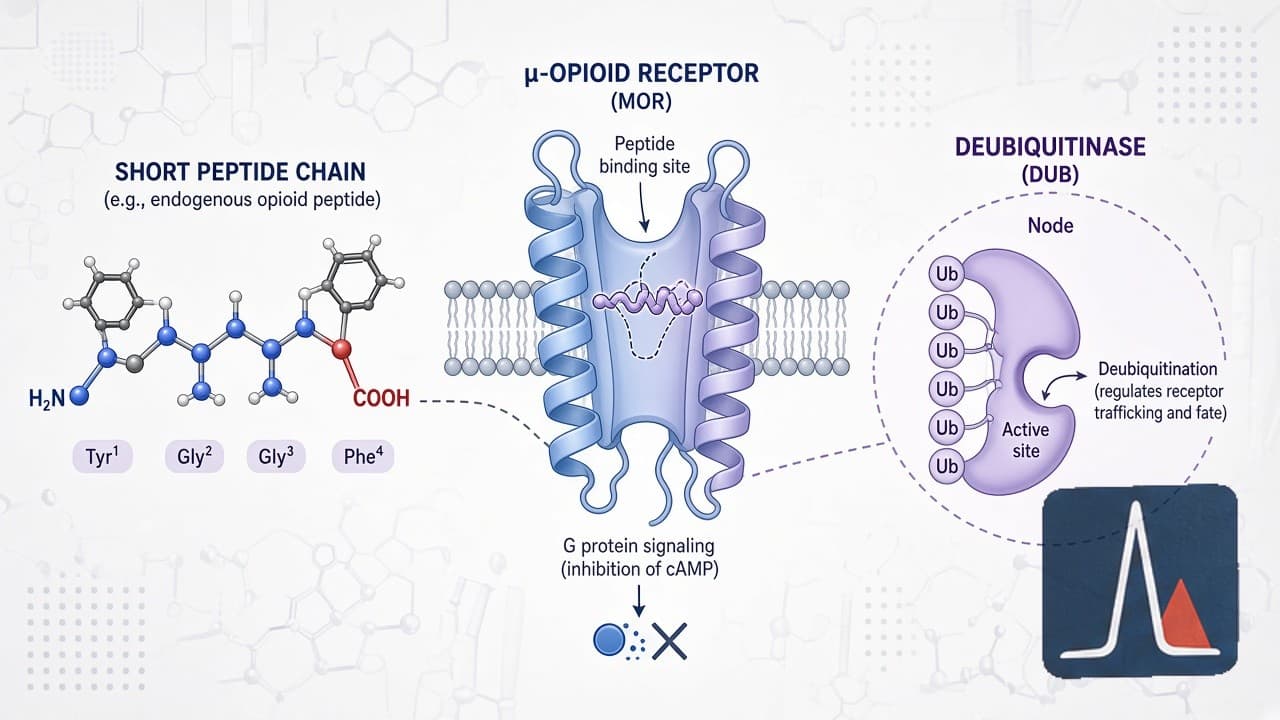
A 2025 British Journal of Pharmacology report described Semax in female mice with spinal cord injury and in neuroinflammation models, with computational target predictions. Findings are study reports only.
Researchers reviewing Semax may note one 2025 paper in the *British Journal of Pharmacology*. Study type: animal model, with computational analyses. The authors reported that Semax was associated, in female mice with spinal cord injury and in neuroinflammation models, with greater functional recovery scores, less lysosomal membrane permeabilization-related pyroptosis, and lower oxidative stress than in their comparison conditions.
The same animal-model work reported RNA sequencing and related analyses that identified regulation of the deubiquitinase USP18. USP18 knockdown was used to test the reported association with recovery in the spinal cord injury model. Limitation: those mechanistic observations depend on the authors’ knockdown and sequencing design; the record here is limited to the published abstract, and independent replication is not established from that source.
Network pharmacology and molecular docking were also reported. Those methods are computational, not clinical measurements. The authors reported that this analysis identified the μ-opioid receptor gene *Oprm1* as a Semax target in their models. Their conclusion stated that, in this spinal cord injury model, the reported recovery association ran through μ-opioid receptor targeting, USP18 regulation, and subsequent deubiquitination of fat mass and obesity-associated protein (FTO). Limitation: that pathway is an author interpretation of one preclinical dataset in female mice. It is not a clinical result, and this briefing does not extend it beyond the reported models.
Sources
Liu R, et al. Semax peptide targets the μ opioid receptor gene Oprm1 to promote deubiquitination and functional recovery after spinal cord injury in female mice. 2025. DOI: 10.1111/bph.70122. https://pubmed.ncbi.nlm.nih.gov/40692165/
More briefings
- Survodutide Dual Agonist: Preclinical and Clinical EvidenceThe open-catalog entry for survodutide describes a synthetic acylated 29-amino-acid peptide dual agonist of glucagon and GLP-1 receptors supplied as high-purity lyophilized powder for laboratory metabolic research. Randomised trials report
- Dulaglutide: GLP-1 Receptor Agonist in Metabolic CareDulaglutide is a recombinant Fc-fusion GLP-1 receptor agonist engineered for once-weekly administration in laboratory and clinical metabolic research. Randomised trials report glycaemic improvements, cardiovascular risk reduction and modest
- Cagrilintide-Semaglutide Mixture: Open-Catalog Context and Metabolic Trial EvidenceThe open-catalog cagrilintide-semaglutide mixture supplies a research pairing of an amylin receptor agonist and GLP-1 receptor agonist for laboratory metabolic studies. Randomised trials of co-administration report enhanced weight loss (13–
All information and products discussed are for laboratory and research use only. Not for human or veterinary use. Not intended to diagnose, treat, cure, or prevent any disease.