
2 November 2026
Survodutide Dual Agonist: Preclinical and Clinical Evidence
Download PDF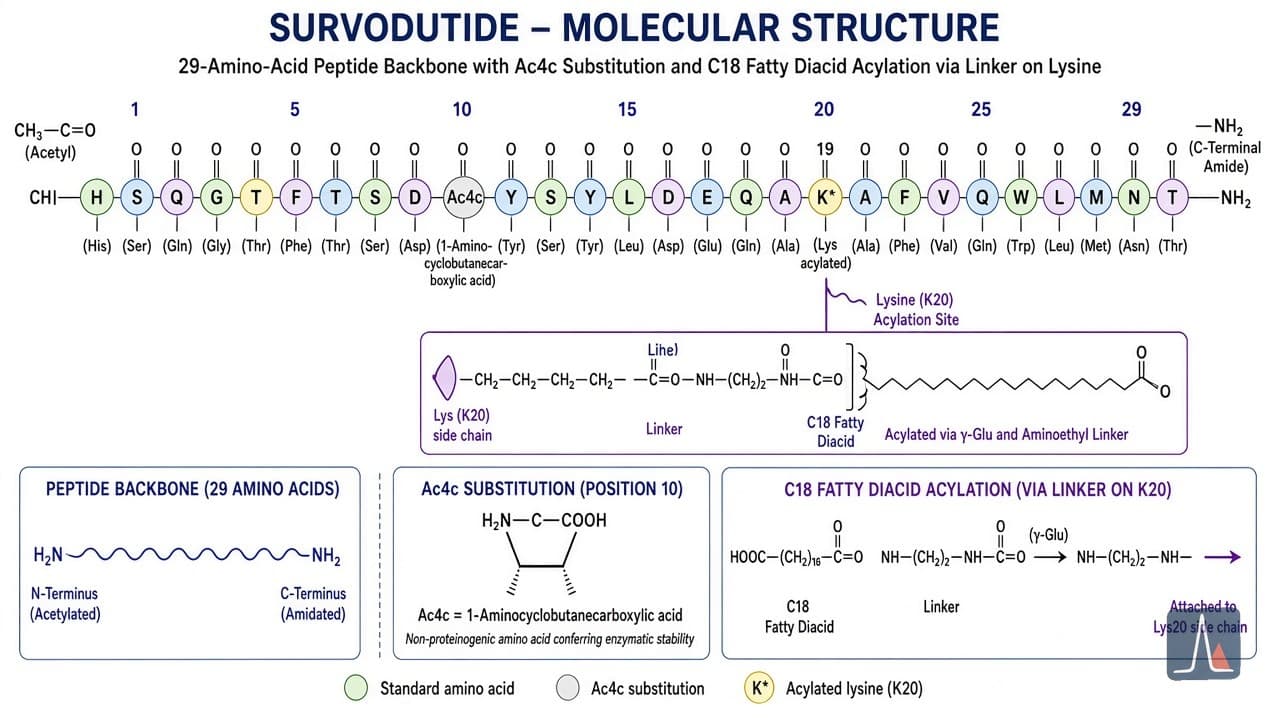
The open-catalog entry for survodutide describes a synthetic acylated 29-amino-acid peptide dual agonist of glucagon and GLP-1 receptors supplied as high-purity lyophilized powder for laboratory metabolic research. Randomised trials report
Survodutide Dual Agonist: Preclinical and Clinical Evidence
The open-catalog entry for Survodutide positions it as a synthetic acylated peptide provided exclusively for laboratory research into metabolic signaling, energy homeostasis, and hepatic lipid metabolism. It is a 29-residue analog of glucagon featuring a 1-aminocyclobutane carboxylic acid (Ac4c) substitution at position 2 for DPP-4 resistance and a C18 fatty diacid conjugated via a glycine-serine linker to a lysine residue to promote albumin binding and support once-weekly dosing in experimental settings. Molecular formula is C₁₉₂H₂₈₉N₄₇O₆₁ with an approximate molecular weight of 4232 Da. Catalog offerings typically include batch-specific certificates of analysis confirming purity >99% by HPLC and mass spectrometry, with recommendations for storage as lyophilized powder and reconstitution using appropriate laboratory reagents such as bacteriostatic or sterile water for injection in controlled experimental protocols. All materials are designated for laboratory research only and are not medicines. Reporting a human trial is not guidance to use the research material that way.
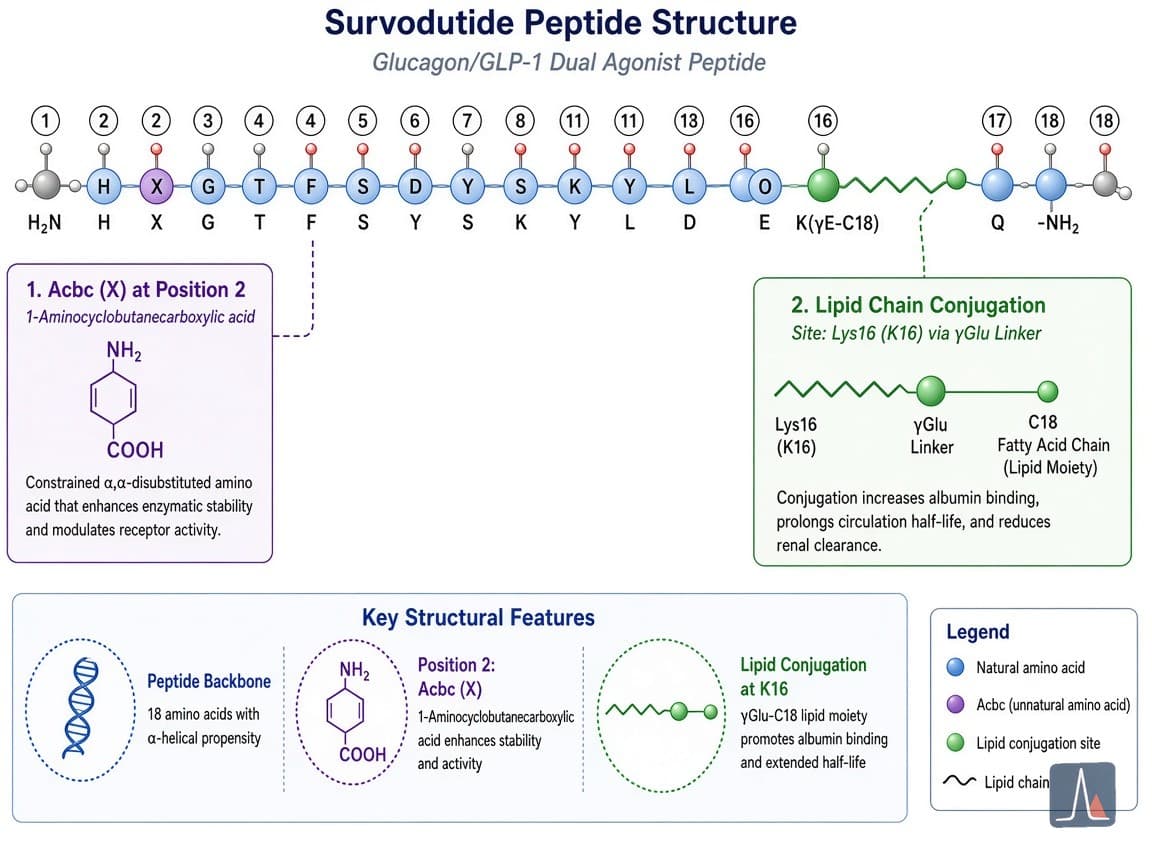
Chemical Identity and Catalog Context
Survodutide corresponds to the catalog path /compounds/survodutide and is presented as a research tool for investigators studying dual receptor pathways in cell culture, tissue explants, animal models of obesity and steatohepatitis, and related metabolic assays. Vendor descriptions emphasize its defined sequence, high chemical purity, and suitability for in vitro receptor activation assays, biomarker studies, and preclinical efficacy models. Physical form is a white to off-white lyophilized powder supplied in vials, with solubility in aqueous buffers at neutral pH. Analytical characterization routinely includes reverse-phase HPLC for purity, mass spectrometry for molecular weight confirmation, and peptide content determination. The entry stresses strict adherence to research-use-only labeling, with no implied therapeutic application or human administration.
Foundational Discovery, Receptor Pharmacology, and In Vitro Mechanistic Studies (in_vitro and method papers, 2022–2026)
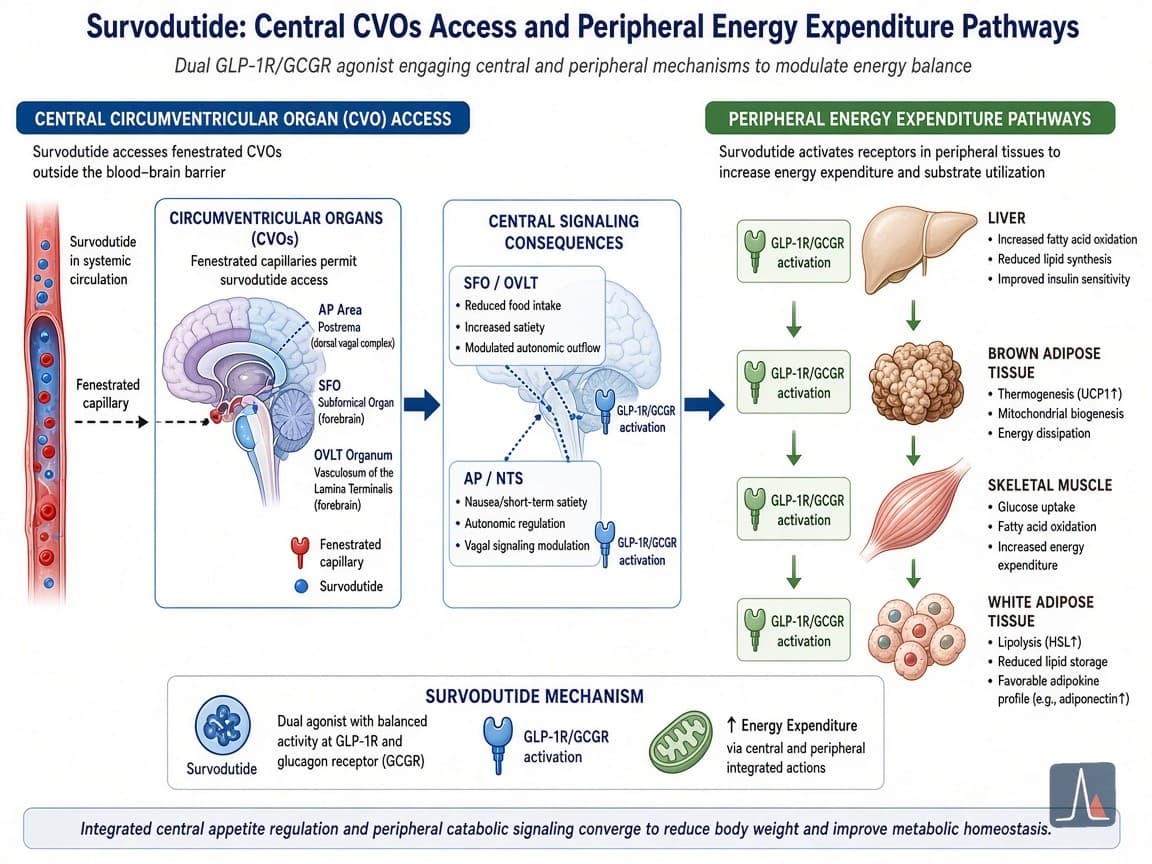
Discovery and pharmacological profiling papers detail the rational design of survodutide from glucagon-based scaffolds to achieve balanced potency at both the glucagon receptor (GCGR) and GLP-1 receptor (GLP-1R). In vitro cAMP accumulation assays in CHO-K1 cells stably expressing human receptors demonstrated sub-nanomolar EC50 values for both targets, confirming dual agonism. Additional cell-based systems using primary hepatocytes confirmed GCGR-mediated effects on gene expression (e.g., NNMT mRNA upregulation) and FGF21 secretion as biomarkers of target engagement. Islet studies showed potentiation of glucose-stimulated insulin secretion consistent with GLP-1R activity. Structural biology approaches, including cryo-electron microscopy, elucidated binding modes at each receptor, highlighting how the Ac4c substitution and lipid moiety contribute to stability and pharmacokinetics without compromising potency. These mechanistic studies established the molecular basis for combined effects on appetite circuits (primarily GLP-1R dependent via circumventricular organ access and satiety nucleus activation) and hepatic energy expenditure/lipid oxidation (GCGR dependent). Biomarker-driven candidate selection ensured the molecule engaged both pathways in vivo while maintaining a profile suitable for further development in metabolic models. Null or less favorable profiles in early analog screening helped refine the final construct.
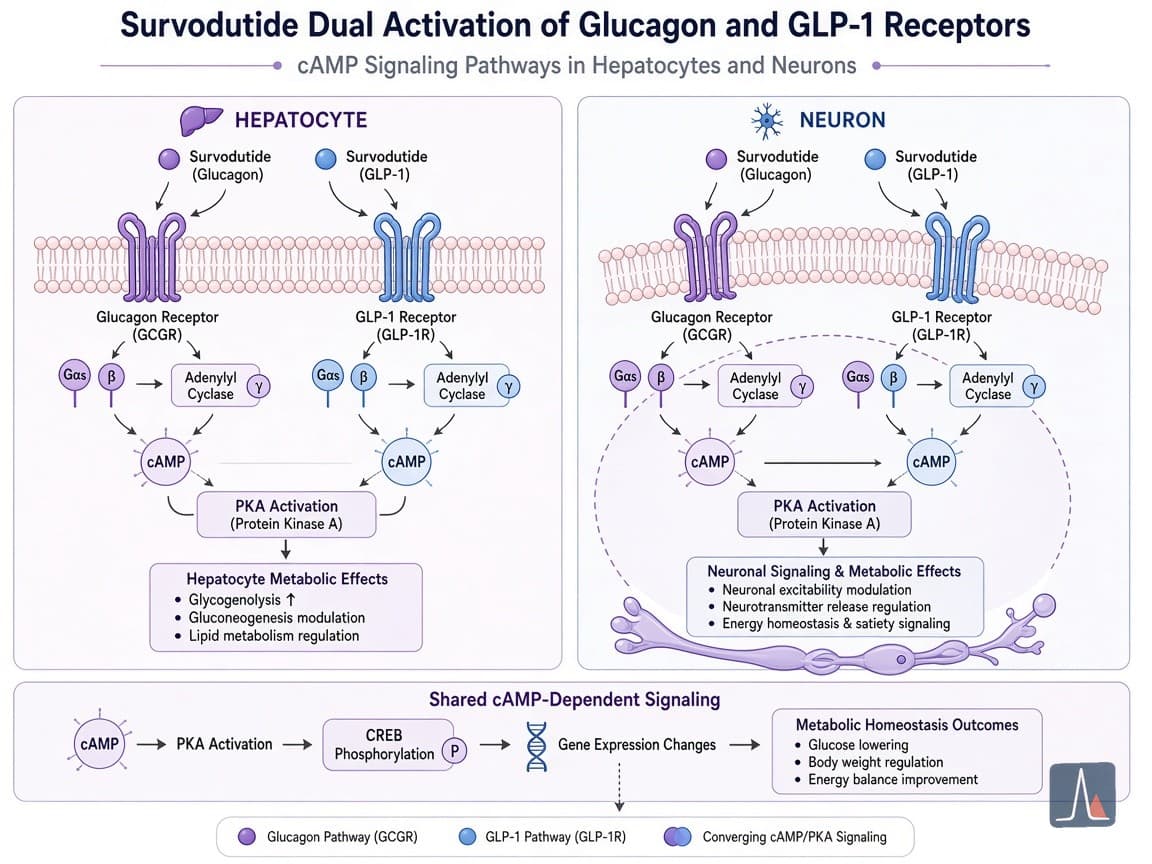
Preclinical Animal Models of Metabolic Regulation, Energy Expenditure, and Hepatic Effects (animal papers, 2022–2026)
Preclinical reports in diet-induced obese rodents and other models demonstrated that survodutide reduces food intake through central mechanisms, increases energy expenditure, lowers body weight, improves glucose tolerance, and reduces hepatic triglyceride content, steatosis, and inflammation markers. Experiments in receptor knockout models helped dissect the relative contributions of each receptor to the observed phenotype. Liver-specific readouts showed decreased de novo lipogenesis, enhanced fatty acid β-oxidation, lowered plasma lipids, and reductions in ALT/AST. Studies in models of metabolic dysfunction-associated steatohepatitis recapitulated histologic improvements in steatosis and ballooning. These findings were consistent across dose ranges and supported advancement to clinical investigation. Limitations of preclinical work include species differences in receptor pharmacology and the artificial nature of high-fat diet models relative to human disease heterogeneity. No unfavorable hepatic toxicity signals were reported in the tested models.
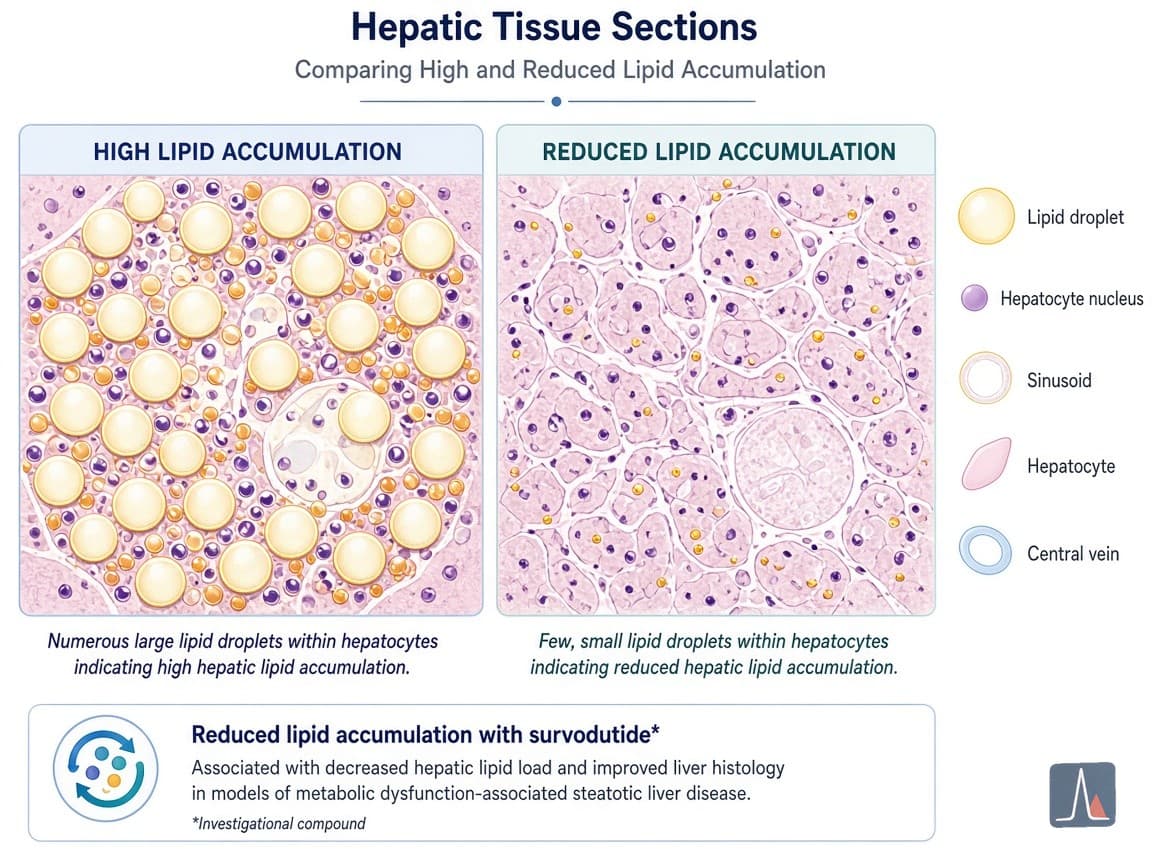
Randomised Phase 2 Trials in Obesity and MASH (clinical papers, 2024)
A 46-week randomised, double-blind, placebo-controlled dose-finding trial in adults with overweight or obesity without diabetes showed dose-dependent mean body weight reductions with survodutide versus placebo, with the majority of participants achieving ≥5% and higher thresholds of weight loss. Gastrointestinal adverse events were the most common and were largely confined to the dose-escalation period. A separate 48-week phase 2 randomised trial in participants with biopsy-confirmed MASH and liver fibrosis stages F1–F3 demonstrated that survodutide produced statistically significant improvement in MASH without worsening of fibrosis in 43–62% of treated participants compared with 14% on placebo (best-fitting quadratic dose-response model, P<0.001). More than half of participants achieved ≥30% relative reduction in liver fat content by MRI proton-density fat fraction, with approximately one-third showing at least one-stage improvement in fibrosis. Liver stiffness, enzymes, and other noninvasive markers also improved. A post-hoc mediation analysis of this trial estimated that 36–72% of the effect on histologic and liver endpoints was independent of weight loss, consistent with direct GCGR contributions to hepatic lipid metabolism. Adverse events were primarily gastrointestinal and similar in pattern to the obesity trial.
Phase 3 Randomised Trials in Obesity, Type 2 Diabetes, and MASLD (clinical papers, 2026)
The SYNCHRONIZE programme generated phase 3 data published in 2026. In adults with obesity without type 2 diabetes (SYNCHRONIZE-1, 76 weeks), survodutide produced mean weight loss of approximately 12–13% (treatment-regimen estimand) or higher under efficacy estimand versus ~5% with placebo, with >70% of participants achieving ≥5% weight loss (P<0.001). MRI substudies demonstrated preferential reductions in visceral adipose tissue (up to ~34%) and liver fat (up to ~63%), with lean mass comprising a small proportion of total tissue loss. In participants with obesity and type 2 diabetes (SYNCHRONIZE-2), co-primary endpoints of weight loss and ≥5% responders were met, with mean weight reductions of ~8–10% (treatment-regimen) or up to 13% (efficacy estimand), alongside HbA1c reductions of ~0.8–1.2 percentage points from a baseline of 7.4%. In the dedicated SYNCHRONIZE-MASLD trial (48 weeks) in adults with obesity and at-risk MASLD, the 6.0 mg dose met co-primary endpoints of ≥30% liver fat reduction (84% vs 24% on placebo) and percentage change in body weight (~12% vs ~1%), with liver fat normalization in ~61% of treated participants. Improvements were observed in liver enzymes, stiffness, waist circumference, and cardiometabolic markers. A study in participants with cirrhosis confirmed pharmacokinetic similarity across Child-Pugh classes and general tolerability, with reductions in liver volume, fat content, and metabolic markers after 28 weeks of treatment. These trials consistently used lifestyle counseling as background therapy.
Safety Profile, Tolerability, and Evidence Context (safety, pooled, and review papers, 2024–2026)
Across phase 2 and 3 trials, adverse events were predominantly gastrointestinal (nausea 40–66%, diarrhea ~49%, vomiting ~41% in active arms vs lower rates on placebo). Events were generally mild to moderate, peaked during dose escalation, and decreased over time. Discontinuation due to adverse events was higher with survodutide (approximately 10–20%) than placebo but serious adverse event rates were comparable. No new safety signals for pancreatitis, gallbladder disease, or acute liver injury emerged. Blood pressure improvements and favorable body composition changes (visceral and liver fat preferential loss) were noted in post-hoc analyses. Mediation analyses supported both weight-loss-dependent and -independent effects on liver histology and noninvasive tests. Systematic reviews and pooled safety data as of 2026 affirm the consistency of efficacy on weight, glycemic, and hepatic surrogates while highlighting the importance of gradual titration for tolerability. Recurrent limitations include relatively short trial durations for chronic conditions, selected populations that may not fully represent real-world heterogeneity, potential unblinding due to gastrointestinal effects, and the need for longer-term data on hard clinical outcomes (cardiovascular events, cirrhosis decompensation, mortality). Phase 3 histological endpoint trials (LIVERAGE programme) and cardiovascular outcomes studies (SYNCHRONIZE-CVOT) are ongoing or completed to address these gaps. As of late 2026, survodutide remains investigational.
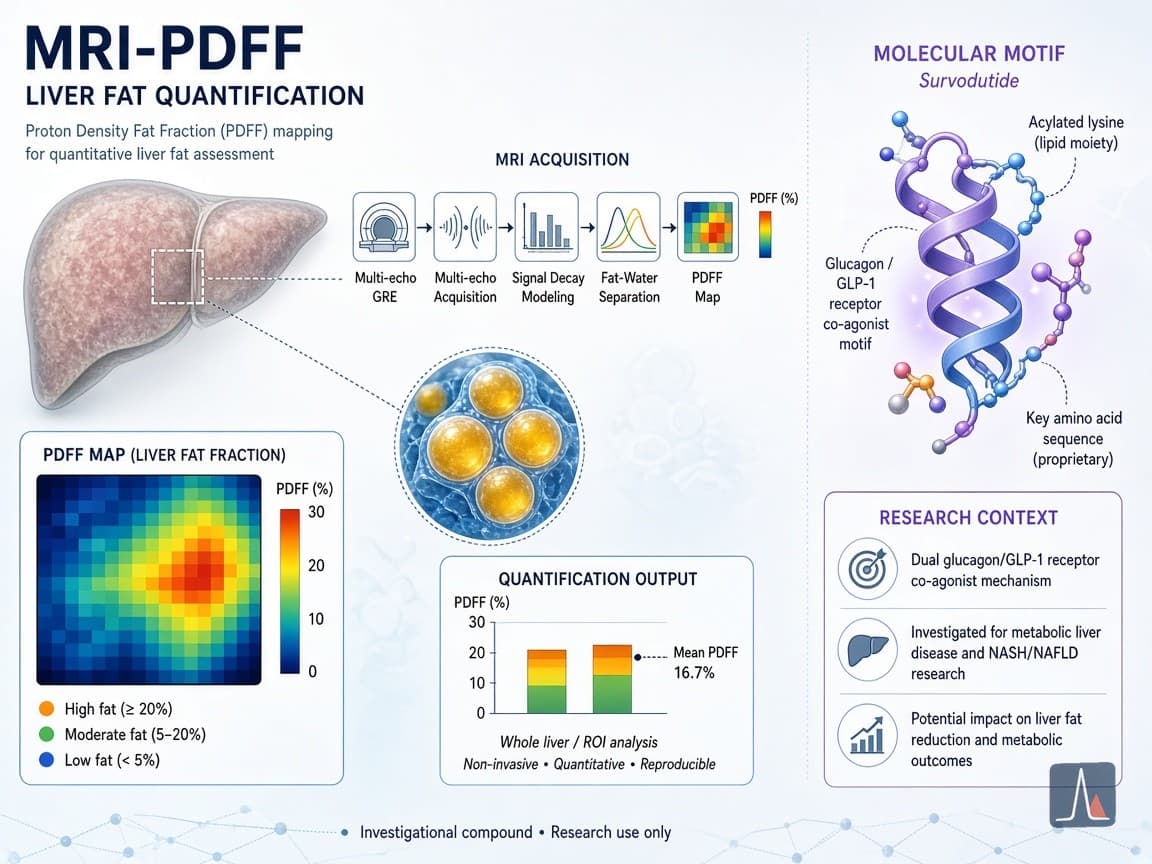
Evidence syntheses underscore that while surrogate endpoints (weight, liver fat by MRI-PDFF, MASH resolution by biopsy) show robust effects, translation to long-term clinical benefit requires continued follow-up. The catalog entry therefore serves as a well-characterized tool for researchers exploring dual receptor pharmacology in controlled laboratory settings, with the accumulating clinical dataset providing context for experimental design and interpretation of mechanistic findings. Future work may further elucidate direct hepatic versus indirect weight-mediated contributions using tissue-specific approaches.
Sources
- Sanyal AJ et al. A Phase 2 Randomized Trial of Survodutide in MASH and Fibrosis. N Engl J Med. 2024;391(4):311-319. doi:10.1056/NEJMoa2401755. PMID: 38847460. (clinical)
- le Roux CW et al. Glucagon and GLP-1 receptor dual agonist survodutide for obesity: a randomised, double-blind, placebo-controlled, dose-finding phase 2 trial. Lancet Diabetes Endocrinol. 2024;12(3):162-173. doi:10.1016/S2213-8587(23)00356-X. PMID: 38330987. (clinical)
- le Roux CW et al. Survodutide Once Weekly for the Treatment of Adults with Obesity. N Engl J Med. 2026;395(8):776-787. doi:10.1056/NEJMoa2600751. PMID: 42253238. (clinical)
- Kaplan LM et al. Survodutide in adults with obesity and metabolic dysfunction-associated steatotic liver disease: SYNCHRONIZE-MASLD, a randomized, double-blind, placebo-controlled phase 3 trial. Nat Med. 2026;32(8):2948-2958. doi:10.1038/s41591-026-04479-3. (clinical)
- Zimmermann T et al. BI 456906: discovery and preclinical pharmacology of a novel GCGR/GLP-1R dual agonist with robust anti-obesity efficacy. Mol Metab. 2022;66:101633. (in_vitro/animal)
- Additional phase 3 baseline characteristics, mediation, cirrhosis PK/tolerability, beta-cell function, and blood pressure post-hoc papers (Diabetes Obes Metab, J Hepatol, 2024–2026).
All cited works are primary literature from PubMed/Europe PMC-indexed journals. No dosing, administration instructions, or therapeutic claims are provided. Materials are for laboratory research only.
More briefings
- Dulaglutide: GLP-1 Receptor Agonist in Metabolic CareDulaglutide is a recombinant Fc-fusion GLP-1 receptor agonist engineered for once-weekly administration in laboratory and clinical metabolic research. Randomised trials report glycaemic improvements, cardiovascular risk reduction and modest
- Cagrilintide-Semaglutide Mixture: Open-Catalog Context and Metabolic Trial EvidenceThe open-catalog cagrilintide-semaglutide mixture supplies a research pairing of an amylin receptor agonist and GLP-1 receptor agonist for laboratory metabolic studies. Randomised trials of co-administration report enhanced weight loss (13–
- Pinealon Catalog Entry: The Single Defined Tripeptide CompoundThe catalog lists Pinealon at /compounds/pinealon as the single synthetic tripeptide Glu-Asp-Arg (EDR), a chemically defined research compound supplied as one discrete molecular entity distinct from tissue extracts or peptide mixtures, with
All information and products discussed are for laboratory and research use only. Not for human or veterinary use. Not intended to diagnose, treat, cure, or prevent any disease.