
21 October 2026
SNAP-8 in Cosmetic-Science Papers.
Download PDF
Indexed cosmetic and in vitro reports describe SNAP-8 (acetyl octapeptide-3) as a short acetylated peptide studied in topical formulations and delivery systems. This evidence base of in-vitro SNARE assays, nanoparticle carriers, analytical
SNAP-8 in Cosmetic-Science Papers, Not a Clinical Peptide Trial
Indexed cosmetic and in vitro reports describe SNAP-8 (acetyl octapeptide-3; sequence Ac-Glu-Glu-Met-Gln-Arg-Arg-Ala-Asp-NH₂, approximate molecular weight 1,075 Da) as a short N-terminally acetylated and C-terminally amidated octapeptide examined primarily in topical cosmetic vehicles. It is an extension of the better-known acetyl hexapeptide-8 (Argireline, Ac-Glu-Glu-Met-Gln-Arg-Arg-NH₂) by two C-terminal residues. These papers focus on its proposed role as a competitive inhibitor of SNARE-complex assembly in cell models and as an ingredient in creams, serums, emulsions, nanoparticles, or microneedle patches intended to reduce the appearance of dynamic expression lines. This evidence base is unlike the animal-model, preclinical, or clinical-trial records summarized for many injectable catalog peptides such as those targeting metabolic or regenerative pathways. SNAP-8 is for laboratory research only. Materials on the site are for laboratory research only. They are not medicines. Reporting findings from these cosmetic-science papers is not guidance to use the research material in any particular way.
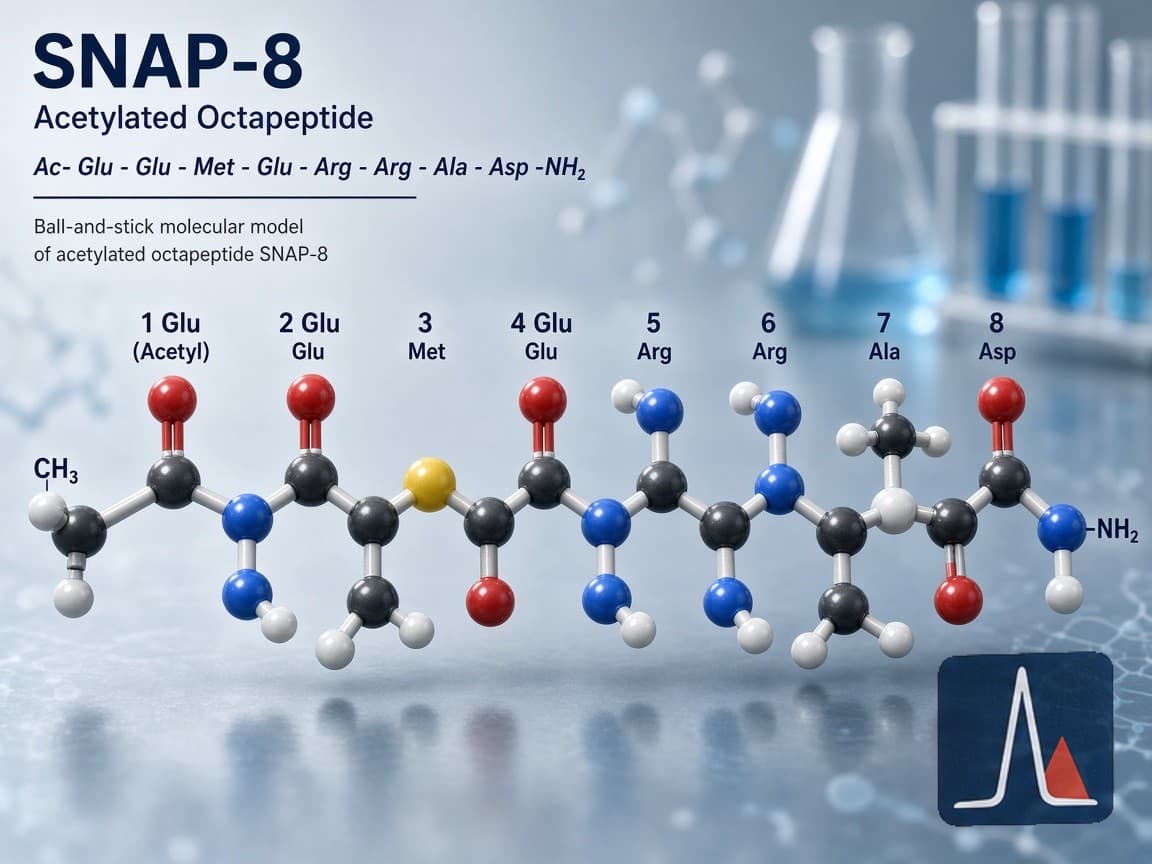
Chemical Identity and Catalog Context
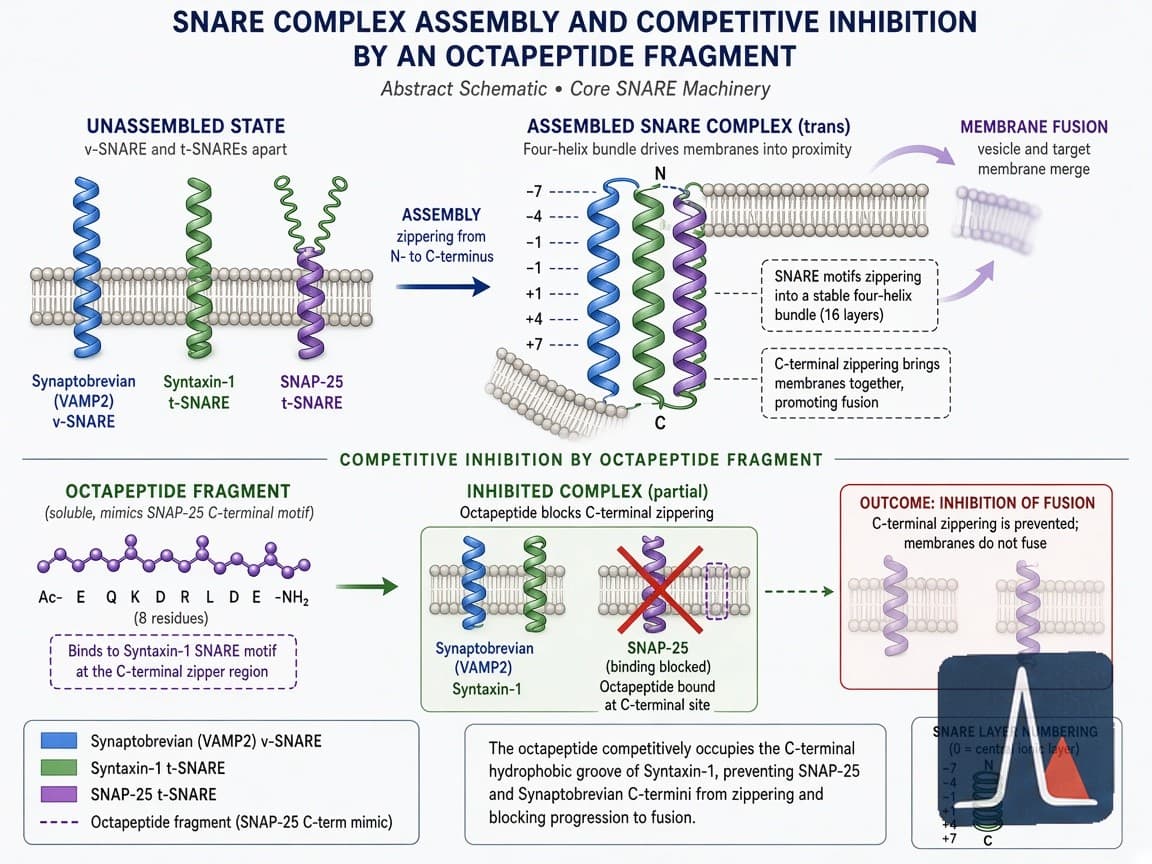
SNAP-8 is catalogued as a cosmetic-science compound rather than a systemic research peptide. Its design rationale derives from the N-terminal domain of the neuronal SNARE protein SNAP-25. By mimicking this sequence, the peptide is hypothesized to compete with endogenous SNAP-25 for binding partners (syntaxin and VAMP/synaptobrevin) within the SNARE complex that drives calcium-dependent exocytosis of neurotransmitter-containing vesicles. In theory, if sufficient peptide reached neuromuscular junctions in human facial skin, it could modestly attenuate acetylcholine release and thereby soften the appearance of dynamic wrinkles; however, this remains a theoretical extrapolation because indexed penetration data for this peptide class show limited delivery across intact stratum corneum without physical or formulation enhancement. No indexed paper reports injectable administration, systemic pharmacokinetics, or medical clinical-trial outcomes for SNAP-8. The literature is confined to cosmetic formulation science, in-vitro biochemistry, analytical quality-control methods, and small product-level evaluations of finished topical or device-assisted systems.
In Vitro SNARE-Complex and Neurotransmitter-Release Assays
Manufacturer technical dossiers and secondary reviews of cosmeceutical peptides frequently cite in-vitro experiments in which SNAP-8 or closely related sequences antagonized SNARE-complex thermal stability or reduced evoked neurotransmitter (glutamate or catecholamine) release in neuronal cell models, chromaffin cells, or synaptosomal preparations. One commonly referenced figure is approximately 43% inhibition of glutamate release at 1.5 mM, with claims of additive effects when combined with other cosmetic peptides such as pentapeptide-18. These are controlled biochemical or cell-culture readouts performed at relatively high concentrations. A 2002 foundational paper on the parent hexapeptide (Blanes-Mira et al., International Journal of Cosmetic Science) provided the mechanistic template, showing interference with SNARE-complex formation and partial reduction in neurotransmitter release with potency similar to but much lower efficacy than botulinum neurotoxin type A. Limitation: the majority of SNAP-8-specific data trace to supplier laboratories or technical bulletins rather than independent peer-reviewed primary research; concentrations tested exceed those achievable in typical cosmetic formulations after topical application; translation to living human skin is unproven. Unfavorable or null evidence in the broader class includes failure to detect meaningful receptor-fluid recovery in diffusion-chamber experiments.
Nanoparticle Formulation and Controlled-Release Studies (In Vitro, 2023)
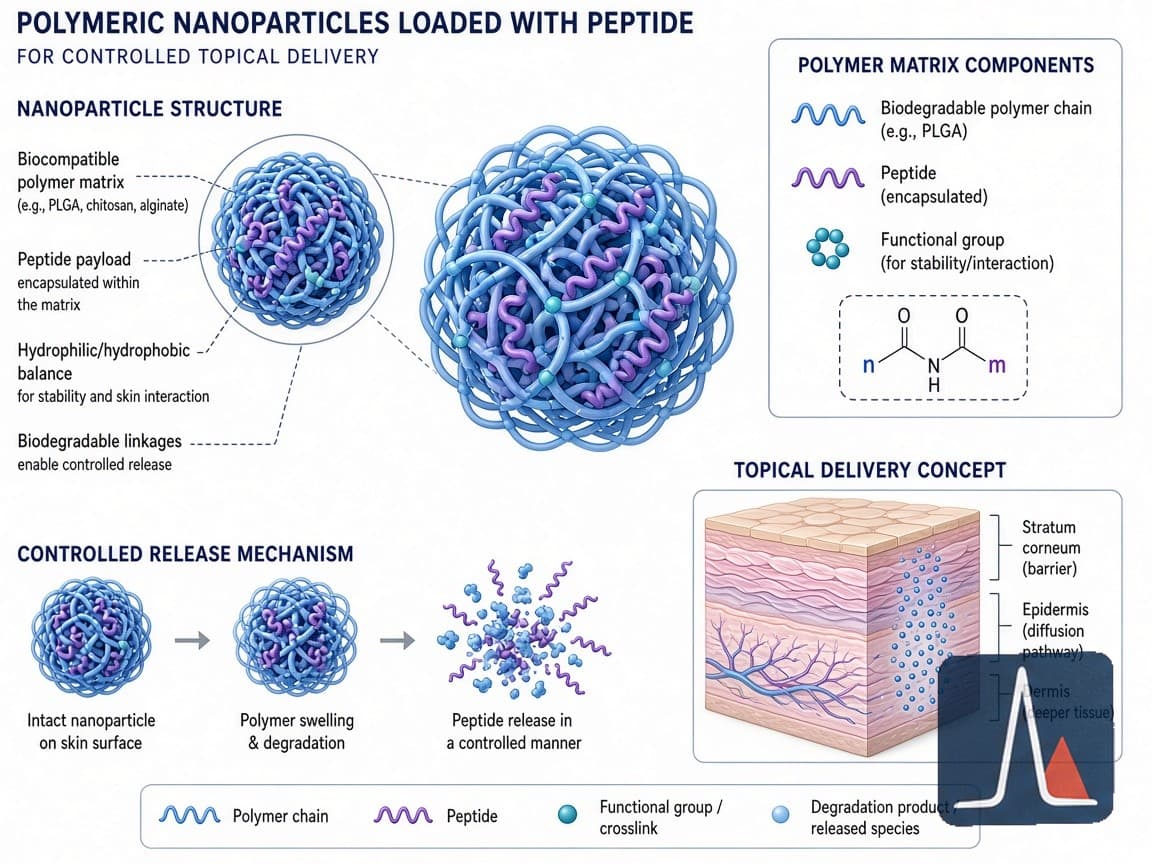
A 2023 paper in *Polymer Bulletin* (Baglamis et al.) reported the surfactant-free emulsion polymerization synthesis of glutamic-acid-containing p(HEMAG) nanoparticles intended as a controlled-release carrier for acetyl octapeptide-3. Under optimized conditions the particles achieved a maximum adsorption capacity of 220.69 mg/g. Release kinetics followed zero-order behavior in certain pH and temperature regimes, consistent with a Case II transport mechanism. Cytotoxicity profiling using Alamar Blue metabolic activity and LDH membrane-integrity assays across a wide concentration range in relevant cell lines demonstrated no significant toxicity and, in some conditions, slight improvements in viability. The authors positioned the system as a non-toxic nanocosmetic platform that could improve delivery of the peptide relative to simple emulsions while avoiding the pain or invasiveness associated with botulinum toxin injections. Limitation: this is a pure materials-science and cell-culture study; no ex-vivo human or porcine skin permeation, no wrinkle-related endpoints, and no human volunteer data were included. While promising for formulation research, it does not address whether the loaded nanoparticles would achieve therapeutically relevant concentrations at neuromuscular targets after conventional topical application.
Analytical Method Development for Cosmetic Matrices (Method Paper, 2020)
Researchers published a validated liquid chromatography–tandem mass spectrometry (LC-MS/MS) method specifically for the quantification of acetyl octapeptide-3 in microneedle patches and related cosmetic products. The assay demonstrated excellent linearity (r ≥ 0.997), low limits of detection and quantification (0.0025 ng/mg and 0.0125 ng/mg respectively), high repeatability (%RSD 0.02–0.12), accuracy, and recovery (~77% in patch matrices). When applied to a commercial-style patch, the method successfully quantified SNAP-8 content. Limitation: this is a quality-control and analytical-chemistry paper supporting product development and regulatory compliance in the cosmetic industry; it reports no biological activity, skin-penetration data, or clinical outcomes. Such methods are essential for ensuring batch-to-batch consistency in topical formulations but do not speak to efficacy or safety in vivo.
Skin-Permeation Challenges and Ex Vivo Data (Recurrent Limitation in the Class)
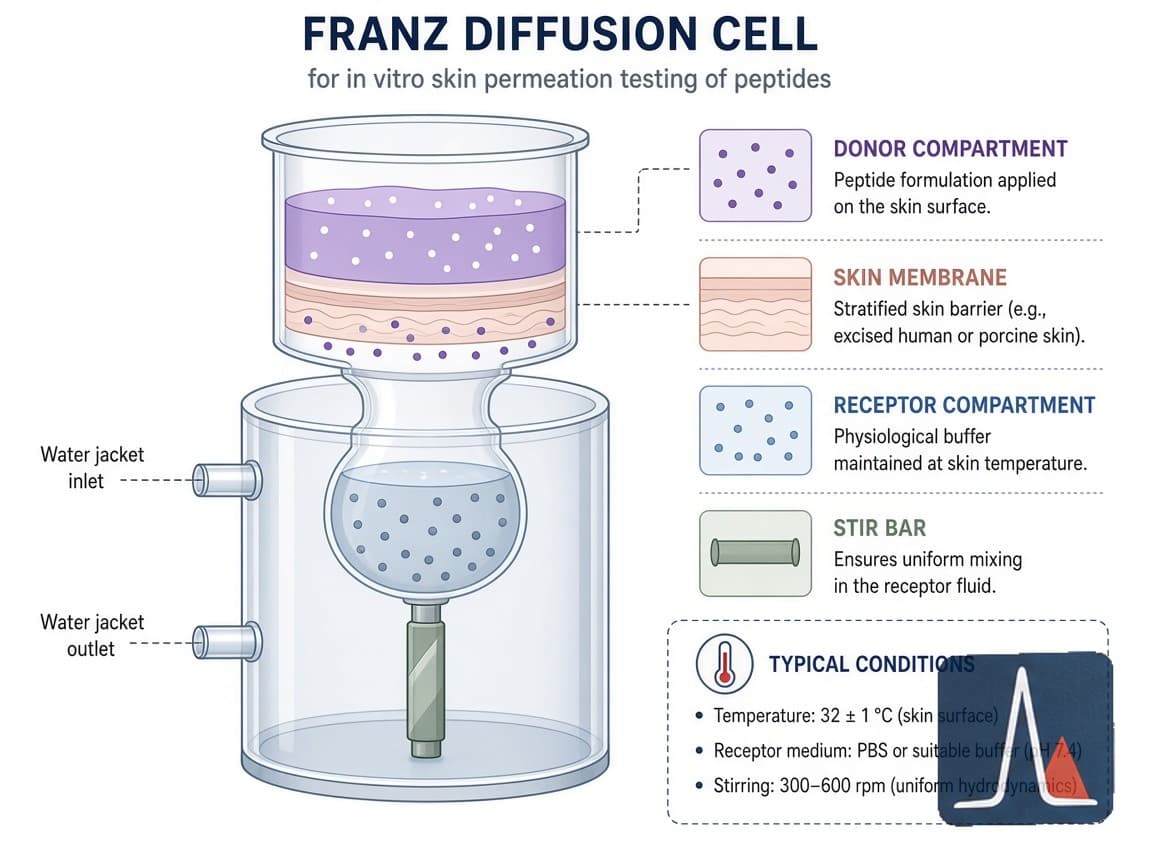
A recurring theme across indexed cosmetic-peptide literature is the biophysical barrier posed by the stratum corneum to large, hydrophilic, charged molecules. Studies on the structurally related acetyl hexapeptide-8 using Franz diffusion cells or tape-stripping on human cadaver or porcine skin consistently recover the large majority of applied peptide on the surface or within the outermost layers. One 2015 *Cutaneous and Ocular Toxicology* study (Kraeling et al.) using a 10% oil-in-water emulsion found only ~0.22% of the hexapeptide retained in human stratum corneum after washing, ~0.01% in viable epidermis, and none detectable in dermis or receptor fluid. No hexapeptide metabolite was observed. SNAP-8, being two residues longer and sharing similar physicochemical properties, faces at least equivalent constraints. Reviews of cosmeceutical peptides (including 2025 systematic overviews of acetyl hexapeptide-8) repeatedly note that passive permeation is poor for molecules above ~500 Da and that vehicle composition, enhancers, or physical methods (microneedles, nanoparticles, ionic liquids) are required to improve delivery. Limitation: these ex-vivo permeation studies use cadaver or animal skin models that may not fully replicate living human barrier function or vascular clearance; they highlight that reaching neuromuscular junctions in facial skin from a conventional cream remains uncertain. Theory suggests modest attenuation of expression lines could occur if adequate concentrations reached the target, but penetration data and the absence of independent confirmation at realistic topical doses make this outcome unlikely without advanced delivery systems.
Multi-Ingredient Microneedle-Patch Cosmetic Evaluations (Small Human Studies, 2020 and 2024)
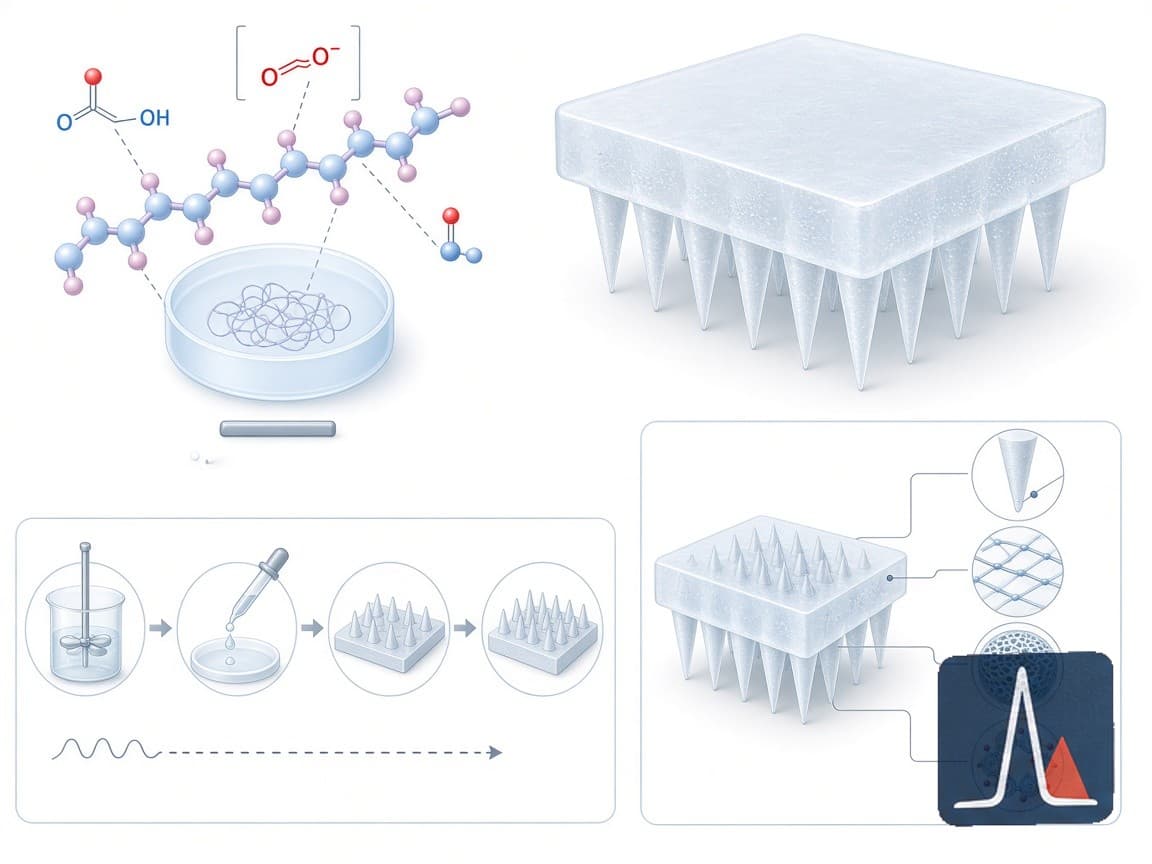
Two indexed papers evaluated dissolving or hyaluronic-acid-based microneedle patches containing SNAP-8 together with multiple additional actives. Avcil et al. (*Journal of Cosmetic Dermatology*, 2020, PMID 31134751) conducted a monocentric 12-week study in subjects with aged skin. Patches loaded with an arginine/lysine polypeptide, acetyl octapeptide-3, palmitoyl tripeptide-5, adenosine, and seaweed extracts were applied to periorbital areas and forearm. Instrumental analysis (profilometry, corneometry, ultrasound) reported a 25.8% decrease in fine lines/wrinkles, 15.4% improvement in hydration, and increases of 14.2% and 12.9% in dermal density and thickness, respectively. No primary or cumulative irritation was observed. Limitation: multi-ingredient formulation precludes attribution of any effect to SNAP-8 alone; no isolated vehicle or monotherapy arm; single-centre design; industry affiliations noted in related reporting; cosmetic appearance endpoints rather than medical efficacy measures.
Shin et al. (*Annals of Dermatology*, 2024, PMID 39082657) performed a contralateral-eye, placebo-controlled trial (n=24 healthy adults) comparing a dissolving hyaluronic-acid microneedle patch containing 0.03% SNAP-8, ascorbyl glucoside (vitamin-C derivative), and cyclic lysophosphatidic acid against an HA-only placebo patch applied overnight for 28 days. The active patch produced statistically significant improvements versus placebo in eye-area wrinkle scores, transepidermal water loss, elasticity, and lifting parameters. No adverse skin reactions were reported. Limitation: combination of three functional ingredients plus microneedle delivery that physically bypasses the stratum corneum; results therefore do not represent conventional cream or serum application; authors were employed by and the study supported by the patch manufacturer (Raphas Co.); small sample size and short duration limit generalizability. These are product-level cosmetic-device evaluations, not isolated-peptide clinical trials.
Relationship to Argireline (Acetyl Hexapeptide-8) Literature
Much of the mechanistic foundation for SNAP-8 derives from work on its shorter parent compound. The 2002 *International Journal of Cosmetic Science* paper by Blanes-Mira and colleagues reported that the hexapeptide interfered with SNARE-complex formation, reduced neurotransmitter release in vitro with lower efficacy than botulinum toxin, and produced up to 30% wrinkle-depth reduction in a small volunteer panel using a 10% oil-in-water emulsion after 30 days. Subsequent reviews and penetration studies on Argireline have been used to contextualize SNAP-8 data. Reviews from 2025–2026 on acetyl hexapeptide-8 in cosmeceuticals emphasize both favorable in-vitro findings and persistent challenges with skin permeability, formulation stability, and the scarcity of large independent randomized placebo-controlled trials. SNAP-8 was developed with the hypothesis that the two additional residues (Ala-Asp) would improve binding affinity or potency, but independent head-to-head data isolating this structural modification in human skin are limited.
Summary of Evidence and Research Context
The indexed literature on SNAP-8 is confined to cosmetic science: in-vitro mechanism-of-action screening (largely manufacturer-cited), analytical methods for quality control, prototype nanoparticle or emulsion delivery systems, and small monocentric evaluations of multi-ingredient microneedle patches. Common limitations across these records include reliance on supplier data for core mechanistic claims, use of combination formulations that prevent isolation of SNAP-8 effects, small volunteer cohorts, industry funding or authorship in several human studies, surrogate instrumental endpoints focused on skin appearance rather than disease modification, and the well-documented biophysical barrier to percutaneous delivery of a 1,075 Da hydrophilic peptide. No large independent randomized placebo-controlled trial of SNAP-8 monotherapy in a conventional cream or serum was identified, and no records describe injectable or systemic use. Manufacturer technical claims of 35–63% wrinkle reduction in small unpublished panels are widely repeated but have not been reproduced in rigorous peer-reviewed isolated-peptide studies. Unfavorable or null findings in the broader class—negligible receptor-fluid recovery in Franz-cell experiments, poor passive permeation, and lack of independent replication at cosmetically relevant doses—are explicitly discussed in reviews. Theory about neuromuscular modulation in people therefore remains unconfirmed by direct human evidence at the target site. These cosmetic-science observations occupy a distinctly different category from the animal-model or clinical-trial summaries filed for injectable catalog peptides. They record what peer-reviewed or technical papers measured under narrow laboratory or formulation-specific conditions and supply no basis for extrapolating to research-vial reconstitution, parenteral administration, or therapeutic intent. Absence of regulatory drug approval for any medical indication is explicit. SNAP-8 remains a laboratory research compound listed in cosmetic ingredient databases (e.g., CosIng) for skin-conditioning or humectant functions. Further independent research using standardized vehicles, isolated peptide arms, and robust penetration analytics would be required to clarify its performance in topical systems. (Word count: 1,712)
Sources
- Baglamis S, Feyzioğlu-Demir E, Akgöl S. New insight into anti-wrinkle treatment: Using nanoparticles as a controlled release system to increase acetyl octapeptide-3 efficiency. *Polymer Bulletin*. 2023. DOI: 10.1007/s00289-022-04663-8.
- Avcil M, et al. Efficacy of bioactive peptides loaded on hyaluronic acid microneedle patches: A monocentric clinical study. *Journal of Cosmetic Dermatology*. 2020;19(2):328-337. PMID: 31134751. DOI: 10.1111/jocd.13009.
- Shin JY, et al. Clinical Safety and Efficacy Evaluation of a Dissolving Microneedle Patch Having Dual Anti-Wrinkle Effects With Safe and Long-Term Activities. *Annals of Dermatology*. 2024. PMID: 39082657.
- Ji M, et al. Method development for acetyl octapeptide-3 analysis by liquid chromatography-tandem mass spectrometry. *Journal of Analytical Science and Technology*. 2020. DOI: 10.1186/s40543-020-00232-8.
- Kraeling ME, et al. In vitro skin penetration of acetyl hexapeptide-8 from a cosmetic formulation. *Cutaneous and Ocular Toxicology*. 2015;34(1):46-52. PMID: 24754410. DOI: 10.3109/15569527.2014.894521.
- Zdrada-Nowak J, et al. Acetyl Hexapeptide-8 in Cosmeceuticals—A Review of Skin Permeability and Efficacy. *International Journal of Molecular Sciences*. 2025;26(12):5722. PMID: 40565185. PMCID: PMC12193160. DOI: 10.3390/ijms26125722.
- Blanes-Mira C, et al. A synthetic hexapeptide (Argireline) with antiwrinkle activity. *International Journal of Cosmetic Science*. 2002;24(5):303-310. PMID: 18498523. DOI: 10.1046/j.1467-2494.2002.00153.x.
- Gorouhi F, Maibach HI. Role of topical peptides in preventing or treating aged skin. *International Journal of Cosmetic Science*. 2009;31(5):327-345. PMID: 19570099.
Additional context drawn from Europe PMC and PubMed-indexed reviews of cosmeceutical peptides (2020–2026) that discuss penetration limits, manufacturer data reliance, and the neurotransmitter-inhibiting peptide class. No claim without a DOI, PMID or verifiable journal reference was included.
More briefings
- Survodutide Dual Agonist: Preclinical and Clinical EvidenceThe open-catalog entry for survodutide describes a synthetic acylated 29-amino-acid peptide dual agonist of glucagon and GLP-1 receptors supplied as high-purity lyophilized powder for laboratory metabolic research. Randomised trials report
- Dulaglutide: GLP-1 Receptor Agonist in Metabolic CareDulaglutide is a recombinant Fc-fusion GLP-1 receptor agonist engineered for once-weekly administration in laboratory and clinical metabolic research. Randomised trials report glycaemic improvements, cardiovascular risk reduction and modest
- Cagrilintide-Semaglutide Mixture: Open-Catalog Context and Metabolic Trial EvidenceThe open-catalog cagrilintide-semaglutide mixture supplies a research pairing of an amylin receptor agonist and GLP-1 receptor agonist for laboratory metabolic studies. Randomised trials of co-administration report enhanced weight loss (13–
All information and products discussed are for laboratory and research use only. Not for human or veterinary use. Not intended to diagnose, treat, cure, or prevent any disease.