
6 November 2026
Retatrutide in indexed studies
Download PDF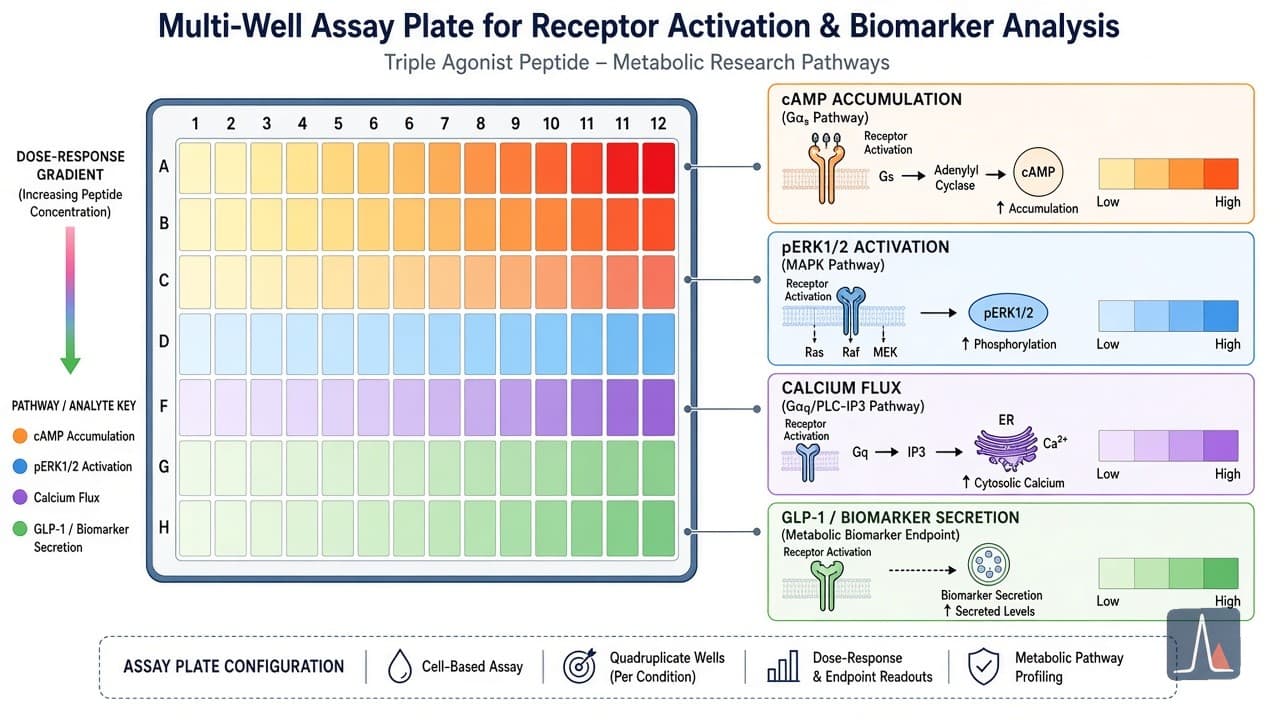
Indexed records on ClinicalTrials.gov and PubMed characterize [Retatrutide](/compounds/retatrutide) (LY3437943) as the subject of numerous phase 2 and phase 3 randomised, double-blind, placebo-controlled trials reporting dose-dependent body
Chemical Identity and Catalog Context
The catalog entry for Retatrutide at /compounds/retatrutide lists it as a single, chemically defined synthetic lipopeptide supplied as high-purity lyophilized powder for laboratory metabolic research only. Materials on this site are for laboratory research only and are not medicines. Reporting what published indexed studies found does not constitute guidance to use the research material in any specific way.
Indexed study records (PubMed, ClinicalTrials.gov, NEJM, Lancet) consistently refer to the identical molecular entity (development code LY3437943) across early pharmacology, dose-ranging, and registrational trials. As of late 2026, ClinicalTrials.gov indexes approximately 17–34 entries (sources vary by inclusion of substudies and extensions), predominantly sponsored by Eli Lilly, spanning Phase 1 (PK/PD/safety in healthy volunteers and T2D), Phase 2 (obesity, T2D, MASLD substudies, CKD), and a large Phase 3 programme under master protocols (TRIUMPH for obesity and comorbidities, TRANSCEND for T2D, SYNERGY for MASLD/MASH). Total enrollment across major trials exceeds 24,000 participants. Records describe once-weekly subcutaneous administration with dose escalation regimens, double-blind placebo-controlled (or active-comparator) parallel-group designs, lifestyle counseling, and primary endpoints focused on percent change in body weight, HbA1c, apnea–hypopnea index (AHI), or WOMAC pain scores in nested subgroups.
Foundational Discovery, Receptor Pharmacology, and In Vitro Records
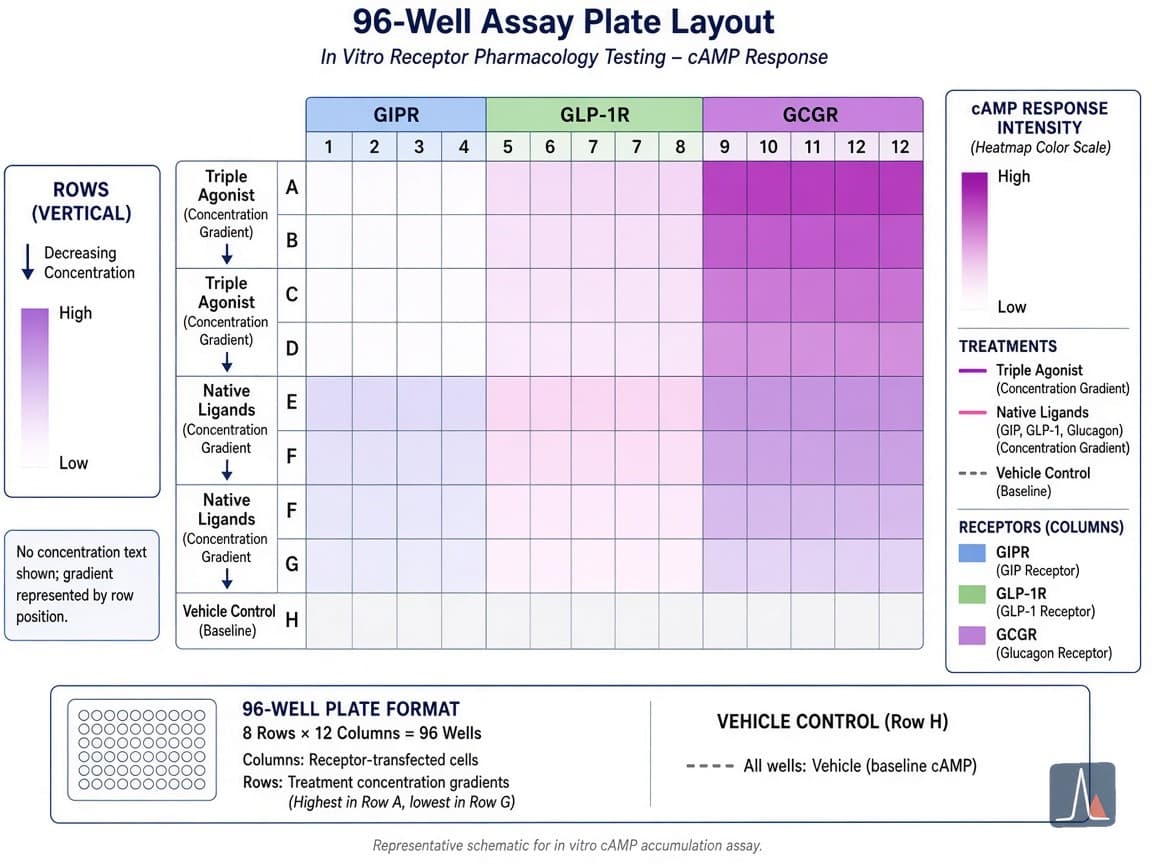
Indexed 2022 discovery literature (Cell Metabolism, PMID 35985340) characterises retatrutide in receptor-transfected cell systems as a full agonist at GIP, GLP-1, and glucagon receptors with a specific potency balance (highest at GIPR, balanced at GLP-1R and GCGR relative to native ligands). In vitro cAMP accumulation and binding assays in HEK293 cells and primary hepatocytes demonstrated concentration-dependent responses used to establish the pharmacologic profile prior to in vivo testing. These method and in_vitro papers appear in indexed records as the foundational reference for all subsequent trial designs. Later indexed method papers reference similar receptor activation or biomarker assay formats used to support clinical sample analysis.
Theory based on these receptor profiles suggests that combined agonism could produce additive effects on energy expenditure, appetite regulation, and hepatic lipid handling in metabolic models, though such extrapolation remains theoretical and is not a reported property of the research material.
Preclinical Animal Model Records (2022–2026)
Indexed animal studies (primarily DIO mice, rats, hamsters, and non-human primates) report dose-dependent reductions in body weight (up to 30–40% in some 12-week protocols), fat mass, liver triglycerides, and improvements in insulin sensitivity and MASLD histology compared with vehicle or dual-agonist controls. Records note increased energy expenditure attributable to glucagon receptor activity offset by incretin components to avoid net hyperglycaemia. These papers (including MASH and body-composition models) appear in indexed journals as supporting the rationale for human trial endpoints such as liver fat by MRI-PDFF and body-composition substudies. Null or context-dependent findings in certain models (e.g., variable lean-mass preservation) are also noted in the indexed preclinical literature.
Phase 2 Randomised Trial Records (2023–2024 Publications)
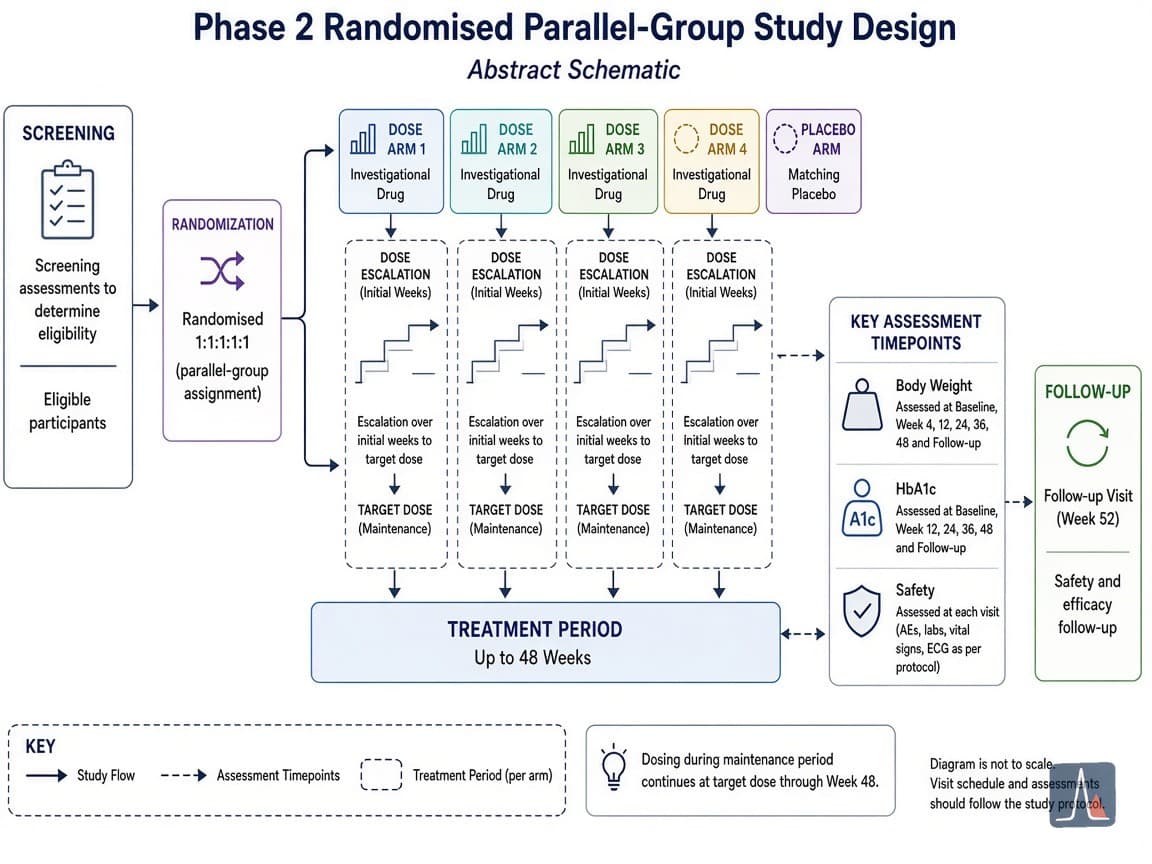
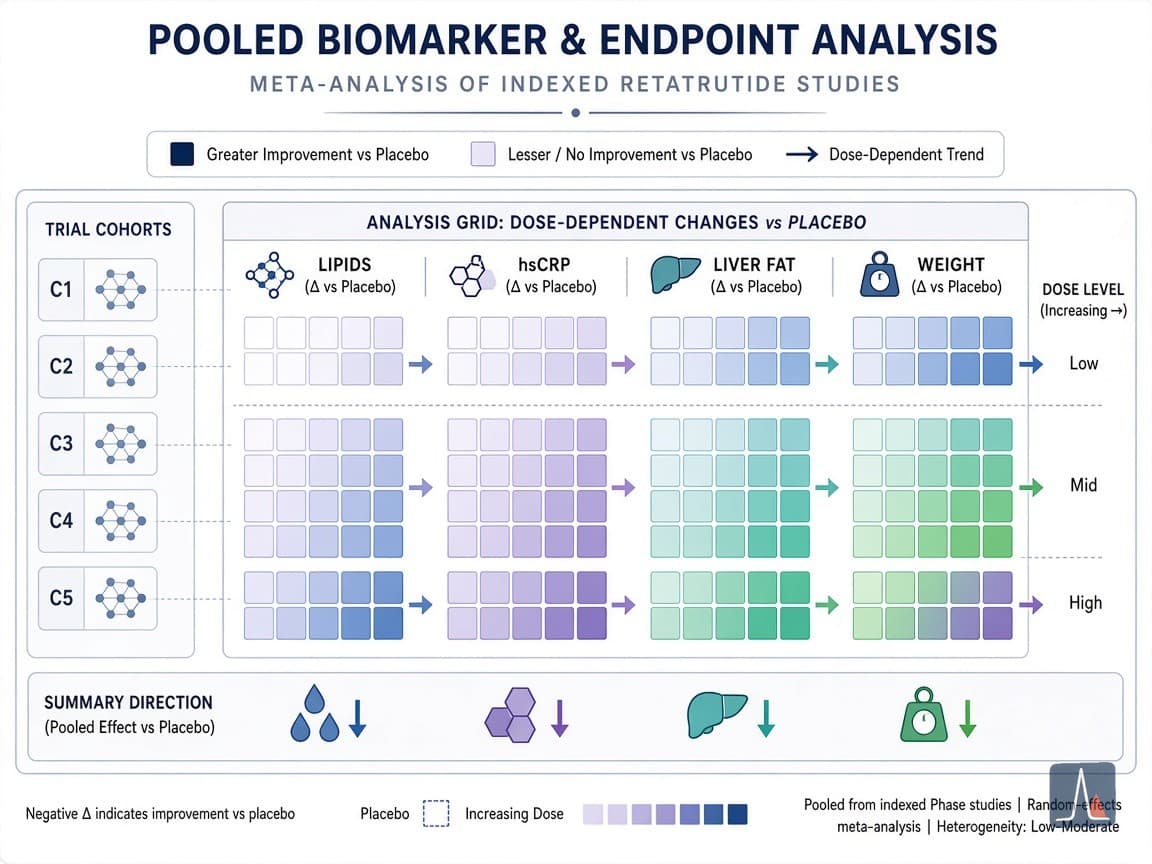
Indexed Phase 2 records include NCT04881760 (NEJM 2023, n=338 adults with obesity or overweight with comorbidities, 48 weeks): least-squares mean percent body-weight change at 48 weeks reached –24.2% with the highest dose versus –2.1% with placebo; proportions achieving ≥15% or ≥20% weight loss were markedly higher in active arms. A parallel Phase 2 in T2D (Lancet 2023, NCT04867785, n=281) reported HbA1c reductions up to –2.02% and weight loss up to –16.9% versus placebo at 36 weeks. A MASLD substudy (Nature Medicine 2024) indexed substantial relative liver-fat reduction (approximately 80–86% in highest-dose arms). Common design elements in these records include dose escalation to mitigate tolerability issues, multiple dose arms (1–12 mg), and assessment of cardiometabolic biomarkers. Post-hoc analyses in indexed records showed improvements in lipids, hsCRP, and inflammatory markers.
Phase 3 TRIUMPH and TRANSCEND Programme Records (2025–2026 Publications)
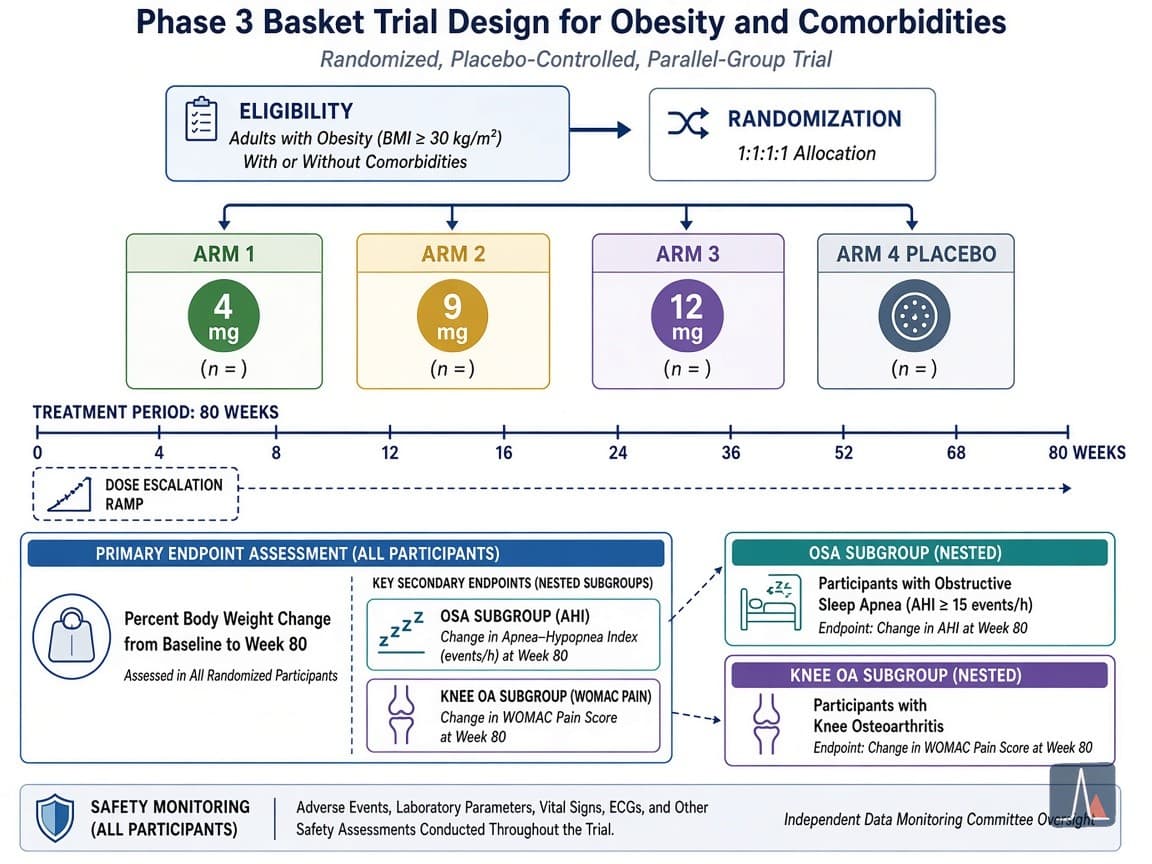
The TRIUMPH master protocol appears in indexed design papers (Diabetes, Obesity and Metabolism, 2026) as a basket approach with shared core elements across indications. TRIUMPH-1 (NEJM 2026, NCT05929066, n=2339 adults with obesity without diabetes, 80 weeks) reported mean percent weight change of –17.6% (4 mg), –23.7% (9 mg), and –25.0% (12 mg) versus –3.9% placebo (treatment-regimen estimand); co-primary endpoints showed statistically significant reductions in WOMAC pain score in the knee osteoarthritis subgroup (n=574) and AHI in the obstructive sleep apnoea subgroup (n=243). TRIUMPH-2 (Lancet 2026, NCT05929079, n=1152 adults with obesity and T2D) recorded weight loss up to –18.8% (12 mg) versus –5.1% placebo with corresponding glycaemic improvements. TRANSCEND-T2D-1 (Lancet 2026) in T2D monotherapy reported HbA1c reductions of –1.69% to –1.94% versus –0.81% placebo at 40 weeks alongside weight loss. Head-to-head TRANSCEND-T2D-2 (2026) indexed superiority to semaglutide 2 mg on weight loss (approximately 20.9% vs 9.4%) and glycaemic endpoints. Additional TRIUMPH-3 (CVD), TRIUMPH-4 (standalone knee OA), and ongoing TRIUMPH-Outcomes (n≈10,000 CV/kidney) and SYNERGY (MASH outcomes) records complete the indexed registrational picture. Completion rates were high (≈84% in some trials); many records list primary completion in 2025–2026 with results modules or linked publications.
Safety, Tolerability, and Adverse Event Profiles Across Records
Safety data in indexed trial records consistently identify gastrointestinal events (nausea, diarrhea, vomiting, constipation) as the most frequent adverse events, occurring in a dose-dependent manner and generally mild to moderate. Discontinuation due to adverse events ranged from 4–12% in higher-dose arms versus ≈5% with placebo across Phase 3 records; slow titration mitigated incidence in later protocols. Transient increases in heart rate (peaking around week 24 then declining) and reports of hypotension or dysesthesia were noted more frequently with retatrutide than placebo. Serious adverse events and mortality rates were similar or slightly higher numerically but deemed unrelated to study drug by investigators in published records. No severe hypoglycemia signals emerged in non-diabetic or T2D populations. Meta-analyses indexed in 2024–2026 (e.g., Expert Rev Clin Pharmacol, High Blood Press Cardiovasc Prev) pool data confirming statistically significant weight, BMI, waist, blood pressure, and lipid improvements versus placebo while noting increased risk of gastrointestinal adverse events (RR ≈1.1–2.9 depending on severity). Hypersensitivity and injection-site reactions appear at low rates. These safety summaries appear uniformly across registry results postings and journal supplements.
Evidence Context, Recurrent Limitations, and Catalog Implications
Indexed records portray a rapidly maturing development programme with consistent dose–response relationships for weight loss and metabolic endpoints across thousands of participants in rigorously designed RCTs. Favorable primary outcomes on weight, glycaemia, liver fat, knee pain, and sleep apnoea are reported without major null efficacy signals in primary analyses; however, secondary and exploratory endpoints show heterogeneity by dose, population (greater weight loss in non-diabetic vs T2D cohorts), and estimand (efficacy vs treatment-regimen). Recurrent limitations noted in indexed papers and design records include sponsor funding in all large trials, predominantly Western populations, relatively short-to-medium trial durations relative to lifelong obesity management, and the need for mature cardiovascular and long-term hepatic outcomes data (still recruiting or pending as of late 2026). Publication bias toward positive results cannot be excluded, although multiple independent meta-analyses corroborate the magnitude of effect. Null or inconsistent findings appear mainly in tolerability at rapid escalation or in specific biomarker subsets.
For laboratory researchers, the catalog entry at /compounds/retatrutide provides a chemically defined research material whose properties can be studied in assay systems or animal models that mirror protocols described in these indexed records (e.g., receptor activation assays, DIO metabolic models, or biomarker panels). Records supply detailed methods for reconstitution with laboratory reagents such as BAC water or antibacterial water in experimental settings. The density of indexed data makes retatrutide one of the most thoroughly documented triple-agonist research peptides available for controlled laboratory investigation. Researchers are encouraged to consult primary NCT records, PMIDs, and DOIs directly for protocol replication.
Sources
- Jastreboff AM et al. Triple–Hormone-Receptor Agonist Retatrutide for Obesity — A Phase 2 Trial. N Engl J Med. 2023;389(6):514-526. DOI: 10.1056/NEJMoa2301972. PMID: 37366315.
- Jastreboff AM et al. Retatrutide, a Triple Hormone Receptor Agonist, for Treatment of Obesity. N Engl J Med. 2026;395(18):1781-1793. DOI: 10.1056/NEJMoa2604169. PMID: 42814954.
- Davies M et al. Retatrutide in adults with obesity and type 2 diabetes (TRIUMPH-2). Lancet. 2026;408(10563):1455-1472. DOI: 10.1016/S0140-6736(26)01861-1.
- Coskun T et al. Discovery and preclinical characterization of LY3437943. Cell Metab. 2022;34(8):1153-1166.e6. DOI: 10.1016/j.cmet.2022.07.013. PMID: 35985340.
- Multiple meta-analyses (Expert Rev Clin Pharmacol 2025; High Blood Press Cardiovasc Prev 2026; Metabolism Open 2024) and ClinicalTrials.gov entries (NCT04881760, NCT05929066, NCT05929079, NCT06354660, NCT07165028, NCT06383390, and related).
- Additional indexed design, biomarker, and substudy papers (Diabetes Obes Metab 2026; Nat Med 2024).
All sources accessed via PubMed, Europe PMC, or direct journal pages. Records current as of November 2026.
More briefings
- Melatonin in indexed studiesIndexed meta-analyses of randomised controlled trials report reduced sleep onset latency and improved sleep quality scores in children and adolescents with neurodevelopmental disorders and selected comorbid conditions, preclinical antioxida
- Semaglutide in indexed studiesSemaglutide appears extensively across indexed scientific literature, with thousands of PubMed entries by late 2026 spanning receptor pharmacology, preclinical metabolic models, large randomised trial programmes (SUSTAIN, PIONEER, STEP, SEL
- Tirzepatide in indexed studiesIndexed studies, primarily the SURPASS programme in type 2 diabetes and SURMOUNT programme in obesity or overweight, report that tirzepatide produces dose-dependent reductions in body weight (15–21% at higher doses in non-diabetic adults) a
All information and products discussed are for laboratory and research use only. Not for human or veterinary use. Not intended to diagnose, treat, cure, or prevent any disease.