
29 October 2026
Published Reports on Thymalin
Download PDF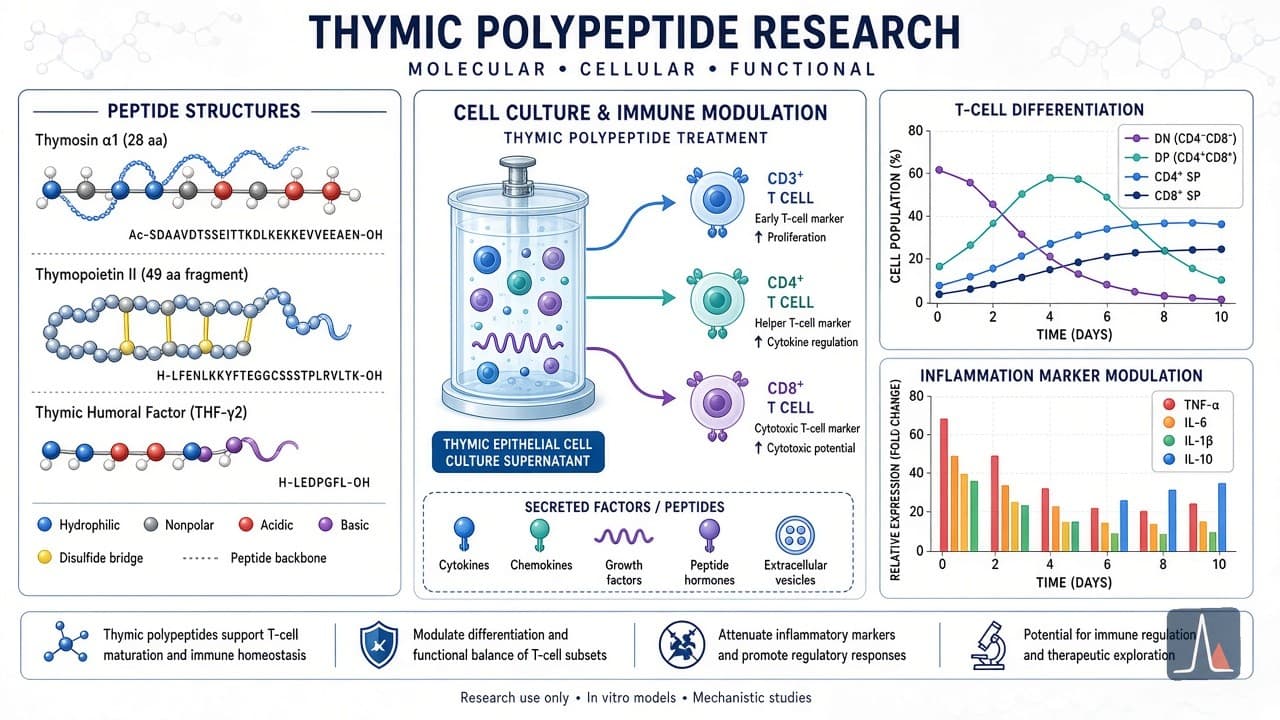
Indexed papers characterize Thymalin as a bovine thymus polypeptide complex studied predominantly in Russian preclinical and clinical reports for immune modulation in aging and infection. Preclinical models report T-cell differentiation and
Published Reports on Thymalin
Thymalin is supplied by Rierink Compounds for laboratory research only. Materials on the site are for laboratory research only. They are not medicines. These published records do not establish that research-vial Thymalin treats, cures, prevents, or is safe for any human or animal condition.
Chemical Identity and Catalog Context
Thymalin is a complex of low-molecular-weight polypeptides (typically 1,000–10,000 Da) obtained by mild acid extraction from the thymus of young calves. It is not a single synthetic sequence such as thymosin alpha-1 but a natural peptide mixture containing multiple short bioactive fragments, with key dipeptides identified as Lys-Glu (KE/Vilon) and Glu-Trp (EW/Thymogen). The preparation has been standardized by biological activity in thymocyte maturation assays and HPLC peptide fingerprinting. It is registered in the Russian Federation (LS-000267) as an immunomodulator for conditions involving decreased immune function, including infections, post-chemotherapy/radiation states, and chronic immunopathology. In Western jurisdictions it holds no marketing authorisation or FDA approval and is supplied strictly for qualified laboratory research.
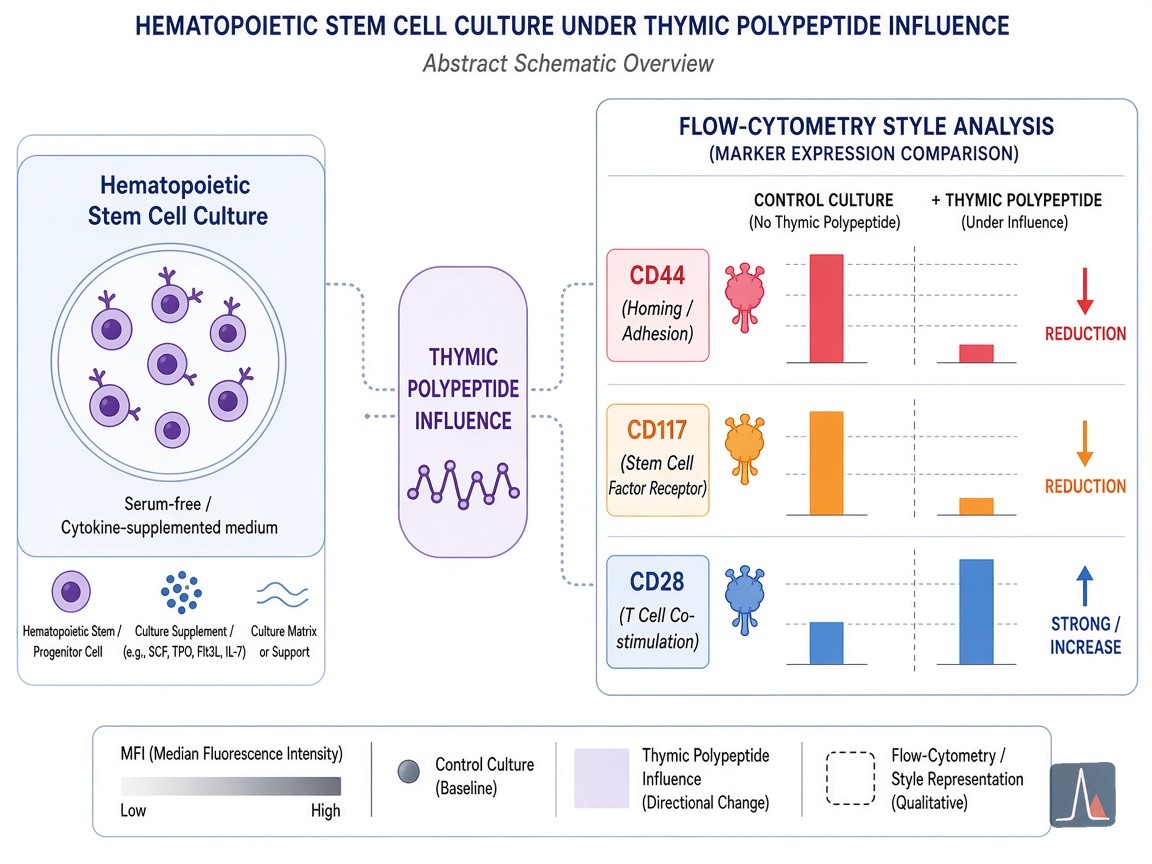
PubMed indexes approximately 234 papers mentioning Thymalin (as of late 2026), with roughly 12 tagged as clinical trials. The literature is heavily dominated by work from the St. Petersburg Institute of Bioregulation and Gerontology and collaborating Russian centres, many published in Russian-language journals with English abstracts only. !In vitro HSC differentiation schematic Schematic of reported in-vitro effects on human hematopoietic stem cell differentiation markers.
Foundational In Vitro Mechanistic and Hematopoietic Differentiation Studies (in_vitro and method papers, 1990s–2023)
Early mechanistic work isolated natural thymic peptides and compared them with synthetic analogs. Thymalin and its component dipeptides have been shown to activate T-cell differentiation, modulate intracellular cyclic nucleotide levels, enhance IL-2 and interferon production by lymphocytes, and stimulate neutrophil chemotaxis and phagocytosis while exerting limited effects on thymocyte antioxidant responses. A 2020 study examined Thymalin’s influence on human hematopoietic stem cells (HSCs). In culture, Thymalin reduced expression of stem/progenitor markers CD44 and CD117 by 2- to 3-fold while increasing the mature T-lymphocyte co-stimulatory marker CD28 by 6.8-fold, interpreted by the authors as promotion of differentiation toward functional T-cells. A 2023 study used molecular docking and in-vitro inflammatory models of peripheral blood mononuclear cells to show that KE and EW dipeptides from Thymalin can bind preferred DNA sequences and down-regulate synthesis of pro-inflammatory cytokines (IL-1β, IL-6, TNF-α) by 1.4- to 6.0-fold. These experiments provide plausible mechanisms for immune-correcting activity but were performed with pharmaceutical-grade material; equivalence of research-vial preparations has not been independently verified. Limitations include reliance on marker expression rather than full functional assays and origin from the developing laboratory network. !Preclinical antitumor model schematic Schematic of reported preclinical antitumor and immune activation findings in rodent models.
Preclinical Animal Models of Antitumor Activity, Immune Restoration, and Tissue Repair (animal papers, 1980s–2024)
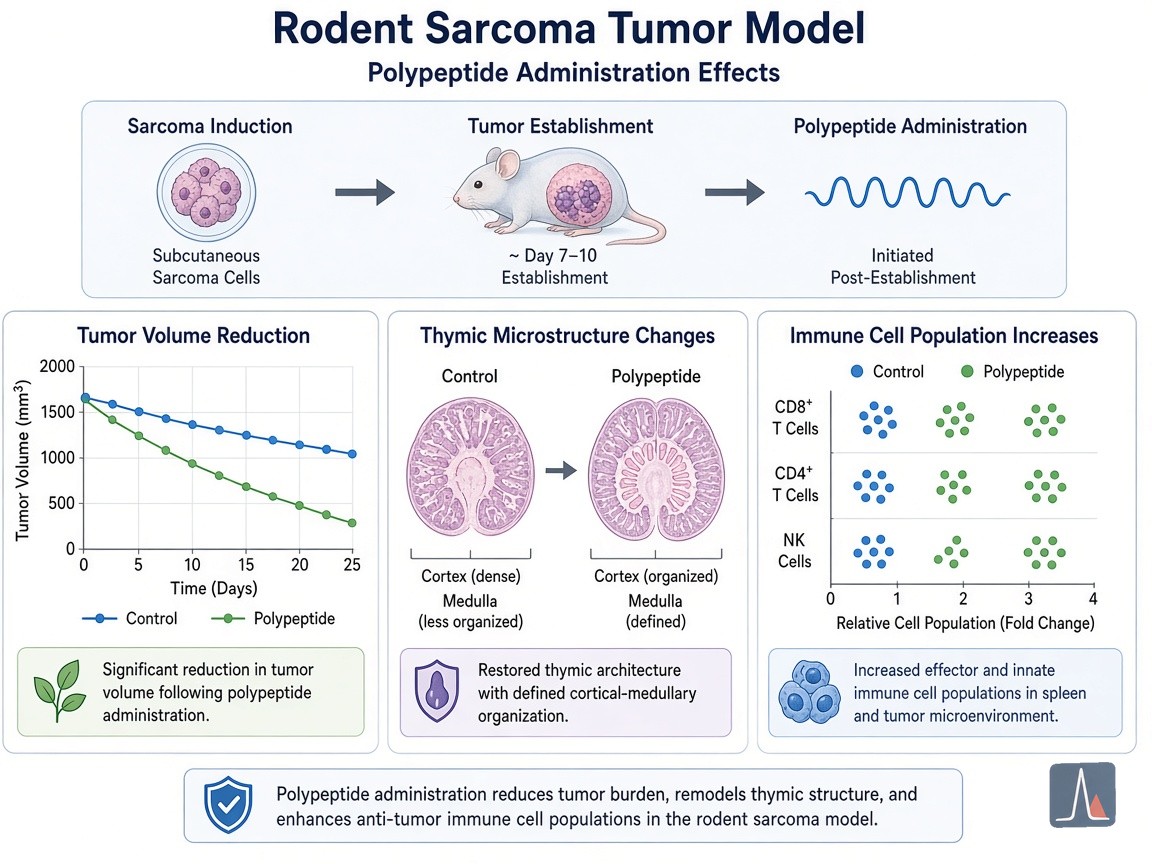
Rodent studies have examined antitumor, geroprotective, and regenerative effects. In outbred rats bearing transplanted sarcoma 45, low-dose Thymalin administered under an “activation therapy” regimen produced tumor growth arrest or regression in more than 50 % of animals and 78 % growth inhibition in the remainder; associated thymic changes included increased lymphoproliferation, basophils, and plasmocytes together with development of antistress adaptation reactions. Related short peptides extended mean and maximum lifespan and reduced spontaneous tumor incidence in CBA mice and rats. In 2024 rat models of mandibular bone defects filled with hydroxyapatite osteotropic material, perilesional injection of Thymalin improved reparative osteogenesis and altered the expression profile of T-lymphocytes, B-lymphocytes, and macrophages within the regenerate tissue. Earlier models demonstrated accelerated recovery of leukocyte counts, NK-cell activity, and splenocyte proliferative responses in cyclophosphamide-immunosuppressed or aged animals. These preclinical signals are consistent with immunomodulatory and tissue-supportive activity; however, studies are predominantly from the same research network, often small, and do not address long-term chronic administration safety or batch variability of biological extracts. !Geroprotective cohort timeline schematic Schematic representation of the landmark elderly longitudinal cohort design and reported outcomes.
Geroprotective Longitudinal Observation in Elderly Cohorts (observational cohort, 2002–2003)
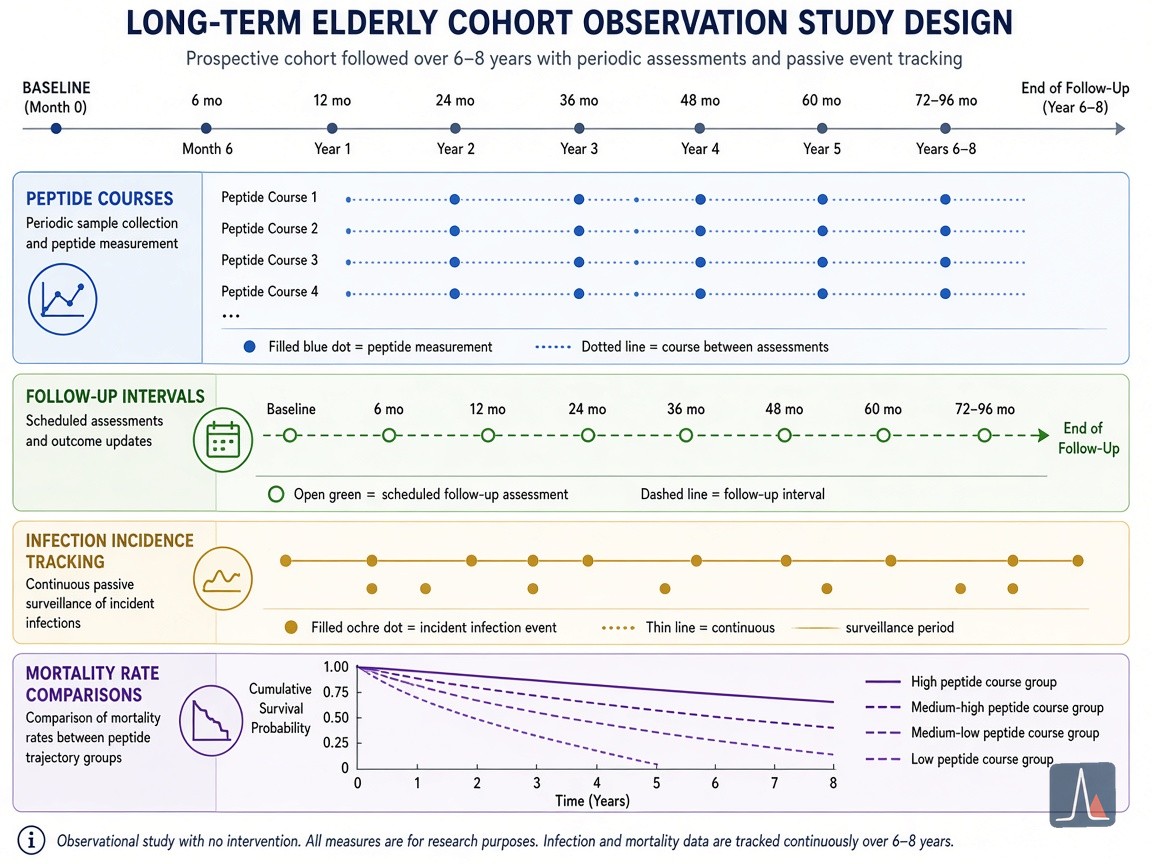
The most frequently cited human report is a long-term observational assessment conducted by Khavinson, Morozov and colleagues. A total of 266 elderly and senile subjects (St. Petersburg veterans’ home and Kiev cohorts) were followed for 6–8 years. Thymalin (and/or the pineal peptide Epithalamin) was administered in courses during the first 2–3 years of observation versus untreated controls. Investigators reported normalisation of cardiovascular, endocrine, immune, and metabolic indices; a 2.0–2.4-fold reduction in acute respiratory disease incidence; and decreased clinical manifestations of ischaemic heart disease, hypertension, deforming osteoarthrosis, and osteoporosis. Mortality during follow-up was reported as 2.0–2.1-fold lower in the Thymalin-treated group compared with controls, with larger relative reductions claimed for combined treatment arms and for a subgroup receiving annual courses over 6 years (up to 4.1-fold). Detailed re-analyses of the published data indicate relatively small per-arm numbers for the mortality endpoint. The study is described as a clinical assessment rather than a fully randomised, double-blind, placebo-controlled trial; allocation, blinding, and statistical handling of dropouts are only partially described in available English abstracts. No independent Western replication of these mortality findings has been published after more than two decades. !COVID-19 clinical trial schematic Schematic of reported design and immune/inflammatory marker normalisation in COVID-19 hospital trials.
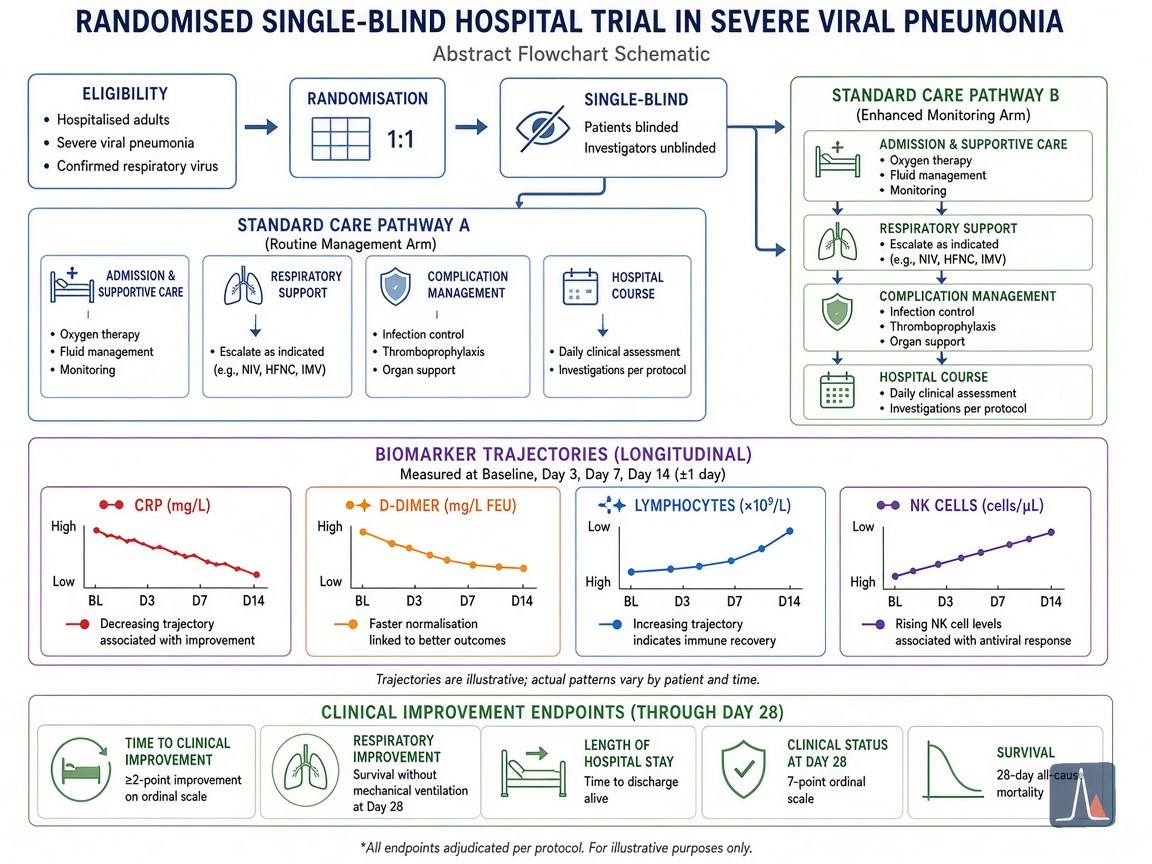
Randomised Hospital Trials in Severe COVID-19 (clinical trial papers, 2020–2022)
Two single-centre Russian studies examined adjunctive Thymalin in hospitalised patients with COVID-19. A St. Petersburg open-label randomised trial (envelope method) enrolled 92 patients; 42 received standard care plus Thymalin (intramuscular daily for 5 days) versus 50 standard care alone. The Thymalin arm showed accelerated declines in IL-6, C-reactive protein, and D-dimer, faster recovery from lymphopenia, improved T-cell and NK-cell parameters, and numerically fewer cases of CT-scan deterioration. No deaths occurred in either arm.
A prospective randomised single-blind controlled trial performed in Chita enrolled approximately 80 older patients with severe COVID-19. Thirty-six patients received Thymalin plus standard therapy versus 44 standard therapy plus saline placebo. The Thymalin group manifested more rapid clinical improvement, higher rates of recovery from lymphopenia (approximately 92 % increase in lymphocytes), faster normalisation of CRP, D-dimer, leukocyte counts, and NK-cell subpopulations, and approximately halved hospital mortality (reported in the range of 20–21 % versus 41 % in controls). These trials were conducted under medical supervision in the acute hospital setting. Limitations include modest sample sizes, single-centre design, open-label or single-blind elements, author overlap with the developer network, and absence of independent data monitoring committees or pre-registered primary endpoints meeting current international standards. Results have not been replicated outside Russia. !Literature evidence overview schematic Integrated schematic of published study types, reported findings, and recurrent evidentiary limitations.
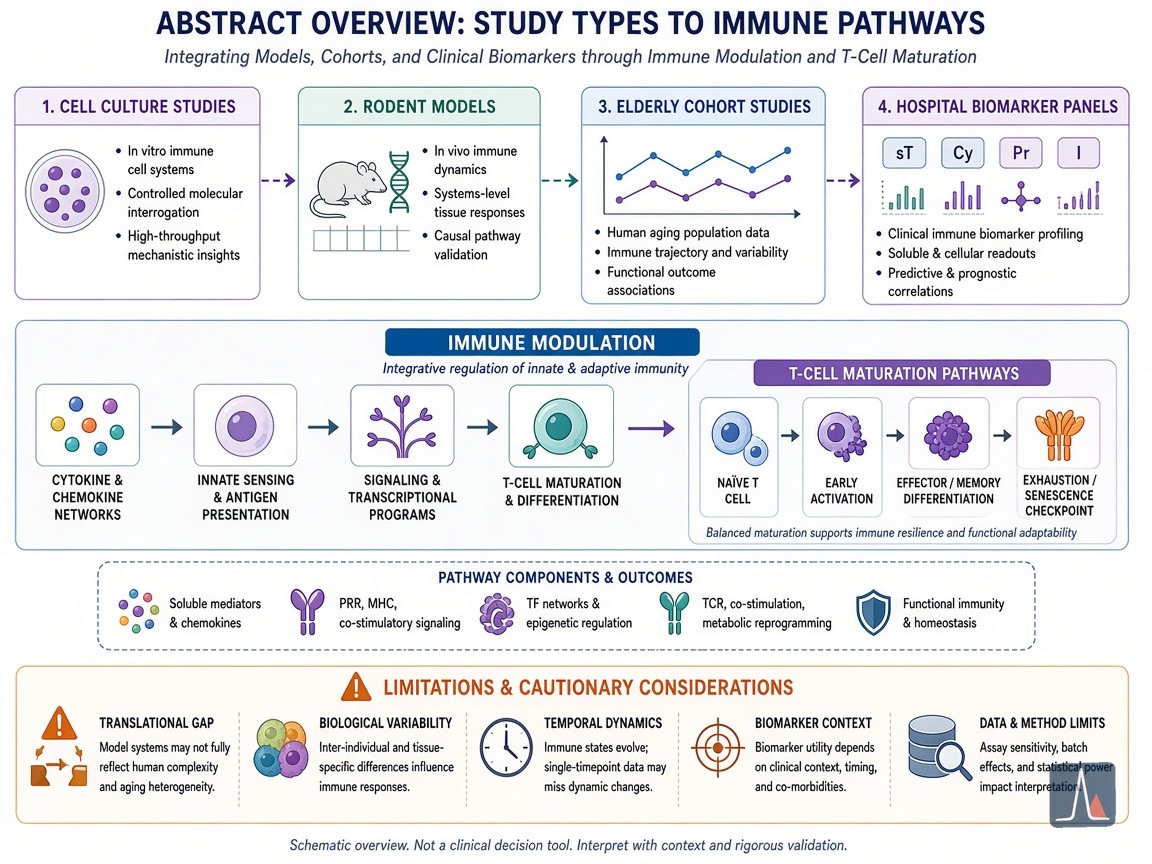
Evidence Context, Recent Syntheses, and Recurrent Limitations (review papers, 2002–2026)
Reviews produced by the developing group summarise thymic peptide bioregulation, geroprotective potential, and possible utility in infections including COVID-19. Molecular work on the short dipeptides KE and EW has been highlighted as the basis for gene-regulatory and anti-cytokine-storm effects. Independent 2026 evidence summaries grade data for longevity, immunodeficiency, and broad anti-aging indications as low-tier (Tier D). Recurrent limitations include heavy reliance on a single research network with potential commercial interest, predominance of Russian-language full texts, methodological weaknesses (sparse blinding and allocation concealment details, small per-arm numbers in the pivotal mortality dataset, surrogate rather than hard clinical endpoints in many reports), absence of large independently conducted double-blind multicentre placebo-controlled trials, lack of replication by Western groups, and the inherent compositional variability possible with a biological extract versus synthetic single peptides. No active Thymalin trials are registered on ClinicalTrials.gov. While preclinical mechanistic signals and Russian clinical biomarker improvements are internally consistent, the overall evidence base does not meet contemporary standards for robust efficacy or safety conclusions. High-quality, independent confirmatory studies would be required to substantiate translational potential.
Sources
- Khavinson VK, Morozov VG. Geroprotective effect of thymalin and epithalamin. Adv Gerontol. 2002;10:74-84. PMID: 12577695. (Russian with English abstract.)
- Khavinson VK et al. Thymalin: Activation of Differentiation of Human Hematopoietic Stem Cells. Bull Exp Biol Med. 2020;170(1):118-122. doi: 10.1007/s10517-020-05016-z. PMID: 33237528. PMC7686446.
- Linkova NS et al. The Influence of KE and EW Dipeptides in the Composition of the Thymalin Drug on Gene Expression and Protein Synthesis Involved in the Pathogenesis of COVID-19. Int J Mol Sci. 2023;24(17):13377. doi: 10.3390/ijms241713377. PMID: 37686182. PMC10487900.
- Kuznik BI et al. Peptide Drug Thymalin Regulates Immune Status in Severe COVID-19 Older Patients. Adv Gerontol. 2021;34(6):895-902. PMCID: PMC8654498.
- Additional Russian-language reports on sarcoma models (2018), mandibular regeneration (2024), and earlier clinical use in infections (1982–1994) indexed on PubMed.
- 2026 independent evidence summaries and critical analyses noting methodological constraints and absence of Western replication.
A complete PubMed search for “Thymalin OR Timalin” is recommended for primary literature. Critical appraisal of full texts (where available) is essential given language and authorship patterns.
More briefings
- Survodutide Dual Agonist: Preclinical and Clinical EvidenceThe open-catalog entry for survodutide describes a synthetic acylated 29-amino-acid peptide dual agonist of glucagon and GLP-1 receptors supplied as high-purity lyophilized powder for laboratory metabolic research. Randomised trials report
- Dulaglutide: GLP-1 Receptor Agonist in Metabolic CareDulaglutide is a recombinant Fc-fusion GLP-1 receptor agonist engineered for once-weekly administration in laboratory and clinical metabolic research. Randomised trials report glycaemic improvements, cardiovascular risk reduction and modest
- Cagrilintide-Semaglutide Mixture: Open-Catalog Context and Metabolic Trial EvidenceThe open-catalog cagrilintide-semaglutide mixture supplies a research pairing of an amylin receptor agonist and GLP-1 receptor agonist for laboratory metabolic studies. Randomised trials of co-administration report enhanced weight loss (13–
All information and products discussed are for laboratory and research use only. Not for human or veterinary use. Not intended to diagnose, treat, cure, or prevent any disease.