
22 October 2026
Published Reports on SS-31 (Elamipretide)
Download PDF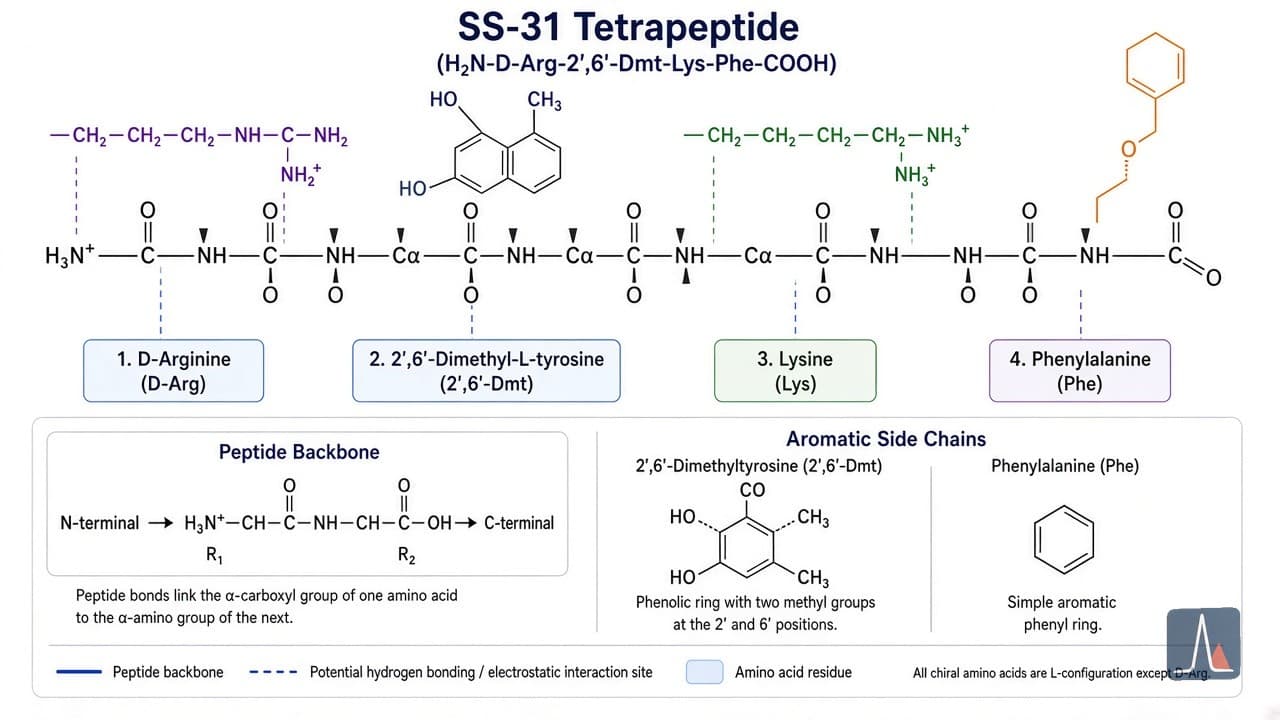
Indexed cell, animal, and clinical papers describe SS-31 as a mitochondria-targeting tetrapeptide studied for cardiolipin interaction and organ-function readouts, and those records do not establish research-vial use.
Published reports on SS-31 (elamipretide)
Indexed cell, animal, and clinical papers describe SS-31 as a mitochondria-targeting tetrapeptide studied for cardiolipin interaction and organ-function readouts, and those records do not establish research-vial use. SS-31 is for laboratory research only. Materials on this site are for laboratory research only. They are not medicines. Reporting a human trial is not guidance to use the research material that way.
Chemical Identity and Catalog Context
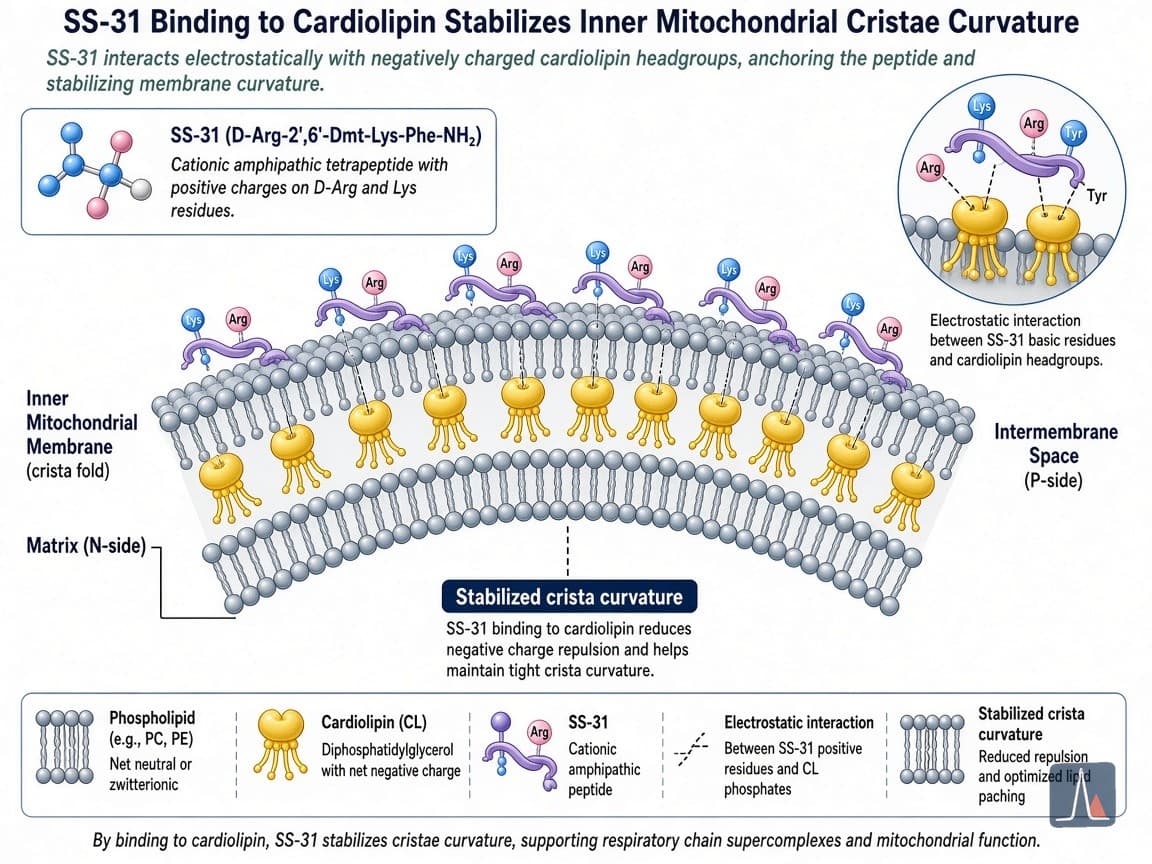
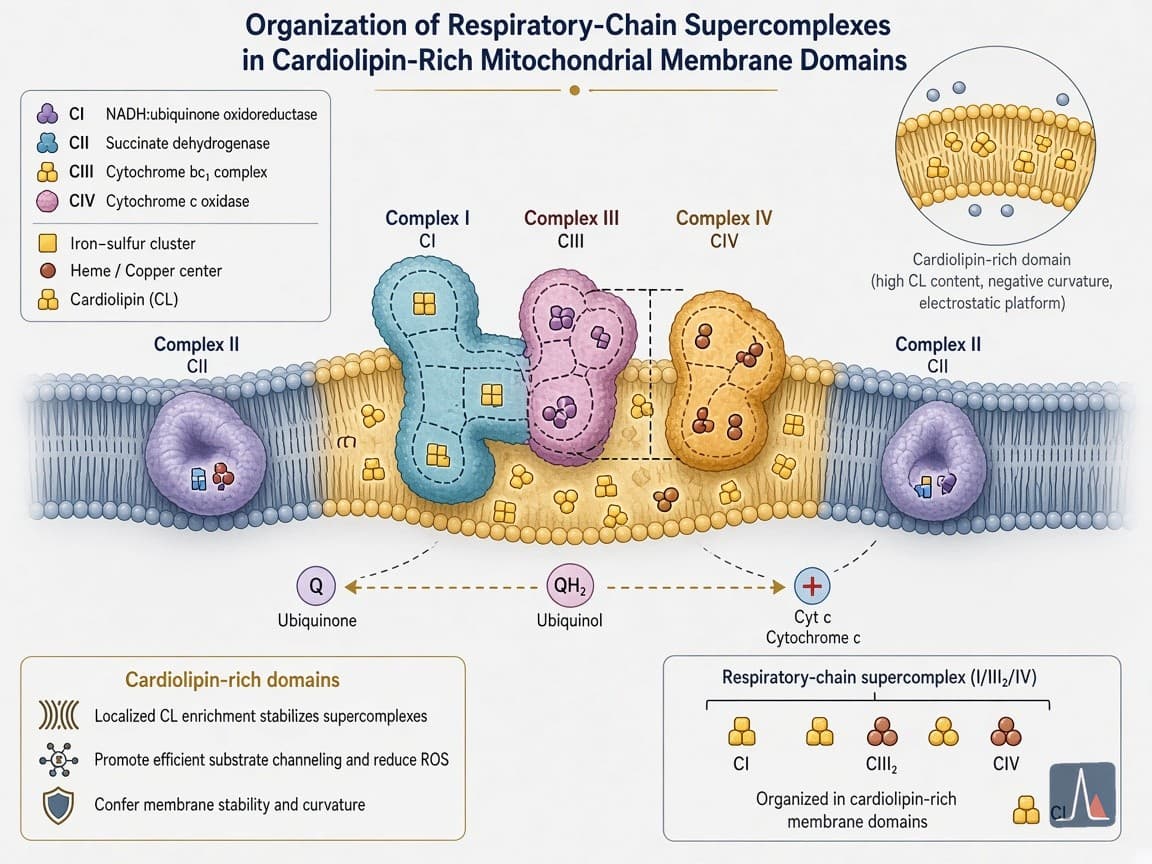
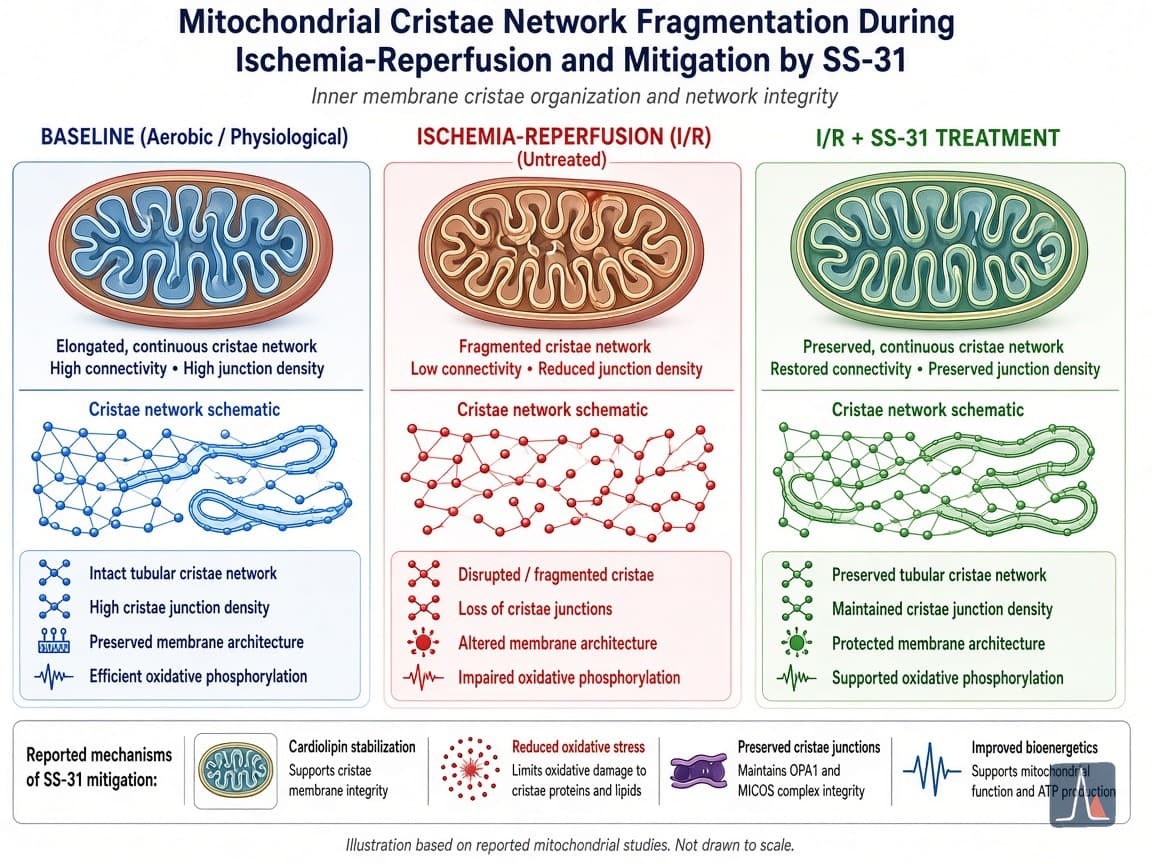
SS-31, also known as elamipretide, MTP-131 or Bendavia, is the synthetic aromatic-cationic tetrapeptide D-Arg-2',6'-dimethyltyrosine-Lys-Phe-NH₂. Peer-reviewed literature localizes its action to the anionic phospholipid cardiolipin in the inner mitochondrial membrane, where it is reported to modulate cristae curvature, inhibit cytochrome *c* peroxidase activity while preserving electron transfer, alter membrane electrostatic potential, stabilize respiratory supercomplexes, and influence downstream bioenergetic and organ-function measures in experimental systems.
Rierink Compounds supplies SS-31 strictly for controlled laboratory investigation of mitochondrial physiology. No indexed record equates these experimental observations with suitability of research vials for any non-laboratory context.
Foundational Cardiolipin-Binding and Biophysical Studies (in_vitro, biophysical and method papers, 2013–2025)
A 2013 *Journal of the American Society of Nephrology* report (in_vitro liposome/bicelle assays, isolated mitochondria, and rat renal ischemia-reperfusion) demonstrated saturable, high-affinity binding of a fluorescent SS-31 analog to cardiolipin (K_D ≈ 1.9 μM), inhibition of cardiolipin-induced cytochrome *c* peroxidase activity, preservation of electron-carrier function, protection of cristae ultrastructure, accelerated post-ischemic ATP recovery, and reduced tubular injury. Limitation: acute cell-free and ex-vivo systems plus a pretreatment animal model; long-term translation unknown. 1 2
A 2020 *Journal of Biological Chemistry* study (in_vitro lipid bilayers, isolated mitochondria, NMR, Langmuir trough, and molecular-dynamics simulations) reported that SS-31 partitions into the membrane interfacial region in a surface-charge-dependent manner, modulates electrostatic potential and lipid packing without destabilizing the bilayer, and alters divalent-cation distribution. Limitation: reductionist model membranes; biophysical parameters not directly predictive of tissue-level outcomes. 3
A 2020 *PNAS* cross-linking mass-spectrometry study (method on isolated mouse cardiac mitochondria) mapped SS-31 proximity to 12 known cardiolipin-binding proteins concentrated in oxidative-phosphorylation complexes and 2-oxoglutarate metabolic pathways; functional improvements in respiration and H₂O₂ production were more pronounced in mitochondria from aged hearts. Limitation: snapshot interactome in isolated organelles from one tissue; causality of individual cross-links not established in intact cells. 4
2025 narrative reviews (in_vitro, biophysical, and animal synthesis) expanded the mechanistic picture beyond initial reactive-oxygen-species scavenging to include membrane-potential tuning, respiratory-supercomplex stabilization, and reduced proton leak via adenine-nucleotide-translocase interaction. Limitation: reviews aggregate existing data; they present no new primary measurements. 5
Preclinical Models of Organ Dysfunction, Aging, and Injury (animal and ex-vivo human tissue, 2013–2026)
Aged-mouse skeletal-muscle studies (animal physiology, 2013–2019) reported that a single dose of SS-31 restored mitochondrial state-3 respiration, ATP production rate, and exercise tolerance within one hour in 26–30-month-old animals, with effects on cristae remodeling and cardiolipin remodeling enzymes; longer administration improved redox balance. Limitation: rodent aging models only; rapid functional rescue may not persist or translate to human sarcopenia. 6
Rat cardiac ischemia-reperfusion models (animal, 2020) using serial-block-face scanning electron microscopy showed that SS-31 mitigated cristae-network fragmentation, improved complex I/III/IV activities in permeabilized fibers, and aggregated cardiolipin in biomimetic membranes without restoring total cardiolipin content. Limitation: acute surgical model; 3D reconstructions capture morphology at single time points. 7
Ex-vivo incubation of explanted failing human pediatric and adult hearts (method/ex-vivo, 2019) improved mitochondrial oxygen consumption, supercomplex-associated complex-IV activity, and ETC coupling in failing but not non-failing myocardium. Limitation: non-viable tissue from end-stage disease; acute addition only, independent of cardiolipin remodeling. 8
A 2026 Zucker-fatty-spontaneously-hypertensive rat HFpEF model (animal) reported that 12 weeks of SS-31 improved soleus and extensor-digitorum-longus contractile force, normalized titin phosphorylation, prevented fiber atrophy, and was associated with better mitochondrial parameters and cardiolipin integrity. Limitation: preclinical disease model; exact dosing and group sizes abbreviated in some abstracts. 9
Additional rodent spinal-cord-injury, Barth-syndrome, and ovarian-aging models (animal, through 2026) described histologic, locomotor, or bioenergetic improvements. Limitation: each study uses a specific genetic or surgical insult; reproducibility across strains or sexes is not uniformly reported.
Randomised Human Physiological and Clinical Trial Reports (clinical pharmacology and phase 2/3 trials, 2017–2026)
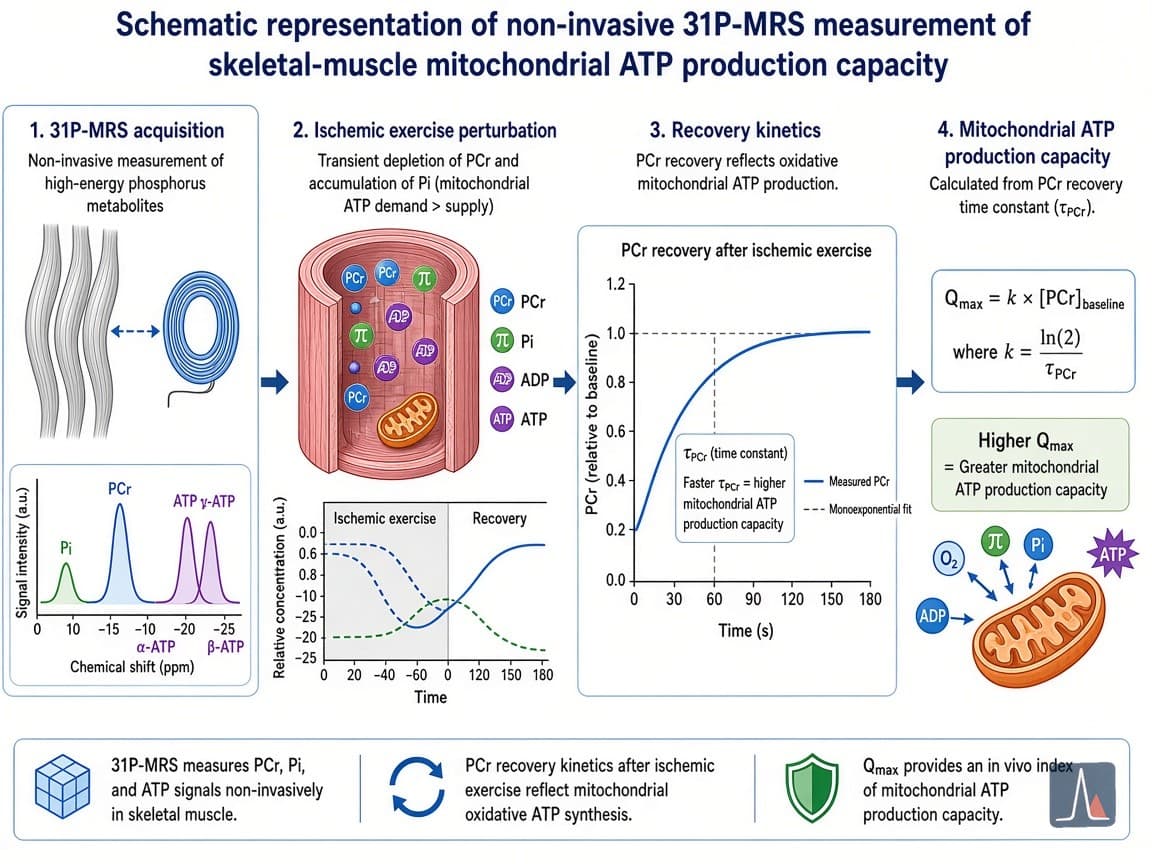
A 2021 randomised, double-blind, placebo-controlled single-infusion trial in 39 carefully screened older adults (clinical pharmacology/physiology) measured a borderline increase in first-dorsal-interosseous muscle ATPmax by ³¹P-MRS immediately post 2-hour intravenous elamipretide (P = 0.055 absolute change, P = 0.045 percent change; ~27 % vs 12 % placebo) that was absent at day 7; no improvement in fatigue resistance was observed. Limitation: small selected cohort with low baseline mitochondrial function, surrogate endpoint in a single hand muscle, transient effect consistent with peptide pharmacokinetics. 10
MMPOWER-1 (phase 1/2 randomised dose-escalation clinical trial, n = 36 adults with genetically confirmed primary mitochondrial myopathy, 5 days intravenous) reported a nominal 6-minute-walk-test improvement at the highest dose (+64.5 m vs +20.4 m placebo, unadjusted P = 0.053). Limitation: small, short-duration exploratory study not powered for confirmatory efficacy. 11
MMPOWER-3 (phase 3 randomised double-blind placebo-controlled clinical trial, n = 218 adults with primary mitochondrial myopathy, 24 weeks subcutaneous 40 mg daily) showed no statistically significant difference versus placebo on co-primary endpoints of 6-minute-walk distance (−3.2 m, P = 0.69) or patient-reported fatigue score. Limitation: missed both primary clinical endpoints despite acceptable tolerability; heterogeneous genotypes. 12
TAZPOWER (phase 2/3 randomised double-blind placebo-controlled crossover clinical trial in 12 patients with Barth syndrome followed by open-label extension up to 168 weeks) missed primary endpoints of 6-minute-walk distance and symptom score in the blinded phase; the open-label extension reported progressive gains in walking distance (~96 m at week 168), fatigue scores, knee-extensor strength, cardiac volumes, and monolyso-cardiolipin to cardiolipin ratio normalization. These open-label strength data supported 2025 accelerated FDA approval of the pharmaceutical formulation (Forzinity) for improvement of muscle strength in Barth syndrome patients weighing ≥ 30 kg, with a required confirmatory randomised placebo-controlled trial. Limitation: very small blinded cohort, open-label design after negative randomised phase susceptible to bias, ultra-rare-disease context with high uncertainty accepted by regulators; common injection-site reactions. 13
Additional phase 2 randomised placebo-controlled trials in heart-failure-with-reduced-ejection-fraction (PROGRESS-HF and earlier single-infusion studies) and geographic atrophy secondary to age-related macular degeneration (ReCLAIM-2) largely missed primary left-ventricular-volume, functional, or lesion-growth endpoints, although some reported nominal secondary signals on imaging surrogates or hemodynamics. Limitation: primary endpoints not met; reliance on surrogates; heterogeneous mitochondrial contribution across indications.
Summary of Evidence and Research Context
The indexed literature positions SS-31 as a laboratory tool compound whose cardiolipin interaction produces reproducible improvements in mitochondrial ultrastructure, respiratory efficiency, and selected organ-function readouts in cell, aged-rodent, ischemia-reperfusion, heart-failure, and genetic-mitochondrial-disease models. Human physiological studies have documented transient surrogate bioenergetic signals in selected older muscle, while larger randomised trials in primary mitochondrial myopathy and other indications frequently failed to meet prespecified primary clinical or functional endpoints. The single accelerated approval (Barth syndrome muscle strength) rests on open-label extension data in a very small cohort and requires confirmatory evidence. Recurrent limitations across the corpus include model-specific preclinical findings, small clinical samples for rare diseases, transient or surrogate endpoints, discordance between biomarker changes and patient-centered outcomes, and frequent primary-endpoint failures in phase 3. No paper summarised here provides data on research-vial formulation stability, human safety outside registered protocols, or long-term efficacy in common diseases. These records supply context for ongoing laboratory investigation of mitochondrial membrane biophysics and are not evidence of suitability for any non-research application.
Sources
- Birk AV et al. The mitochondrial-targeted compound SS-31 re-energizes ischemic mitochondria by interacting with cardiolipin. *J Am Soc Nephrol*. 2014. PMID: 23813215. DOI: 10.1681/ASN.2012121216.
- Mitchell W et al. The mitochondria-targeted peptide SS-31 binds lipid bilayers and modulates surface electrostatics. *J Biol Chem*. 2020. PMID: 32273339. DOI: 10.1074/jbc.RA119.012094.
- Chavez JD et al. Mitochondrial protein interaction landscape of SS-31. *PNAS*. 2020. PMID: 32554501.
- Roshanravan B et al. In vivo mitochondrial ATP production is improved in older adult skeletal muscle after a single dose of elamipretide in a randomized trial. *PLoS One*. 2021. PMID: 34264994. DOI: 10.1371/journal.pone.0253849.
- Karaa A et al. Efficacy and Safety of Elamipretide in Individuals With Primary Mitochondrial Myopathy: The MMPOWER-3 Randomized Clinical Trial. *Neurology*. 2023. DOI: 10.1212/WNL.0000000000207402.
- Thompson WR et al. A phase 2/3 randomized clinical trial followed by an open-label extension to evaluate the effectiveness of elamipretide in Barth syndrome. *Genet Med*. 2021. PMID: 33077895. (and 2024 OLE update).
- Contemporary insights into elamipretide’s mitochondrial mechanism of action and therapeutic effects. *Biomed Pharmacother*. 2025. PMID: 40294492.
- Additional 2026 preclinical reports on HFpEF rat skeletal muscle, spinal-cord injury, and aging models (as indexed in PubMed/Europe PMC).
All sources are primary literature or direct trial reports. Secondary reviews, shop sites, and dosing blogs were excluded.
More briefings
- Survodutide Dual Agonist: Preclinical and Clinical EvidenceThe open-catalog entry for survodutide describes a synthetic acylated 29-amino-acid peptide dual agonist of glucagon and GLP-1 receptors supplied as high-purity lyophilized powder for laboratory metabolic research. Randomised trials report
- Dulaglutide: GLP-1 Receptor Agonist in Metabolic CareDulaglutide is a recombinant Fc-fusion GLP-1 receptor agonist engineered for once-weekly administration in laboratory and clinical metabolic research. Randomised trials report glycaemic improvements, cardiovascular risk reduction and modest
- Cagrilintide-Semaglutide Mixture: Open-Catalog Context and Metabolic Trial EvidenceThe open-catalog cagrilintide-semaglutide mixture supplies a research pairing of an amylin receptor agonist and GLP-1 receptor agonist for laboratory metabolic studies. Randomised trials of co-administration report enhanced weight loss (13–
All information and products discussed are for laboratory and research use only. Not for human or veterinary use. Not intended to diagnose, treat, cure, or prevent any disease.