
30 October 2026
Published Reports on PT-141
Download PDF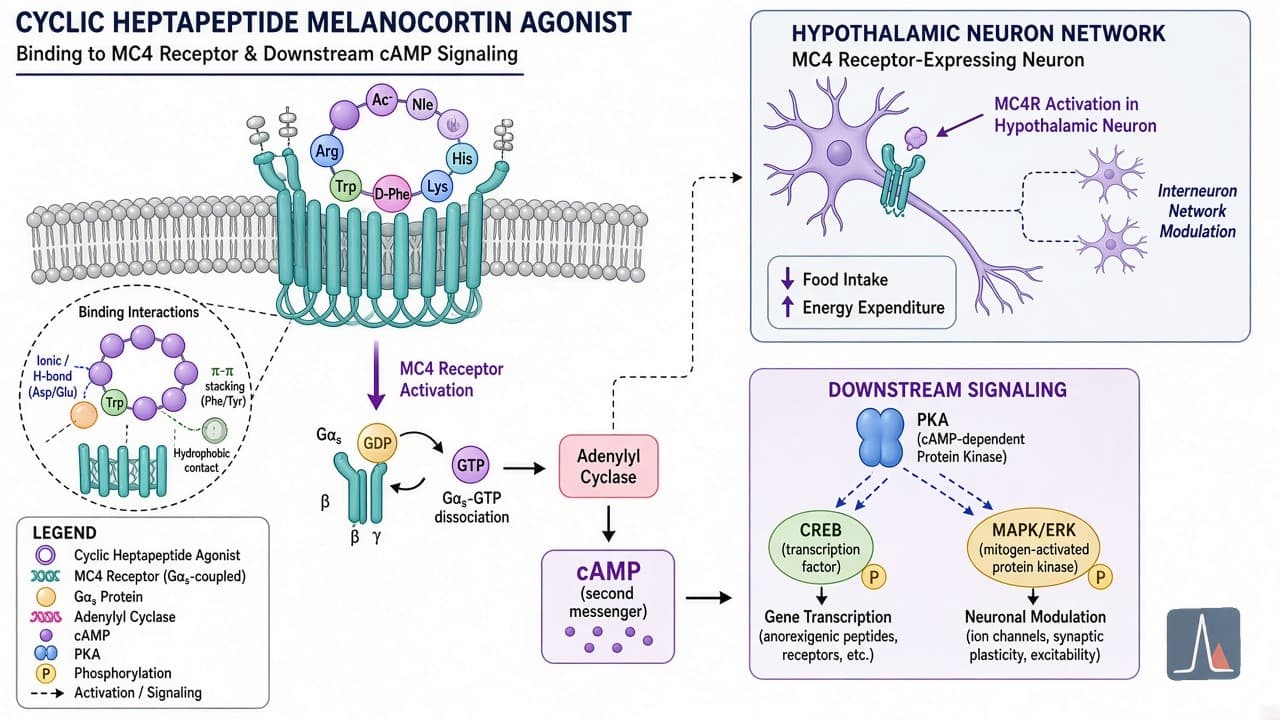
Published reports characterize PT-141 (bremelanotide) as a synthetic cyclic heptapeptide melanocortin receptor agonist with foundational preclinical data on central sexual motivation pathways and two phase 3 randomised trials demonstrating
Chemical Identity and Catalog Context
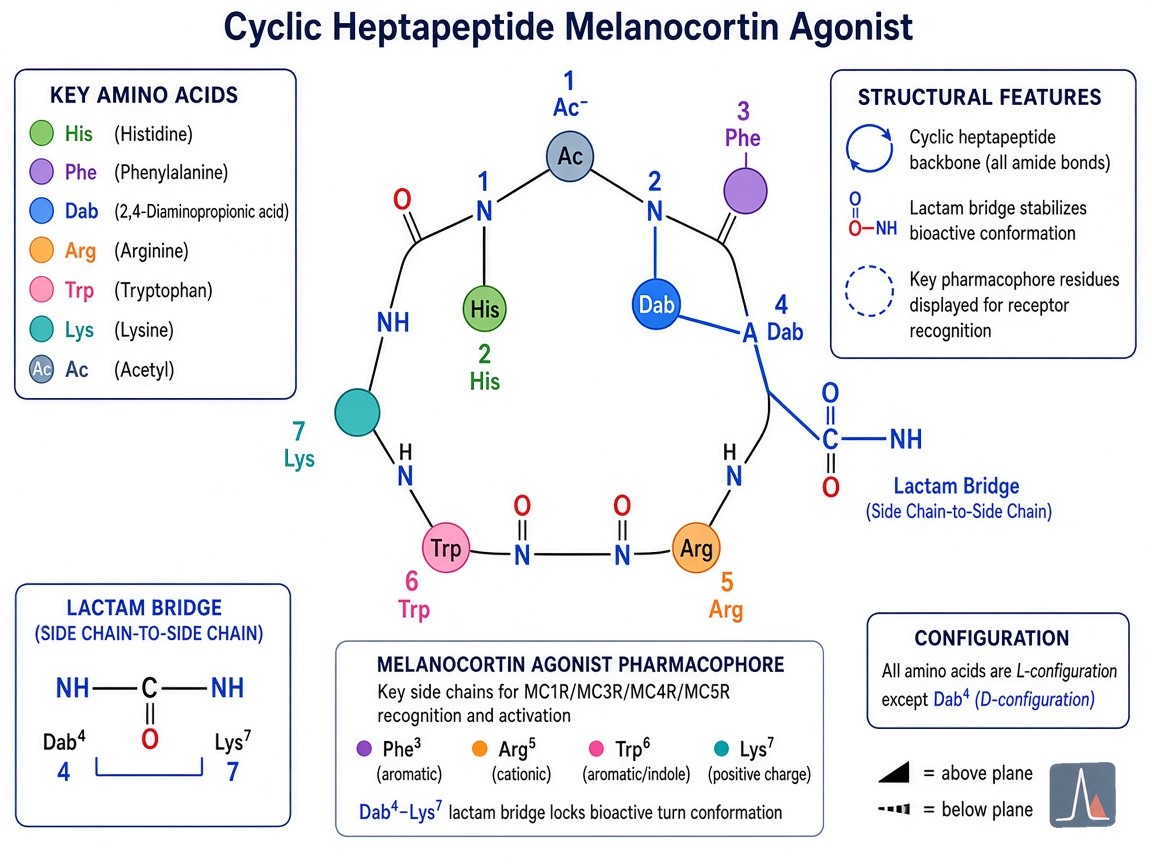
PT-141 is the research designation for bremelanotide, a synthetic cyclic heptapeptide analog of α-melanocyte-stimulating hormone (α-MSH) with the sequence Ac-Nle-cyclo[Asp-His-D-Phe-Arg-Trp-Lys]-OH (molecular formula C₅₀H₆₈N₁₄O₁₀). It functions as a non-selective melanocortin receptor agonist with highest affinity for MC4R and MC3R in central hypothalamic circuits, particularly the medial preoptic area (mPOA), where it modulates dopaminergic signaling to enhance sexual motivation. This distinguishes it from peripherally acting agents such as PDE5 inhibitors. The compound was optimized from earlier melanocortin analogs during development by Palatin Technologies and received FDA approval in 2019 as Vyleesi, an on-demand 1.75 mg subcutaneous autoinjector for acquired, generalized hypoactive sexual desire disorder (HSDD) in premenopausal women. In the Rierink catalog it is supplied strictly for laboratory research. Materials on the site are for laboratory research only. They are not medicines. Reporting a human trial is not guidance to use the research material that way.
Foundational Discovery, Receptor Pharmacology, and In Vitro Mechanistic Studies (in_vitro and method papers, 1998–2010s)
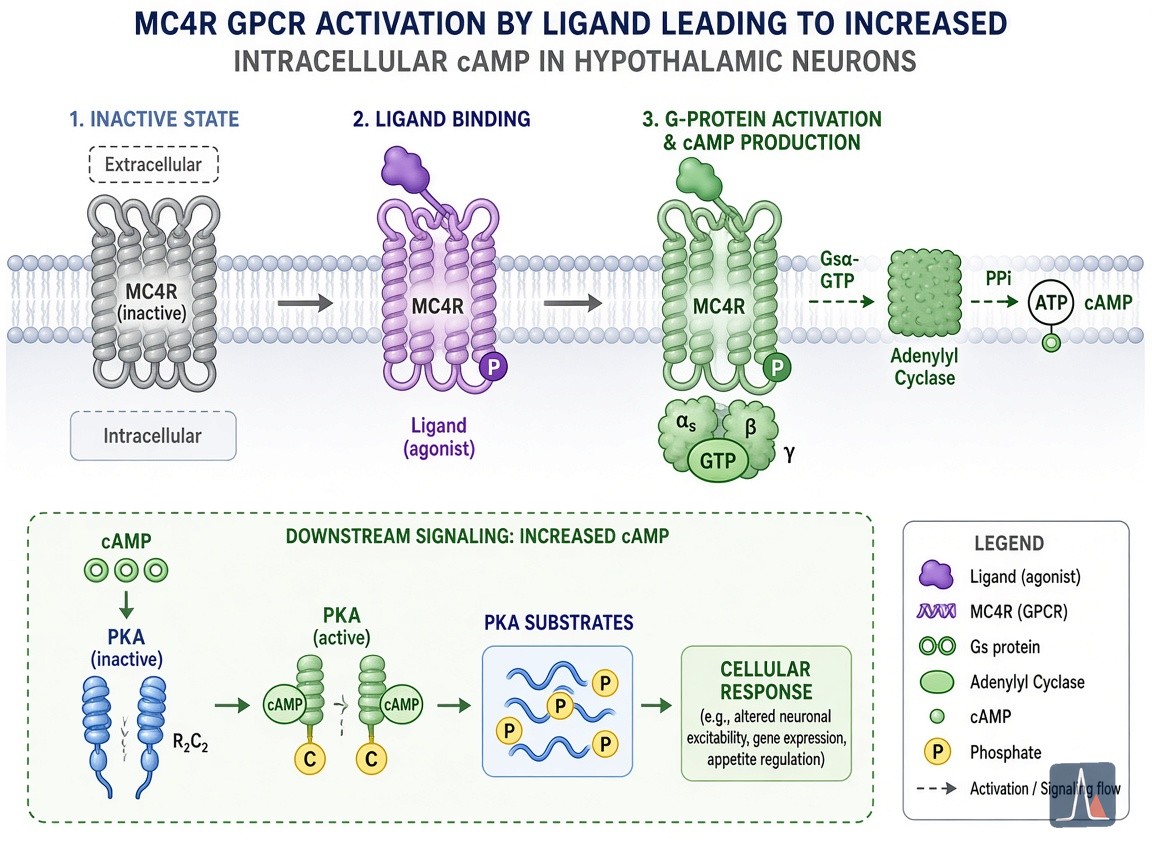
Early discovery traces to structure-activity relationship work on α-MSH and Melanotan II analogs in the 1990s–early 2000s. In vitro radioligand displacement and functional cAMP accumulation assays in recombinant cell lines established nanomolar potency at human MC4R (Ki ≈ 0.25–2.5 nM), with agonist activity at MC3R and MC1R but markedly lower activity at MC2R. These studies confirmed Gₛ-coupled signaling leading to increased intracellular cAMP without significant adrenal stimulation. Methodological papers detailed HPLC stability, formulation for subcutaneous delivery, and receptor subtype selectivity that reduced unwanted melanogenic effects relative to parent compounds. No large-scale independent in vitro replication beyond sponsor-associated work exists, and cell-line data do not capture full CNS circuit complexity. !PT-141 molecular schematic Schematic representation of the cyclic heptapeptide structure of PT-141.
Preclinical Animal Models of Appetitive Sexual Behavior and Melanocortin Pathways (animal papers, 2003–2010s)
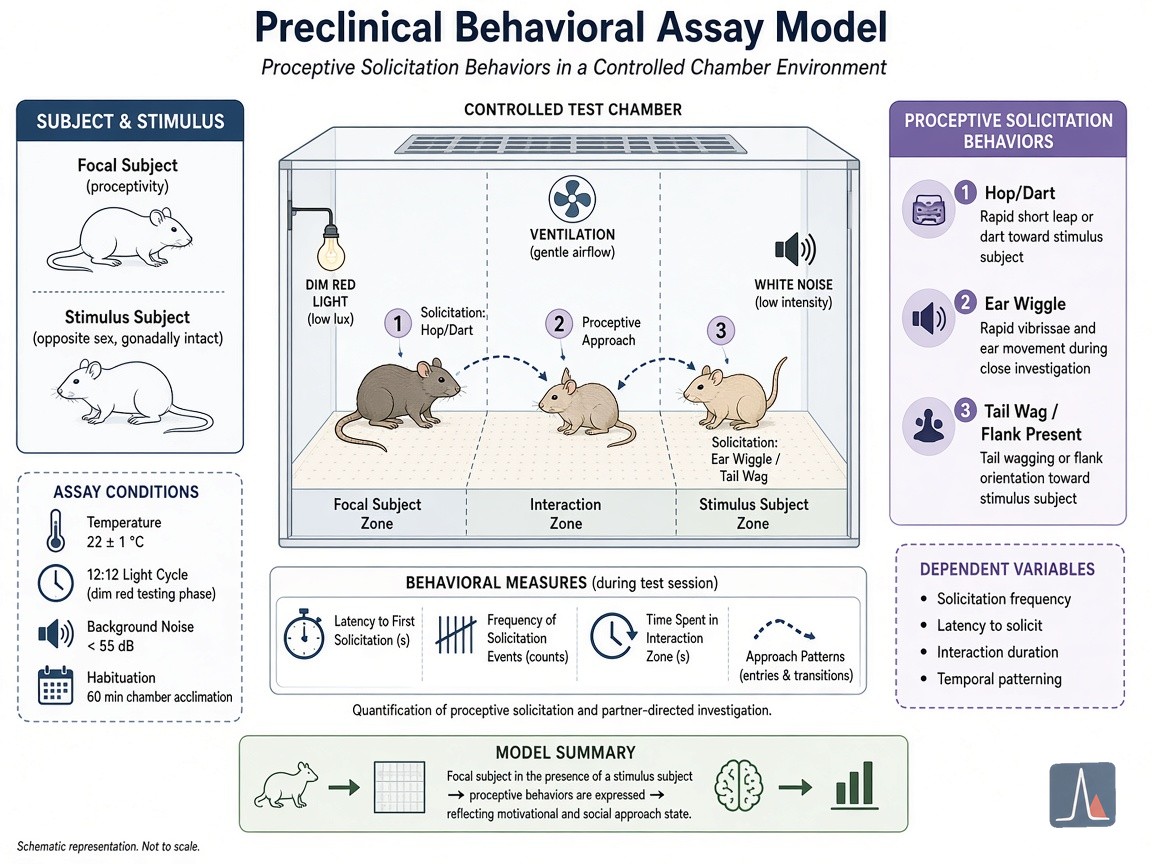
Rodent studies provided mechanistic foundation. Pfaus et al. (2004, PNAS) reported that subcutaneous or intracerebroventricular PT-141 selectively and dose-dependently increased proceptive solicitation behaviors (solicitations, hops, darts, ear wiggles) in estrogen-primed ovariectomized female rats in bilevel and pacing chambers, without altering lordosis quotients, pacing intervals, general locomotion, or perception of sexual reward. Direct infusion into the mPOA replicated the effect; infusion into the ventromedial hypothalamus did not. c-Fos immunoreactivity and microdialysis showed activation of hypothalamic and mesolimbic circuits with increased dopamine release in the mPOA. Male rat and nonhuman primate models demonstrated penile erections via central pathways. These findings established PT-141 as modulating appetitive “desire-like” components rather than consummatory reflexes. Limitations include species-specific behavior, hormone priming requirements, and uncertain direct translation to human subjective experience. Later confirmatory rodent work reinforced MC4R mediation but added nuance on mesolimbic involvement. !MC4R signaling pathway schematic In vitro receptor pharmacology and signaling schematic.
Early Human Clinical Pharmacology and Proof-of-Concept Studies (clinical pharmacology papers, 2003–2010s)
Initial human work focused on male erectile physiology. Small laboratory-based studies (Diamond 2004, Rosen 2004) using RigiScan monitoring reported dose-dependent erectile responses to intranasal or subcutaneous PT-141 in healthy men and men with mild-to-moderate erectile dysfunction, with onset ~30 minutes and some activity in PDE5i non-responders. A parallel pilot in premenopausal women with sexual arousal disorder suggested improvements in subjective desire and genital response measures. Pharmacokinetic studies characterized rapid absorption, short half-life supporting as-needed use, and common transient flushing, headache, and nausea. One 2008 RCT in men with ED reported positive outcomes but later received a journal expression of concern; a related female study was retracted. These early reports established proof-of-concept for central pro-sexual activity but were limited by small sample sizes, laboratory rather than home settings, and methodological concerns in select publications. No robust data emerged for healthy individuals or performance enhancement. !Rat behavior assay schematic Schematic of animal model for appetitive sexual behavior.
Randomised Phase 2b Dose-Ranging Trial in Premenopausal Women with Female Sexual Dysfunction (clinical paper, 2016)
A 12-week, randomised, double-blind, placebo-controlled dose-finding study in ~397 premenopausal women with HSDD, female sexual arousal disorder, or both tested self-administered subcutaneous doses (0.75, 1.25, or 1.75 mg) as needed. Pooled 1.25/1.75 mg arms showed statistically significant increases in satisfying sexual events (+0.7 vs +0.2 per month, p=0.018), total FSFI score, and reductions in FSDS-DAO distress compared with placebo. Adverse events mirrored later trials with nausea predominant. This study supported selection of the 1.75 mg dose for phase 3 while highlighting dose-response for both efficacy and tolerability. Limitations included mixed diagnostic population and reliance on self-report instruments susceptible to expectation bias. !Clinical trial program schematic Overview of pivotal clinical development programme.
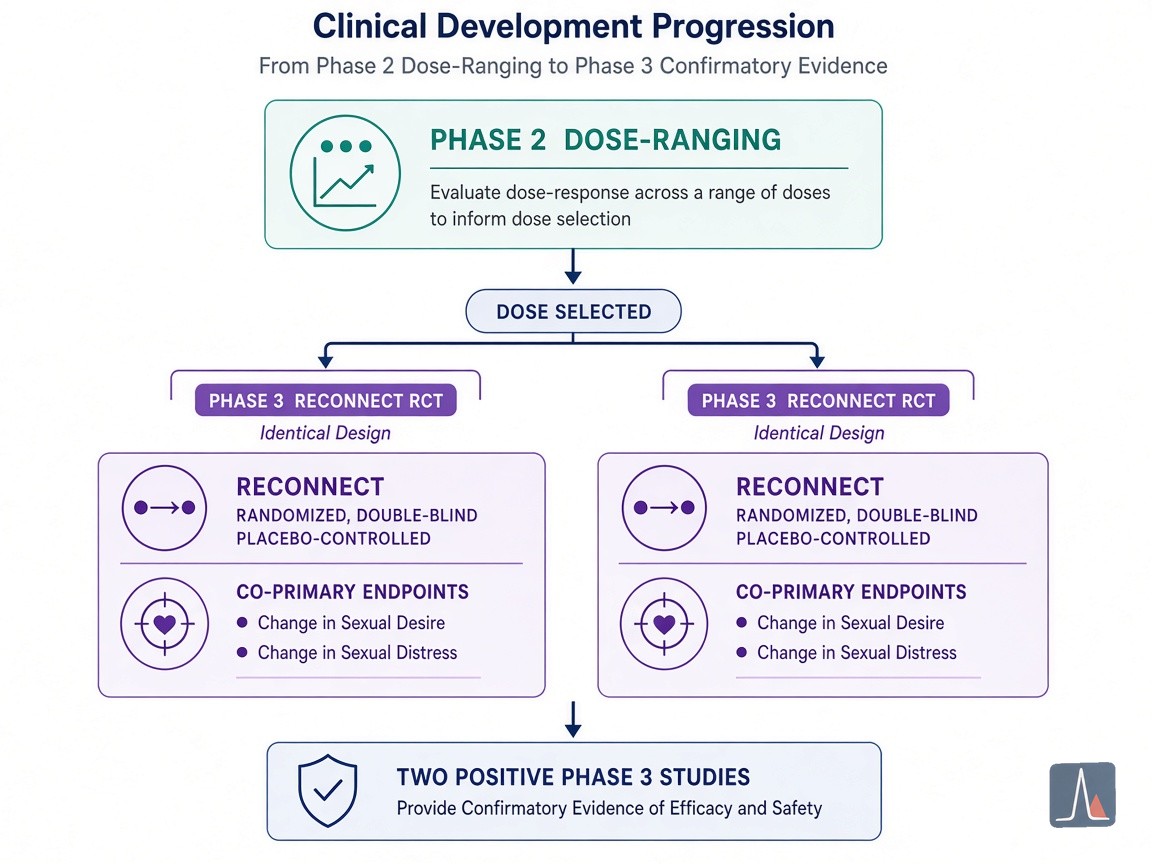
Pivotal Randomised Phase 3 Trials for Hypoactive Sexual Desire Disorder (RECONNECT programme, clinical papers, 2019)
Two identical multicentre, randomised, double-blind, placebo-controlled phase 3 trials (RECONNECT 301 and 302; Kingsberg et al., Obstet Gynecol 2019; NCT02333071, NCT02338960) enrolled 1,267 premenopausal women (mean age 39 years, predominantly White, US sites) with acquired generalized HSDD. Participants received 1.75 mg PT-141 or placebo subcutaneously as needed before sexual activity for 24 weeks. Co-primary endpoints were met in both studies and integrated analysis: change from baseline in FSFI-desire domain score (+0.30 and +0.42 individually; +0.35 integrated, p<0.001) and reduction in FSDS-DAO desire distress score (−0.37, −0.29; −0.33 integrated, p≤0.005). Benefits appeared by week 4. Responder rates were higher with active treatment (~58% vs ~36%). Change in number of satisfying sexual events (secondary) did not consistently reach significance. Effects were statistically robust but modest in absolute magnitude on patient-reported scales. !Safety and efficacy summary schematic Integrated safety and efficacy findings schematic.
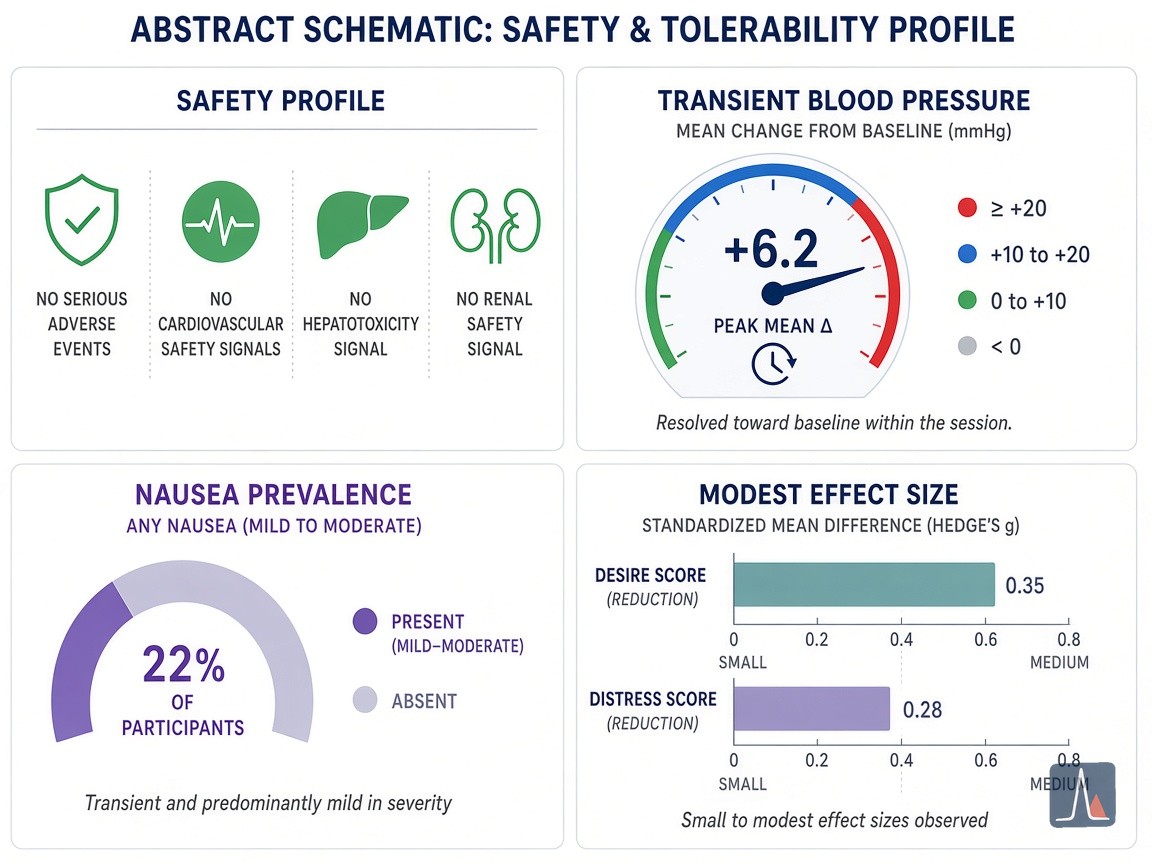
Integrated Safety Profile, Open-Label Extension, Subgroup Analyses, and Exploratory Reports (pooled, extension, and clinical papers, 2019–2026)
Pooled safety data from the clinical development programme (~3,500 participants across 43 studies) identified nausea (40% vs 1.3% placebo), flushing (20.3%), and headache (11.3%) as most frequent treatment-emergent adverse events; the majority were mild or moderate, occurred predominantly after the first dose, and decreased with repeated use. Discontinuation due to adverse events was ~8–10% on drug versus ~1–2% on placebo. A dedicated ambulatory blood-pressure study confirmed small transient post-dose increases (~3 mmHg systolic). The 52-week open-label extension (Simon et al., 2019; n=684 entered, 272 completed) showed sustained or further improvement in desire scores with no new safety signals. Subgroup analyses (age, BMI, baseline testosterone, hormonal contraceptive use, presence of arousal comorbidity) were largely consistent with overall results. A small 2024 open-label phase 2b BREAKOUT study (n=16 completers) in type 2 diabetic nephropathy reported signals of reduced urine protein-to-creatinine ratio and stabilized eGFR when added to standard care, suggesting possible broader anti-inflammatory or tissue-protective melanocortin effects; these data remain preliminary and unconfirmed in larger controlled trials.
Evidence Syntheses, Independent Reanalyses, Regulatory Context, and Recurrent Limitations (review, reanalysis, and regulatory papers, 2019–2026)
Expert reviews and regulatory documents affirm that the precise mechanism translating MC4R agonism to improved HSDD symptoms remains incompletely elucidated but plausibly involves hypothalamic dopaminergic modulation of excitatory sexual pathways. The FDA label notes the indication is restricted to premenopausal women with HSDD not due to medical, psychiatric, relational, or medication-related causes, with dosing limits (maximum one dose per 24 hours and eight per month) and warnings for transient blood-pressure elevation, hyperpigmentation with repeated use (MC1R effect), and contraindications in uncontrolled hypertension or known cardiovascular disease. Independent reanalysis (Spielmans et al., J Sex Res 2024) examined all 11 prespecified efficacy outcomes from the RECONNECT trials, noting that eight had not been fully published in primary reports; effects on these ranged from nil to small, and the primary instruments (FSFI-desire and FSDS-DAO item 13) possess limited published validity evidence specifically in HSDD populations. Categorical responder definitions appeared post-hoc in some cases. High adverse-event-driven dropout and lower rates of continuation into open-label extension among drug-treated participants were highlighted. Systematic reviews acknowledge statistical significance on co-primaries yet characterize overall clinical benefit as modest given typical large placebo responses in female sexual dysfunction trials, subjective endpoint susceptibility to expectation bias, and the absence of large independent confirmatory studies. No approval exists for men, postmenopausal women, or performance enhancement in healthy individuals; early male ED data remain limited and methodologically mixed. Recent interest in melanocortin agonists for inflammatory or kidney conditions is exploratory.
Evidence Context and Recurrent Limitations
The published literature on PT-141 as a standalone compound provides one of the more developed clinical evidence bases among research peptides in the sexual-function domain, anchored by two identical large phase 3 randomised controlled trials, supporting regulatory approval for a narrowly defined indication. Preclinical consistency across rodent behavioral models and receptor pharmacology robustly supports a central MC4R-mediated mechanism for appetitive sexual motivation. However, recurrent limitations temper interpretation: effect sizes on validated but subjective patient-reported outcomes are modest (Cohen’s d ~0.4 range); clinical meaningfulness continues to be debated; nausea remains a prominent tolerability barrier; nearly all pivotal data originate from the sponsor’s development programme; and independent reanalyses have raised concerns regarding selective outcome reporting, endpoint validity in the target population, and the magnitude of benefit once all prespecified measures are considered. Data in men are weaker, with some early reports carrying methodological caveats or journal notes of concern. No high-quality studies address use in healthy populations or performance enhancement. Exploratory signals in non-sexual indications such as diabetic nephropathy require independent confirmation in larger controlled trials. Overall, published reports establish a characterised pharmacological profile and modest efficacy signal in the approved setting while underscoring the well-documented challenges of developing and measuring treatments for female sexual desire disorders. Future independent research could further clarify translational relevance, long-term outcomes, and potential utility in additional melanocortin-responsive conditions.
Sources
- Kingsberg SA, et al. Bremelanotide for the Treatment of Hypoactive Sexual Desire Disorder: Two Randomized Phase 3 Trials. Obstet Gynecol. 2019;134(5):899-908. doi:10.1097/AOG.0000000000003500. PMID: 31599840. PMC6819021.
- Pfaus JG, et al. Selective facilitation of sexual solicitation in the female rat by a melanocortin receptor agonist. Proc Natl Acad Sci U S A. 2004;101(27):10201-4. doi:10.1073/pnas.0400491101. PMID: 15226502.
- Molinoff PB, et al. PT-141: a melanocortin agonist for the treatment of sexual dysfunction. Ann N Y Acad Sci. 2003;994:96-102. doi:10.1111/j.1749-6632.2003.tb03167.x. PMID: 12851303.
- Clayton AH, et al. Bremelanotide for female sexual dysfunctions in premenopausal women: a randomized, placebo-controlled dose-finding trial. Womens Health (Lond). 2016. doi:10.2217/whe-2016-0018.
- Spielmans GI, Ellefson EM. Small Effects, Questionable Outcomes: Bremelanotide for Hypoactive Sexual Desire Disorder. J Sex Res. 2024;61(4):540-561. doi:10.1080/00224499.2023.2175192. PMID: 36809187.
- Clayton AH, et al. Safety Profile of Bremelanotide Across the Clinical Development Program. J Womens Health (Larchmt). 2022;31(2):171-182. doi:10.1089/jwh.2021.0191. PMID: 35147466.
- Additional reviews, pooled analyses, and regulatory documents (2019–2026) from PubMed and FDA labeling.
Sources
- PT-141: a melanocortin agonist for the treatment of sexual dysfunction, 2003. https://doi.org/10.1111/j.1749-6632.2003.tb03167.x
- Selective facilitation of sexual solicitation in the female rat by a melanocortin receptor agonist, 2004. https://doi.org/10.1073/pnas.0400491101
- Bremelanotide for the Treatment of Hypoactive Sexual Desire Disorder: Two Randomized Phase 3 Trials, 2019. https://doi.org/10.1097/AOG.0000000000003500
- Safety Profile of Bremelanotide Across the Clinical Development Program, 2022. https://doi.org/10.1089/jwh.2021.0191
- Small Effects, Questionable Outcomes: Bremelanotide for Hypoactive Sexual Desire Disorder, 2024. https://doi.org/10.1080/00224499.2023.2175192
More briefings
- Survodutide Dual Agonist: Preclinical and Clinical EvidenceThe open-catalog entry for survodutide describes a synthetic acylated 29-amino-acid peptide dual agonist of glucagon and GLP-1 receptors supplied as high-purity lyophilized powder for laboratory metabolic research. Randomised trials report
- Dulaglutide: GLP-1 Receptor Agonist in Metabolic CareDulaglutide is a recombinant Fc-fusion GLP-1 receptor agonist engineered for once-weekly administration in laboratory and clinical metabolic research. Randomised trials report glycaemic improvements, cardiovascular risk reduction and modest
- Cagrilintide-Semaglutide Mixture: Open-Catalog Context and Metabolic Trial EvidenceThe open-catalog cagrilintide-semaglutide mixture supplies a research pairing of an amylin receptor agonist and GLP-1 receptor agonist for laboratory metabolic studies. Randomised trials of co-administration report enhanced weight loss (13–
All information and products discussed are for laboratory and research use only. Not for human or veterinary use. Not intended to diagnose, treat, cure, or prevent any disease.