
29 October 2026
Published Reports on P21
Download PDF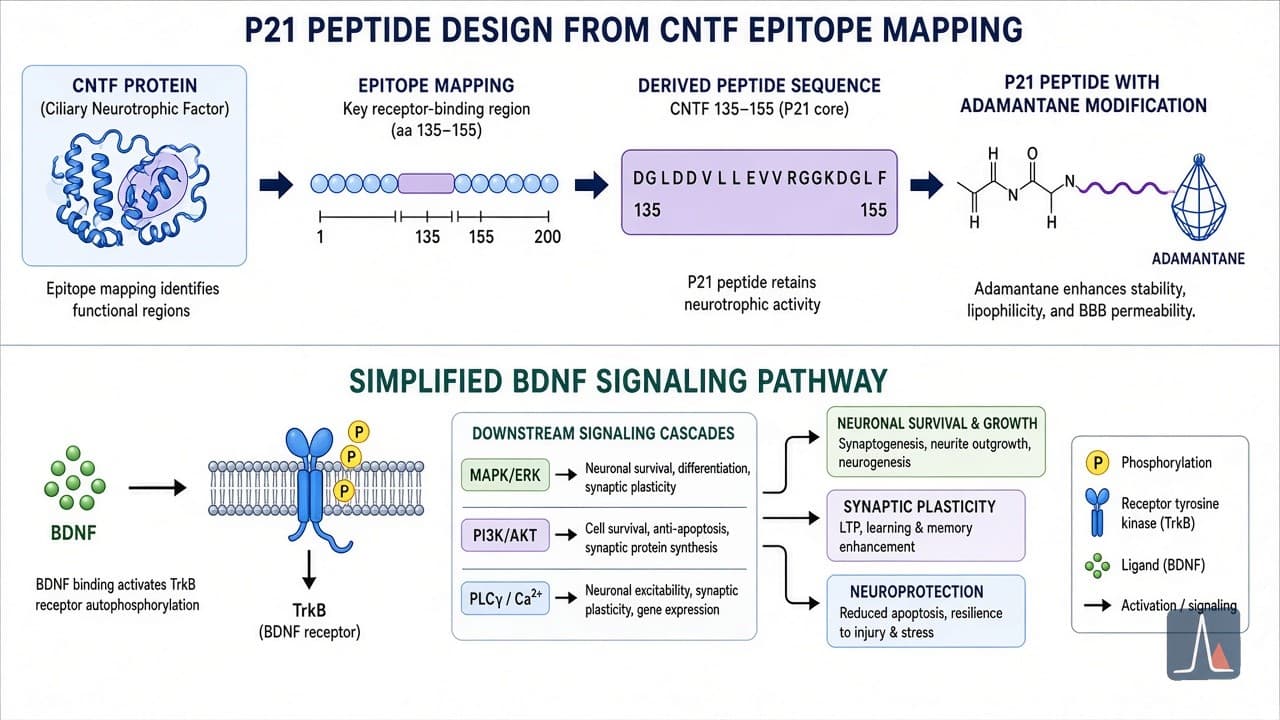
Published reports characterize P21 (P021), a CNTF-derived adamantane-modified tetrapeptide mimetic, as a preclinical tool studied for promotion of hippocampal neurogenesis, BDNF upregulation, synaptic plasticity, reduced tau hyperphosphoryl
Published Reports on P21
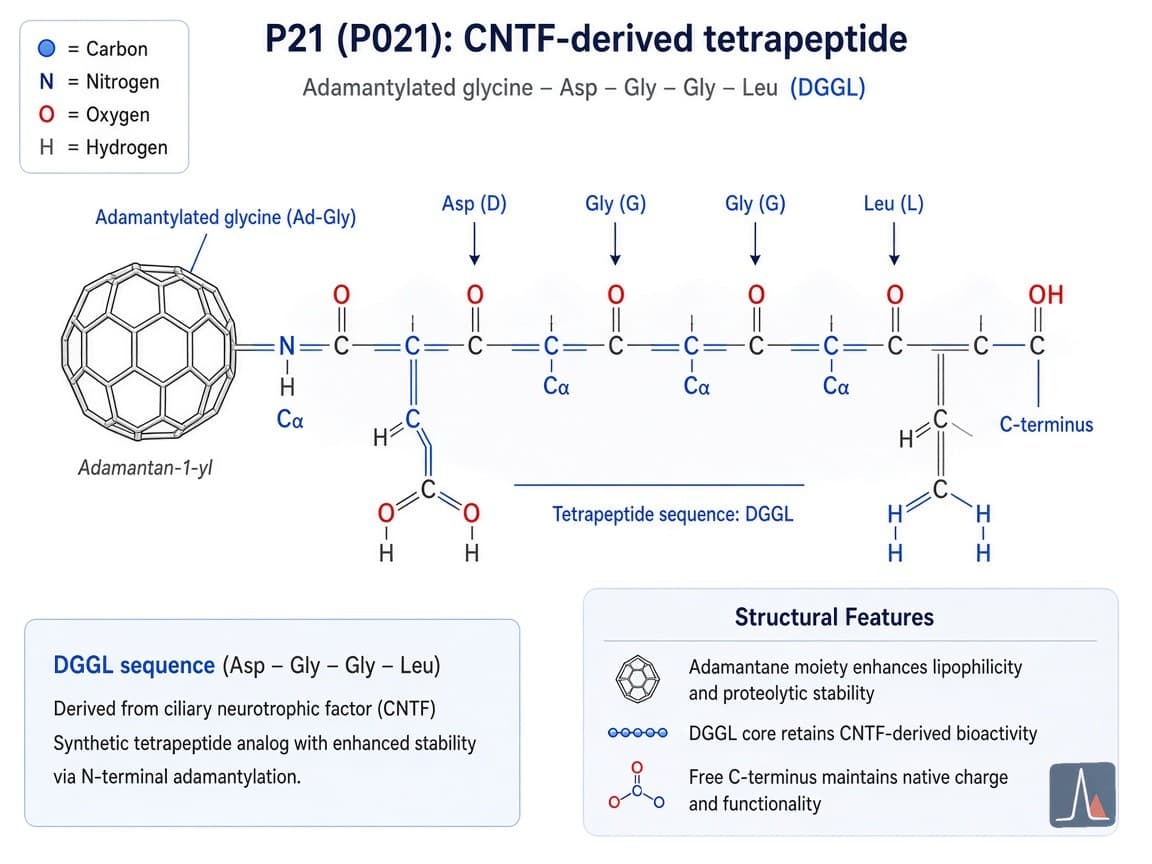
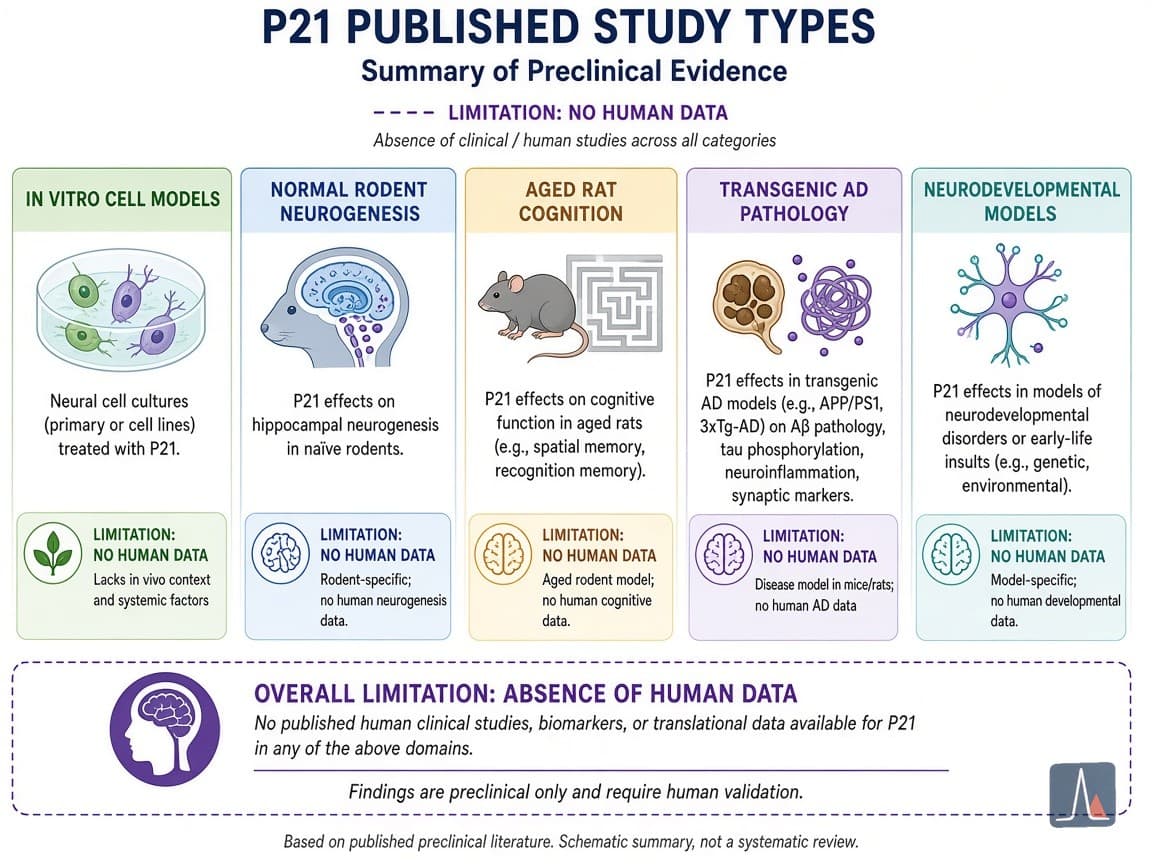
Published reports characterize P21 (also designated P021 or Peptide 021; Ac-DGGLAG-NH₂ with C-terminal adamantylated glycine) as a small, orally bioavailable, blood-brain-barrier-permeable CNTF-derived peptidergic mimetic engineered to stimulate endogenous BDNF production, promote adult hippocampal neurogenesis, enhance synaptic plasticity, inhibit LIF signaling, reduce GSK-3β activity, and attenuate tau hyperphosphorylation without the cachexia, weight loss, or immunogenicity associated with native CNTF. Nearly all indexed in-vivo work originates from one laboratory (primarily Khalid Iqbal and collaborators at the New York State Institute for Basic Research), with consistent reports of neurogenic, neurotrophic, anti-tau, and pro-cognitive effects across normal mice, aged rats, 3xTg-AD transgenic mice, Ts65Dn Down syndrome mice, and other models. A 2024 study provided positive results in a human neuronal CDKL5-knockout cell model but limited behavioral benefit, no BDNF elevation, and no major structural rescue in corresponding knockout mice in vivo. Rodent studies report good tolerability with chronic oral dosing up to 18 months. No human clinical, pharmacokinetic, safety, or observational data have been published, and no trials are registered on ClinicalTrials.gov as of 2026. These records do not establish any use in people. Reporting published studies is not guidance to use the research material that way.
Chemical Identity and Catalog Context
P21 is a synthetic pentapeptide (molecular weight approximately 578 Da) corresponding to residues 148–151 of human ciliary neurotrophic factor (CNTF) with an adamantane-modified glycine added at the C-terminus to confer metabolic stability, resistance to exopeptidases, and blood-brain barrier permeability. It was developed through epitope mapping with neutralizing antibodies against CNTF. The compound is listed in the Rierink catalog as P21 and is supplied strictly for laboratory research. It is not a medicine, holds no regulatory approvals for human or veterinary use, and is unrelated to the cell-cycle regulator protein p21 (CDKN1A). Name confusion between the peptide and the protein appears in some literature searches but is irrelevant to the neurotrophic mimetic.
Foundational Discovery, In Vitro Mechanistic, and Normal Rodent Neurogenesis Studies (in_vitro, method, and animal papers, 2010–2011)
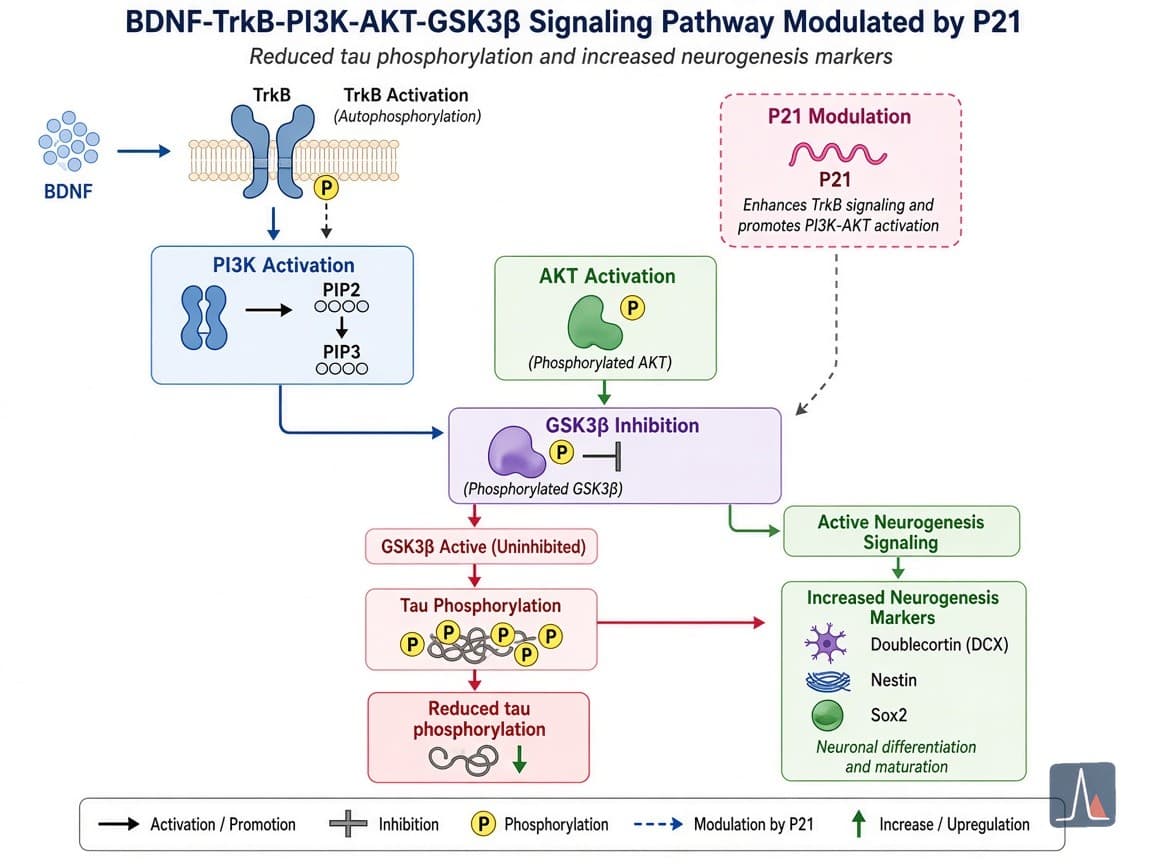
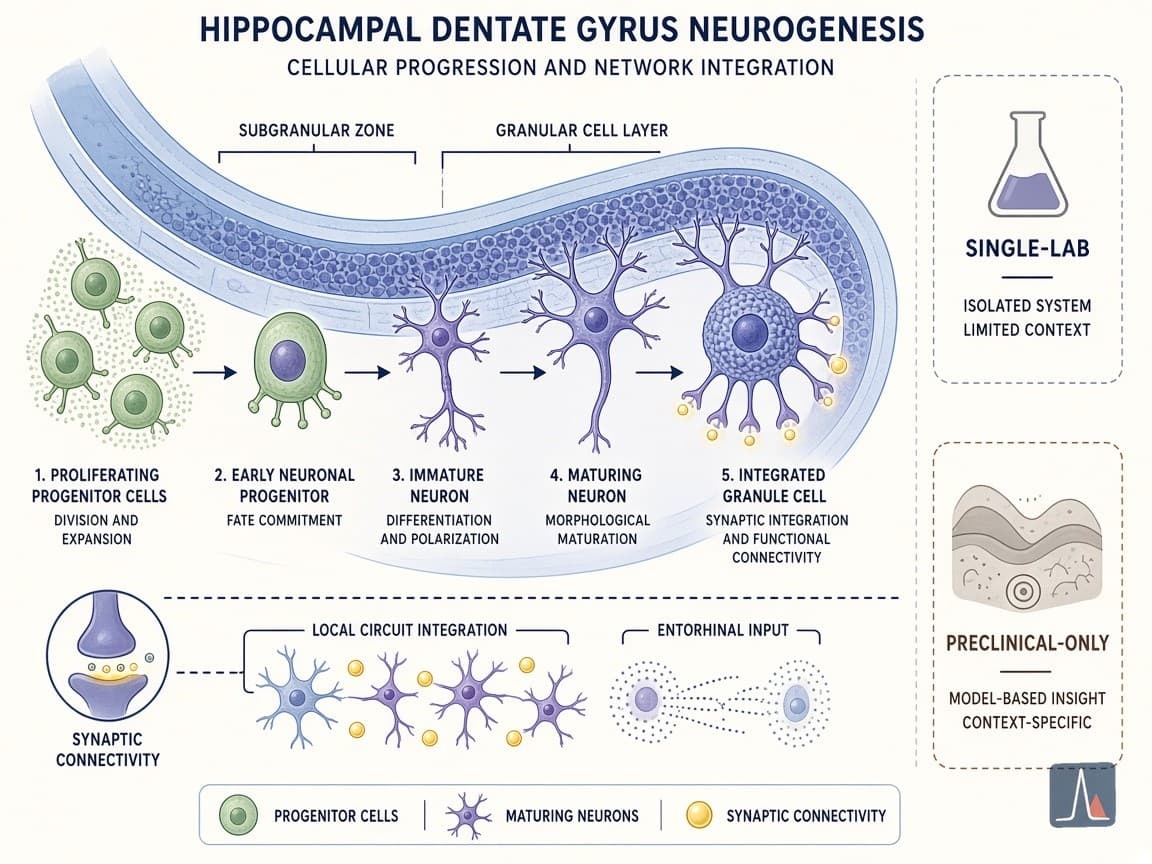
Foundational work identified an active CNTF region (initially an 11-mer termed Peptide 6, narrowed to the tetrapeptide DGGL) and added the adamantane moiety. In vitro studies demonstrated competitive LIF receptor antagonism, transcriptional upregulation of BDNF, promotion of neural progenitor proliferation and differentiation into mature neurons, increased expression of synaptic proteins (MAP2, synaptophysin, PSD-95), and modulation of the BDNF/TrkB/PI3K/AKT pathway leading to inhibitory phosphorylation of GSK-3β. In normal adult C57BL/6 mice, peripheral administration increased BrdU incorporation, doublecortin-positive neuroblasts, and mature neuron integration in the dentate gyrus subgranular zone, elevated synaptic markers, and improved performance in spatial reference memory and learning tasks (Li et al. 2010, PMID 20600002; Chohan et al. 2011, PMID 19767127). These early studies established proof-of-concept for neurogenic and plasticity-enhancing activity in non-diseased animals.
Limitations: Experiments conducted by the developing laboratory; behavioral improvements in healthy young-adult rodents may not translate to aged or diseased states; brain exposure was inferred from downstream markers rather than direct measurement.
Preclinical Animal Models of Cognitive Aging and Synaptic Restoration (animal papers, 2014)
In aged (22–24 month) Fischer rats, chronic oral P21 in diet significantly attenuated age-related decline in learning and memory tasks, restored hippocampal neurogenesis, increased BDNF protein levels, normalized synaptic protein expression in cortex and hippocampus, and improved magnetic resonance spectroscopy metabolite profiles (reduced myo-inositol). CSF tau levels were also normalized to young-adult ranges without detectable immune response. These findings positioned P21 as a candidate for counteracting cognitive aging through neurotrophic support during the period of synaptic compensation (Bolognin et al. 2014, PMID 24702821).
Limitations: Single-lab execution; aged-rat model captures some but not all aspects of human cognitive aging; long-term functional outcomes beyond the treatment window were not reported.
Disease-Modifying and Preventive Studies in Transgenic Alzheimer’s Disease Models (animal papers, 2014–2026)
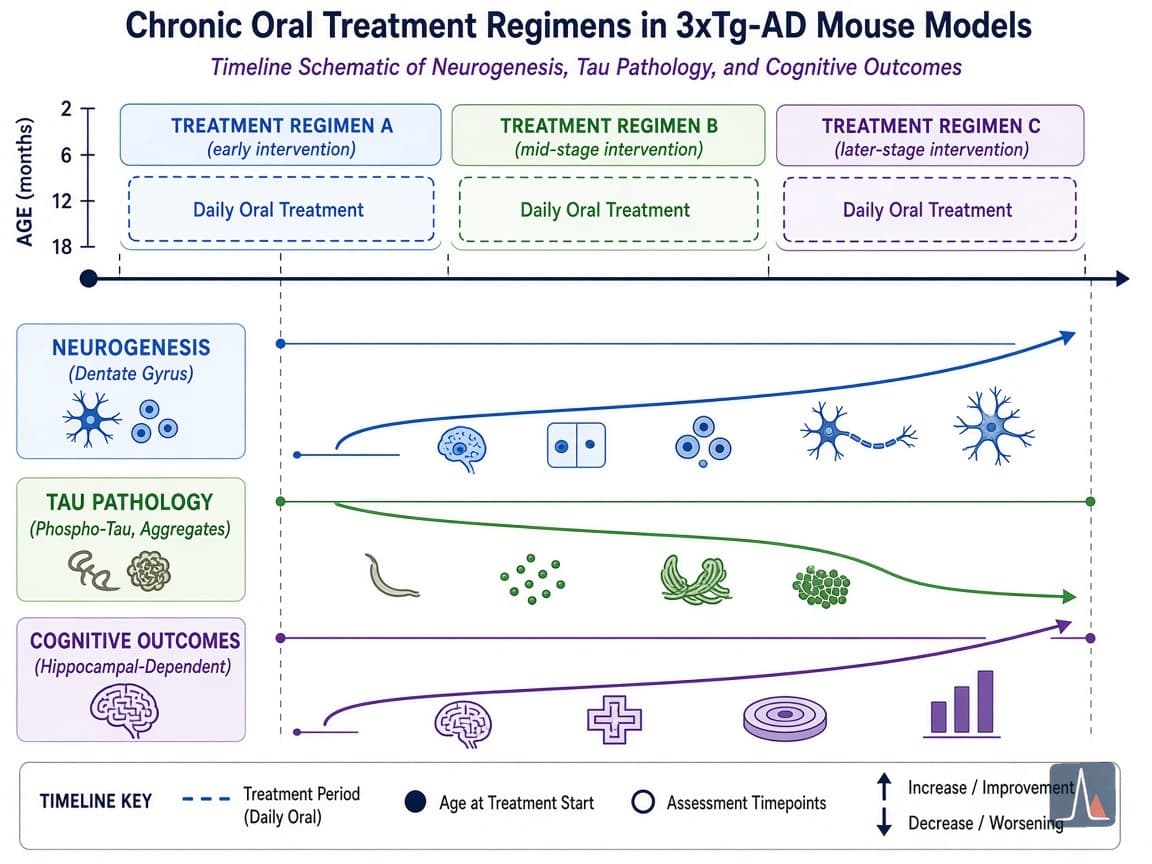
Multiple studies in the triple-transgenic 3xTg-AD mouse (which develops both amyloid and tau pathologies) tested therapeutic and preventive regimens. When initiated at 9–10 months of age (moderate pathology stage) and continued for 12 months via diet, P21 produced robust reduction in abnormal tau hyperphosphorylation and accumulation at multiple AD-relevant epitopes, modest but significant lowering of soluble Aβ levels, a non-significant trend toward reduced plaque load, rescue of deficits in neurogenesis, dendritic arborization, synaptic markers, and cognition (Morris water maze, novel object recognition). The proposed mechanism was BDNF-mediated inhibitory phosphorylation of GSK-3β (Kazim et al. 2014, PMID 25046994).
Preventive administration starting at 3 months of age and continued to 21 months, or from prenatal day 8 to postnatal day 21 followed by standard diet, prevented or markedly attenuated later synaptic/dendritic deficits, neuroinflammation (reduced GFAP), tau and Aβ pathologies, episodic memory impairment, and cognitive decline. One prevention paradigm also reported substantially improved survival. A 2026 diffusion MRI study (with corrigendum) detected corresponding improvements in brain microstructure consistent with reduced neurodegeneration (Baazaoui et al. 2017, PMID 28655344; additional prevention data PMID 32854771; Falangola et al. 2026).
Limitations: Overwhelmingly from the originating laboratory with declared patents; 3xTg-AD model is aggressive and may not fully recapitulate sporadic late-onset human AD; Aβ effects were milder than tau effects; functional rescue measured during or shortly after treatment.
Studies in Down Syndrome, CDKL5 Deficiency, and Other Neurodevelopmental or Injury Models (animal and in_vitro papers, 2017–2024)
In the Ts65Dn mouse model of Down syndrome, prenatal-to-early-postnatal oral P21 rescued developmental delay in pups and prevented adult hippocampus-dependent memory deficits, normalizing BDNF, CREB activity, synaptic markers, and reducing neuroinflammation (PMID 28368015). In a mild-to-moderate traumatic brain injury model, 30-day treatment enhanced post-injury neurogenesis and preserved dendritic and synaptic density.
A 2024 study examined P021 in CDKL5 deficiency disorder. In a human SH-SY5Y CDKL5-knockout neuronal model, treatment restored deficits in cell proliferation, survival, neurite outgrowth, maturation, and GSK-3β signaling. However, in Cdkl5 knockout mice treated from juvenile age, benefits were limited to modest behavioral improvements; there was no detectable increase in BDNF, no rescue of hippocampal neurogenesis or spine density, and no major correction of neuroanatomical defects (Mottolese et al. 2024, DOI 10.1186/s11689-024-09583-4). The senior author from the originating group was a co-author and disclosed competing interests including patents.
Limitations: Mixed outcomes in the more independent CDKL5 in-vivo arm call into question universality of the BDNF mechanism; small effect sizes in some behavioral domains; COI present even in the “external” study.
Complete Absence of Human Data, Registered Trials, and Clinical Safety Assessments
Targeted searches of PubMed, Europe PMC, ClinicalTrials.gov, and related registries returned zero published human studies, pharmacokinetic profiles, tolerability data, observational cohorts, or registered interventional trials for P21/P021, Ac-DGGL, or CNTF tetrapeptide mimetic as of late 2026. No Phase 1 safety, dose-escalation, or biomarker studies exist. Developer statements reference ongoing or planned IND-enabling work and potential clinical advancement (Phanes Biotech, with Iqbal as CSO), but no registrations or results appeared by 2026. Human safety is therefore entirely uncharacterized. Preclinical rodent data cannot substitute for human pharmacokinetics or adverse-event profiling.
Evidence Context, Developer Involvement, Retractions in Related Work, Animal Safety Profile, and Recurrent Limitations (review, synthesis, and ledger papers, 2016–2026)
Developer-led reviews (e.g., PMID 27400746) summarize P21 as a promising orally active neurotrophic mimetic suitable for Alzheimer’s disease and related tauopathies, citing consistent preclinical efficacy across models. The Alzheimer’s Drug Discovery Foundation Cognitive Vitality report (updated 2025) and independent 2026 evidence ledgers (e.g., vialog.org) acknowledge the strength of the rodent neurogenesis, BDNF, synaptic, tau, and behavioral data while explicitly noting the complete absence of human testing and unassessed human safety. A related 2011 paper comparing an earlier 11-mer CNTF peptide (Peptide 6) with Cerebrolysin was retracted in June 2026; it did not test P021 itself.
Animal safety observations across chronic studies (up to 12–18 months dietary exposure) report no weight loss, cachexia, tumors, overt toxicity, or immune activation, addressing a major limitation of recombinant CNTF. However, recurrent limitations dominate the evidence context: near-total dependence on a single research group with multiple declared patents and commercial development interests; sparse true independent replication free of co-authorship or COI; one mixed/negative in-vivo result on the core BDNF mechanism; lack of direct brain-exposure quantification; historical poor translation of rodent AD prevention data to human sporadic disease; risk of over-extrapolation from transgenic models; and name confusion with unrelated p21 protein literature. Theoretical long-term risks of sustained neurotrophic or pro-neurogenic activity (e.g., circuit dysregulation or proliferative effects) remain untested in people.
P21 is an interesting preclinical research tool that has generated a coherent body of rodent data on neurotrophic support. Further independent, multi-laboratory validation and, crucially, rigorous human pharmacokinetic, safety, and proof-of-concept studies would be required before any translational conclusions can be drawn. At present the compound remains strictly for laboratory research.
Sources
- Li et al. (2010). Beneficial effect of a CNTF tetrapeptide on adult hippocampal neurogenesis, neuronal plasticity, and spatial memory in mice. *J Alzheimers Dis*. PMID 20600002.
- Chohan et al. (2011). Enhancement of dentate gyrus neurogenesis, dendritic and synaptic plasticity and memory by a neurotrophic peptide. *Neurobiol Aging*. PMID 19767127.
- Kazim et al. (2014). Disease modifying effect of chronic oral treatment with a neurotrophic peptidergic compound in a triple transgenic mouse model of Alzheimer’s disease. *Neurobiol Dis*. PMID 25046994.
- Bolognin et al. (2014). Rescue of cognitive-aging by administration of a neurogenic and/or neurotrophic compound. *Neurobiol Aging*. PMID 24702821.
- Baazaoui et al. (2017). Prevention of dendritic and synaptic deficits and cognitive impairment with a neurotrophic compound. *Alzheimers Res Ther*. PMID 28655344.
- Mottolese et al. (2024). Effects of a ciliary neurotrophic factor (CNTF) small-molecule peptide mimetic in an in vitro and in vivo model of CDKL5 deficiency disorder. *J Neurodev Disord*. DOI 10.1186/s11689-024-09583-4.
- Iqbal group reviews (2016, PMID 27400746) and ADDF Cognitive Vitality reports (2025); 2026 diffusion MRI papers and retraction notice (PMID 42015030 for related work).
- Independent evidence syntheses (vialog.org 2026 ledger).
Linked: p21
More briefings
- Survodutide Dual Agonist: Preclinical and Clinical EvidenceThe open-catalog entry for survodutide describes a synthetic acylated 29-amino-acid peptide dual agonist of glucagon and GLP-1 receptors supplied as high-purity lyophilized powder for laboratory metabolic research. Randomised trials report
- Dulaglutide: GLP-1 Receptor Agonist in Metabolic CareDulaglutide is a recombinant Fc-fusion GLP-1 receptor agonist engineered for once-weekly administration in laboratory and clinical metabolic research. Randomised trials report glycaemic improvements, cardiovascular risk reduction and modest
- Cagrilintide-Semaglutide Mixture: Open-Catalog Context and Metabolic Trial EvidenceThe open-catalog cagrilintide-semaglutide mixture supplies a research pairing of an amylin receptor agonist and GLP-1 receptor agonist for laboratory metabolic studies. Randomised trials of co-administration report enhanced weight loss (13–
All information and products discussed are for laboratory and research use only. Not for human or veterinary use. Not intended to diagnose, treat, cure, or prevent any disease.