
28 October 2026
Published Reports on NAD
Download PDF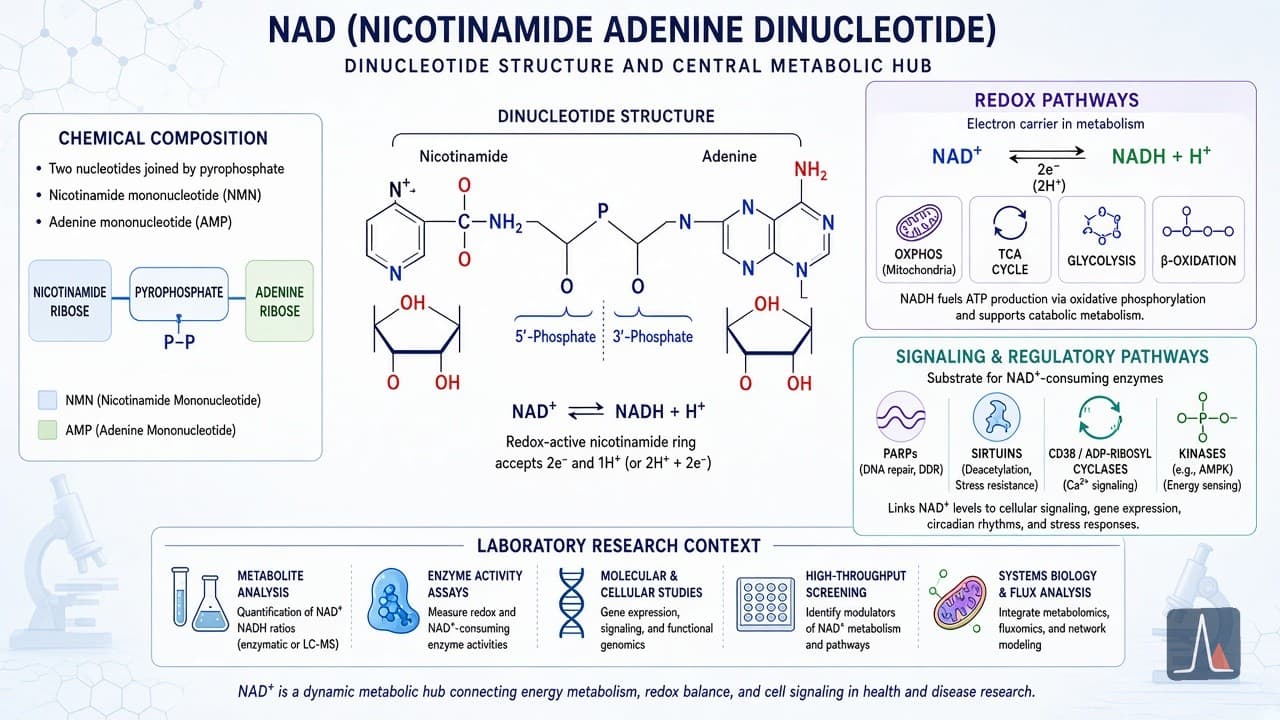
Published reports characterize NAD as an essential redox coenzyme and substrate for sirtuins, PARPs and CD38 studied extensively in metabolism, aging and disease models. Preclinical animal studies report metabolic, mitochondrial and neuropr
Chemical Identity and Catalog Context
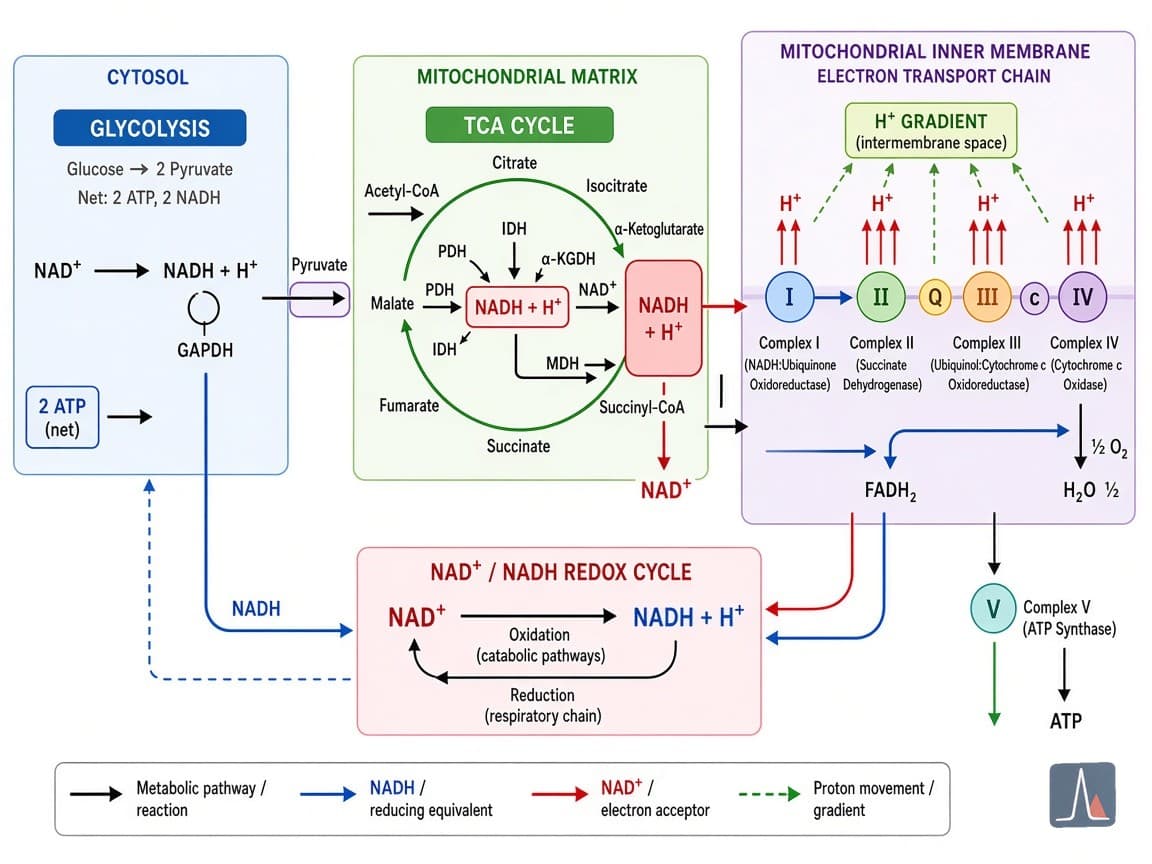
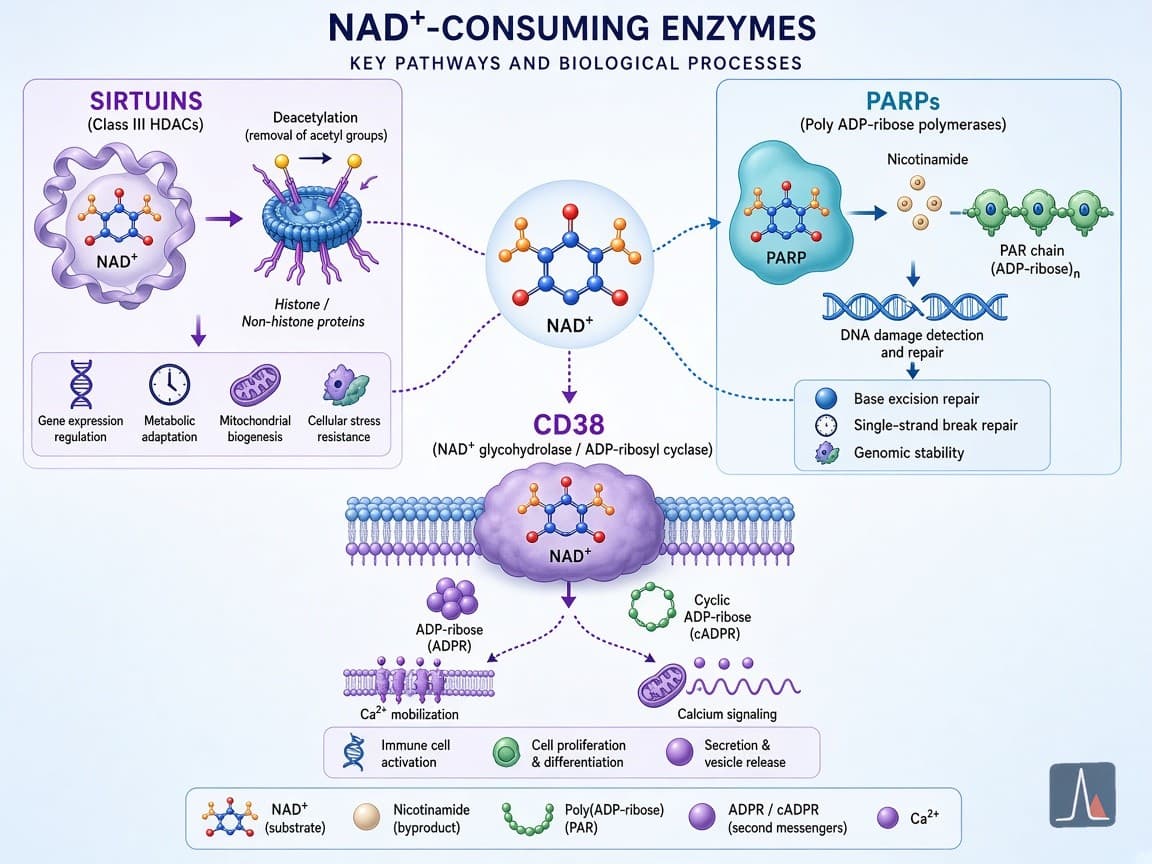
NAD (nicotinamide adenine dinucleotide) is a dinucleotide coenzyme consisting of two nucleotides joined by their phosphate groups, existing in oxidized (NAD+) and reduced (NADH) forms. It functions as a critical electron carrier in hundreds of dehydrogenase reactions supporting glycolysis, the tricarboxylic acid cycle, oxidative phosphorylation and fatty acid oxidation. Beyond redox roles, NAD+ serves as a consumed substrate for sirtuin deacetylases, poly(ADP-ribose) polymerases (PARPs) involved in DNA repair, and ectoenzymes such as CD38 that regulate calcium signaling and inflammation. NAD is catalogued by Rierink Compounds for laboratory research use only. Reporting findings from published human trials is not guidance to use this research material in any specific way.
Foundational Discovery, Biosynthesis, and In Vitro Mechanistic Studies (in_vitro and method papers, 1906–2020s)
NAD was discovered in 1906 by Arthur Harden and William John Young as a heat-stable, dialyzable coferment (cozymase) essential for yeast fermentation. Subsequent work by Otto Warburg in the 1930s established its hydride-transfer role in redox reactions. The Preiss-Handler pathway (1958) and salvage routes from nicotinamide riboside (identified 2004) describe its biosynthesis. In vitro studies have mapped compartment-specific NAD+ pools (nuclear, cytosolic, mitochondrial) and identified major consumers. Sirtuins (discovered as NAD+-dependent deacetylases around 2000) link NAD+ to epigenetic regulation, mitochondrial biogenesis and stress resistance. PARPs consume large amounts of NAD+ during DNA damage responses, while CD38 is a major NAD+ glycohydrolase whose expression rises with age, contributing to depletion. Method papers detail sensitive mass-spectrometry assays for NAD+ metabolomes across tissues and compartments. These foundational in_vitro and method studies established NAD+ as both a metabolic cofactor and signaling molecule whose availability regulates cellular homeostasis. No human outcomes are implied by these mechanistic findings.
Preclinical Animal Models of Metabolic Dysfunction, Neurodegeneration, Aging, and Organ Protection (animal papers, 2010–2026)
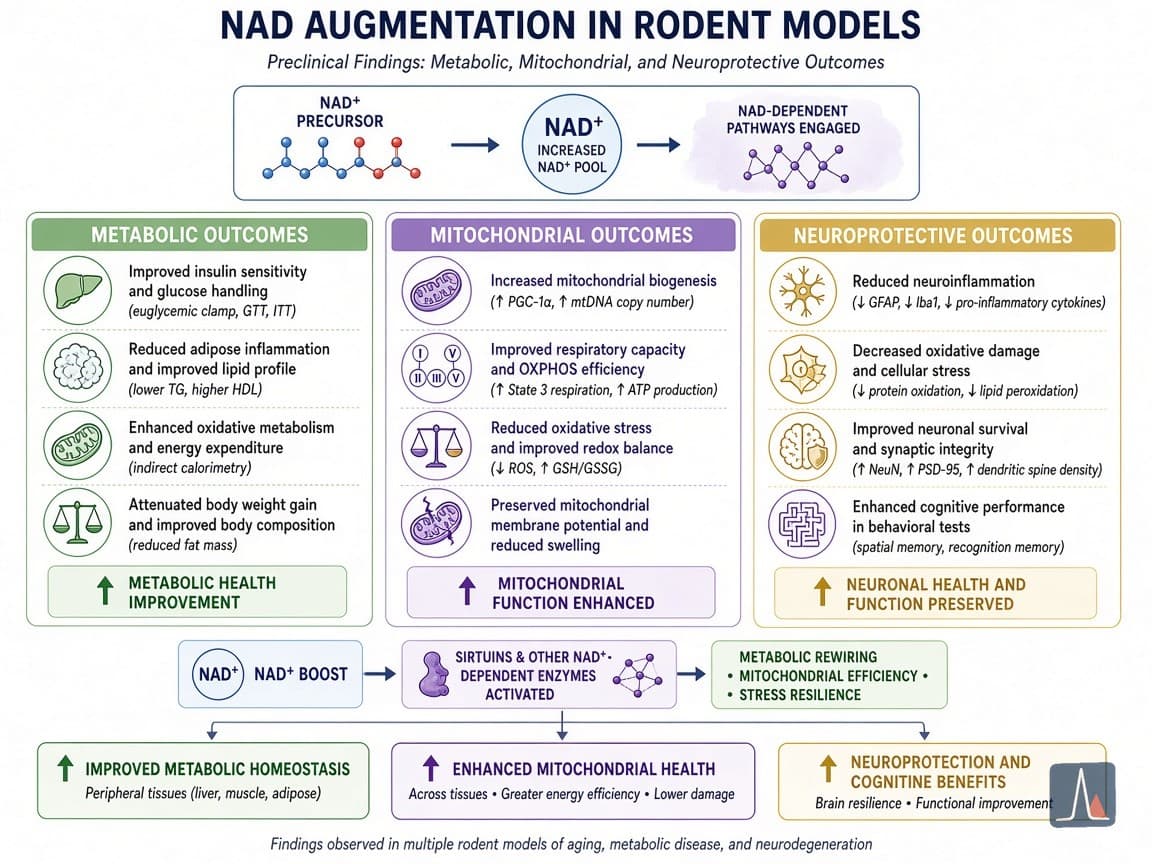
Numerous rodent studies report that NAD+ levels decline in tissues with aging, obesity, diabetes and neurodegeneration. Supplementation strategies, frequently using precursors such as nicotinamide riboside (NR) or nicotinamide mononucleotide (NMN) to elevate NAD+, have been tested in these models. In obese or aged mice, NAD+ augmentation improved mitochondrial function, insulin sensitivity, exercise capacity and reduced inflammation. Neuroprotective effects appear in Alzheimer’s and Parkinson’s disease models, with reports of reduced amyloid pathology, improved cognitive performance and dopaminergic neuron preservation. Cardiac and renal protection models show reduced fibrosis and improved function after ischemia-reperfusion. Some studies report extended healthspan metrics although lifespan extension is inconsistent. Direct NAD administration has been less common due to bioavailability but has shown signals in certain injury models. These animal findings generated substantial interest in translational potential; however, results vary by model, dose, duration, tissue measured and specific endpoint. Translation to humans remains theoretical. A theory is that similar augmentation in people could support metabolic resilience or slow certain age-related declines, but this is not a demonstrated result in humans.
Human Pharmacokinetic, Physiological, and Randomised Trials for Metabolic, Neurologic, and Functional Outcomes (clinical pharmacology, RCT, and meta-analysis papers, 2010–2026)
Human studies have primarily examined oral NAD+ precursors rather than direct NAD due to poor oral bioavailability of the parent molecule. Randomised trials consistently show that NR and NMN (typical doses 250–1000 mg/day for weeks to months) dose-dependently elevate blood NAD+ and related metabolites (often 1.5- to >5-fold) with generally good short-term tolerability. A 2018 randomised crossover trial (Martens et al., PMID: 29599478) in healthy middle-aged and older adults reported elevated NAD+ metabolites, reduced systolic blood pressure and arterial stiffness in those with elevated baseline values. Some trials report modest improvements in insulin sensitivity, muscle function or inflammatory markers, yet multiple randomised controlled trials and meta-analyses show null effects on insulin sensitivity, exercise capacity, body composition, cognitive scores or broad metabolic parameters. A 2026 phase 3 randomised double-blind placebo-controlled trial of NR (1 g/day for 52 weeks) in early Parkinson’s disease (n≈410) found no improvement in motor scores and reported slightly worse outcomes on the MDS-UPDRS and non-motor symptom scores compared with placebo. Limited published data exist on direct intravenous NAD. Small pharmacokinetic pilots indicate rapid extracellular metabolism with delayed or compartment-specific rises in NAD metabolites. One randomised trial in ischemic heart failure (approximately 180 participants) using low-dose IV NAD (10 mg/day for 7 days) reported a modest improvement in left ventricular ejection fraction at one month versus control. Small open-label or pilot studies on IV NAD or oral NADH in chronic fatigue, cognitive impairment or addiction have reported mixed signals on quality-of-life or biomarker measures, but these are uncontrolled or underpowered. Adverse events are generally mild (nausea, flushing with certain precursors); serious events are rare in short-term studies. These records document biochemical target engagement and safety signals but do not establish efficacy or support use of research vials.
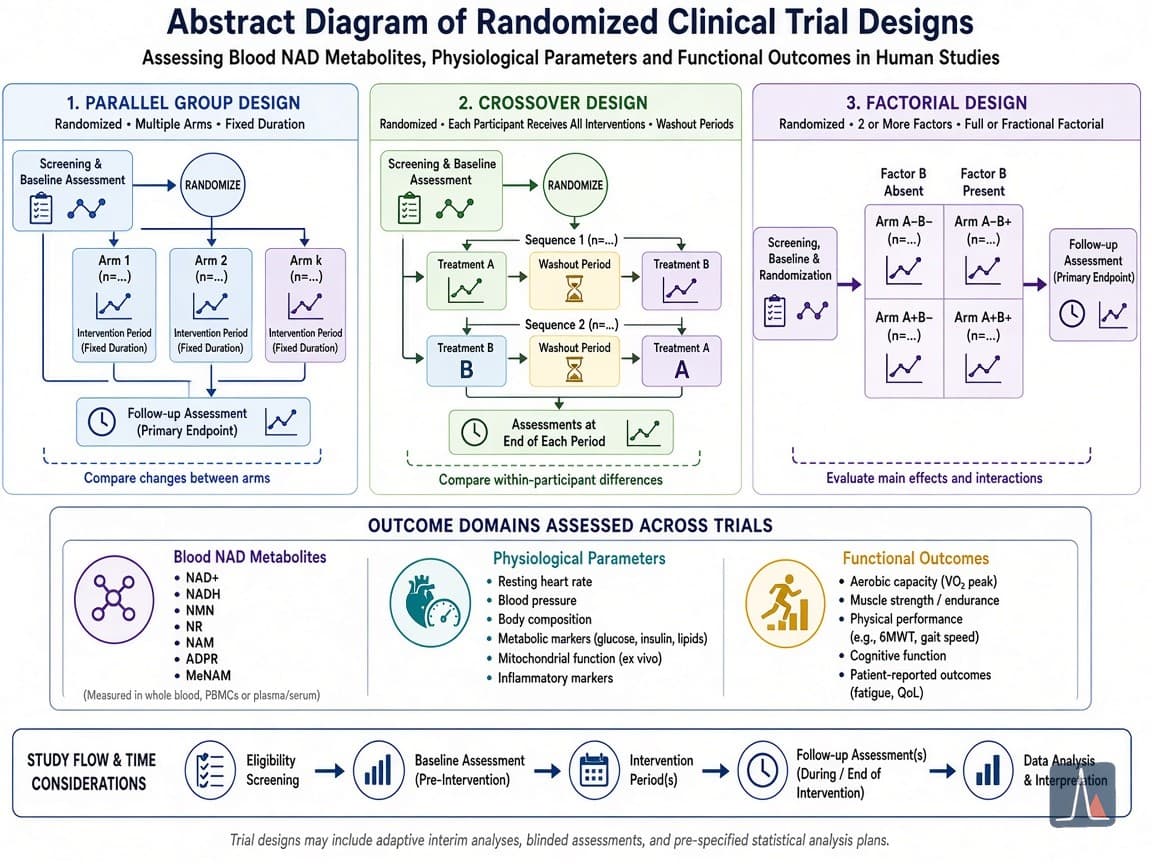
Recent Systematic Reviews, Evidence Syntheses, and Recurrent Limitations (review, meta-analysis and systematic papers, 2020–2026)
A 2024 systematic review of randomised trials on NAD+/NADH supplementation (PMID: 37971292, DOI: 10.1152/ajpendo.00242.2023) included 10 studies (489 participants) across chronic fatigue, Parkinson’s, Alzheimer’s, overweight and prediabetes cohorts. It concluded supplementation was well tolerated with some reports of improved quality-of-life parameters, reduced anxiety, lower maximum heart rate after stress, and better insulin signaling, but called for larger trials on specific diseases and doses. A 2026 PRISMA-guided systematic review of 113 studies (33 human, 28 randomised) found consistent biochemical NAD+ elevation and short-term safety for oral precursors but heterogeneous and frequently null or endpoint-specific effects on functional, metabolic, vascular and healthspan outcomes; it noted the absence of robust eligible outcomes trials for intravenous NAD in anti-aging or wellness contexts. A 2025 Nature Aging review on clinical targeting of NAD+ summarised safety and bioavailability data while emphasising the need for larger, longer studies on optimal dosing, routes, long-term safety and inter-individual variability. Other 2023–2026 reviews and meta-analyses echo that while preclinical data are robust, human functional translation is limited, with recurrent issues including small sample sizes, short durations, surrogate rather than clinical endpoints, variable tissue NAD+ responses, potential microbiome effects on precursor metabolism, and compartment-specific NAD+ dynamics that blood measures may not fully capture. Some reviews note possible context-dependent risks (for example in certain cancers where NAD+ may support proliferation) although human evidence here is preliminary.
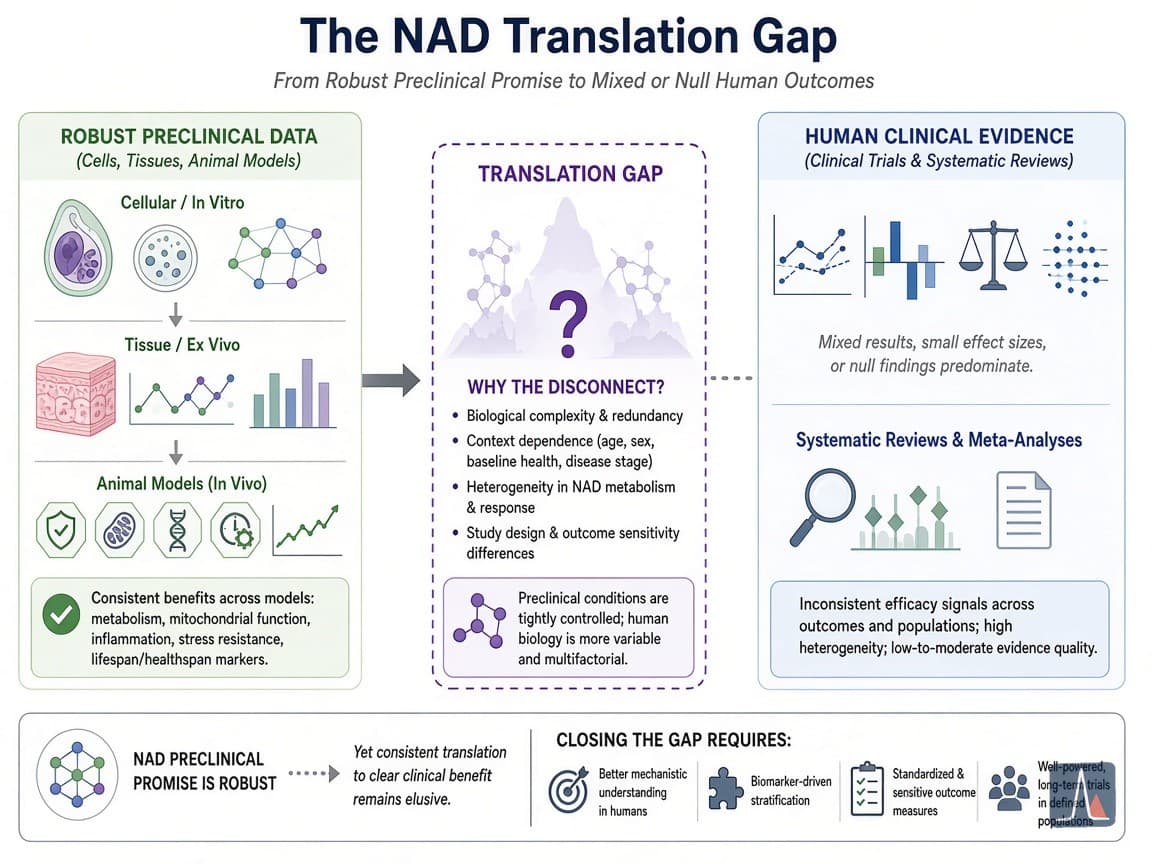
Evidence Context and Recurrent Limitations
Collectively, published reports establish NAD as a thoroughly studied research compound whose biology is intimately tied to cellular energy, stress responses and aging processes. Preclinical models provide mechanistic plausibility and phenotypic rescue data, yet human clinical evidence remains preliminary. Biochemical elevation of NAD-related metabolites is reproducible; clinically meaningful, sustained functional benefits are not consistently observed across adequately powered trials. Large recent randomised outcomes such as the 2026 Parkinson’s disease trial add important negative data that temper enthusiasm derived from smaller or surrogate-endpoint studies. Limitations include heavy reliance on precursor rather than direct NAD data, challenges in measuring intracellular and tissue-specific NAD+ pools non-invasively, industry funding in portions of the literature, and the absence of long-term, hard-outcome trials in healthy aging populations. Further rigorous, independent, adequately powered research is required to clarify whether, in which contexts, and by what mechanisms NAD modulation might affect human physiology. All materials from Rierink Compounds are intended strictly for laboratory research.
Sources
- Evaluation of safety and effectiveness of NAD in different clinical conditions: a systematic review. Am J Physiol Endocrinol Metab. 2024. DOI: 10.1152/ajpendo.00242.2023. PMID: 37971292.
- Clinical Evidence for Targeting NAD Therapeutically. Pharmaceuticals (Basel). 2020. PMC7558103.
- Dietary Supplementation With NAD+-Boosting Compounds in Humans: Current Knowledge and Future Directions. J Gerontol A Biol Sci Med Sci. 2023. PMC10692436.
- Emerging strategies, applications and challenges of targeting NAD+ in the clinic. Nat Aging. 2025. DOI: 10.1038/s43587-025-00947-6.
- Chronic nicotinamide riboside supplementation is well-tolerated and elevates NAD+ in healthy middle-aged and older adults. Nat Commun. 2018. PMID: 29599478.
- Nicotinamide riboside for patients with early-stage Parkinson disease: a randomized clinical trial. JAMA. 2026 (NOPARK trial summary).
- NAD+ Precursors in Human Health and Disease: Current Status and Future Prospects. Antioxid Redox Signal. 2023. DOI: 10.1089/ars.2023.0354.
- Additional primary literature accessed via PubMed and Europe PMC (1906–2026) including foundational papers by Harden & Young, Warburg, Preiss & Handler, and mechanistic reviews on sirtuins, PARPs and CD38.
More briefings
- Survodutide Dual Agonist: Preclinical and Clinical EvidenceThe open-catalog entry for survodutide describes a synthetic acylated 29-amino-acid peptide dual agonist of glucagon and GLP-1 receptors supplied as high-purity lyophilized powder for laboratory metabolic research. Randomised trials report
- Dulaglutide: GLP-1 Receptor Agonist in Metabolic CareDulaglutide is a recombinant Fc-fusion GLP-1 receptor agonist engineered for once-weekly administration in laboratory and clinical metabolic research. Randomised trials report glycaemic improvements, cardiovascular risk reduction and modest
- Cagrilintide-Semaglutide Mixture: Open-Catalog Context and Metabolic Trial EvidenceThe open-catalog cagrilintide-semaglutide mixture supplies a research pairing of an amylin receptor agonist and GLP-1 receptor agonist for laboratory metabolic studies. Randomised trials of co-administration report enhanced weight loss (13–
All information and products discussed are for laboratory and research use only. Not for human or veterinary use. Not intended to diagnose, treat, cure, or prevent any disease.