
24 October 2026
Published Reports on KPV
Download PDF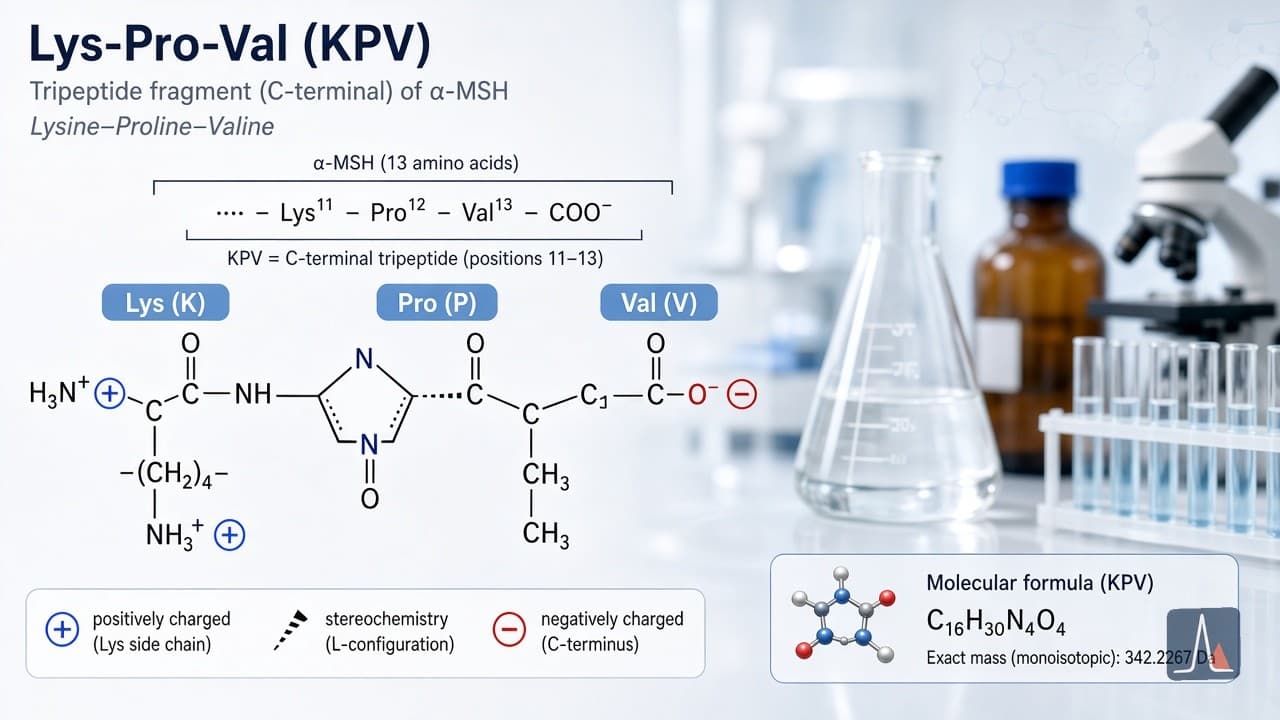
Indexed cell and animal papers describe KPV as a C-terminal alpha-MSH tripeptide studied for melanocortin and inflammatory readouts, distinct from the gastric injury-model, thymic, and cathelicidin peptides already briefed. Those records do
Published Reports on KPV
Indexed cell and animal papers describe KPV as a C-terminal alpha-MSH tripeptide studied for melanocortin and inflammatory readouts, distinct from the gastric injury-model, thymic, and cathelicidin peptides already briefed. KPV is for laboratory research only. The materials on this site are not medicines. Reporting published cell or animal findings is not guidance to use research materials in any living system. No published human clinical trials of KPV were identified in the indexed literature as of 2026.
Chemical Identity and Catalog Context
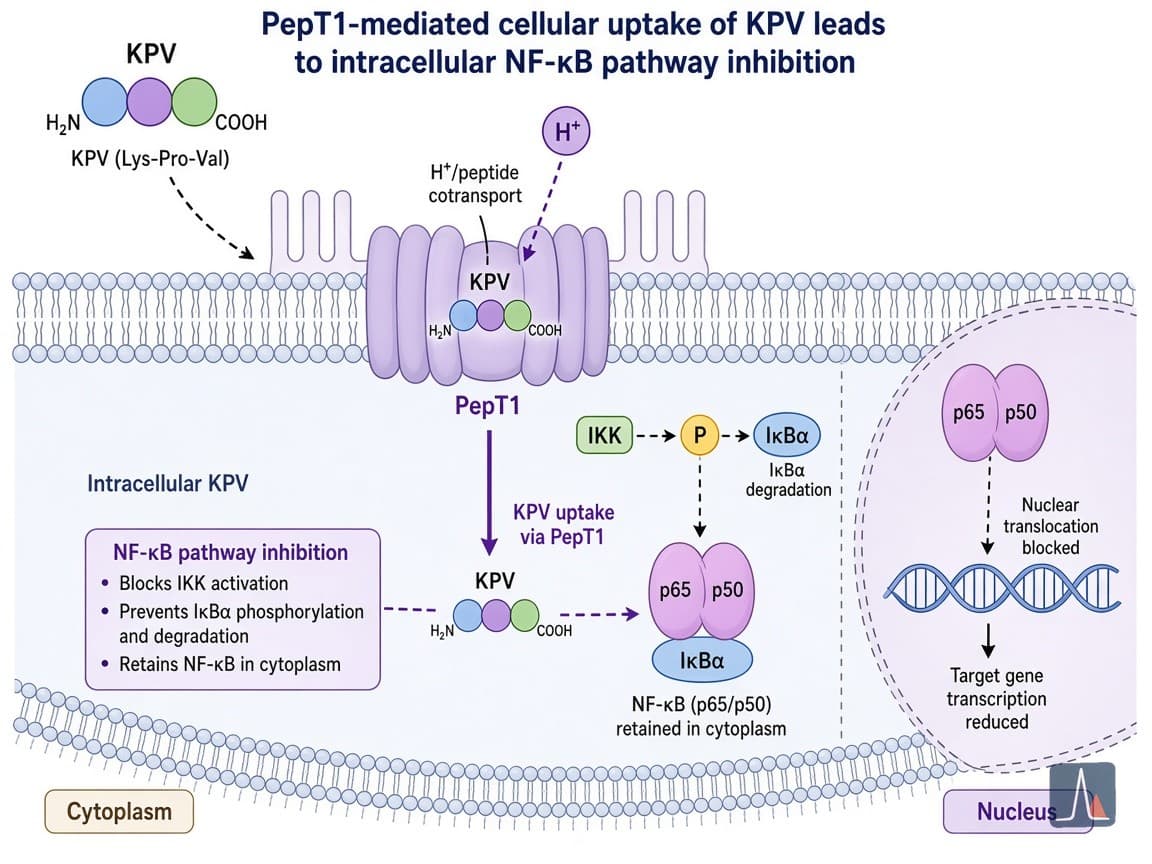
KPV (Lys-Pro-Val; α-MSH(11–13); CAS 67727-97-3) is the synthetic tripeptide corresponding to residues 11–13 at the carboxyl terminus of α-melanocyte-stimulating hormone (α-MSH), a 13-amino-acid cleavage product of pro-opiomelanocortin. With a molecular weight of approximately 342 Da, it is one of the smallest peptides in the catalog. While full-length α-MSH activates melanocortin receptors (MC1R–MC5R) to produce both pigmentation and broad anti-inflammatory effects, the literature on KPV focuses on its retained anti-inflammatory activity that is frequently independent of classical melanocortin receptor cAMP signaling. In many models KPV acts via PepT1-mediated cellular uptake in epithelial and immune cells, leading to intracellular inhibition of NF-κB nuclear translocation, MAPK phosphorylation, and downstream cytokine production (TNF-α, IL-1β, IL-6, IL-8).
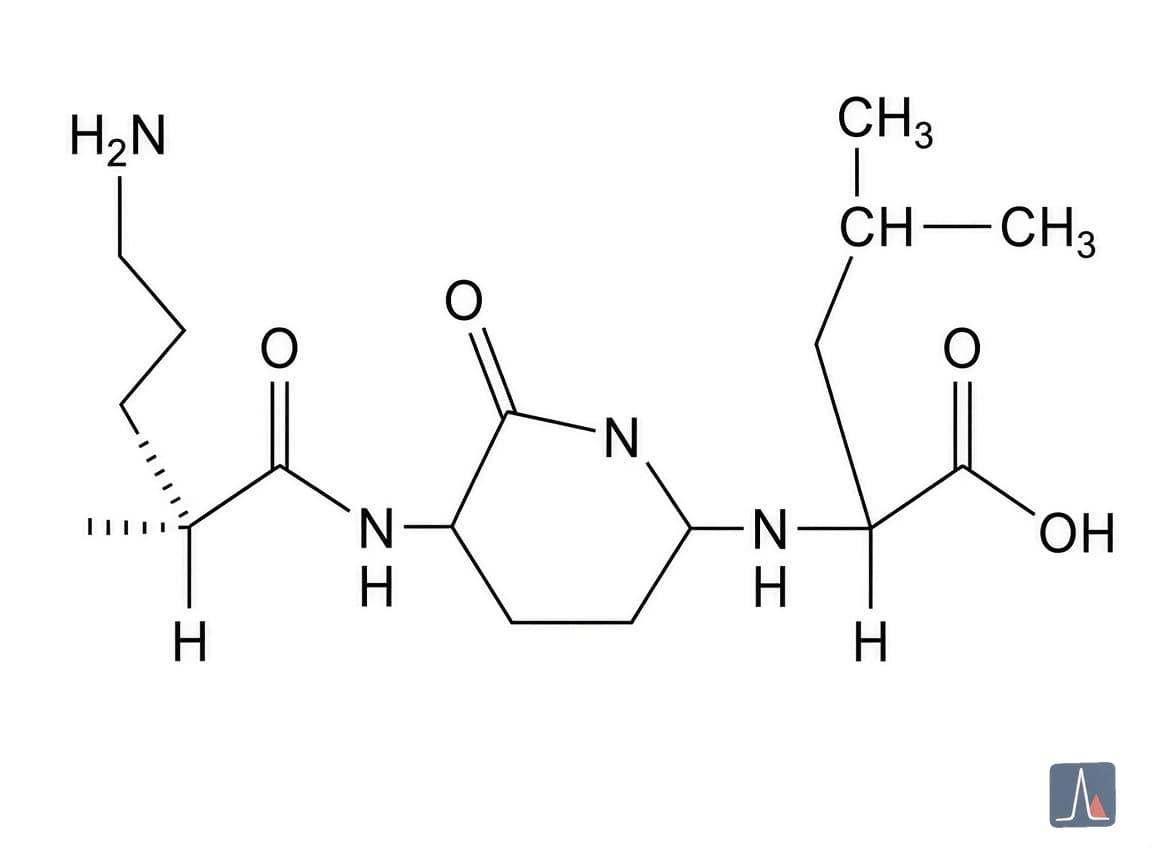
In the Rierink catalog KPV is offered for laboratory research into melanocortin-related and inflammatory signaling readouts and appears in certain mixtures such as KLOW. It is mechanistically distinct from BPC-157 (gastric pentadecapeptide cytoprotection and injury models), thymosin alpha-1 or thymalin (thymic immune restoration), and LL-37 (cathelicidin antimicrobial and innate-immune duality) already briefed. All catalog material is supplied as high-purity lyophilized powder for *in vitro* and preclinical animal use only.
Foundational Discovery and In Vitro Melanocortin-Independent NF-κB Studies (in_vitro and method papers, 2003–2015)
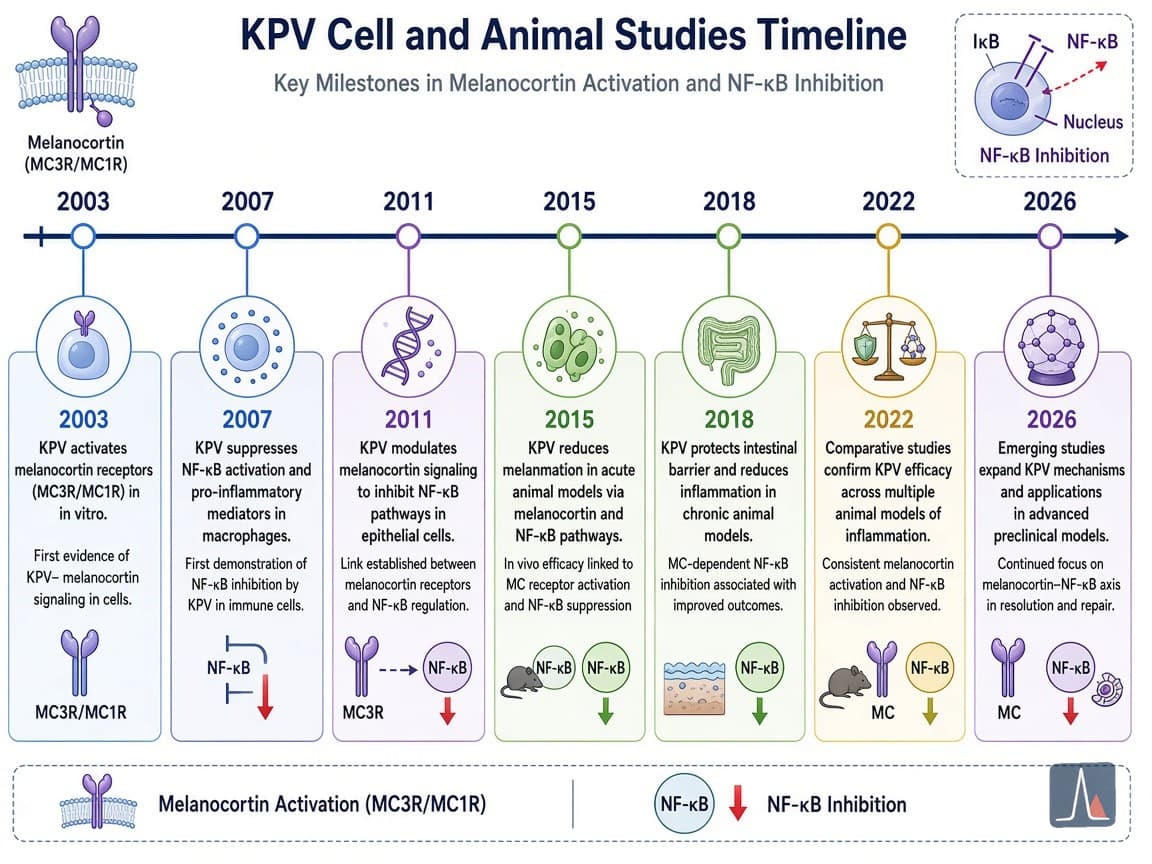
Early pharmacological work dissected α-MSH fragments. Hiltz and Lipton (late 1980s–early 1990s) reported that the C-terminal tripeptide inhibited ear swelling, paw edema, and contact sensitivity in mice without the melanotropic effects of the parent hormone. Getting et al. (2003) compared KPV to core melanocortin sequences in a crystal-induced peritonitis model. Systemic KPV reduced polymorphonuclear leukocyte (PMN) accumulation comparably to α-MSH or the MC3/4 agonist MTII; however, the effect was not blocked by the MC3/4 antagonist SHU9119, did not elevate cAMP in macrophages, and persisted in MC1R-deficient (recessive yellow e/e) mice. The authors concluded that KPV likely acts through inhibition of IL-1β functions rather than classical melanocortin receptors. 1 1
The pivotal mechanistic study is Dalmasso et al. (2008, Gastroenterology). In human intestinal epithelial cell lines (Caco-2-BBE, HT-29) and Jurkat T cells, nanomolar KPV inhibited NF-κB and MAPK activation and reduced secretion of pro-inflammatory cytokines. Uptake was shown to be mediated by the proton-coupled oligopeptide transporter PepT1 (Km values indicating high affinity in inflamed tissue); PepT1 knockdown abolished the anti-inflammatory effect. Parallel work in human bronchial epithelial cells (Land et al., 2012) demonstrated KPV nuclear import, IκBα stabilization, competition at importin-α3 sites on p65RelA, and consequent dose-dependent inhibition of NF-κB-driven IL-8, eotaxin, and MMP-9 release. These intracellular actions were separable from MC3R-mediated effects of γ-MSH. Keratinocyte signaling studies (Elliott et al., 2004) showed rapid calcium transients without consistent cAMP elevation. Limitations across these cell-line studies include use of immortalized lines that may over-express transporters or signaling components relative to primary cells, and concentrations that, while low nanomolar for signaling, required higher levels for detectable transport kinetics. 2 3
Preclinical Animal Models of Colitis and Intestinal Inflammation (animal papers, 2008–2017)
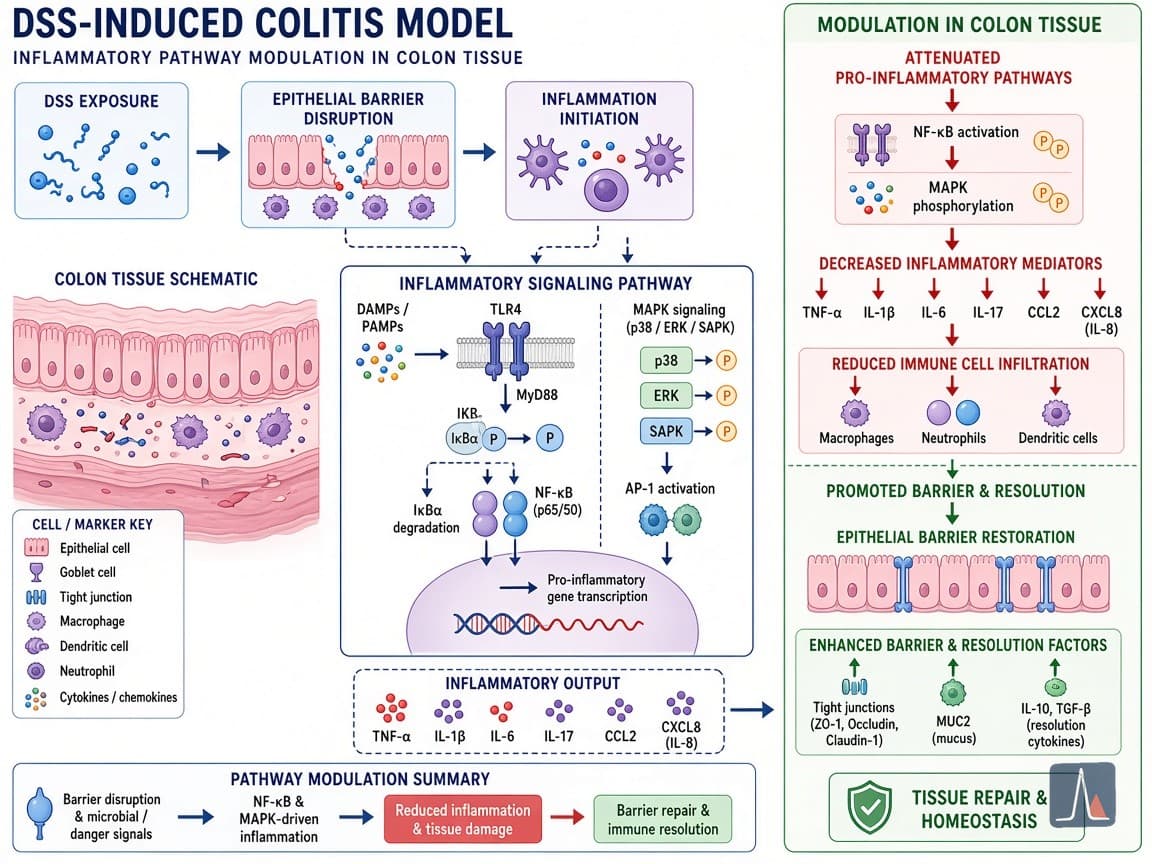
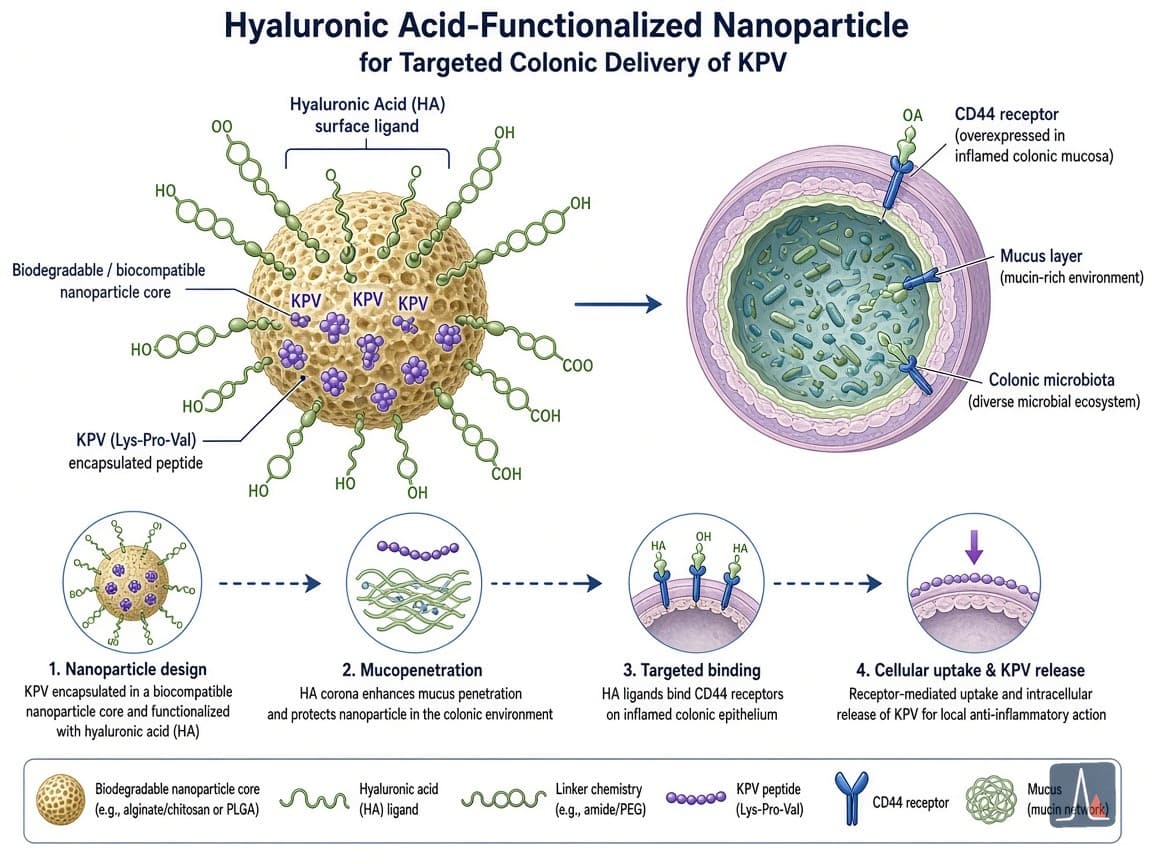
Two independent 2008 studies established efficacy in standard murine IBD models. Dalmasso et al. showed that KPV supplied in drinking water (≈100 μM) reduced disease-activity index, colon shortening, histologic damage, myeloperoxidase (MPO) activity, and pro-inflammatory cytokine mRNA in both DSS-chemical and TNBS-hapten models of colitis. Kannengiesser et al. (Inflamm Bowel Dis) replicated reduced inflammatory infiltrates, MPO, and improved weight recovery in DSS colitis and in the CD45RBhi T-cell transfer model of chronic colitis; the tripeptide conferred full survival benefit in MC1R-deficient mice during lethal DSS colitis, reinforcing receptor-independent activity. Limitations include use of acute chemical or adoptive-transfer models rather than spontaneous chronic disease, short treatment durations, and reliance on a narrow set of outcome measures (weight, histology, MPO, select cytokines). Later studies using hyaluronic-acid-functionalized nanoparticles or alginate-chitosan hydrogels demonstrated colon-targeted delivery, macrophage and epithelial uptake, and comparable or superior mucosal healing and TNF-α reduction at doses orders of magnitude lower than free peptide (Laroui, Xiao, and Merlin-group papers, 2010–2017). A colitis-associated tumorigenesis model (Viennois 2016) showed reduced tumor multiplicity in wild-type but not PepT1-knockout mice. These formulation papers highlight engineering solutions but do not address long-term safety or human translation. 4 5
Broader Preclinical Models in Peritonitis, Dermatologic, Respiratory, and Metabolic Inflammation (animal and in_vitro papers, 2003–2026)
KPV reduced PMN migration in IL-1β-induced peritonitis and retained activity in MC1R-mutant mice (Getting 2003). Cutaneous models (contact dermatitis, ear swelling, PM10-exposed HaCaT keratinocytes and 3D skin constructs) showed reduced epidermal thickening, ROS, IL-1β, MAPK/NF-κB activation, and pyroptosis markers (Sung ~2025). Respiratory epithelial studies confirmed NF-κB inhibition and lowered chemokine output. Recent 2026 reports extend to macrophage NLRP3 inflammasome suppression and foam-cell formation, as well as inhibition of 3T3-L1 adipogenesis and high-fat-diet-induced weight gain, adipose expansion, and dyslipidemia via ROS-AKT-mTORC1-PPARγ modulation. Corneal wound-healing models in rabbits suggested nitric-oxide-dependent acceleration of re-epithelialization. Oral-mucositis hydrogel studies in rats reported lowered local cytokines. These studies broaden the readout portfolio but remain preclinical, often use high local concentrations, and lack independent large-scale replication outside core laboratories. Limitations include variable receptor dependence across cell types, short observation periods, and absence of pharmacokinetic data in non-rodent species. 6
Recent Reviews, Delivery Systems, Regulatory Context, and Recurrent Limitations (review and method papers, 2008–2026)
Brzoska et al. (2008, Endocrine Reviews) synthesized decades of α-MSH and tripeptide research, positioning KPV (and the related KdPT) as retaining potent anti-inflammatory and protective effects across models of fever, dermatitis, colitis, arthritis, ocular inflammation, and organ injury while lacking the pigmentary actions that limit full-length α-MSH. Subsequent reviews (2015–2026) reiterate the NF-κB/PepT1 axis, highlight nanoparticle and hydrogel advances for colon-specific release, and note potential for immune-mediated diseases. Analytical papers describe detection methods for research or doping contexts. 2026 FDA Pharmacy Compounding Advisory Committee briefing documents observed zero published human clinical trials, no registered studies on ClinicalTrials.gov, and no human exposure or adverse-event data in the literature. Recurrent limitations cited across reviews include heavy reliance on acute rodent injury models, limited independent replication outside a few academic groups (notably the Merlin laboratory for PepT1/gut work), incomplete mechanistic mapping (mixture of receptor-independent intracellular actions and context-dependent melanocortin contributions), questions of oral bioavailability and peptide stability without advanced formulations, absence of long-term toxicology or dose-ranging in higher species, and the complete lack of human physiological or therapeutic data. Bell-shaped dose–response curves appeared in some early ear-edema experiments.
Evidence Context and Recurrent Limitations
The indexed preclinical literature presents a coherent picture of KPV as a compact melanocortin-derived tripeptide capable of dampening NF-κB-driven inflammation across intestinal, cutaneous, respiratory, peritoneal, and emerging metabolic models. Effects are reproducibly reported at nanomolar concentrations in cell culture and low-mg/kg exposures in rodents, often via PepT1-mediated uptake and intracellular signaling that can operate independently of classical MC1R/MC3R cAMP pathways. Nanoparticle and hydrogel delivery systems address potential stability and targeting limitations and improve efficacy in colitis models. These findings differentiate KPV from the gastric cytoprotection focus of BPC-157, the immune-restorative profile of thymic peptides, and the antimicrobial/dual-role innate-immune actions of LL-37.
However, recurrent limitations are substantial. The core colitis and PepT1 data cluster within a small number of related laboratories. Most studies use acute chemical or adoptive-transfer models rather than spontaneous chronic disease. There are no published human pharmacokinetic, safety, efficacy, or even physiological reports as of 2026. Long-term toxicology, non-rodent species data, head-to-head comparisons with approved agents, and standardized analytical methods for human matrices are absent. Mechanistic heterogeneity (receptor-independent vs. non-canonical melanocortin contributions) remains incompletely resolved. While the preclinical signals are intriguing for laboratory research into mucosal protection and inflammatory signaling, these records do not establish efficacy, dosing, safety, or any human application. Translation would require independent large-scale replication, rigorous pharmacokinetic profiling, and controlled human studies. All catalog material remains strictly for laboratory research.
Sources
- Dalmasso G et al. (2008). PepT1-mediated tripeptide KPV uptake reduces intestinal inflammation. *Gastroenterology*. PMID: 18061177. DOI: 10.1053/j.gastro.2007.11.020.
- Kannengiesser K et al. (2008). Melanocortin-derived tripeptide KPV has anti-inflammatory potential in murine models of inflammatory bowel disease. *Inflamm Bowel Dis*. PMID: 18092346. DOI: 10.1002/ibd.20334.
- Getting SJ et al. (2003). Dissection of the anti-inflammatory effect of the core and C-terminal (KPV) alpha-melanocyte-stimulating hormone peptides. *J Pharmacol Exp Ther*. PMID: 12750433. DOI: 10.1124/jpet.103.051623.
- Brzoska T et al. (2008). Alpha-melanocyte-stimulating hormone and related tripeptides: biochemistry, antiinflammatory and protective effects in vitro and in vivo. *Endocr Rev*. PMID: 18612139. DOI: 10.1210/er.2007-0027.
- Land SC (2012). Inhibition of cellular and systemic inflammation cues in human bronchial epithelial cells by melanocortin-related peptides. *Int J Physiol Pathophysiol Pharmacol*. PMC3403564.
- Xiao B et al. (2017). Orally Targeted Delivery of Tripeptide KPV via Hyaluronic Acid-Functionalized Nanoparticles Efficiently Alleviates Ulcerative Colitis. *Mol Ther*. PMID: 28143741. DOI: 10.1016/j.ymthe.2016.11.020.
Additional supporting cell, animal, formulation, and review papers (2004–2026) on keratinocytes, macrophages, adipogenesis, hydrogels, and regulatory summaries were consulted from PubMed and Europe PMC. All claims derive from these indexed primary or review sources. No claims without DOI/PMID/URL were included.
More briefings
- Survodutide Dual Agonist: Preclinical and Clinical EvidenceThe open-catalog entry for survodutide describes a synthetic acylated 29-amino-acid peptide dual agonist of glucagon and GLP-1 receptors supplied as high-purity lyophilized powder for laboratory metabolic research. Randomised trials report
- Dulaglutide: GLP-1 Receptor Agonist in Metabolic CareDulaglutide is a recombinant Fc-fusion GLP-1 receptor agonist engineered for once-weekly administration in laboratory and clinical metabolic research. Randomised trials report glycaemic improvements, cardiovascular risk reduction and modest
- Cagrilintide-Semaglutide Mixture: Open-Catalog Context and Metabolic Trial EvidenceThe open-catalog cagrilintide-semaglutide mixture supplies a research pairing of an amylin receptor agonist and GLP-1 receptor agonist for laboratory metabolic studies. Randomised trials of co-administration report enhanced weight loss (13–
All information and products discussed are for laboratory and research use only. Not for human or veterinary use. Not intended to diagnose, treat, cure, or prevent any disease.