
21 October 2026
Published Reports on Cagrilintide as an Amylin-Receptor Agonist
Download PDF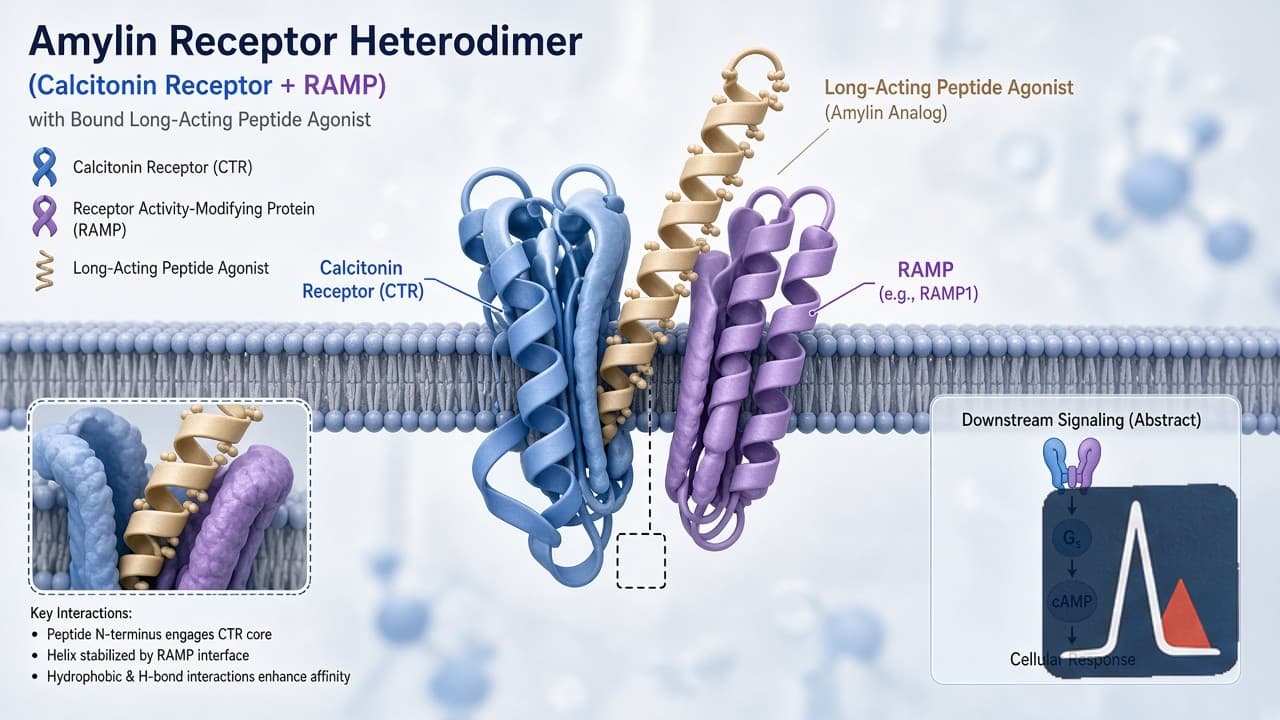
Published papers identify cagrilintide as a long-acting amylin-receptor agonist rather than another GLP-1 or dual incretin peptide, and those records do not establish anything about research-vial use. Cagrilintide is for laboratory research
Published Reports on Cagrilintide as an Amylin-Receptor Agonist
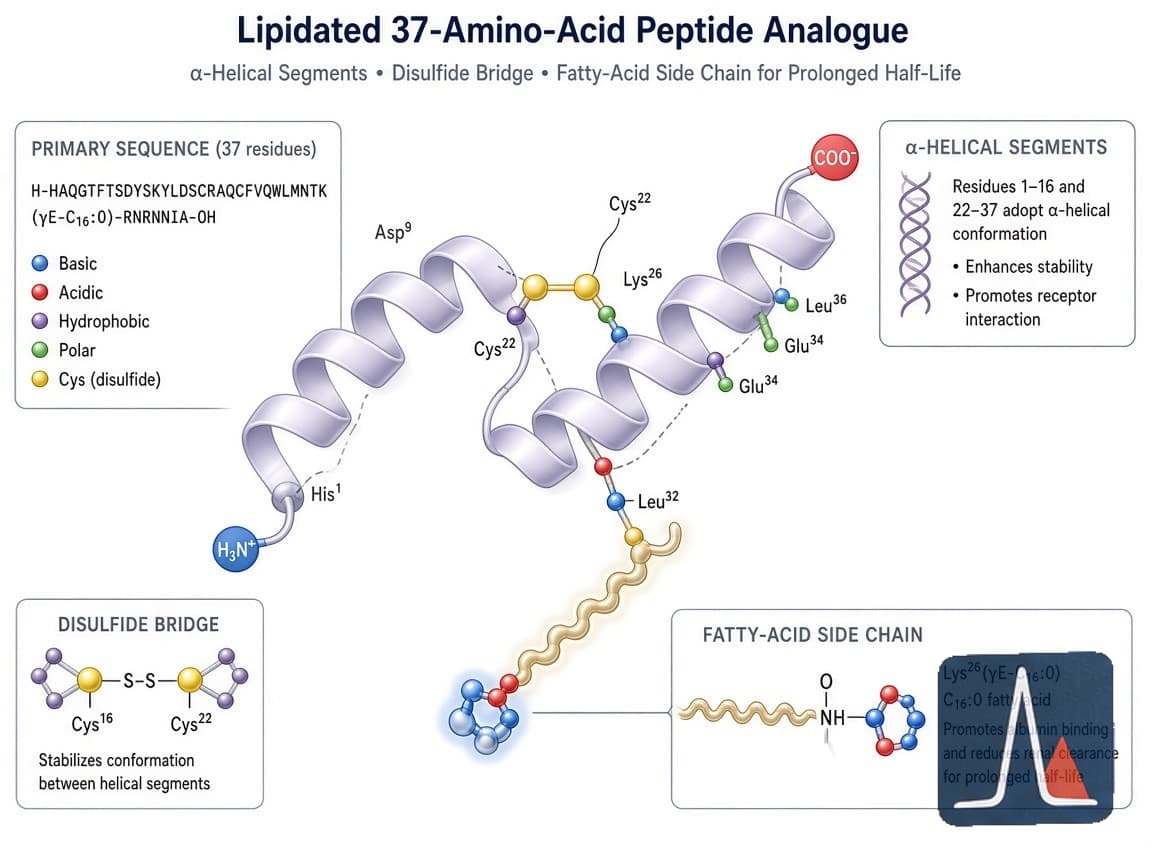
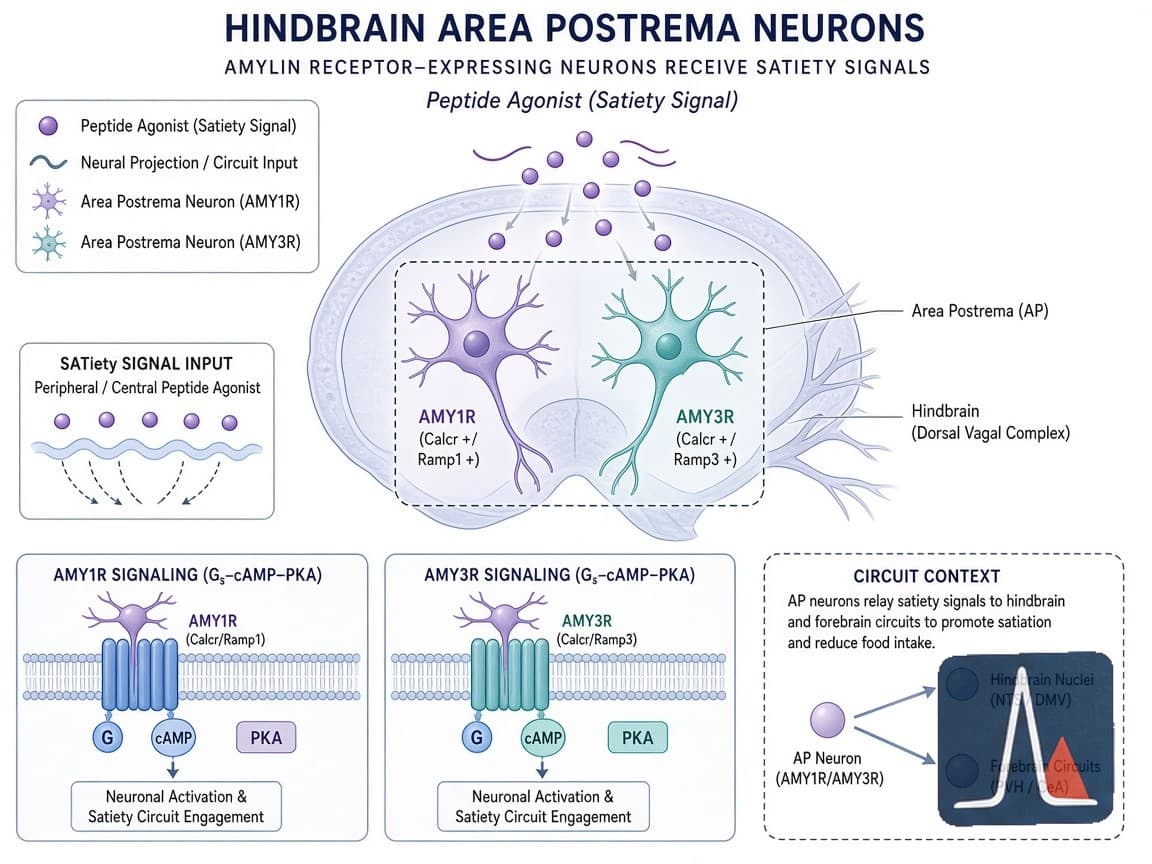
Published papers identify cagrilintide as a long-acting amylin analogue and receptor agonist (sometimes termed a dual amylin-calcitonin receptor agonist or DACRA) rather than a GLP-1 receptor agonist or dual-incretin peptide such as semaglutide, tirzepatide or retatrutide. Amylin is a 37-amino-acid pancreatic beta-cell hormone co-secreted with insulin that acts primarily in the area postrema of the hindbrain to promote satiety, slow gastric emptying and suppress postprandial glucagon secretion. Cagrilintide was designed with an N-terminal lipid modification and sequence changes to improve solubility, reduce fibrillation propensity and extend half-life for once-weekly administration while retaining amylin-like pharmacology.
Indexed records, including development chemistry papers, structural biology studies, preclinical receptor-knockout experiments and randomised clinical trials, consistently label it an amylin-receptor agonist. It is frequently studied in fixed-dose combination with the GLP-1 receptor agonist semaglutide (as CagriSema) precisely because the two pathways are complementary rather than redundant. Clinical reports describe assigned-arm differences in percent body-weight change, HbA1c and adverse-event incidence versus placebo or active comparators in adults with overweight, obesity or type 2 diabetes. Each summary below names the study type and states one recorded limitation. These are observations from published pharmaceutical-development studies. Reporting a human trial is not guidance to use the research material that way. Cagrilintide is for laboratory research only.
Receptor Pharmacology and Structural Studies (in_vitro and method papers, 2025)
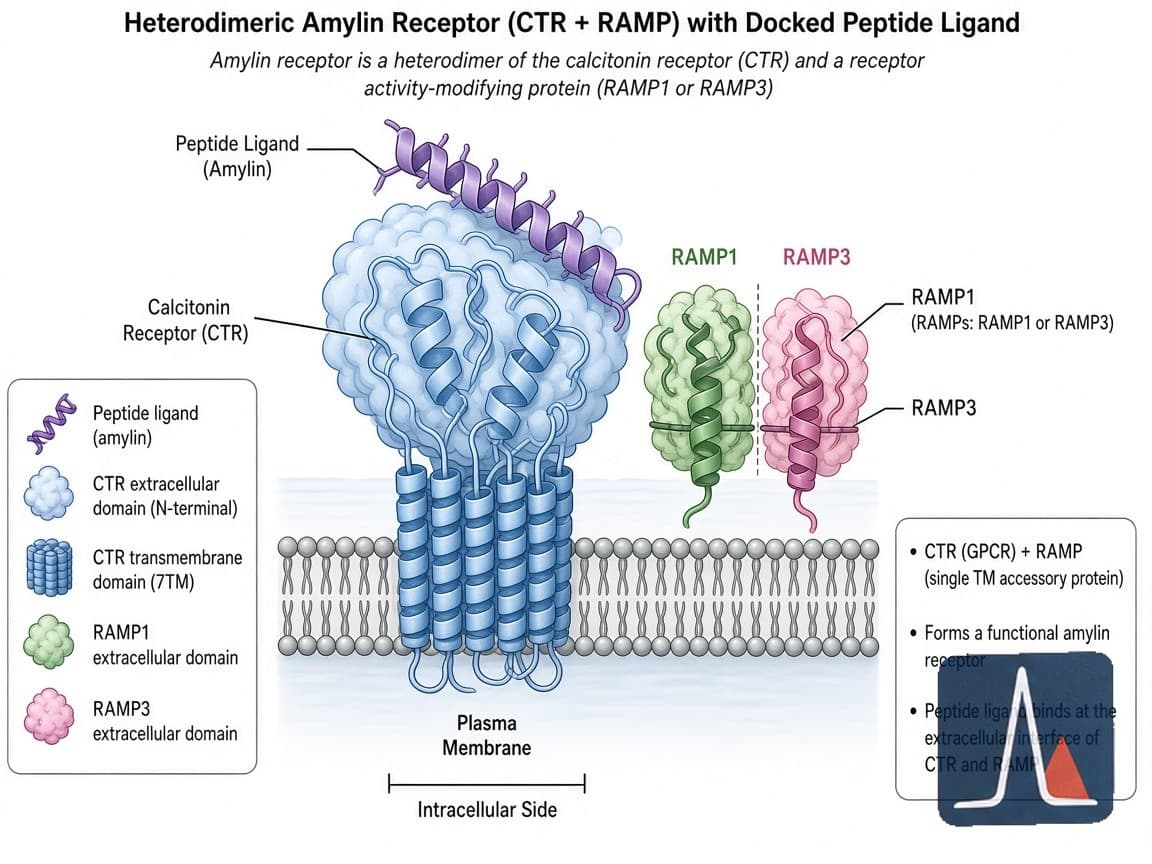
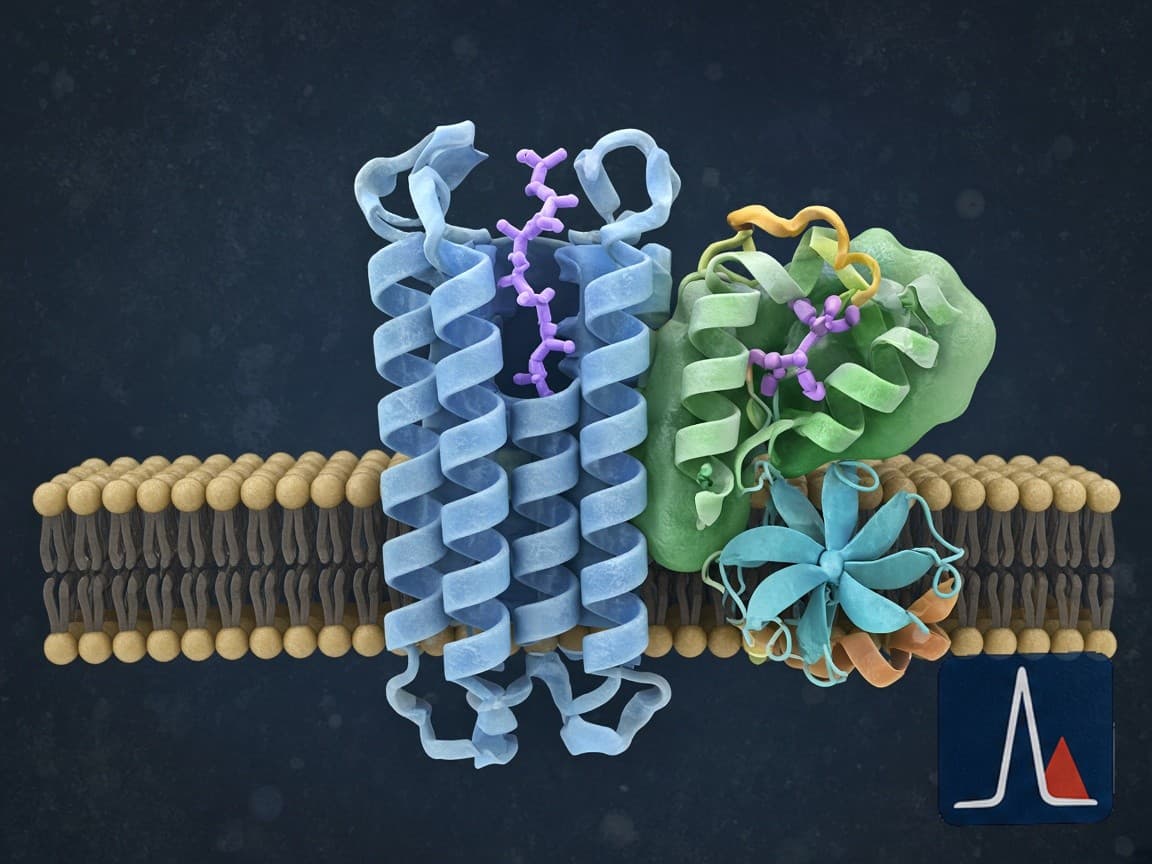
Several 2025 papers used cryo-electron microscopy to resolve structures of cagrilintide bound to Gs-coupled active states of the calcitonin receptor (CTR) and the three amylin-receptor complexes (AMY1R = CTR+RAMP1, AMY2R = CTR+RAMP2, AMY3R = CTR+RAMP3). The structures showed an amylin-like "bypass" binding mode in which the peptide C-terminus engages the extracellular domain while the N-terminal helix interacts with the transmembrane bundle. Key molecular features included an intramolecular salt bridge (Glu14-Arg17) stabilising helical conformation, Phe23 anchoring at the transmembrane-micelle interface, and Pro37 interaction with the receptor extracellular domain. Functional cAMP assays confirmed non-selective Gs signalling potency across CTR and AMY receptors with limited activity at CGRP or adrenomedullin receptors. These records distinguish cagrilintide from incretin mimetics that target GLP-1 or GIP receptors.
A parallel 2025 eBioMedicine study in diet-induced obese mice and RAMP1/3 knockout animals demonstrated that cagrilintide-induced reductions in food intake, body weight and relative fat mass, together with neuronal activation in the area postrema, required the presence of AMY1 and AMY3 receptors. In knockout mice the weight-loss effect was abolished or markedly attenuated, whereas salmon calcitonin showed different behaviour. These findings are consistent with amylin physiology but are confined to rodent models. Limitation: in-vitro structural biology, cell-based signalling assays and short-term preclinical rodent experiments do not predict human receptor occupancy, long-term efficacy or safety in people. It is plausible that selective modulation of hindbrain amylin signalling could influence human energy balance; this remains theoretical.
Phase 2 Monotherapy Dose-Finding Trial in Overweight and Obesity (randomised double-blind placebo- and liraglutide-controlled clinical trial, 2021)
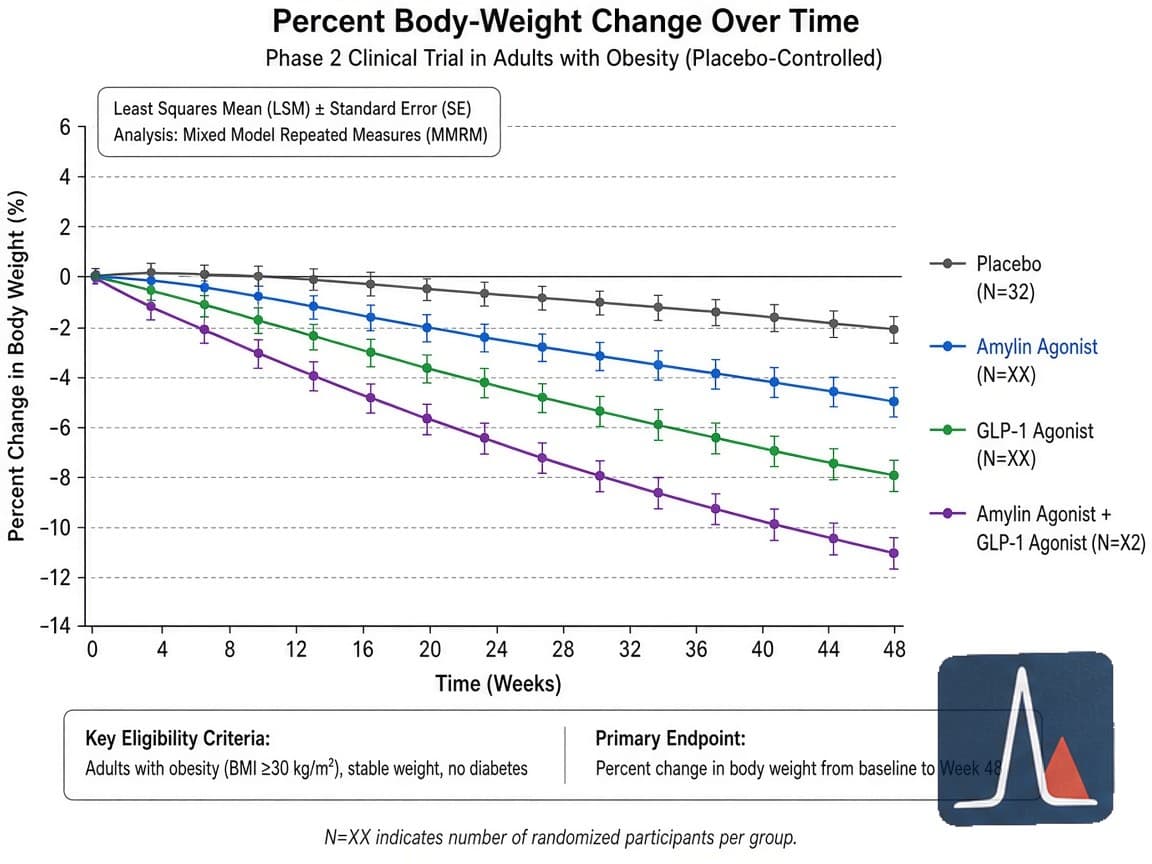
Lau et al. (Lancet, PMID 34798060, DOI 10.1016/S0140-6736(21)01751-7) reported a multicentre phase 2 trial that randomised 706 adults with overweight or obesity (BMI ≥27 kg/m² with comorbidities or ≥30 kg/m², without diabetes) to once-weekly subcutaneous cagrilintide (0.3, 0.6, 1.2, 2.4 or 4.5 mg), liraglutide 3.0 mg daily or placebo for 26 weeks after dose escalation, together with lifestyle intervention. Using the trial-product estimand, mean percentage weight loss ranged from 6.0 % to 10.8 % across cagrilintide doses versus 3.0 % with placebo (estimated treatment differences 3.0–7.8 percentage points, all p<0.001). The 4.5 mg dose produced 10.8 % loss versus 9.0 % with liraglutide (estimated treatment difference 1.8 percentage points, p=0.03). Gastrointestinal disorders (nausea, constipation, diarrhoea) were the most frequent adverse events and occurred in a dose-related manner (41–63 % vs 32 % placebo); most were mild-to-moderate and transient. Permanent discontinuation due to adverse events occurred in approximately 10 % of participants across groups.
The authors concluded that the findings support further development of molecules with novel mechanisms for weight management. Limitation: this was a phase 2 dose-ranging study of 26 weeks duration in a selected population without diabetes; it was not powered for rare events, cardiovascular outcomes or long-term weight maintenance. Subsequent registrational work has largely focused on the fixed-dose combination with semaglutide. The record supplies no information about research-vial purity, stability or human administration.
Phase 3 Combination Trials with Semaglutide (CagriSema) in Type 2 Diabetes and Obesity (multiple randomised double-blind placebo- or active-controlled clinical trials, 2025–2026)
Several 2025–2026 publications in the New England Journal of Medicine, The Lancet and Lancet Diabetes & Endocrinology described the REDEFINE (obesity-focused) and REIMAGINE (type 2 diabetes-focused) phase 3 programmes. In REIMAGINE 1 (treatment-naïve early type 2 diabetes, 40 weeks), once-weekly CagriSema (cagrilintide 2.4 mg + semaglutide 2.4 mg or 1.0 mg + 1.0 mg) produced HbA1c reductions of −1.8 and −1.5 percentage points versus −0.1 with placebo and body-weight reductions of −13.8 % and −11.8 % versus −1.4 % (all estimated treatment differences vs placebo statistically significant, p<0.0001). In REIMAGINE 2 (patients on metformin ± SGLT2 inhibitor, 68 weeks), CagriSema 2.4/2.4 mg was superior to semaglutide 2.4 mg alone for both HbA1c (−1.91 vs −1.75 percentage points) and weight (−14.2 % vs −10.2 %). In REIMAGINE 3 (add-on to basal insulin), similar superiority over placebo was observed with no increase in hypoglycaemia. Parallel REDEFINE trials in adults with obesity (with or without type 2 diabetes) reported mean weight losses of 13.7–20.4 % with CagriSema versus approximately 3 % with placebo at 68 weeks, with high proportions achieving ≥15 % or ≥20 % loss. Gastrointestinal adverse events occurred in 70–80 % of active-treatment participants (versus ~35 % placebo), were predominantly nausea, vomiting, diarrhoea or constipation, and were mostly transient and mild-to-moderate. Discontinuation rates due to adverse events remained low and comparable to placebo in many analyses.
These trials consistently recorded favourable cardiometabolic changes (waist circumference, blood pressure, lipids) as secondary endpoints. Limitation: all were sponsor-funded registrational trials conducted in protocol-specified populations receiving structured lifestyle intervention and background therapy; finite follow-up (40–68 weeks), selected inclusion criteria and the use of a fixed-dose pharmaceutical combination limit generalisability. Dedicated cardiovascular-outcome data and very-long-term safety remain under investigation in ongoing programmes. Monotherapy arms or sub-analyses in these trials showed meaningful but generally smaller effects than the combination, reinforcing the complementary-mechanism rationale. None of these records address research-vial material.
It is plausible that concurrent activation of amylin and GLP-1 pathways could produce additive satiety signals in humans; this is a theoretical inference from the trial designs and preclinical complementarity data, not a demonstrated property of any vial.
Summary of Evidence and Research Context
Across the cited literature, cagrilintide is uniformly presented as an amylin-receptor agonist. No paper reviewed here confuses it with incretin mimetics; instead, the CagriSema programme is explicitly built on the premise of non-overlapping hindbrain and hypothalamic circuitry. Preclinical and structural work provides mechanistic grounding, while clinical reports supply quantitative estimates of effect size in defined cohorts together with tolerability data dominated by gastrointestinal class effects. Unfavourable or null observations are routinely reported: dose-dependent increases in nausea, modest discontinuation rates, absence of weight-loss plateau in shorter studies, and the need for longer-term outcome data. No human study summarised here evaluated research-grade or compounded material, and none claimed regulatory approval or broad safety for non-trial use.
The body of evidence remains that of an investigational pharmaceutical agent in late-stage development. Researchers using cagrilintide in laboratory settings should interpret published findings strictly within the context of the models, populations and formulations actually tested. Future papers may refine understanding of receptor subtype selectivity, long-term cardiometabolic outcomes or combination strategies, but current records supply no warrant for extrapolation to research vials.
Cagrilintide is for laboratory research only.
Sources
- Lau DCW, Erichsen L, et al. Once-weekly cagrilintide for weight management in people with overweight and obesity: a multicentre, randomised, double-blind, placebo-controlled and active-controlled, dose-finding phase 2 trial. *Lancet*. 2021;398(10317):2160-2172. doi:10.1016/S0140-6736(21)01751-7. PMID: 34798060.
- Aroda VR, et al. Efficacy and safety of once-weekly cagrilintide-semaglutide (CagriSema) in adults with type 2 diabetes inadequately controlled on diet and exercise (REIMAGINE 1): a randomised, double-blind, placebo-controlled, phase 3a study. *Lancet Diabetes Endocrinol*. 2026. doi:10.1016/S2213-8587(26)00126-9.
- Corresponding REIMAGINE 2 and REIMAGINE 3 papers (Buse, Rosenstock et al., *Lancet Diabetes Endocrinol* and *Lancet*, 2026).
- Garvey WT, et al. Cagrilintide-Semaglutide in Adults with Overweight or Obesity and Type 2 Diabetes. *N Engl J Med*. 2025. doi:10.1056/NEJMoa2502082.
- Cao J, et al. Structural and dynamic features of cagrilintide binding to calcitonin and amylin receptors. *Nat Commun*. 2025. PMC11982234.
- Carvas AO, et al. Cagrilintide lowers bodyweight through brain amylin receptors 1 and 3. *eBioMedicine*. 2025. doi:10.1016/j.ebiom.2025.105836.
- Kruse T, et al. Development of cagrilintide (AM833). *J Med Chem*. 2021 (development chemistry paper).
Additional mechanism and meta-analysis papers indexed on PubMed or Europe PMC (2025–2026) were consulted for consistency of receptor classification. All citations are primary literature or direct trial reports. No shop, forum or non-peer-reviewed sources were used.
More briefings
- Survodutide Dual Agonist: Preclinical and Clinical EvidenceThe open-catalog entry for survodutide describes a synthetic acylated 29-amino-acid peptide dual agonist of glucagon and GLP-1 receptors supplied as high-purity lyophilized powder for laboratory metabolic research. Randomised trials report
- Dulaglutide: GLP-1 Receptor Agonist in Metabolic CareDulaglutide is a recombinant Fc-fusion GLP-1 receptor agonist engineered for once-weekly administration in laboratory and clinical metabolic research. Randomised trials report glycaemic improvements, cardiovascular risk reduction and modest
- Cagrilintide-Semaglutide Mixture: Open-Catalog Context and Metabolic Trial EvidenceThe open-catalog cagrilintide-semaglutide mixture supplies a research pairing of an amylin receptor agonist and GLP-1 receptor agonist for laboratory metabolic studies. Randomised trials of co-administration report enhanced weight loss (13–
All information and products discussed are for laboratory and research use only. Not for human or veterinary use. Not intended to diagnose, treat, cure, or prevent any disease.