
30 October 2026
Published Reports on BAC water
Download PDF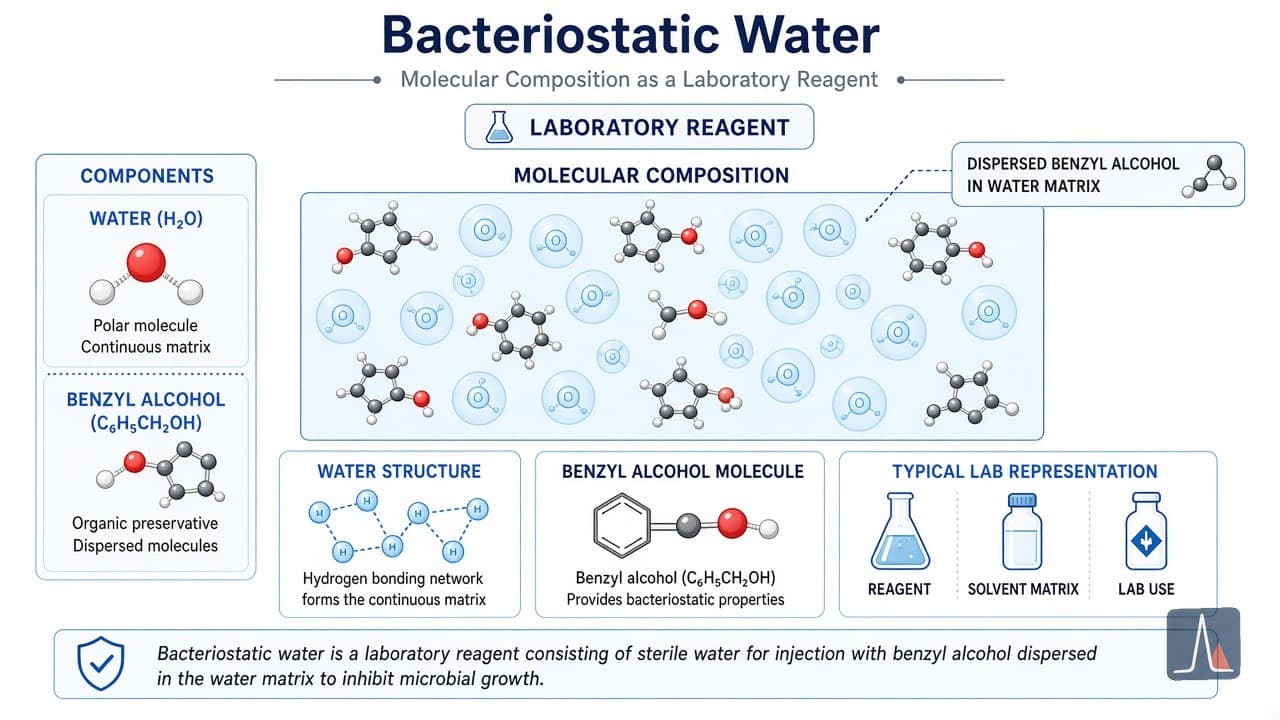
Published reports and pharmacopeial standards characterize BAC water as sterile Water for Injection containing 0.9% benzyl alcohol as bacteriostatic preservative, serving as a common laboratory reagent for reconstituting research peptides i
Published Reports on BAC water
Published reports and pharmacopeial standards characterize BAC water (bacteriostatic water for injection, bWFI) as a sterile, non-pyrogenic, unbuffered preparation of Water for Injection containing 0.9% w/v (9 mg/mL, approximately 83 mM) benzyl alcohol (C₇H₈O, CAS 100-51-6) added as the antimicrobial preservative. Supplied in multi-dose vials, it functions as a standard laboratory reagent for dissolving or diluting lyophilized research peptides and proteins where repeated aseptic access over days or weeks is required. The benzyl alcohol component inhibits multiplication of contaminating microorganisms by increasing membrane fluidity and compromising structural integrity but is neither bactericidal at this concentration nor a sterilant for already-contaminated material. It does not remove endotoxins, buffer the solution, or chemically stabilize the solute against hydrolysis, oxidation, deamidation, or other degradation pathways. All materials from Rierink Compounds are for laboratory research only. Reporting published studies on laboratory reagents or excipients is not guidance to use any Rierink material in any particular way.
Chemical Identity and Catalog Context
In the Rierink catalog, BAC water is positioned as a reagent alongside related items such as Antibacterial water. Its identity is defined by two components only: Water for Injection, USP, and benzyl alcohol at the pharmacopeial specification of 0.9% w/v. The solution is hypotonic, contains no salts or buffers, and exhibits a pH nominally around 5.7 within the specified range of 4.5–7.0. This distinguishes it from preservative-free sterile water (intended for single-use ampoules) and from bacteriostatic sodium chloride solutions that add isotonicity. Published labels (DailyMed, USP) and supplier certificates consistently confirm these parameters, with lot-specific testing via HPLC-UV or LC-MS for benzyl alcohol identity and quantity, potentiometry for pH, kinetic chromogenic LAL for endotoxins (typically ≤0.25 EU/mL), and membrane filtration for sterility. Benzyl alcohol’s preservative role enables the multi-dose format while introducing a non-inert organic component that must be accounted for in downstream assays or compatibility assessments.
Pharmacopeial Standards, Composition Verification, and Analytical Challenges (method and analytical papers, 1990s–2026)
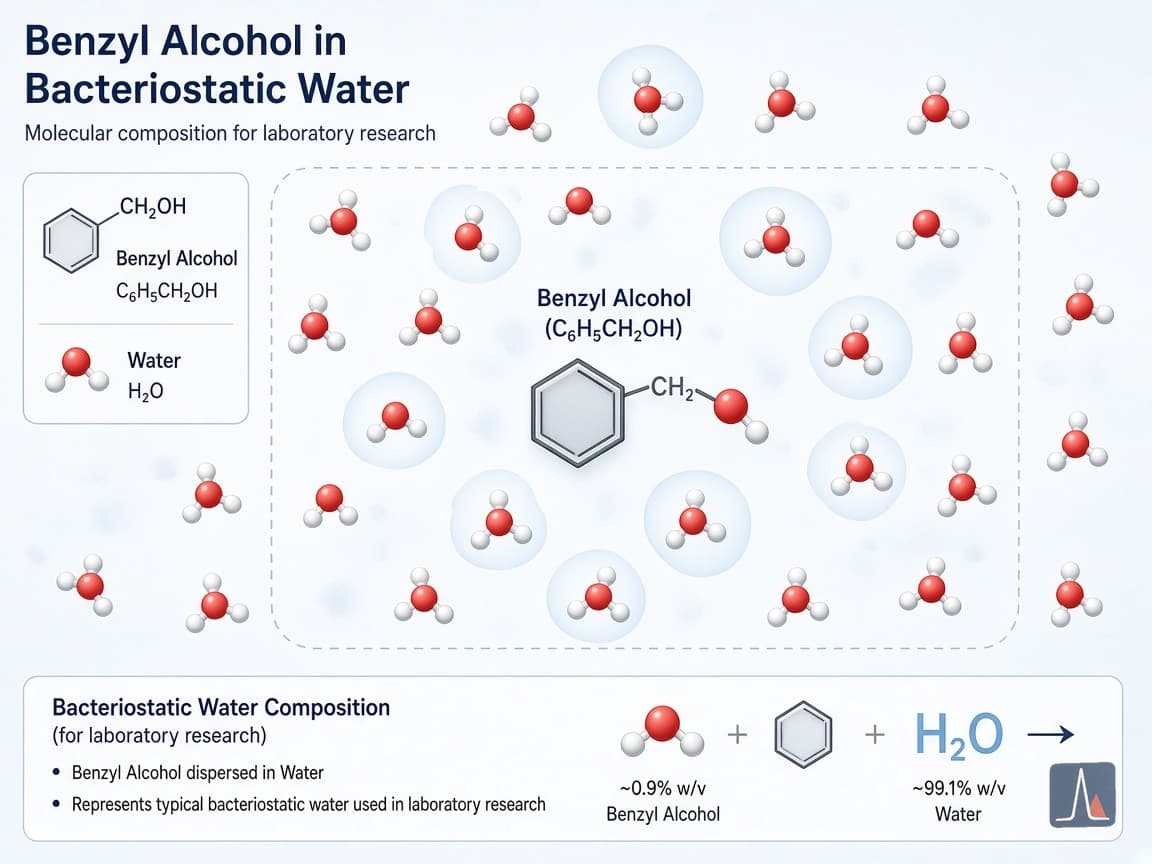
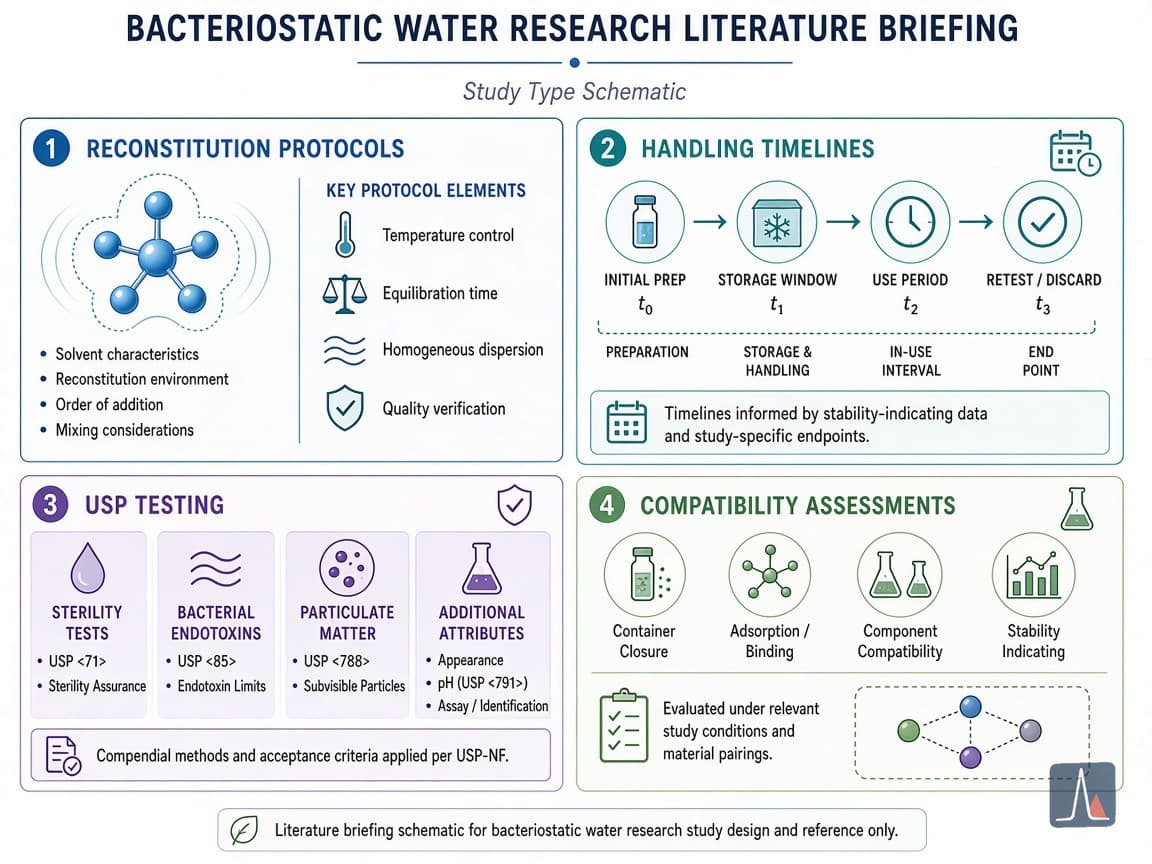
The United States Pharmacopeia monograph for Bacteriostatic Water for Injection establishes rigorous specifications including sterility (USP <71>), bacterial endotoxin limits (USP <85>), particulate matter (USP <788>), and antimicrobial effectiveness (USP <51>). pH must fall between 4.5 and 7.0, with no added buffering agents contributing to the low ionic strength that complicates measurement. A 2023 method paper (Hu et al., Journal of Pharmaceutical Sciences, DOI: 10.1016/j.xphs.2023.02.023, PMID: 36870668) comprehensively characterizes these difficulties: unbuffered bWFI produces long electrode response times, noisy signals, and drift even after KCl addition to increase ionic strength. The authors evaluated probe suitability, stabilization times, meter settings, and environmental controls, recommending specific protocols to achieve reproducible results in a controlled laboratory setting. Certificates of analysis for research-grade material routinely report benzyl alcohol content near 0.921% against a 0.9% target, pH values within range, and passing sterility and endotoxin tests. Over time, benzyl alcohol can oxidize to benzaldehyde and benzoic acid upon air or light exposure or adsorb into certain rubber stoppers and plastics, potentially lowering its concentration in aged or frequently punctured vials. These factors underscore the importance of lot-specific verification and adherence to labeled storage.
Antimicrobial Mechanism, Preservative Efficacy, and Microbiology Studies (in_vitro and method papers, 1950s–2020s)
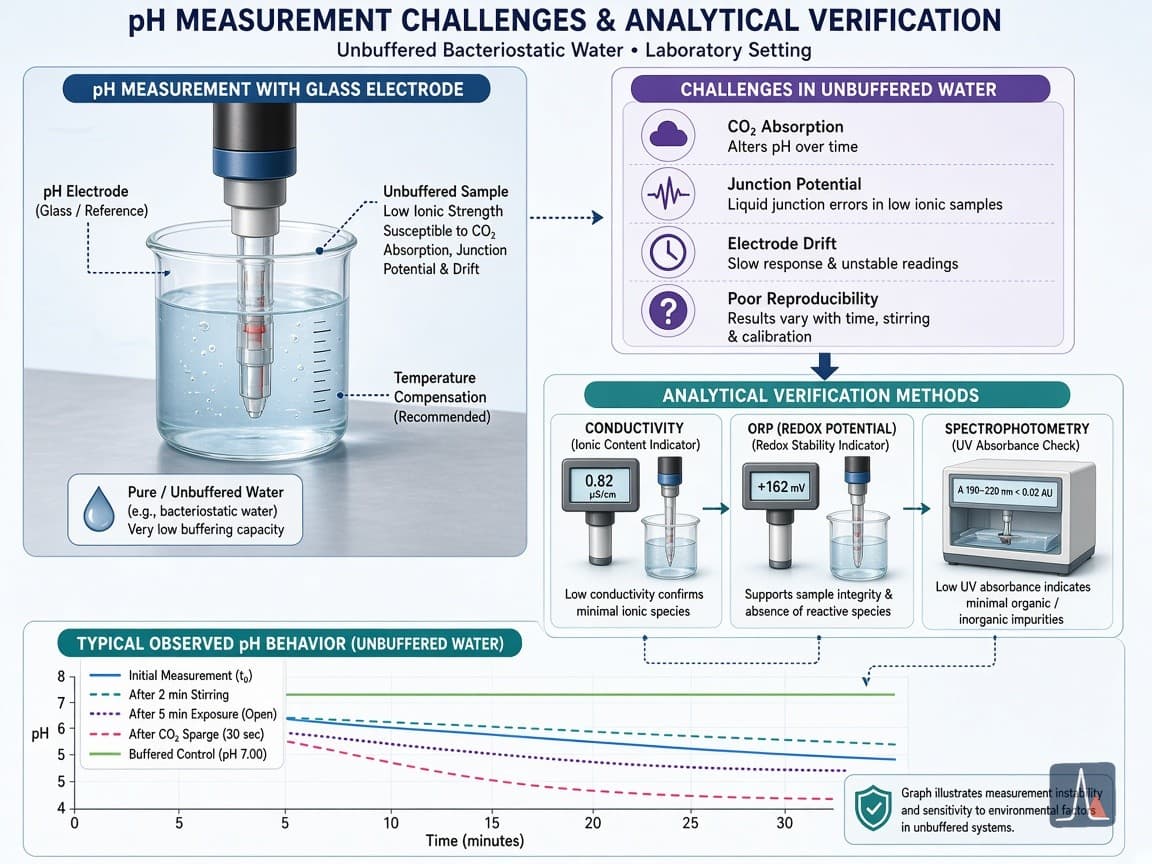
In vitro microbiology and compendial challenge studies confirm that 0.9% benzyl alcohol exerts bacteriostatic rather than bactericidal effects against common laboratory contaminants including Gram-positive and Gram-negative bacteria, yeasts, and molds. Historical papers (e.g., Straka and Stokes, 1957, Applied Microbiology) examined bacterial survival in various diluents, demonstrating rapid killing in some inorganic media but survival or slow growth in others; benzyl alcohol at pharmacopeial levels reliably suppresses proliferation in multi-dose containers when combined with aseptic technique. USP <51> antimicrobial effectiveness testing validates performance against indicator organisms (S. aureus, E. coli, P. aeruginosa, C. albicans, A. brasiliensis) over 28 days. The mechanism involves membrane fluidization that compromises integrity without complete lysis at this concentration, with limited sporicidal activity. Outbreak analyses and compounding guidelines (USP <797>) emphasize that the preservative does not compensate for poor technique, compromised septa, or initial contamination. Refrigeration slows microbial growth further but does not replace disinfection of the stopper with 70% isopropyl alcohol (allowed to dry) before each entry with a fresh sterile needle and syringe. These studies collectively support BAC water’s utility for multi-withdrawal laboratory workflows while highlighting recurrent risks if beyond-use dating or aseptic practices are ignored.
Documented Laboratory Use in Peptide Reconstitution and Preclinical Research (method and applied papers, 1990s–2026)
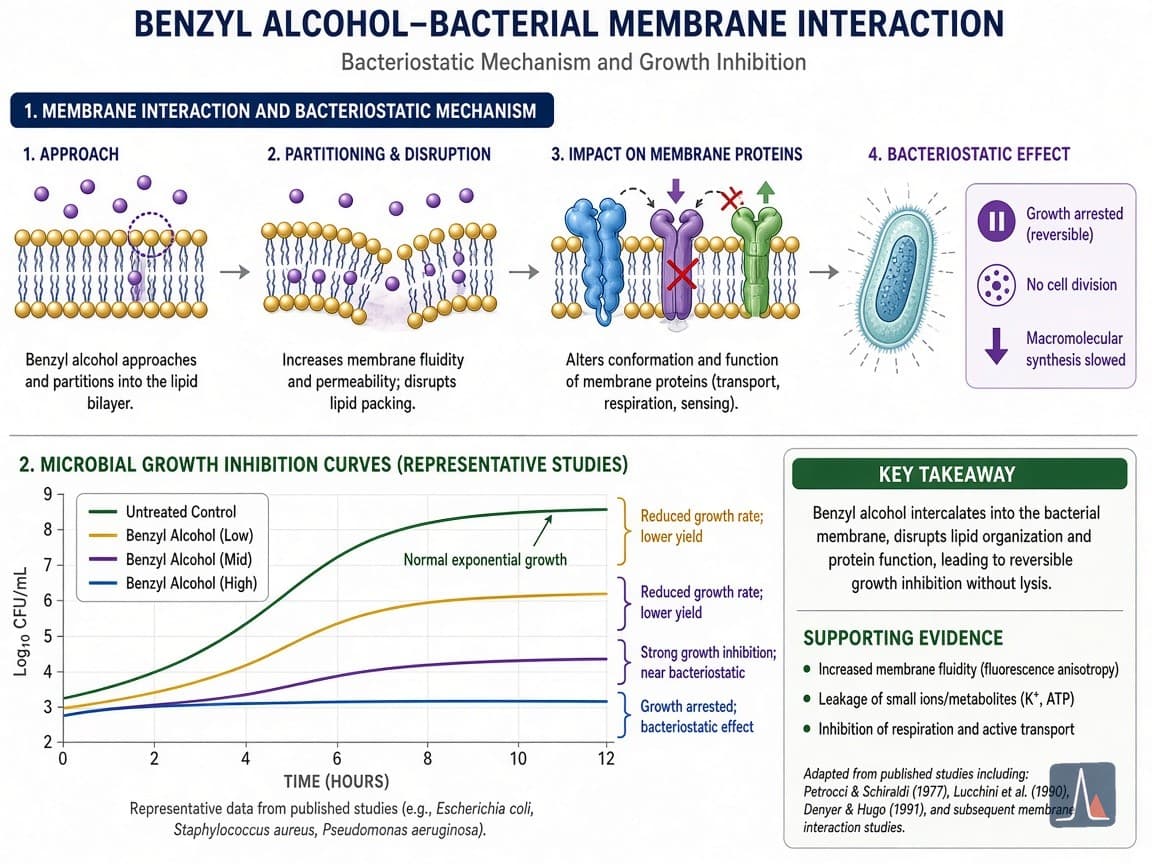
BAC water appears ubiquitously in methods sections of preclinical peptide research as the preferred solvent for preparing stock solutions of lyophilized materials when multiple aliquots will be withdrawn. Typical laboratory practice involves calculating concentration (peptide mass divided by added volume), slow addition of the reagent along the vial wall to minimize foaming and interfacial stress, and gentle swirling or rolling rather than vigorous shaking or vortexing. It is routinely cited in stability, in vitro binding, cell-based, and animal model studies involving catalog compounds such as GLP-1 receptor agonists (semaglutide, tirzepatide, liraglutide), melanocortin analogs, thymosins, GHK-Cu, and others. The multi-dose format reduces the number of containers and associated contamination opportunities compared with single-use sterile water ampoules. Stability of the reconstituted peptide itself is compound-specific and governed by intrinsic chemical degradation pathways; the preservative primarily addresses microbial risk during repeated access. Researchers are advised to prepare fresh vehicle controls matched for benzyl alcohol concentration because residual preservative (approximately 83 µM after 1:1000 dilution) can contribute to UV absorbance at low wavelengths in HPLC, alter membrane fluidity in cell assays, or appear in mass spectrometry traces. For freeze-thaw workflows or highly sensitive applications, preservative-free sterile water is often substituted to eliminate the variable.
Biophysical and Formulation Studies on Compatibility, Partial Unfolding, and Aggregation (in_vitro, formulation, and review papers, 2004–2026)
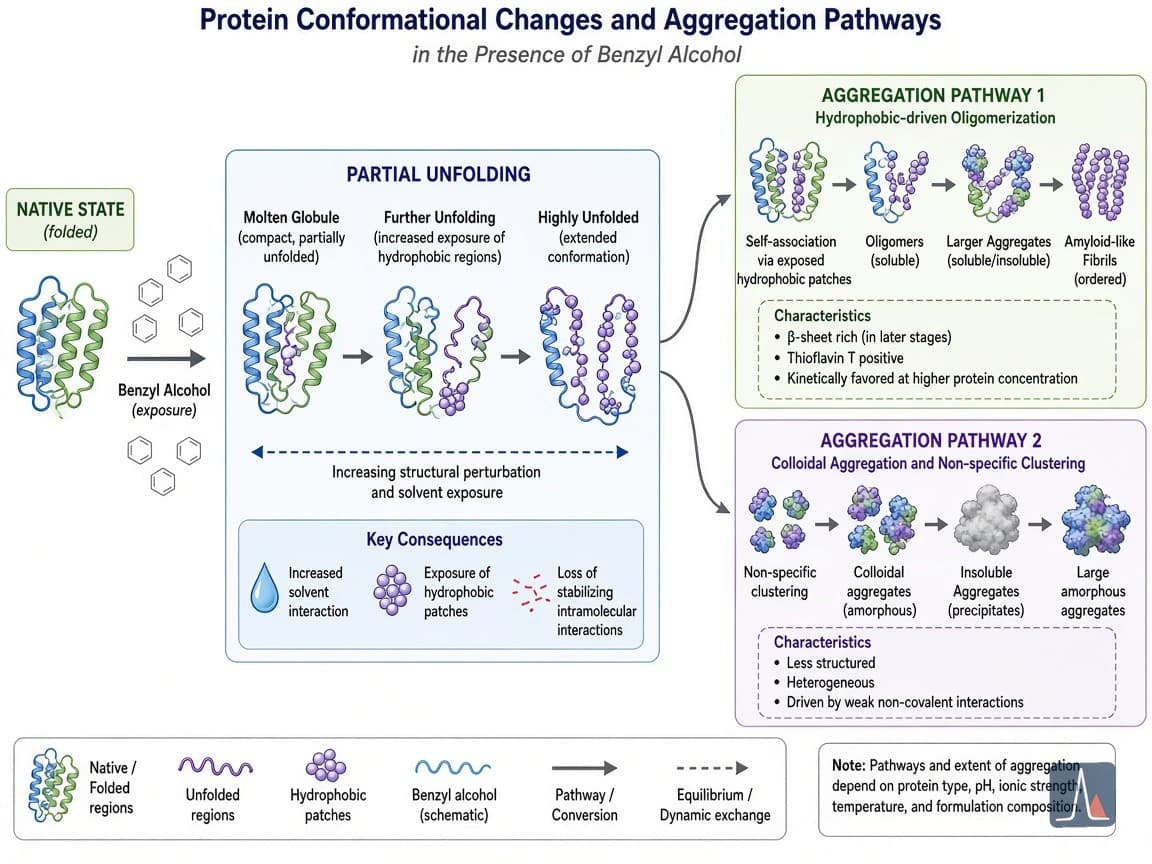
A substantial body of formulation science examines benzyl alcohol’s interactions with peptides and proteins. Studies on recombinant human interleukin-1 receptor antagonist (Roy et al., Journal of Pharmaceutical Sciences, 2005, DOI: 10.1002/jps.20258, PMID: 15614819) demonstrated greater aggregation upon reconstitution with 0.9% benzyl alcohol versus water alone; the effect was modulated by the degree of native secondary structure retained in the lyophilized cake. Follow-up biophysical work using hydrogen-deuterium exchange and fluorescence showed weak hydrophobic binding that populates partially unfolded, aggregation-prone states in a temperature- and concentration-dependent manner (Roy et al., Biochemistry, 2006, DOI: 10.1021/bi052132g, PMID: 16548517). Parallel investigations on interferon α-2a (Bis et al., 2015) and cytochrome c (Hutchings et al., Journal of Pharmaceutical Sciences, 2013, PMC3990441) established a reproducible rank order of preservative-induced aggregation (m-cresol > phenol > benzyl alcohol > phenoxyethanol > chlorobutanol), independent of the model protein studied. The effect scales with concentration and correlates with hydrophobicity of the preservative. A 2023 review of antimicrobial preservatives in protein and peptide formulations (Pharmaceutics, DOI: 10.3390/pharmaceutics15020563) synthesizes these findings, noting that while many short synthetic research peptides tolerate 0.9% benzyl alcohol with minimal perturbation at refrigerated storage, larger or structurally labile molecules may exhibit accelerated particle formation, especially under freeze-thaw or agitation stress. Recent NMR studies on model incretin peptides indicate that interactions with benzyl alcohol are often weaker and more reversible than with phenolic preservatives such as phenol or m-cresol. These data support case-by-case compatibility testing rather than blanket assumptions and recommend vehicle-matched controls in spectroscopic or cell-based assays.
Handling, Storage, Safety Profile, and Evidence Context (guidance, review, and observational papers, 1980s–2026)
Practical laboratory guidance consistently recommends storing unopened vials at 20–25 °C protected from light, allowing the vial to reach room temperature before opening to prevent condensation, and refrigerating (2–8 °C) after first puncture. The typical beyond-use date is 28 days when handled aseptically, though peptide-specific stability may dictate shorter intervals. Visual inspection for clarity, particulates, or discoloration is mandatory before use. Safety literature includes the well-documented “gasping syndrome” in premature neonates exposed to high cumulative benzyl alcohol doses from preserved flushes and medications (Gershanik et al., New England Journal of Medicine, 1982, PMID: 7133084), leading to the prominent regulatory warning “NOT FOR USE IN NEONATES.” Adult parenteral toxicity studies (e.g., Kimura et al., 1971) indicated substantial safety margins at volumes typical of laboratory reconstitution. Reviews of sterile compounding (USP <797>) and preservative use in biologics stress that benzyl alcohol sorption into vial components, oxidation, or repeated freeze-thaw cycles can alter both preservative potency and solute stability. Evidence context reveals that while direct head-to-head long-term stability datasets for every research peptide in BAC water are limited, the reagent’s decades-long track record in methods sections, combined with targeted biophysical studies, supports its role as a practical multi-dose diluent when compatibility is verified. Recurrent limitations include potential assay interference, the need for rigorous documentation of beyond-use dating, and the recognition that preservative-free alternatives may be preferable for single-use, cell-culture, or freeze-thaw applications. Overall, published reports provide clear, reproducible frameworks for laboratory researchers to employ BAC water effectively while mitigating known risks through technique, controls, and case-specific evaluation.
Sources
- USP monograph for Bacteriostatic Water for Injection and related chapters (<51>, <71>, <85>, <797>, <788>).
- DailyMed labels for Bacteriostatic Water for Injection, USP (Hospira/Pfizer).
- Hu J et al. (2023). Critical Aspects of pH Measurement for Bacteriostatic Water for Injection. J Pharm Sci. DOI: 10.1016/j.xphs.2023.02.023. PMID: 36870668.
- Roy S et al. (2005). Effects of benzyl alcohol on aggregation of recombinant human interleukin-1-receptor antagonist. J Pharm Sci. DOI: 10.1002/jps.20258. PMID: 15614819.
- Hutchings RL et al. (2013). Effect of antimicrobial preservatives on partial protein unfolding and aggregation. J Pharm Sci. DOI: 10.1002/jps.23362. PMC3990441.
- Bis RL et al. (2015). Role of benzyl alcohol in the unfolding and aggregation of interferon α-2a. J Pharm Sci. PMID: 24974985.
- Gershanik J et al. (1982). The gasping syndrome and benzyl alcohol poisoning. N Engl J Med. PMID: 7133084.
- Antimicrobial Preservatives for Protein and Peptide Formulations: An Overview. Pharmaceutics (2023). DOI: 10.3390/pharmaceutics15020563.
- Additional supporting references from formulation reviews (Meyer 2007, Arora 2017) and historical microbiology papers (Straka & Stokes 1957).
The body of evidence underscores BAC water’s utility as a laboratory reagent while repeatedly cautioning that its preservative is an active component whose effects on specific research materials must be empirically verified.
Sources
- Effects of benzyl alcohol on aggregation of recombinant human interleukin-1-receptor antagonist in reconstituted lyophilized formulations, 2005. https://doi.org/10.1002/jps.20258
- Effect of antimicrobial preservatives on partial protein unfolding and aggregation, 2013. https://doi.org/10.1002/jps.23362
- Critical Aspects of pH Measurement for Bacteriostatic Water for Injection, 2023. https://doi.org/10.1016/j.xphs.2023.02.023
- Bacteriostatic Water for Injection, USP (DailyMed label and USP monograph), 2019. https://dailymed.nlm.nih.gov/dailymed/drugInfo.cfm?setid=87d6e9dc-fe3b-4593-ac9a-d7493d1959c7
- Role of benzyl alcohol in the unfolding and aggregation of interferon α-2a, 2015. https://doi.org/10.1002/jps.24257
More briefings
- Survodutide Dual Agonist: Preclinical and Clinical EvidenceThe open-catalog entry for survodutide describes a synthetic acylated 29-amino-acid peptide dual agonist of glucagon and GLP-1 receptors supplied as high-purity lyophilized powder for laboratory metabolic research. Randomised trials report
- Dulaglutide: GLP-1 Receptor Agonist in Metabolic CareDulaglutide is a recombinant Fc-fusion GLP-1 receptor agonist engineered for once-weekly administration in laboratory and clinical metabolic research. Randomised trials report glycaemic improvements, cardiovascular risk reduction and modest
- Cagrilintide-Semaglutide Mixture: Open-Catalog Context and Metabolic Trial EvidenceThe open-catalog cagrilintide-semaglutide mixture supplies a research pairing of an amylin receptor agonist and GLP-1 receptor agonist for laboratory metabolic studies. Randomised trials of co-administration report enhanced weight loss (13–
All information and products discussed are for laboratory and research use only. Not for human or veterinary use. Not intended to diagnose, treat, cure, or prevent any disease.