
21 October 2026
Published Reports on ARA-290 (Cibinetide)
Download PDF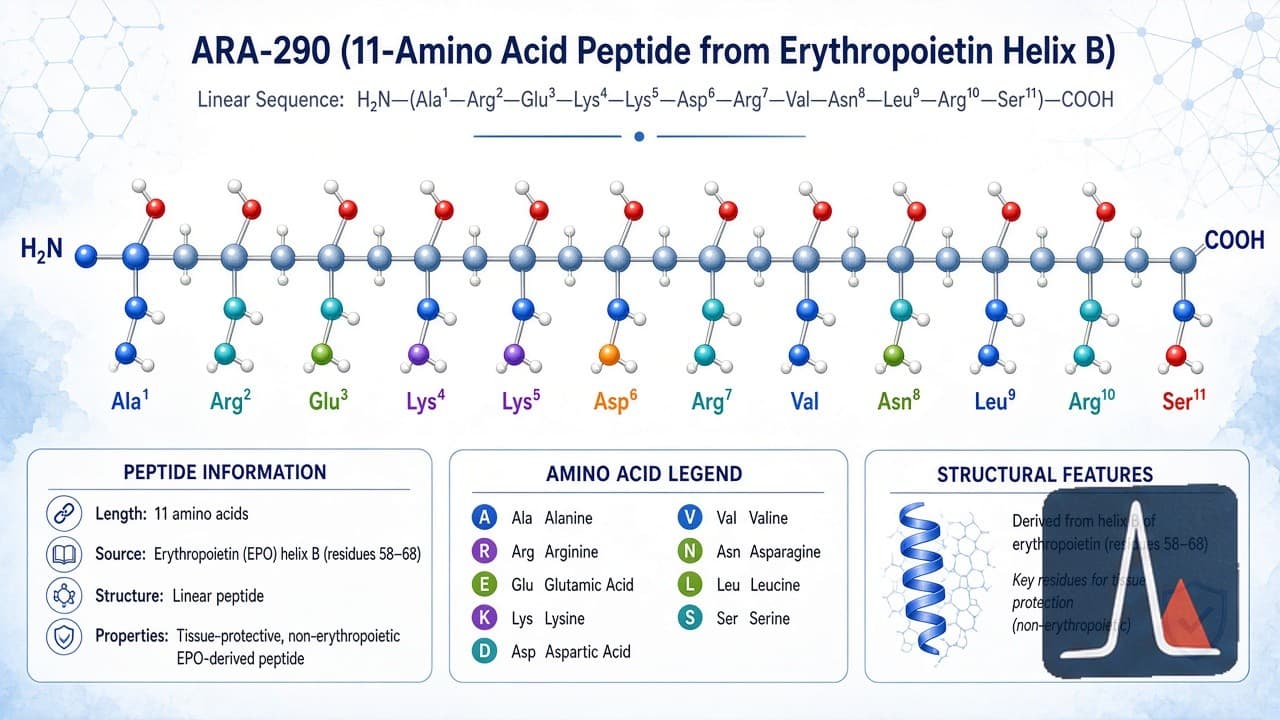
Indexed papers reported ARA-290 (cibinetide) findings in small clinical neuropathy studies in sarcoidosis and type 2 diabetes patients and in related preclinical models. Each summary states the study type and a limitation. Reporting a human trial is not guidance to use the research material. [ARA-290](/compounds/ara-290) is for laboratory research only.
Published Reports on ARA-290 (Cibinetide)
Indexed papers from 2012–2017 and later preclinical work reported ARA-290 (cibinetide) findings in small clinical neuropathy studies primarily involving sarcoidosis-associated small fiber neuropathy (SFN) or type 2 diabetes painful neuropathy, together with supporting preclinical models of nerve injury, inflammation, and tissue repair. Each record below names the study type and states one limitation drawn from the paper or program. These are observations from indexed literature only; none of the records is summarized as use guidance. Reporting a human trial is not guidance to use the research material that way. ARA-290 is offered for laboratory research only.
ARA-290 is an 11-amino-acid linear peptide engineered from the helix-B surface domain of erythropoietin. It was designed to selectively engage the innate repair receptor (IRR), a heteromer of the erythropoietin receptor (EPOR) and the β-common receptor (CD131), without triggering the erythropoietic signaling of full-length EPO. Preclinical work suggested this pathway could dampen inflammation and promote tissue repair. Theory based on animal and cell data suggests that selective IRR activation could plausibly reduce neuroinflammation or support small-fiber repair in people, although that remains a theoretical extrapolation from non-human models and has not been confirmed in large-scale human outcome trials.
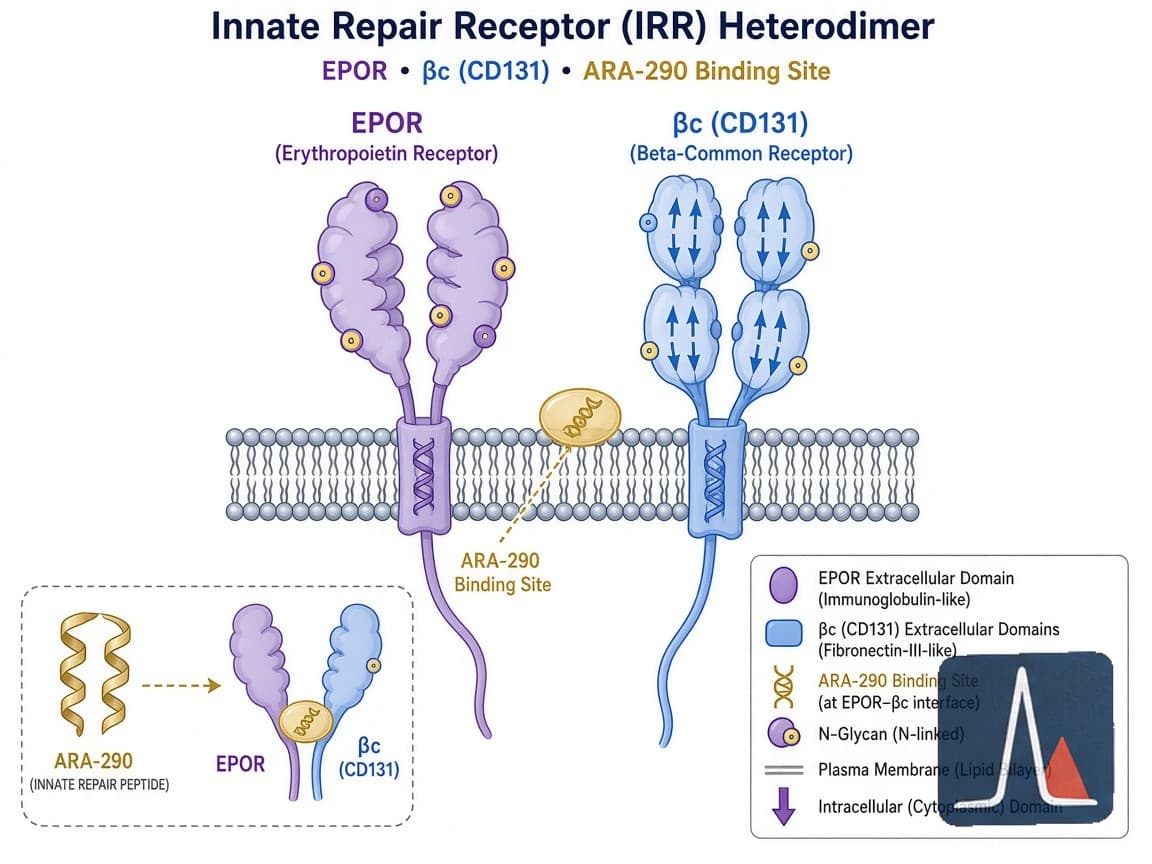
The innate repair receptor (EPOR/beta-common heteromer) is the proposed target of ARA-290 in preclinical models.
Sarcoidosis SFN Pilot Trial (Randomized Double-Blind Pilot Clinical Trial, 2012)
A 2012 double-blind, placebo-controlled pilot trial (n=22) in patients with sarcoidosis and symptoms of small fiber neuropathy administered 2 mg intravenous ARA-290 three times weekly for four weeks. The record reported a significantly greater reduction in the Small Fiber Neuropathy Screening List (SFNSL) score in the ARA-290 arm versus placebo (Δ −11.5 ± 3.04 vs Δ −2.9 ± 3.34, p < 0.05) and improvements in selected SF-36 pain and physical-functioning domains. Brief Pain Inventory pain intensity and fatigue scores improved similarly in both groups. No safety concerns were raised by clinical or laboratory assessments. Limitation: small exploratory cohort from a single research group; the pilot design yields wide uncertainty around effect-size estimates and durability. 1 2
Sarcoidosis-Associated Small Nerve Fiber Loss Trial (Blinded Placebo-Controlled Clinical Trial, 2013)
A 2013 blinded, placebo-controlled study enrolled patients with sarcoidosis-associated small nerve fiber loss and neuropathic symptoms. Daily subcutaneous ARA-290 for 28 days was reported to improve patient-reported neuropathic symptoms (SFNSL reduction ~28% vs ~9% for placebo at week 5, p=0.005), increase corneal nerve fiber density/area (median +14.5% or +185 µm² from baseline, p=0.022), alter cutaneous temperature sensitivity thresholds (increased cold and heat pain thresholds), and increase six-minute walk test distance (p=0.049). No evident adverse events attributable to the peptide were noted. Limitation: modest sample size (~38 participants); the 28-day treatment interval is short relative to the time course of nerve regeneration, and skin intraepidermal nerve fiber density showed only a non-significant trend. Corneal confocal microscopy served as a surrogate structural endpoint. 3 4
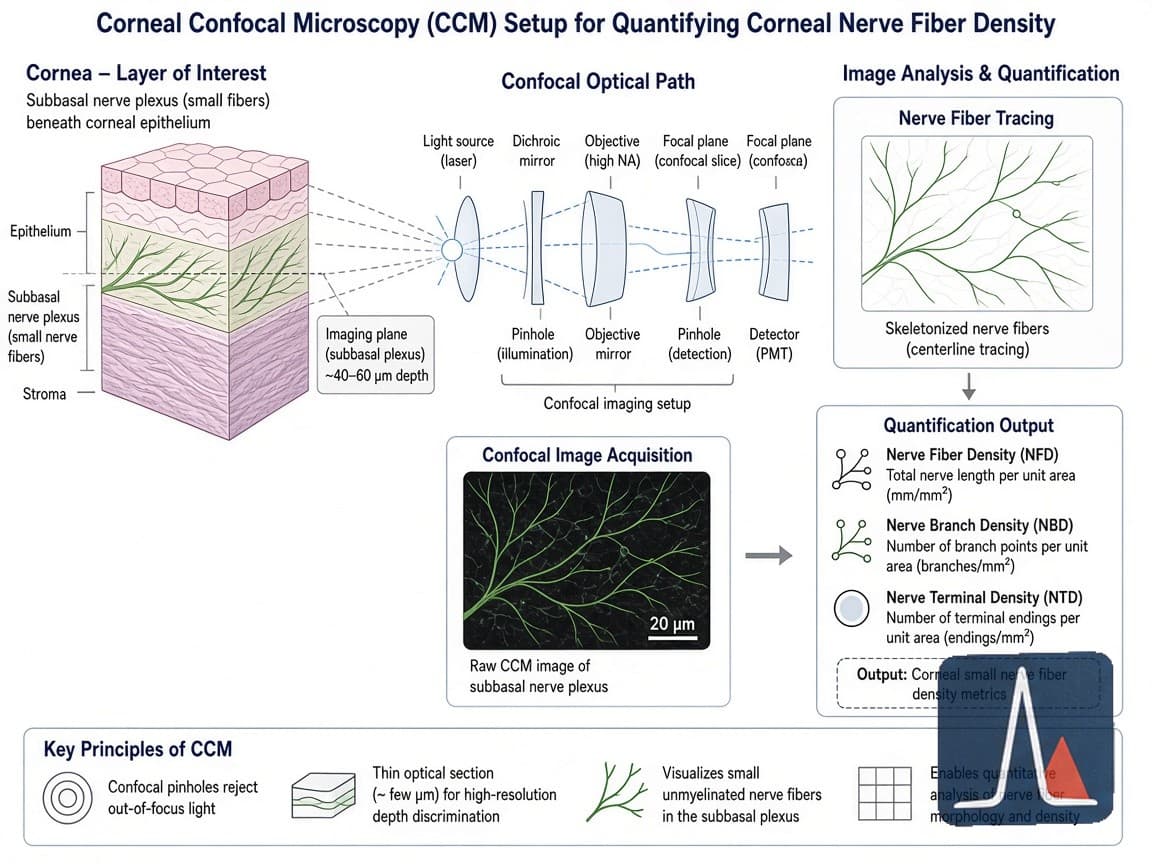
Corneal confocal microscopy is used as a non-invasive surrogate measure of small nerve fiber density in the clinical reports.
Type 2 Diabetes Painful Neuropathy Trial (Phase 2 Randomized Placebo-Controlled Clinical Trial, 2015)
A 2015 phase 2 randomized, double-blind, placebo-controlled trial (~48 participants with type 2 diabetes and painful neuropathy) administered 4 mg subcutaneous ARA-290 or placebo daily for 28 days, with follow-up to day 56. The record reported improvements in hemoglobin A1c and lipid profiles over the 56-day observation, reduced PainDetect neuropathic symptom scores (particularly tingling, thermal pain, and allodynia), and increased corneal nerve fiber density in the subgroup with low baseline values. No potential safety issues were identified. Limitation: small cohort and short-term observation; metabolic changes were secondary/exploratory, and the study was conducted primarily by one research group affiliated with the sponsor. 5 6
Sarcoidosis Phase 2b Dose-Ranging Trial (Randomized Double-Blind Placebo-Controlled Clinical Trial, 2017)
A multicenter randomized, double-blind, placebo-controlled phase 2b dose-ranging trial (n=64) in patients with sarcoidosis-associated small nerve fiber loss and neuropathic pain tested daily subcutaneous doses of 1, 4, or 8 mg versus placebo for 28 days. The record stated that the 4 mg dose produced a statistically significant placebo-corrected increase in corneal nerve fiber area (primary structural endpoint, ~697 µm², p=0.012, corresponding to ~23% rise from baseline) and increased regenerating intraepidermal GAP-43-positive fibers; these structural changes correlated with functional improvements on the 6-minute walk test. Pain intensity decreased in all arms, including placebo. Limitation: efficacy on the primary endpoint was confined to the middle dose (non-monotonic dose response); the placebo-corrected pain-intensity reduction in the moderate-to-severe baseline pain subgroup did not reach statistical significance (p=0.157). The program was sponsored by a single company that later ceased operations; no Phase 3 confirmation has been published. 7 8
Unfavorable and null results appear in the same records. Pain scores often improved substantially in placebo arms, limiting separation on symptomatic endpoints. The 4 mg dose was effective on corneal nerve metrics in the phase 2b trial, but the 8 mg dose produced a smaller numerical effect, and the 1 mg dose was not significant. A subsequent small open-label trial in diabetic macular edema (n≈9 completed) reported no mean improvement in visual acuity, retinal thickness, or retinal sensitivity despite some questionnaire gains; the study was terminated early due to drug supply issues. No large, independent, Phase 3 trials or regulatory approvals for any indication have been identified in indexed literature through 2026. Development appears to have stalled after these early-phase programs. Independent replication outside the original Leiden/Araim-linked investigators remains limited.
Related Preclinical Models (Multiple Rodent and Cell Studies)
Preclinical reports, including a spared-nerve-injury model in rats and mice and a 2025 rat sciatic-nerve-crush study, described ARA-290-associated rapid and long-lasting relief of mechanical and cold allodynia (up to 15–20 weeks after limited dosing), suppressed spinal microglial activation, and inhibition of the NLRP3 inflammasome in Schwann cells via reduced NF-κB phosphorylation and ROS. Effects were absent in β-common receptor knockout animals, supporting IRR mediation. Additional models (aged-rat cardiac inflammation, experimental colitis, renal ischemia-reperfusion, apical periodontitis in mice via SIRT1/NF-κB/IL-1β modulation, and oxygen-induced retinopathy) reported reduced inflammatory cytokines, preserved tissue integrity, and functional improvements. Limitation: all are animal or in-vitro observations; behavioral, histologic, and molecular outcomes in acute-injury or specific-disease rodent models have uncertain relevance to human chronic small-fiber neuropathy or sarcoidosis. Translation has not been established in confirmatory human studies. 9 10
These preclinical observations make it plausible that selective IRR activation could modulate neuroinflammation or support repair processes in people, but that remains a theoretical possibility unsupported by large-scale clinical outcome data.
Common limitations across the clinical program include small sample sizes (22–64 participants), short treatment durations (typically 28 days or 4 weeks), use of surrogate imaging endpoints (corneal confocal microscopy), sponsor involvement in multiple trials, and lack of long-term follow-up or independent replication. The records consistently note no major safety signals in the tested populations, but the studies were not powered to detect rare adverse events. No unfavorable hematologic effects (consistent with the non-erythropoietic design) were highlighted.
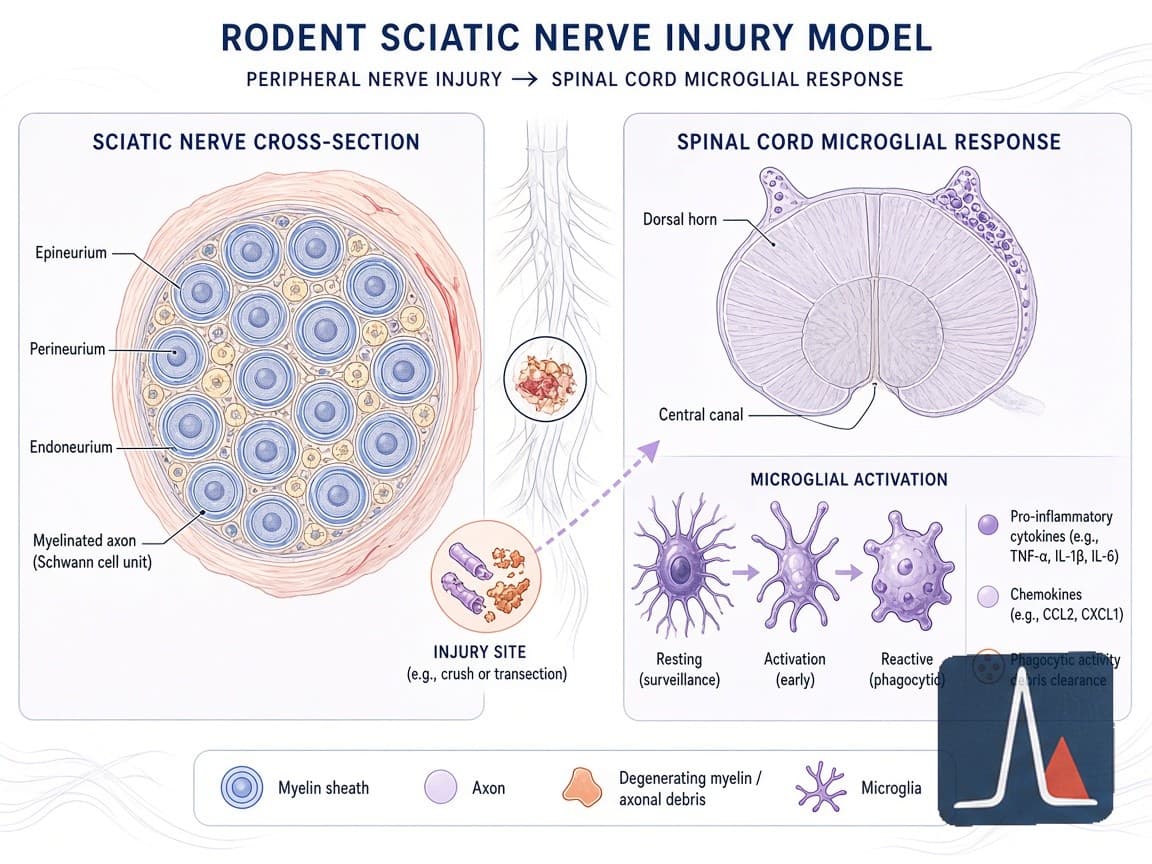
Preclinical rodent nerve-injury models reported reduced allodynia and modulated inflammation after ARA-290 exposure.
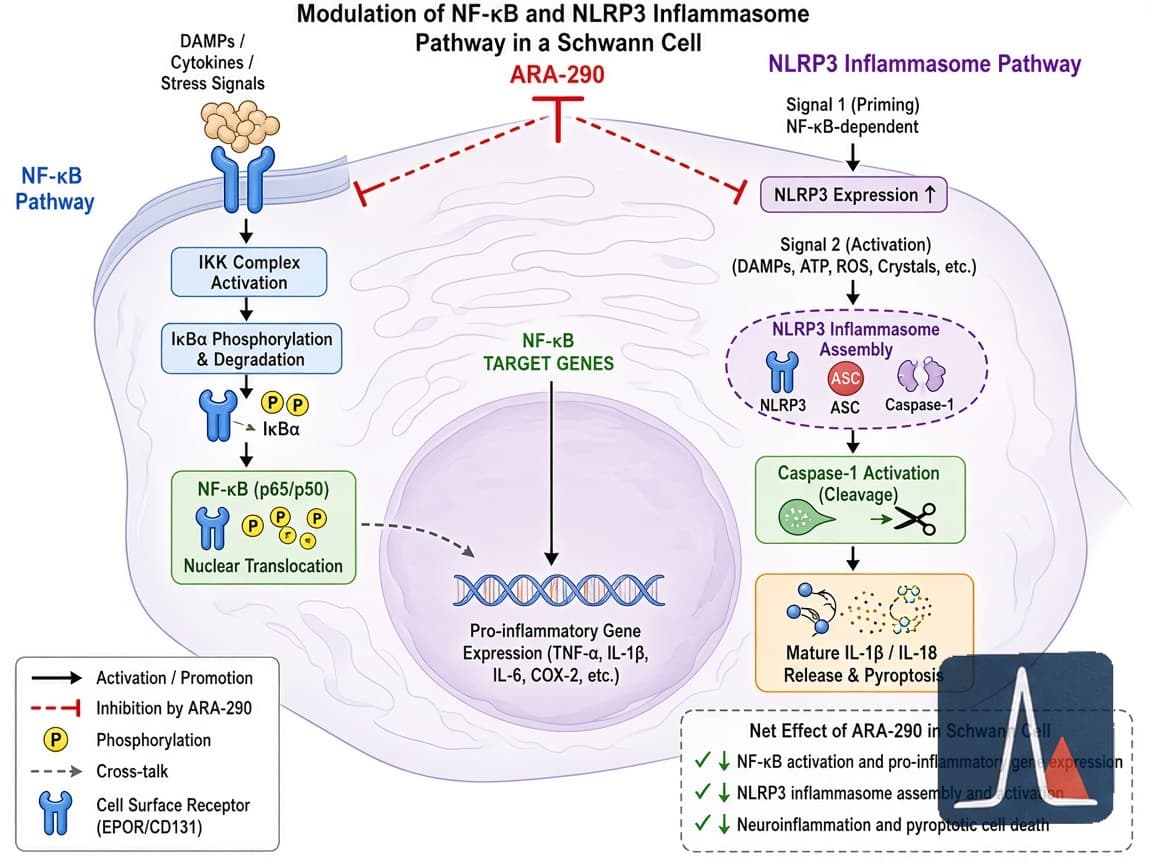
Recent preclinical reports link ARA-290 to downregulation of NF-kB, NLRP3, and pro-inflammatory cytokines.
Sources
- Heij L, Niesters M, Swartjes M, et al. Safety and efficacy of ARA 290 in sarcoidosis patients with symptoms of small fiber neuropathy: a randomized, double-blind pilot study. *Mol Med*. 2012;18(1):1430-1436. doi:10.2119/molmed.2012.00332. PMID: 23168581. (Clinical pilot.)
- Dahan A, Brines M, et al. ARA 290 improves symptoms in patients with sarcoidosis-associated small nerve fiber loss and increases corneal nerve fiber density. *Mol Med*. 2013;19:334-345. doi:10.2119/molmed.2013.00122. PMID: 24136731. PMC3883966. (Blinded clinical trial.)
- Brines M, Dunne AN, et al. ARA 290, a nonerythropoietic peptide engineered from erythropoietin, improves metabolic control and neuropathic symptoms in patients with type 2 diabetes. *Mol Med*. 2015;20(1):658-666. doi:10.2119/molmed.2014.00215. PMID: 25387363. (Phase 2 clinical trial.)
- Culver DA, Dahan A, Bajorunas D, et al. Cibinetide improves corneal nerve fiber abundance in patients with sarcoidosis-associated small nerve fiber loss and neuropathic pain. *Invest Ophthalmol Vis Sci*. 2017;58(6):BIO52-BIO60. doi:10.1167/iovs.16-21291. (Phase 2b clinical trial.)
- Additional preclinical: Winicki N, et al. (Front Cardiovasc Med, 2023) on aged-rat cardiac inflammation; 2025 papers on NLRP3 inflammasome in Schwann cells (Eur J Pharmacol / Int Dent J) and SIRT1 pathway in apical periodontitis. Narrative reviews (e.g., Dahan et al., Pain Rep 2016; PMC5741312) summarize the IRR mechanism and the same small set of early-phase trials.
No Phase 3 trials or marketing authorizations were identified in the indexed records surveyed as of 2026. The briefing collates what the papers stated; it contains no health claims, dosing information, or recommendations for use in people or animals.
Linked: ara-290
More briefings
- Survodutide Dual Agonist: Preclinical and Clinical EvidenceThe open-catalog entry for survodutide describes a synthetic acylated 29-amino-acid peptide dual agonist of glucagon and GLP-1 receptors supplied as high-purity lyophilized powder for laboratory metabolic research. Randomised trials report
- Dulaglutide: GLP-1 Receptor Agonist in Metabolic CareDulaglutide is a recombinant Fc-fusion GLP-1 receptor agonist engineered for once-weekly administration in laboratory and clinical metabolic research. Randomised trials report glycaemic improvements, cardiovascular risk reduction and modest
- Cagrilintide-Semaglutide Mixture: Open-Catalog Context and Metabolic Trial EvidenceThe open-catalog cagrilintide-semaglutide mixture supplies a research pairing of an amylin receptor agonist and GLP-1 receptor agonist for laboratory metabolic studies. Randomised trials of co-administration report enhanced weight loss (13–
All information and products discussed are for laboratory and research use only. Not for human or veterinary use. Not intended to diagnose, treat, cure, or prevent any disease.