
24 October 2026
Published Reports on Ara-290
Download PDF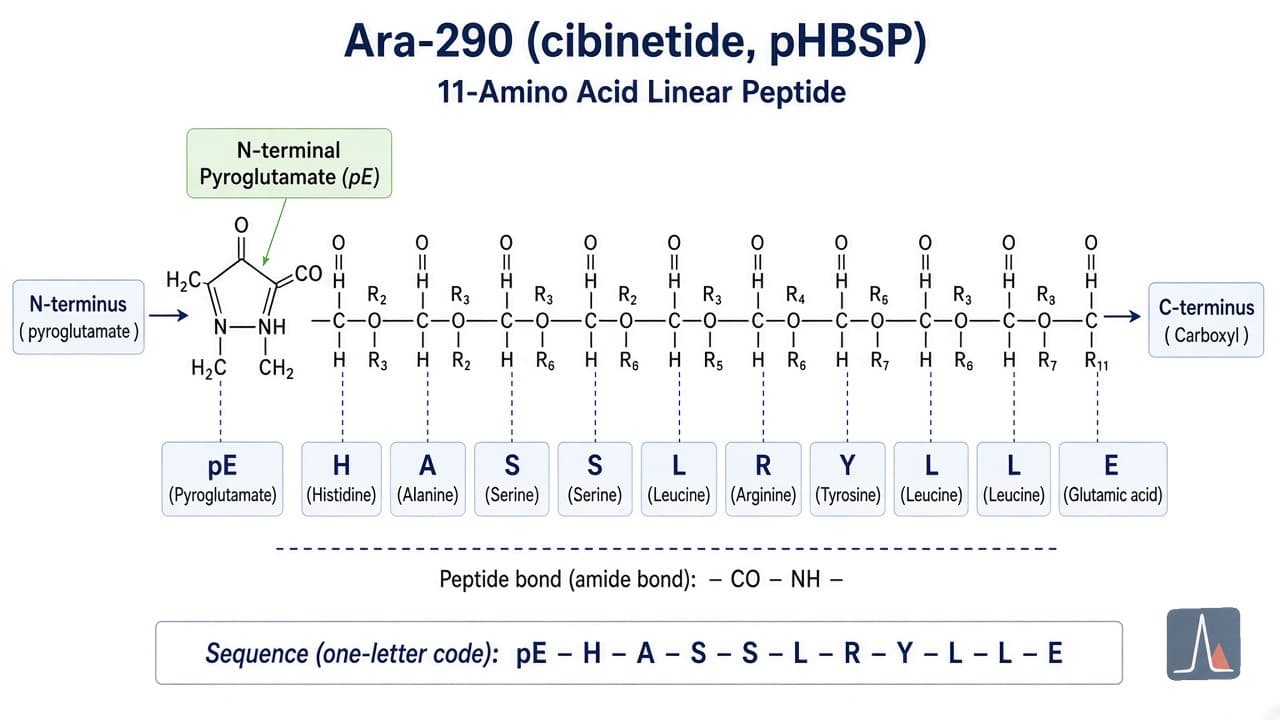
Indexed cell, animal, and limited clinical papers describe Ara-290 as a synthetic innate-repair-receptor peptide studied for small-fiber and inflammatory readouts, distinct from the injury-model and thymic peptides already briefed, and thos
Published Reports on Ara-290
Indexed cell, animal, and limited clinical papers describe Ara-290 as a synthetic innate-repair-receptor peptide studied for small-fiber and inflammatory readouts, distinct from the injury-model and thymic peptides already briefed, and those records do not establish research-vial use. Ara-290 is for laboratory research only.
Chemical Identity and Catalog Context
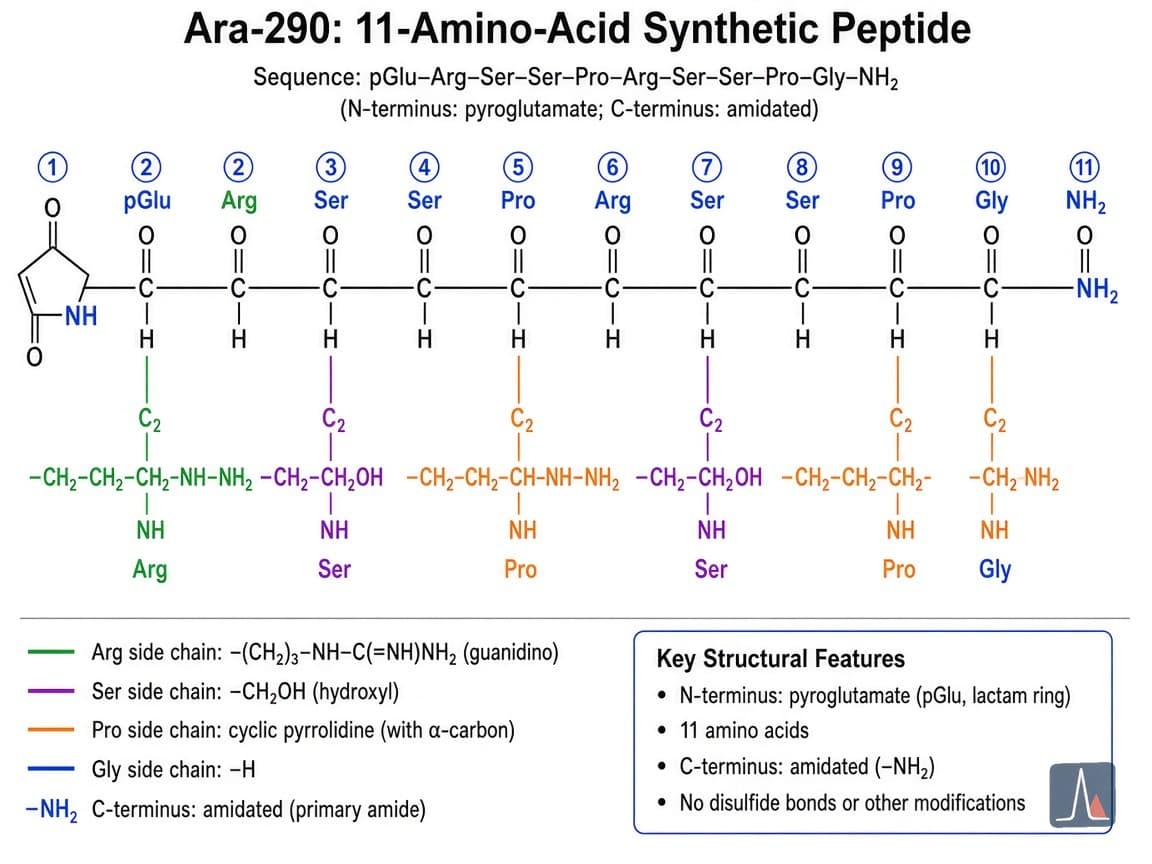
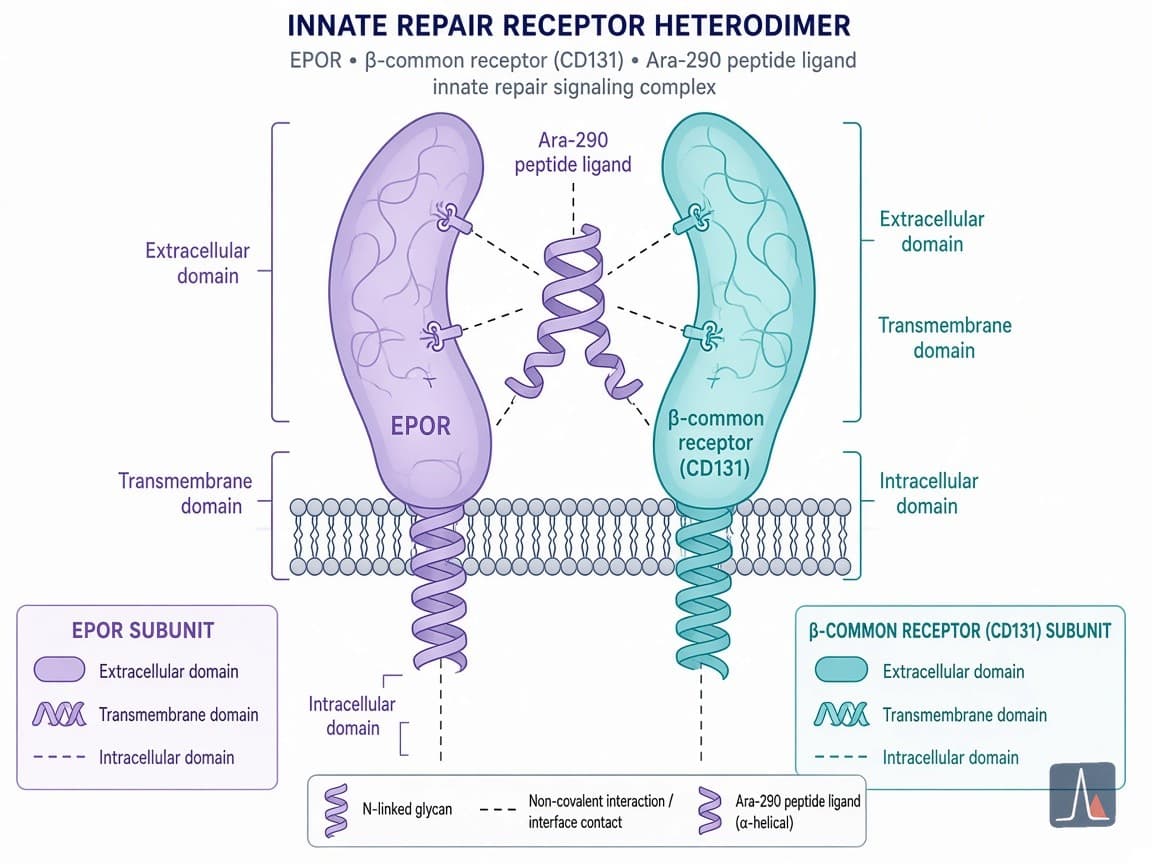
Ara-290 (cibinetide, pHBSP, pyroglutamate helix B surface peptide) is a synthetic linear undecapeptide with the sequence Pyr-Glu-Gln-Leu-Glu-Arg-Ala-Leu-Asn-Ser-Ser (or pE-Q-E-L-E-R-A-L-N-S-S). It has a molecular weight of approximately 1,257 Da and was rationally designed from the aqueous-facing residues of helix B of human erythropoietin (EPO). Unlike full-length EPO or its hematopoietic derivatives, Ara-290 selectively engages the innate repair receptor (IRR), a heterodimer of the EPO receptor (EPOR) and the β-common receptor (βcR or CD131), without activating the EPOR homodimer that drives red-blood-cell production.
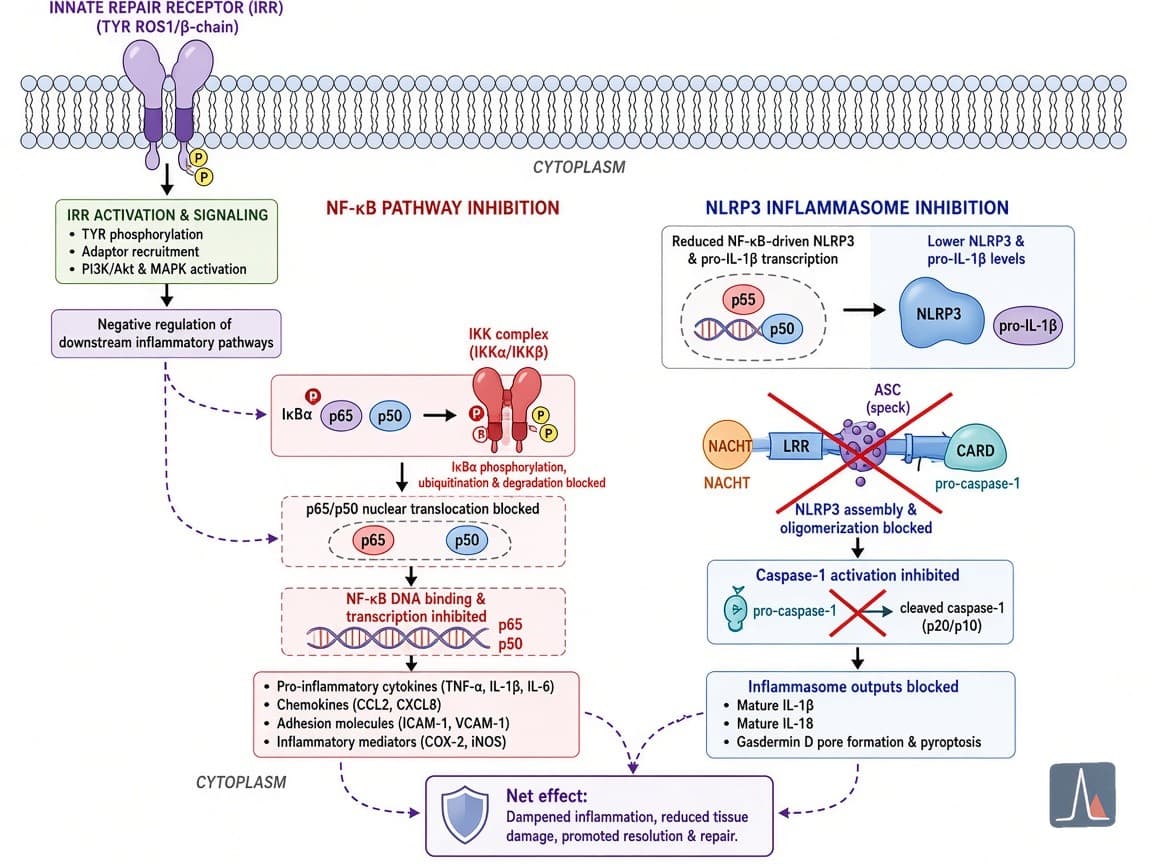
This selectivity avoids hematopoietic effects such as increased hematocrit. The peptide has a very short plasma half-life (~2 minutes) yet has been reported in multiple studies to trigger longer-lasting downstream signaling involving JAK2/STAT, PI3K/Akt, NF-κB inhibition, and reduced reactive oxygen species (ROS) and NLRP3 inflammasome activation. These mechanisms are hypothesized to reprogram an inflammatory, tissue-damaging milieu toward resolution and repair.
The compound is catalogued at Rierink as a research peptide under /compounds/ara-290 and is supplied for laboratory use exclusively. It is distinct from gastric pentadecapeptides studied in cytoprotection and wound models, thymosin fragments studied for actin binding or immune modulation, and mitochondrial-derived peptides studied for metabolic homeostasis.
Foundational Discovery and In Vitro IRR-Activation Studies (in_vitro and method papers, 2008–2015)
The foundational report by Brines and colleagues (2008) described the design of non-erythropoietic peptides based on the three-dimensional structure of EPO helix B. Using in vitro binding and cell-protection assays, they demonstrated that an 11-amino-acid sequence corresponding to the aqueous face of helix B activated tissue-protective signaling without stimulating erythroid progenitors. Subsequent in vitro work in macrophage cell lines (e.g., J774) showed that Ara-290 suppressed TNF-α-induced NF-κB activation and downstream inflammatory cytokine expression in a βcR-dependent manner.
These studies established that the IRR is typically silent in healthy tissue but rapidly upregulated at sites of injury or inflammation, where ligand engagement shifts cellular phenotype from pro-inflammatory to reparative. Additional cell-culture experiments in renal tubular epithelial cells, endothelial cells, cardiomyocytes, and Schwann cells demonstrated reduced apoptosis, lowered ROS production, and preserved mitochondrial function under stressors such as oxidative injury or cytokine challenge. A 2025 in_vitro study using primary rat Schwann cells after sciatic-nerve crush simulation reported that Ara-290 (and EPO) inhibited NLRP3 inflammasome assembly via reduced NF-κB phosphorylation and ROS, providing a plausible cellular mechanism for dampening neuroinflammation.
Limitations of these foundational reports include heavy reliance on immortalized cell lines, supraphysiological concentrations in some assays, and limited independent replication outside the original research network. No human cell data contradict the anti-inflammatory directionality, but translation to complex tissue environments requires the animal data reviewed below.
Preclinical Animal Models of Neuropathy, Inflammation, and Organ Protection (animal papers, 2009–2026)
Multiple rodent models have examined Ara-290 in neuropathy. In spared-nerve-injury (SNI) and sciatic-nerve-crush models in mice and rats, short-term administration produced rapid and long-lasting (up to 15–20 weeks) relief of mechanical and cold allodynia. These effects were absent in βcR-knockout animals, supporting IRR dependence. Histological and transcriptomic analyses showed reduced spinal-cord microglial activation and lowered pro-inflammatory cytokine levels. A 2025 rat sciatic-nerve-injury study confirmed inhibition of NLRP3 inflammasome in Schwann cells, reduced macrophage infiltration, and accelerated functional recovery.
Broader inflammatory and organ-protection models have been reported. In burn-wound progression models, Ara-290 limited secondary microvascular thrombosis and necrosis. Renal ischemia-reperfusion and cisplatin-nephrotoxicity models showed preserved glomerular filtration, reduced tubular apoptosis, and lower fibrosis scores. Cardiac studies are notable: in aged Fischer 344 × Brown Norway rats, chronic Ara-290 administration (15-month integrated longitudinal/cross-sectional design) attenuated age-related increases in cardiac non-myocyte-to-myocyte ratio, leukocyte infiltration, NF-κB activation, and pro-inflammatory cytokines while enhancing cardiomyocyte autophagy and reducing lipofuscin accumulation. It also preserved body weight and reduced frailty markers at end of life. Post-myocardial-infarction dilated-cardiomyopathy models similarly reported reduced remodeling and improved systolic reserve.
Metabolic and diabetic models have shown improved insulin sensitivity and islet-cell survival in some reports, although a subset of early metabolic papers were later retracted for image duplication. Overall, the animal literature consistently points toward IRR-mediated reprogramming of inflammation toward resolution and modest structural repair. Recurrent limitations include small group sizes in many studies, variable dosing regimens, predominant use of young male rodents, and limited long-term functional outcomes beyond 4–8 weeks in most neuropathy experiments. Positive findings are largely from groups linked to the original developers.
Limited Randomised Clinical Reports on Small-Fiber Neuropathy and Metabolic Readouts (clinical trials, 2012–2017)
Four small randomised, double-blind, placebo-controlled trials (total ~170 participants) have evaluated Ara-290, primarily in sarcoidosis-associated small-fiber neuropathy (SFN) or type 2 diabetes (T2D) with painful neuropathy. Treatment duration was uniformly short (4 weeks), and most studies were sponsored by Araim Pharmaceuticals with overlapping authorship from Leiden University Medical Center.
Heij et al. (2012, randomised double-blind pilot, n=22 sarcoidosis patients with SFN symptoms) administered 2 mg intravenous Ara-290 three times weekly for 4 weeks. The primary symptom score (Small Fiber Neuropathy Screening List, SFNSL) improved significantly more in the Ara-290 arm than placebo (Δ –11.5 vs –2.9). Pain and fatigue scores on the Brief Pain Inventory improved similarly in both groups; SF-36 pain and physical-functioning domains showed greater improvement with Ara-290. No safety signals or hematologic changes were observed. Limitations: very small sample, short duration, intravenous route, and equivalent improvement on some patient-reported outcomes.
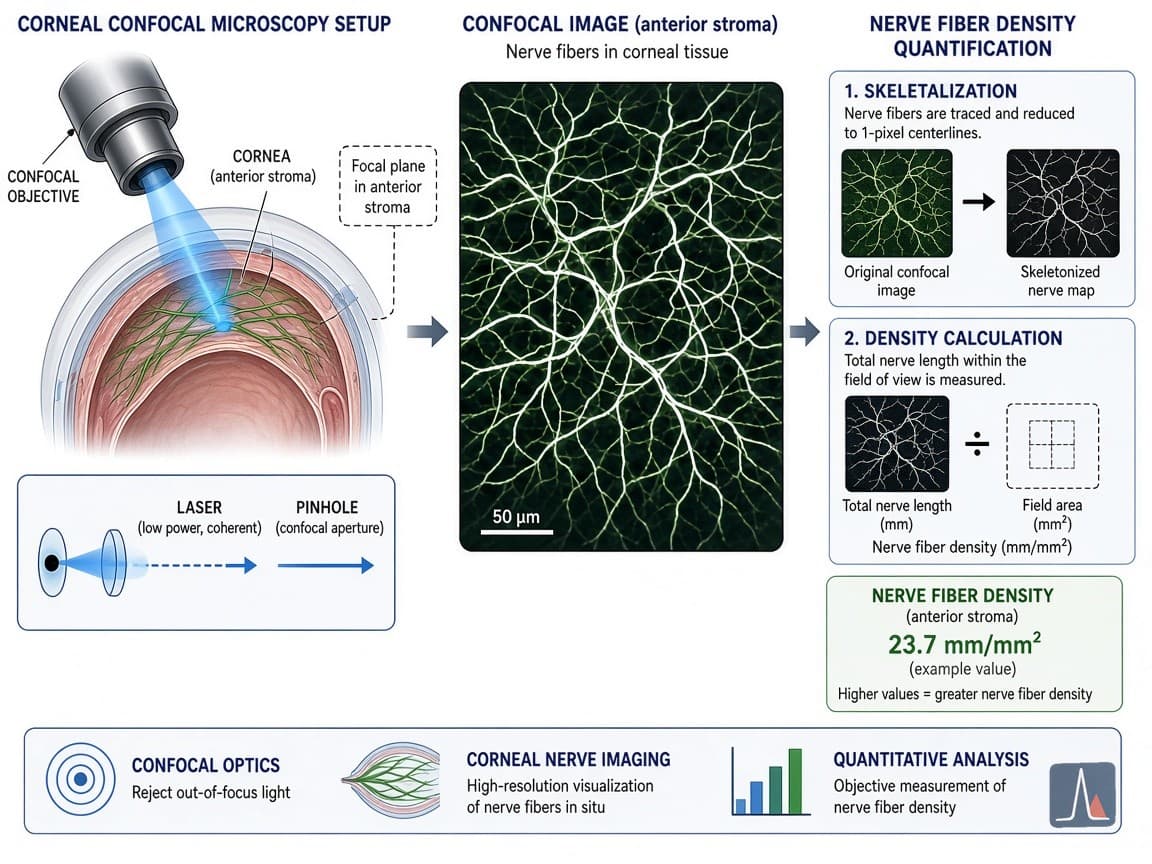
Dahan et al. (2013, randomised placebo-controlled, sarcoidosis patients with documented small-nerve-fiber loss) used daily subcutaneous dosing for 28 days. The Ara-290 group reported greater improvement in neuropathic symptoms, showed a statistically significant increase in corneal nerve fiber density (CNFD) measured by in vivo corneal confocal microscopy (a surrogate for small-fiber regeneration), exhibited altered cutaneous temperature sensitivity, and performed better on the 6-minute walk test. Intra-epidermal nerve-fiber density in skin biopsies did not change significantly. No serious adverse events occurred.
Brines et al. (2015, phase 2 randomised double-blind placebo-controlled, patients with T2D and painful neuropathy) administered 4 mg subcutaneous daily for 28 days with 28-day follow-up. HbA1c and lipid profiles improved in the Ara-290 arm and the benefit persisted to day 56; PainDetect neuropathic-symptom scores also improved significantly. Subjects with baseline CNFD more than one standard deviation below normal showed a significant increase in corneal nerve fiber density, whereas the placebo group did not. No safety concerns were identified. This trial provides the clearest metabolic-signal data among the clinical reports.
Culver et al. (2017, phase 2b randomised dose-ranging, n=64 sarcoidosis patients with small-fiber loss and pain) tested 1, 4, or 8 mg subcutaneous daily for 28 days. The primary endpoint (change in corneal nerve fiber area) reached statistical significance only in the 4 mg group (placebo-corrected increase of ~697 μm², p=0.012). Regenerating GAP-43-positive intra-epidermal nerve fibers also increased at 4 mg. Neuropathic pain improved across all arms, including placebo; the placebo-corrected difference in moderate-to-severe pain at 4 mg did not reach statistical significance (p=0.157). Functional and quality-of-life measures showed trends favoring active treatment. Again, no major safety issues or hematopoietic effects were noted.
A small open-label study in diabetic macular edema (2020) did not demonstrate clear visual-acuity benefit. Across the randomised reports, corneal confocal microscopy provided the most consistent objective signal of small-fiber regrowth at the optimal dose (4 mg), while patient-reported pain outcomes were more variable and often showed substantial placebo response. All trials were short, enrolled highly selected patients, and were conducted within a limited research network. No phase 3 confirmatory trials have been published as of 2026.
Recent Reviews, Mechanistic Syntheses, and Recurrent Limitations (review papers, 2015–2026)
Reviews by Brines and colleagues (2015, Pharmacol Ther) synthesised pharmacokinetic/pharmacodynamic data and proposed that brief IRR activation triggers a “molecular switch” leading to sustained anti-inflammatory and reparative programs despite the peptide’s short half-life. Subsequent narrative and scoping reviews (2016–2026) have highlighted the potential of IRR agonism for neuropathy, cardiac inflammation, and age-related frailty while noting the predominance of preclinical data from a single translational axis, small clinical sample sizes (largest n=64), short treatment durations, reliance on surrogate imaging endpoints (corneal nerve metrics), and inconsistent separation of active treatment from placebo on primary pain outcomes. Some early metabolic and renal papers were retracted, reducing confidence in those specific claims. No independent large-scale replication of the clinical nerve-regrowth signal has appeared. Reviews uniformly state that while the preclinical rationale is coherent and the short-term safety profile favorable in the studied populations, the evidence base remains preliminary and does not support regulatory approval or routine clinical translation.
Evidence Context and Recurrent Limitations
The indexed literature portrays Ara-290 as a selective IRR agonist capable of modulating inflammatory and small-fiber phenotypes in cell and animal models and producing measurable changes in corneal nerve morphology and selected symptom/metabolic scores in small short-term human trials. Objective structural signals (corneal nerve fiber density/area) appear more consistent than subjective pain reports, which are confounded by large placebo responses typical of neuropathy studies. Preclinical breadth is impressive yet concentrated in a narrow set of laboratories; clinical data are limited to four small phase 2 studies sharing authorship and sponsorship. No long-term safety, efficacy, or disease-modification data exist. Dose-response has not been linear in every trial (4 mg often outperforming 8 mg for structural endpoints). Development appears to have stalled without phase 3 confirmation.
Theory based on IRR biology and preclinical pathway data suggests that transient activation of this receptor could plausibly shift tissue macrophages and Schwann cells toward a pro-reparative state in people, but this remains an extrapolation from surrogate markers and has not been rigorously tested in adequately powered, independent, longer-duration human studies. Researchers should interpret the existing record as hypothesis-generating for laboratory models of inflammation and small-fiber biology rather than definitive evidence of therapeutic utility. Future independent replication with larger cohorts, longer follow-up, and hard clinical endpoints will be required to clarify the translational potential of this peptide.
Sources (selected primary and review literature with DOI/PMID where available): - Brines M et al. (2008). Nonerythropoietic tissue protective peptides... PNAS (foundational design). - Heij L et al. (2012). Safety and efficacy of ARA 290 in sarcoidosis... Mol Med. doi:10.2119/molmed.2012.00332. PMID: 23168581 (clinical pilot RCT). - Dahan A et al. (2013). ARA 290 improves symptoms... and increases corneal nerve fiber density. Mol Med. PMC3883966 (clinical RCT). - Brines M et al. (2015). ARA 290... improves metabolic control and neuropathic symptoms in T2D. Mol Med. PMC4365069 (clinical RCT). - Culver DA et al. (2017). Phase 2b corneal nerve fiber and pain outcomes (IOVS). - Brines M (2015). Flipping the molecular switch... long-lasting effects of non-erythropoietic peptide. Pharmacol Ther. doi:10.1016/j.pharmthera.2015.02.005 (review). - Additional animal cardiac (Front Cardiovasc Med 2023), Schwann-cell NLRP3 (Eur J Pharmacol 2025), and scoping reviews up to 2026.
All cited human studies are small, short-duration phase 2 investigations; none establish safety or efficacy for any therapeutic indication. Materials on this site are for laboratory research only.
Sources
- Safety and efficacy of ARA 290 in sarcoidosis patients with symptoms of small fiber neuropathy: a randomized, double-blind pilot study, 2012. https://doi.org/10.2119/molmed.2012.00332
- ARA 290 Improves Symptoms in Patients with Sarcoidosis-Associated Small Nerve Fiber Loss and Increases Corneal Nerve Fiber Density, 2013. https://doi.org/10.2119/molmed.2013.00122
- ARA 290, a Nonerythropoietic Peptide Engineered from Erythropoietin, Improves Metabolic Control and Neuropathic Symptoms in Patients with Type 2 Diabetes, 2015. https://doi.org/10.2119/molmed.2014.00215
- Phase 2b study of ARA 290 on corneal nerve fiber density and neuropathic symptoms in sarcoidosis, 2017. https://pubmed.ncbi.nlm.nih.gov/29392190/
- A small erythropoietin derived non-hematopoietic peptide reduces cardiac inflammation, attenuates age associated declines in heart function and prolongs healthspan, 2023. https://doi.org/10.3389/fcvm.2022.1096887
- Flipping the molecular switch for innate protection and repair of tissues: Long-lasting effects of a non-erythropoietic small peptide engineered from erythropoietin, 2015. https://doi.org/10.1016/j.pharmthera.2015.02.005
More briefings
- Survodutide Dual Agonist: Preclinical and Clinical EvidenceThe open-catalog entry for survodutide describes a synthetic acylated 29-amino-acid peptide dual agonist of glucagon and GLP-1 receptors supplied as high-purity lyophilized powder for laboratory metabolic research. Randomised trials report
- Dulaglutide: GLP-1 Receptor Agonist in Metabolic CareDulaglutide is a recombinant Fc-fusion GLP-1 receptor agonist engineered for once-weekly administration in laboratory and clinical metabolic research. Randomised trials report glycaemic improvements, cardiovascular risk reduction and modest
- Cagrilintide-Semaglutide Mixture: Open-Catalog Context and Metabolic Trial EvidenceThe open-catalog cagrilintide-semaglutide mixture supplies a research pairing of an amylin receptor agonist and GLP-1 receptor agonist for laboratory metabolic studies. Randomised trials of co-administration report enhanced weight loss (13–
All information and products discussed are for laboratory and research use only. Not for human or veterinary use. Not intended to diagnose, treat, cure, or prevent any disease.