
21 October 2026
KPV in published cell and mouse studies
Download PDF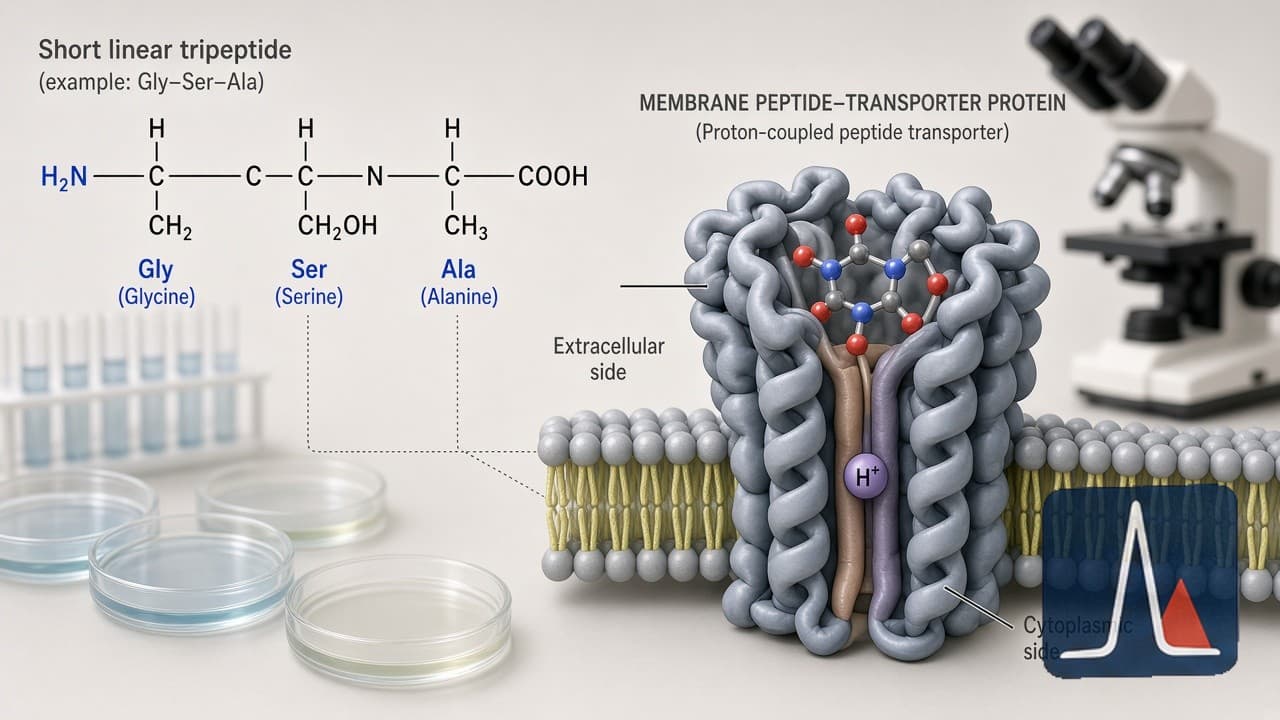
Briefing on what peer-reviewed papers reported for the tripeptide KPV: in vitro transporter and cytokine readouts, and mouse colitis-model histology. No clinical trial is summarized.
What papers reported
Work on the tripeptide KPV (Lys-Pro-Val) cited here is experimental. Findings are study reports, not statements about use in people or animals.
In vitro. Dalmasso and colleagues (2008) reported that KPV was taken up in cells expressing the peptide transporter PepT1. In stimulated intestinal epithelial and immune-cell cultures, they reported lower NF-κB transcriptional activity and lower IL-8 release than in stimulated comparison conditions. Limitation: these are cell systems; they do not show what occurs in an intact organism.
Animal model. The same paper reported that, in dextran sulfate sodium and CD4+ CD45RB-high T-cell transfer mouse models of colitis, animals given KPV had lower histologic inflammation scores and lower measured proinflammatory cytokines than model comparison groups. Kannengiesser and colleagues (2008) reported, in murine models of inflammatory bowel disease, lower histologic inflammatory-cell infiltration and lower myeloperoxidase activity relative to model controls. Limitation: both sets of results are from mice. This briefing does not summarize a clinical trial.
Sources
- PepT1-mediated tripeptide KPV uptake reduces intestinal inflammation. 2008. https://pubmed.ncbi.nlm.nih.gov/18166354/
- Melanocortin-derived tripeptide KPV has anti-inflammatory potential in murine models of inflammatory bowel disease. 2008. https://pubmed.ncbi.nlm.nih.gov/18092346/
More briefings
- Survodutide Dual Agonist: Preclinical and Clinical EvidenceThe open-catalog entry for survodutide describes a synthetic acylated 29-amino-acid peptide dual agonist of glucagon and GLP-1 receptors supplied as high-purity lyophilized powder for laboratory metabolic research. Randomised trials report
- Dulaglutide: GLP-1 Receptor Agonist in Metabolic CareDulaglutide is a recombinant Fc-fusion GLP-1 receptor agonist engineered for once-weekly administration in laboratory and clinical metabolic research. Randomised trials report glycaemic improvements, cardiovascular risk reduction and modest
- Cagrilintide-Semaglutide Mixture: Open-Catalog Context and Metabolic Trial EvidenceThe open-catalog cagrilintide-semaglutide mixture supplies a research pairing of an amylin receptor agonist and GLP-1 receptor agonist for laboratory metabolic studies. Randomised trials of co-administration report enhanced weight loss (13–
All information and products discussed are for laboratory and research use only. Not for human or veterinary use. Not intended to diagnose, treat, cure, or prevent any disease.