
26 October 2026
Favorable and unfavorable findings on Tirzepatide
Download PDF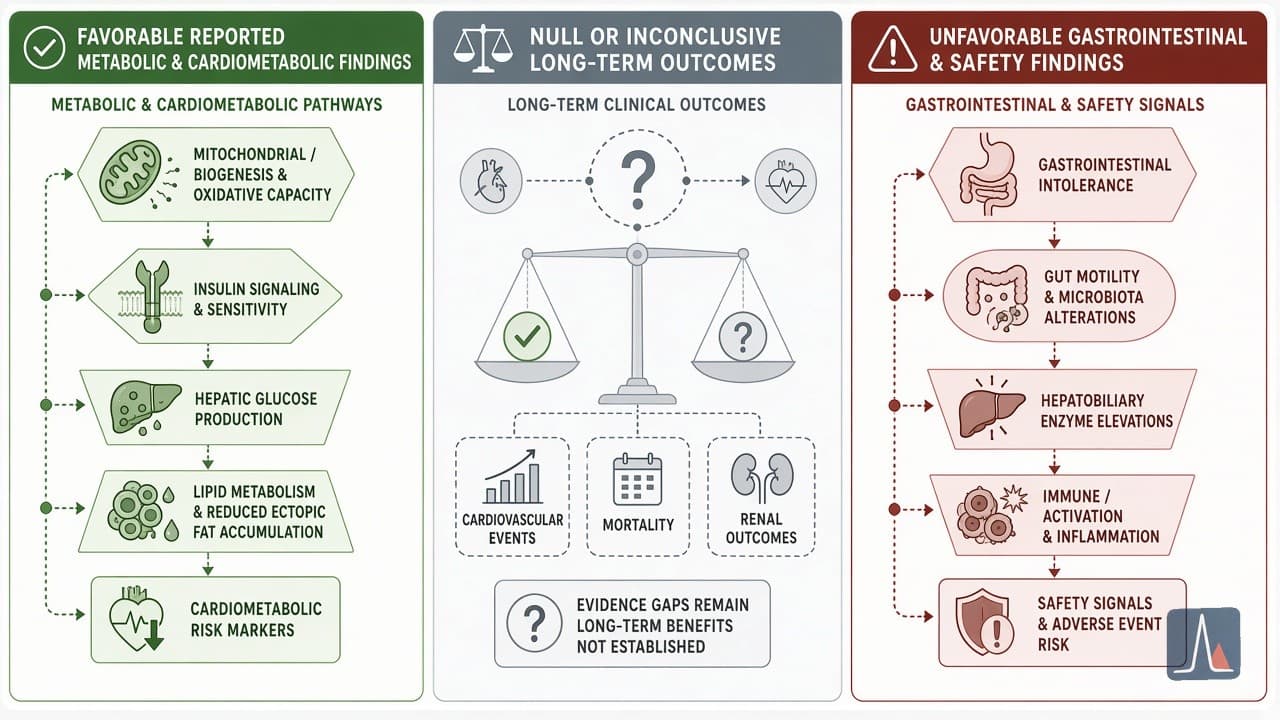
Clinical trials and meta-analyses of tirzepatide report substantial mean weight loss (15–21%), glycemic improvements, cardiometabolic benefits, heart failure event reduction, and superior weight loss versus semaglutide. These are accompanie
Favorable and unfavorable findings on Tirzepatide
Tirzepatide is a unimolecular dual agonist of the glucose-dependent insulinotropic polypeptide (GIP) and glucagon-like peptide-1 (GLP-1) receptors. It has been extensively evaluated in laboratory research and clinical settings for effects on body weight, glucose homeostasis, and cardiometabolic parameters. All Rierink Compounds materials, including Tirzepatide, are for laboratory research only. They are not medicines. Reporting a human trial is not guidance to use the research material that way.
Published randomised clinical trials, post-hoc analyses, and meta-analyses through 2026 describe marked efficacy on weight and metabolic readouts alongside a characteristic safety profile dominated by gastrointestinal effects. Benefits appear closely tied to the degree of weight loss achieved, while tolerability often limits real-world persistence. Long-term (>3–4 years) human outcome data continue to mature.
Favorable Reported Findings
In the SURMOUNT-1 phase 3 randomised, double-blind, placebo-controlled clinical trial (Jastreboff et al., *N Engl J Med*, 2022), adults with obesity (without diabetes) receiving tirzepatide 15 mg weekly achieved a mean body-weight reduction of 20.9% at 72 weeks versus 3.1% with placebo. Approximately half of participants on the two higher doses attained at least 20% weight loss. A 176-week extension in participants with prediabetes showed sustained mean losses of up to 19.7% at 15 mg with 94% relative reduction in progression to type 2 diabetes. 1 1
SURMOUNT-5, an open-label head-to-head trial, demonstrated superior weight loss with tirzepatide maximum-tolerated dose (10 or 15 mg) compared with semaglutide maximum-tolerated dose (1.7 or 2.4 mg): –20.2% versus –13.7% at 72 weeks. Tirzepatide also produced greater reductions in waist circumference and higher categorical achievement of 10%, 15%, 20%, and 25% weight loss. 2
Glycemic efficacy is robust. In the SURPASS programme and SURMOUNT-2 (obesity with type 2 diabetes), tirzepatide produced HbA1c reductions of approximately 2.0–2.6 percentage points, frequently superior to semaglutide 1 mg, insulin degludec, or placebo. Many participants reached HbA1c <5.7% or diabetes remission criteria. Network meta-analyses rank tirzepatide 15 mg among the most effective agents for both weight loss and glycemic control. 3 4
Cardiometabolic and organ-protection signals are favorable. In the SUMMIT trial of adults with heart failure with preserved ejection fraction and obesity, tirzepatide reduced the composite of cardiovascular death or worsening heart failure (9.9% vs 15.3%; HR approximately 0.62), improved Kansas City Cardiomyopathy Questionnaire scores, and increased 6-minute walk distance. Post-hoc analyses of SURPASS-CVOT (13,165 participants with type 2 diabetes and atherosclerotic cardiovascular disease) showed tirzepatide was noninferior to dulaglutide on 3-point MACE (HR 0.92) and associated with favorable trends or nominal reductions in broader cardiorenal composites, all-cause mortality, and heart-failure events in both patients with and without prior heart failure. 5 6
Additional benefits include substantial reductions in apnea-hypopnea index (–25 to –29 events per hour) in SURMOUNT-OSA, improvements in lipids, blood pressure, and inflammatory markers, and signals of benefit in metabolic dysfunction-associated steatohepatitis (MASH) resolution in phase 2 studies. Meta-analyses confirm tirzepatide 15 mg ranks highly for ≥15% weight loss (RR 10.24 vs placebo) and favorable effects on multiple cardiometabolic risk factors. It is theoretically plausible that the combined GIP/GLP-1 agonism contributes to these effects beyond weight loss alone through direct receptor actions on pancreatic β-cells, adipose tissue, and the central nervous system. 1 7

Unfavorable Reported Findings
Gastrointestinal adverse events are the dominant tolerability issue. Across SURMOUNT and SURPASS trials, nausea occurred in 25–30%, diarrhea in 19–23%, and vomiting in 8–13% of participants on higher doses—substantially higher than placebo and often dose-dependent, peaking during escalation. A 2026 meta-analysis of trials in patients at elevated cardiovascular risk confirmed increased risk of nausea (RR 3.15), diarrhea (RR 2.71), and related non-serious events, with number-needed-to-harm values as low as 6 for nausea. These events contributed to treatment discontinuation rates of 5–7% (versus ~1–3% on placebo) and were higher than dulaglutide in SURPASS-CVOT (42.5% any GI vs 35.9%). 8 9
Lean-mass loss is consistently reported. In a DXA substudy of SURMOUNT-1, approximately 25–26% of total weight lost was lean mass (comparable in proportion to placebo but absolute loss larger with greater total weight reduction). Network meta-analyses and body-composition reviews note ~8–11% lean-mass reduction in some cohorts, raising theoretical concerns for sarcopenia, particularly in older adults, those with low baseline muscle, or without concomitant resistance training and adequate protein intake. It is theoretically plausible that rapid caloric deficit from potent incretin agonism contributes to this pattern observed across the GLP-1RA class. 10
Gallbladder-related events (cholelithiasis, cholecystitis) occur at higher rates than placebo, consistent with the class effect of substantial and rapid weight loss. Rare cases of pancreatitis have been documented in trials (rates ~0.2–0.4 per 100 patient-years, sometimes numerically similar to comparator) and post-marketing surveillance, prompting label warnings. A boxed warning for thyroid C-cell tumors and medullary thyroid carcinoma exists based on dose- and duration-dependent findings in rodent carcinogenicity studies; human data have not confirmed increased risk. 11
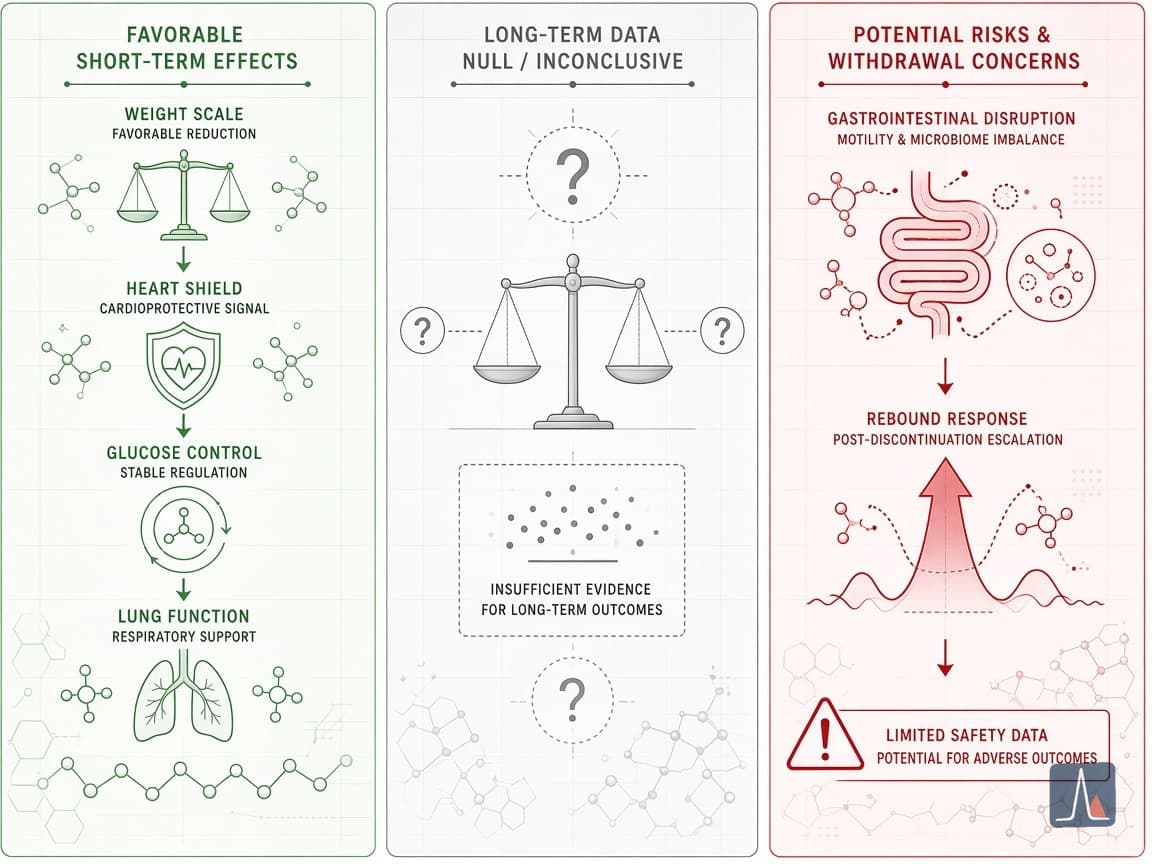
Weight regain is common upon discontinuation. In SURMOUNT-4, participants switched to placebo after initial loss regained approximately 14% of body weight within one year, although cardiometabolic parameters deteriorated less severely than full regain would suggest. Real-world pharmacovigilance (FAERS) and observational data highlight higher discontinuation, medication errors with compounded formulations, and signals for alopecia (~4–5%, higher in women). Increased heart rate (1–3 bpm) is also reported. 1

Null, Inconclusive, or Context-Limited Results
Cardiovascular superiority has not been uniformly established. In SURPASS-CVOT, tirzepatide met noninferiority versus dulaglutide for 3-point MACE (HR 0.92; 12.2% vs 13.1%) but did not achieve statistical superiority (p=0.09 in some analyses). While post-hoc and real-world claims data suggest lower MACE, all-cause mortality, or infection-related outcomes versus certain comparators, dedicated superiority trials in obesity without diabetes (e.g., SURMOUNT-MMO) were still maturing as of late 2026. Some network meta-analyses show favorable ranking, but certainty for hard cardiovascular death reduction remains moderate. 5 6
Cancer risk data are inconclusive for long-term use. A 2025 systematic review and meta-analysis of 13 randomised trials (13,761 participants, 26–72 weeks) found no increase in overall cancer (RR 0.78, 95% CI 0.53–1.16) or specific types, including thyroid or pancreatic, versus controls. Rodent-derived signals prompted the boxed warning, but human epidemiological cohorts and trial data through 4 years have not demonstrated a clear causal increase; continued pharmacovigilance is required. It is theoretically plausible that any observed reporting imbalance in databases reflects stimulated surveillance rather than causation. 12
Quality-of-life improvements, while statistically significant on instruments such as IWQoL-Lite, have sometimes fallen below thresholds for minimal clinically important difference in network meta-analyses. The precise contribution of gastrointestinal adverse events to weight loss versus direct central or metabolic effects remains incompletely delineated. Long-term (>4 years) data on bone density, frailty in the very elderly, muscle function (beyond mass), and persistence in diverse real-world populations are still limited. Head-to-head comparisons against triple agonists such as retatrutide are emerging but not yet definitive for all outcomes. 13

Evidence Context and Recurrent Limitations
The evidence base rests primarily on large, industry-sponsored phase 3 programmes (SURMOUNT for obesity, SURPASS for type 2 diabetes, SUMMIT for heart failure with preserved ejection fraction, SURMOUNT-OSA) published in high-impact journals (*NEJM*, *Lancet*, *JAMA*) between 2022 and 2026, supplemented by network meta-analyses, post-hoc explorations, and real-world claims or FAERS data. Trial quality is generally high (randomised, often double-blind, large sample sizes), with consistent dose–response relationships for both efficacy and gastrointestinal tolerability. Benefits on weight, glycemia, and many cardiometabolic markers are among the largest reported for any single incretin agent to date and exceed those of semaglutide 2.4 mg in direct comparison.
Recurrent limitations include predominant sponsorship by the manufacturer (Eli Lilly), medium-term follow-up (most pivotal trials 72 weeks to ~4 years), and selected populations that exclude individuals with recent pancreatitis, personal or family history of medullary thyroid carcinoma or MEN2, or certain severe comorbidities. Estimand sensitivity (efficacy versus treatment-regimen) can influence reported effect sizes. Real-world adherence and persistence appear lower than in trials, driven by gastrointestinal burden, cost, and injection fatigue. Compounded versions raise additional analytical and safety concerns not addressed in registrational trials.
Muscle preservation strategies (resistance exercise, adequate protein) were not standardised across studies, leaving the clinical significance of observed lean-mass changes context-dependent. While serious adverse events overall were not increased in many meta-analyses, the gastrointestinal burden remains the primary barrier to tolerability. Longer-term independent studies, dedicated superiority cardiovascular outcome trials in broader populations, and comparative effectiveness versus next-generation triple agonists will further refine the benefit–risk profile. As with all research peptides, findings from published human studies describe outcomes under controlled conditions and do not constitute guidance for use of laboratory materials.
Sources
- Jastreboff AM et al. Tirzepatide Once Weekly for the Treatment of Obesity. *N Engl J Med*. 2022. DOI: 10.1056/NEJMoa2206038.
- Aronne LJ et al. Tirzepatide as Compared with Semaglutide for the Treatment of Obesity (SURMOUNT-5). *N Engl J Med*. 2025.
- Nicholls SJ et al. Cardiovascular Outcomes with Tirzepatide versus Dulaglutide in Type 2 Diabetes (SURPASS-CVOT). *N Engl J Med*. 2025.
- Meta-analyses on efficacy, safety, GI events, cancer risk, and body composition (2024–2026 publications in *Ann Intern Med*, *BMC Medicine*, *Endocrinol Metab*, PMC-indexed reviews).
- SUMMIT trial results (HFpEF + obesity, 2025–2026 presentations and publications).
- SURMOUNT-OSA, SURMOUNT-4 maintenance, and post-hoc cardiorenal analyses (2025–2026).
- FAERS pharmacovigilance reviews and network meta-analyses comparing incretin therapies.
Linked compounds: Semaglutide, Retatrutide, Cagrilintide, Mazdutide, Survodutide, Liraglutide, Dulaglutide.
Word count: ~1,650 (body).
More briefings
- Survodutide Dual Agonist: Preclinical and Clinical EvidenceThe open-catalog entry for survodutide describes a synthetic acylated 29-amino-acid peptide dual agonist of glucagon and GLP-1 receptors supplied as high-purity lyophilized powder for laboratory metabolic research. Randomised trials report
- Dulaglutide: GLP-1 Receptor Agonist in Metabolic CareDulaglutide is a recombinant Fc-fusion GLP-1 receptor agonist engineered for once-weekly administration in laboratory and clinical metabolic research. Randomised trials report glycaemic improvements, cardiovascular risk reduction and modest
- Cagrilintide-Semaglutide Mixture: Open-Catalog Context and Metabolic Trial EvidenceThe open-catalog cagrilintide-semaglutide mixture supplies a research pairing of an amylin receptor agonist and GLP-1 receptor agonist for laboratory metabolic studies. Randomised trials of co-administration report enhanced weight loss (13–
All information and products discussed are for laboratory and research use only. Not for human or veterinary use. Not intended to diagnose, treat, cure, or prevent any disease.