
3 November 2026
Favorable and unfavorable findings on Melatonin
Download PDF
Meta-analyses of randomized controlled trials report reduced sleep onset latency and improved sleep quality scores in select populations such as children or those with comorbidities, with preclinical antioxidant and neuroprotective data, bu
Chemical Identity and Catalog Context
Melatonin (N-acetyl-5-methoxytryptamine, C13H16N2O2, CAS 73-31-4) is the endogenous pineal gland hormone that synchronizes circadian rhythms with the light-dark cycle. In the Rierink catalog it is supplied as a high-purity research compound for laboratory investigation of receptor pharmacology (MT1/MT2), redox biology, and cellular signaling. Materials on this site are for laboratory research only.
Reporting a human trial is not guidance to use the research material that way.

Mechanistic Foundations and Preclinical Evidence
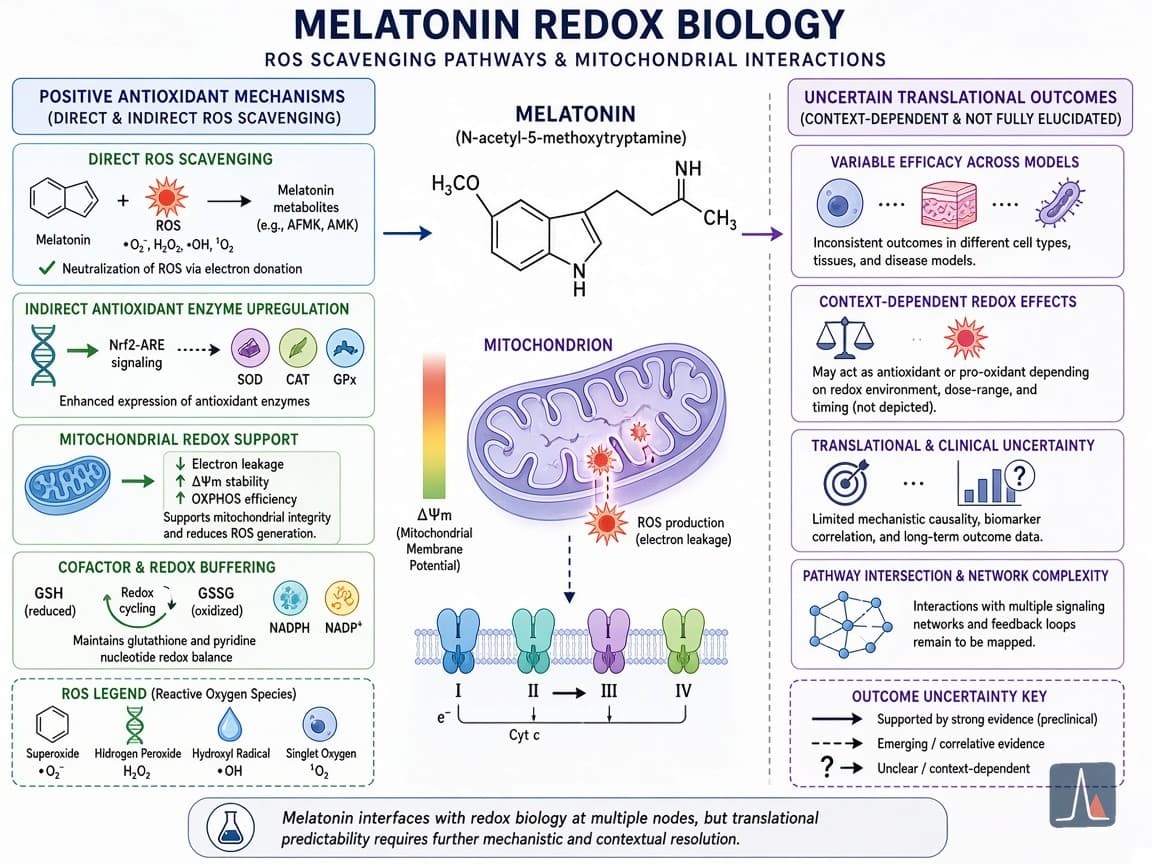
In vitro studies demonstrate that melatonin functions as a direct scavenger of reactive oxygen species (ROS) due to its indole ring structure and can upregulate antioxidant enzymes such as superoxide dismutase and glutathione peroxidase. Reviews of redox biology distinguish circadian receptor-mediated effects from direct non-circadian antioxidant actions, including mitochondrial protection and modulation of Nrf2 and NF-κB pathways. These mechanisms are supported by primary literature showing reduced lipid peroxidation and preservation of mitochondrial membrane potential in cell models of oxidative stress.
Animal models report neuroprotective effects in hypoxic-ischemic brain injury, experimental autoimmune encephalomyelitis (modeling multiple sclerosis), and spinal cord injury, with improvements in behavioral scores, reduced malondialdehyde levels, increased glutathione, and decreased myeloperoxidase activity. A network meta-analysis of spinal cord injury models identified an optimal dose range in rats associated with functional recovery. Preclinical data also show anti-inflammatory and oncostatic properties in various rodent tumor and neurodegeneration models.
Favorable Clinical and Meta-Analytic Findings
An umbrella review of meta-analyses of randomized controlled trials (PMID 34999224) identified robust evidence with low heterogeneity for improved sleep onset latency (SMD 0.33, 95% CI 0.10–0.56) in patients with sleep disorders, prolonged time to first analgesic requirement in surgical patients (SMD 5.81), increased top-quality embryos in women undergoing assisted reproductive technologies (SMD 0.53), and increased one-year survival in cancer patients (RR 1.90). A 2025 scoping review of 57 systematic reviews containing 227 meta-analyses found that 80.9% of 215 meta-analyses comparing melatonin to inactive comparators favored melatonin for sleep quality domains.
A 2022 meta-analysis of perioperative trials reported improved postoperative subjective sleep quality (SMD −0.30) and increased total sleep time and sleep efficiency postoperatively. A 2025 meta-analysis of 63 randomized trials on cardiometabolic risk factors reported reductions in systolic blood pressure, fasting blood glucose, LDL cholesterol, total cholesterol, C-reactive protein, and malondialdehyde, with increases in total antioxidant capacity and HDL cholesterol. A 2025 meta-analysis of cognitive function in adults with impairment found significant improvement (MD 1.08). These findings derive from diverse clinical populations and support plausible roles in circadian alignment and redox homeostasis, though translation to people remains theoretical beyond the reported trial outcomes.

Null, Mixed, and Inconsistent Outcomes
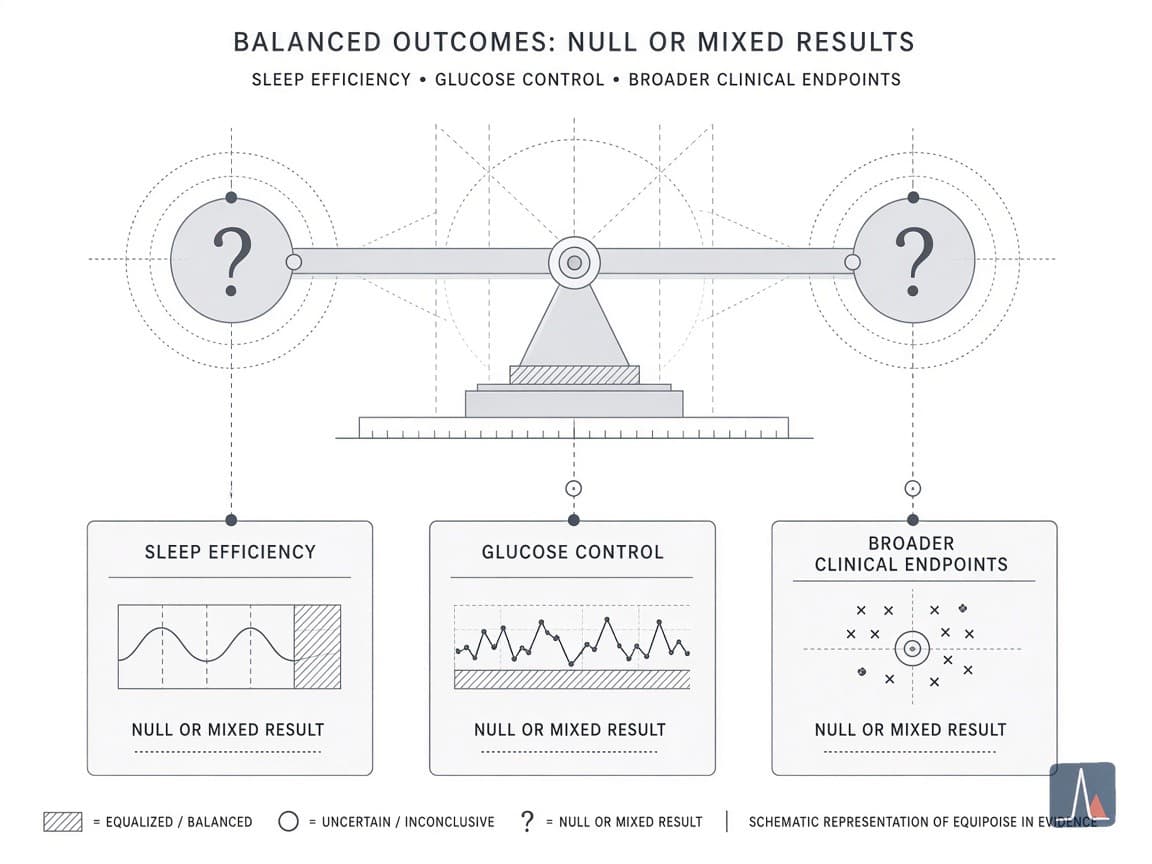
Several meta-analyses report null or modest results for key sleep maintenance parameters. A 2022 systematic review and meta-analysis of melatonin for chronic insomnia found significant effects on sleep onset latency and total sleep time only in children and adolescents, with no significant benefit for adults with non-comorbid insomnia on sleep onset latency, total sleep time, or sleep efficiency. A meta-analysis focused on menopausal women reported improvement in physical symptoms but no benefit for sleep quality (SMD −0.659), general menopausal symptoms, psychological symptoms, or estradiol levels.
Metabolic outcomes are mixed. While some analyses report reduced fasting insulin or HOMA-IR, multiple meta-analyses show no significant effect on fasting glucose, HbA1c, body weight, BMI, or waist circumference. A 2014 meta-analysis of melatonin for depression found no significant therapeutic or prophylactic effect. In assisted reproductive technology trials, benefits for embryo quality were not consistently accompanied by improved live birth rates. A cardiovascular outcomes meta-analysis found improvement in change in left ventricular ejection fraction (especially post-CABG) but no consistent benefit for final LVEF, troponin, or infarct size, with mixed timing-dependent results. High heterogeneity (often I² > 70%), variable outcome definitions, short trial durations, and methodological limitations recur across these syntheses.
Reported Adverse Events, Safety Signals, and Long-Term Data
Randomized trials generally describe a favorable short-term tolerability profile. A 2019 systematic review of 37 RCTs (doses 0.15–12 mg, mostly ≤4 weeks) reported the most common adverse events as daytime sleepiness (1.66%), headache (0.74%), dizziness (0.74%), and hypothermia (0.62%), with few serious events; most resolved spontaneously or upon discontinuation. A 2023 systematic review and GRADE assessment in children and adolescents found an increased risk of non-serious adverse events (RR 1.56, 95% CI 1.01–2.43, moderate certainty) but no association with serious adverse events. Pharmacovigilance analyses of VigiBase have identified disproportionate reporting for nightmares, abnormal dreams, falls, and certain behavioral or growth-related signals, though comparison with other sleep agents often attenuates these signals.
Longer-term randomized data remain limited. One observational analysis presented in 2025 (n>130,000 adults with insomnia) reported associations between prescription melatonin use exceeding one year and increased heart failure incidence (approximately 89% higher risk), heart failure hospitalizations, and all-cause mortality over subsequent years; these findings are preliminary, subject to confounding, and do not establish causation, yet prompted a regulatory safety signal in 2026. Concerns have also been raised regarding possible effects on glucose tolerance, semen quality, pubertal timing with very prolonged pediatric exposure (>7 years in one small observational report), and interactions with CYP1A2-metabolized drugs. Reviews consistently note that while acute toxicity is low, systematic long-term safety studies in vulnerable populations (elderly, pregnant, pediatric) are sparse.

Evidence Context, Recurrent Limitations, and Catalog Implications
Published evidence on melatonin spans in vitro redox chemistry, preclinical disease models, and hundreds of randomized trials synthesized in dozens of meta-analyses and umbrella reviews through 2026. Favorable signals cluster around sleep initiation in circadian-disrupted or comorbid populations, perioperative comfort, select adjunctive uses, and redox modulation. Null or inconsistent results predominate for sleep maintenance in uncomplicated adult insomnia, hard cardiometabolic endpoints, cognitive outcomes in many neurodegenerative contexts, and live birth rates. Unfavorable data center on mild but increased non-serious adverse events, pharmacovigilance signals, and preliminary observational associations with longer-term cardiovascular outcomes.
Recurrent limitations include high statistical heterogeneity, reliance on subjective sleep measures, short intervention durations, variable product quality in older trials, inconsistent timing of administration relative to endogenous rhythms, and predominance of industry-independent but often modestly powered studies. Many favorable preclinical mechanisms (e.g., potent antioxidant capacity at supraphysiological concentrations) have not translated to consistent clinical hard outcomes, underscoring that theoretical extrapolation from laboratory models to people should be distinguished from trial results. Evidence quality ranges from moderate to critically low by AMSTAR or GRADE criteria in many syntheses.
For laboratory researchers, the catalog entry for Melatonin provides a chemically defined tool to probe MT1/MT2 signaling, mitochondrial biology, or chronobiology in controlled cellular or animal systems. The body of literature illustrates both the breadth of investigated pathways and the gaps that remain for definitive causal attribution in complex human physiology. Future well-designed, longer-duration randomized trials with objective endpoints and rigorous safety monitoring will be required to resolve outstanding uncertainties.
Sources
- Effects of exogenous melatonin supplementation on health outcomes: An umbrella review of meta-analyses based on randomized controlled trials. Pharmacol Res. 2022. PMID: 34999224. DOI: 10.1016/j.phrs.2021.105938.
- Exogenous Melatonin and Sleep Quality: A Scoping Review of Systematic Reviews. PubMed. 2026. PMID: 41014554.
- Efficacy of melatonin for chronic insomnia: Systematic reviews and meta-analyses. Sleep Med Rev. 2022. PMID: 36179487.
- Adverse Events Associated with Melatonin for the Treatment of Primary or Secondary Sleep Disorders: A Systematic Review. CNS Drugs. 2019. DOI: 10.1007/s40263-019-00680-w.
- The short-term and long-term adverse effects of melatonin treatment in children and adolescents: a systematic review and GRADE assessment. EClinicalMedicine. 2023. DOI: 10.1016/j.eclinm.2023.102146.
- Comprehensive Effects of Melatonin Supplementation on Cardiometabolic Risk Factors: A Systematic Review and Dose–Response Meta-Analysis. Nutrients. 2025.
- Redox Biology of Melatonin: Discriminating Between Circadian and Noncircadian Functions. Antioxid Redox Signal. 2022. PMID: 35018802. DOI: 10.1089/ars.2021.0275.
- Hypoxic ischemic brain injury: animal models reveal new mechanisms of melatonin-mediated neuroprotection. Rev Neurosci. 2024. PMID: 38153803. DOI: 10.1515/revneuro-2023-0126.
- Melatonin for Spinal Cord Injury in Animal Models: A Systematic Review and Network Meta-Analysis. J Neurotrauma. 2016. PMID: 26414869. DOI: 10.1089/neu.2015.4038.
Additional primary literature and meta-analyses cited inline derive from PubMed and Europe PMC searches (2021–2026). All claims are anchored to identifiable DOIs or PMIDs.
More briefings
- Favorable and unfavorable findings on SemaglutideRandomised trials and meta-analyses report that semaglutide produces meaningful weight loss, cardiovascular and renal benefits in adults with obesity or type 2 diabetes, but is also associated with high rates of gastrointestinal adverse eve
- Survodutide Dual Agonist: Preclinical and Clinical EvidenceThe open-catalog entry for survodutide describes a synthetic acylated 29-amino-acid peptide dual agonist of glucagon and GLP-1 receptors supplied as high-purity lyophilized powder for laboratory metabolic research. Randomised trials report
- Dulaglutide: GLP-1 Receptor Agonist in Metabolic CareDulaglutide is a recombinant Fc-fusion GLP-1 receptor agonist engineered for once-weekly administration in laboratory and clinical metabolic research. Randomised trials report glycaemic improvements, cardiovascular risk reduction and modest
All information and products discussed are for laboratory and research use only. Not for human or veterinary use. Not intended to diagnose, treat, cure, or prevent any disease.