
27 October 2026
Favorable and unfavorable findings on GHK-Cu
Download PDF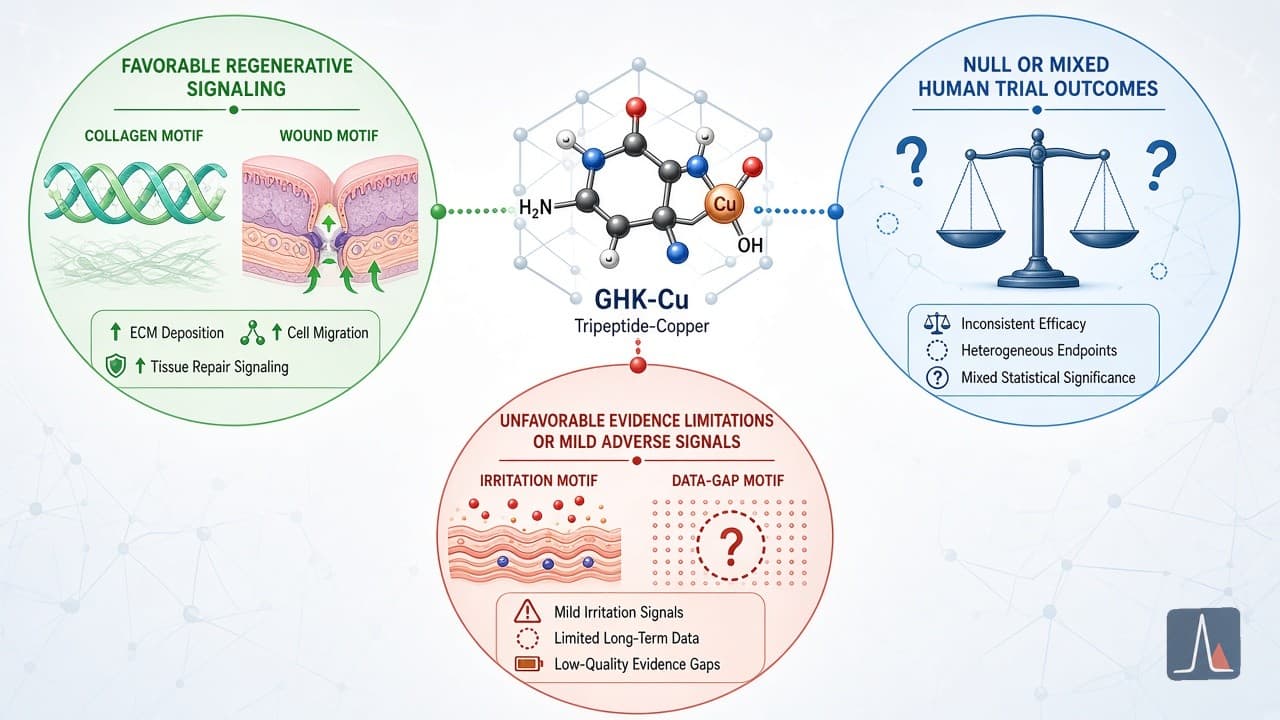
Preclinical studies on GHK-Cu report consistent stimulation of collagen synthesis, anti-inflammatory effects, and accelerated wound healing in cell and animal models. Human topical trials are small and mixed, with favorable signals in selec
Favorable and unfavorable findings on GHK-Cu
Indexed papers and 2026 systematic reviews characterize GHK-Cu (glycyl-L-histidyl-L-lysine–copper complex) as an endogenous tripeptide-copper signal studied for tissue repair, extracellular-matrix remodeling, anti-inflammatory, antioxidant, and gene-regulatory effects, primarily in cell, animal, and limited topical human models. These records do not establish research-vial use. None of the summaries below is a health claim.

Favorable Reported Findings
Preclinical literature (in vitro fibroblast and keratinocyte models, ex-vivo human skin, rodent, rabbit, and porcine wound and aging models from the 1970s–2026) consistently reports that GHK-Cu at nanomolar concentrations stimulates synthesis of type-I collagen, elastin, and glycosaminoglycans while modulating matrix metalloproteinases (MMP-1, MMP-2) and tissue inhibitors of metalloproteinases (TIMP-1) for controlled remodeling. It promotes fibroblast and keratinocyte proliferation and migration, angiogenesis (via VEGF and bFGF upregulation), suppresses pro-inflammatory pathways (NF-κB, IL-6, TGF-β1), exerts antioxidant effects (Nrf2 pathway, reduced ROS, ferritin-like activity), and produces broad gene-expression remodeling (Connectivity Map analyses report effects on thousands of genes shifting toward a youthful, reparative profile). Animal models frequently show accelerated wound contraction, re-epithelialization, organized collagen deposition, reduced scarring and fibrosis, and protection in lung emphysema, colitis, and radiation-injury models. Microneedling or liposomal formulations markedly improve dermal uptake and biological activity in ex-vivo and porcine skin models. 1 2
Limited human topical data include a 1994 multicenter evaluator-blinded vehicle-controlled trial in diabetic neuropathic foot ulcers that reported substantially higher median closure rates (98.5% vs 60.8% vehicle in plantar ulcers) and lower infection rates with GHK-Cu gel under standardized care. Small randomised or split-face cosmetic trials (typically n = 13–71 women with photoaging, 8–12 weeks twice-daily application) have reported increased skin density and thickness (ultrasound or biopsy), reduced fine-line and wrinkle volume/depth, improved firmness, laxity, clarity, and appearance, and higher patient-reported satisfaction post-laser resurfacing or in comparison with vitamin C or retinoic acid (one thigh-biopsy study showed collagen response in 70% of GHK-Cu subjects vs 50% vitamin C and 40% retinoic acid). A 2026 small randomised split-face eyebrow study (n=18) with 2% serum reported increased hair count and thickness versus the control side. One synthesis of 22 studies (n=1,124) reported large effect sizes for tissue regeneration, inflammation reduction, and regenerative gene expression. 2026 systematic reviews describe a “deep, mechanistically coherent” preclinical foundation and “reasonable biological basis” for regenerative and aesthetic applications. 3 4
Unfavorable Reported Findings
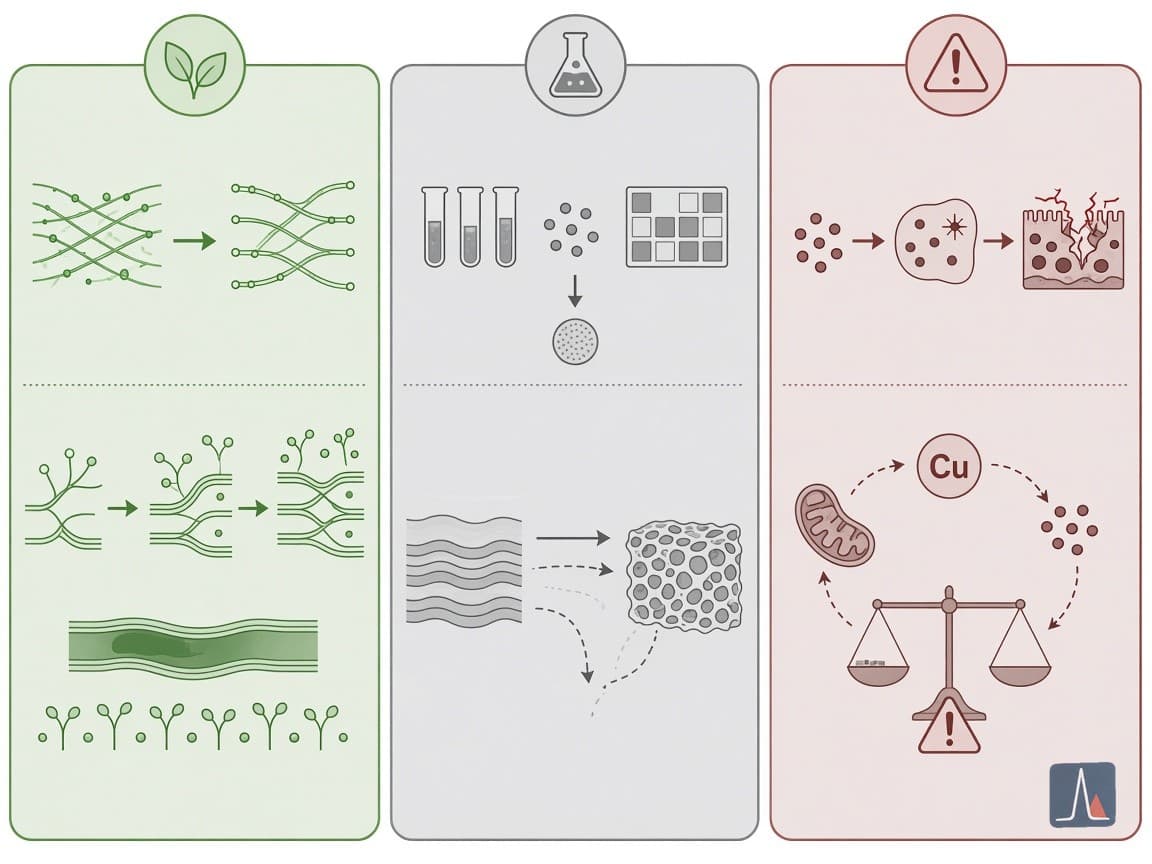
Topical use has been associated with mild-to-moderate local irritation including erythema, dryness, stinging, pruritus, or transient “copper uglies” (dullness or breakouts) in user reports, some cosmetic studies, and a 2025 acne-scar split-face trial that noted possible increased hyperpigmentation risk when combined with dermarolling. Systematic adverse-event recording is often limited in older papers. For injectable or systemic administration there are zero published controlled human pharmacokinetic, safety, or efficacy trials. FDA assessments (2026) highlight limited human data to inform safety-related considerations and flag potential immunogenicity risks from peptide aggregation, impurities, or inconsistent copper chelation in compounded material. Theoretical concerns include copper dyshomeostasis (contraindicated in Wilson disease or impaired copper metabolism) and possible pro-angiogenic effects in contexts where new vessel growth could be undesirable. A notable fraction (~35%) of the primary literature lists the discoverer Loren Pickart or affiliated commercial entities (Skin Biology/ProCyte) as authors, which 2026 reviews note limits independence of some positive reports. Larger follow-on diabetic-ulcer programs reportedly failed to replicate the 1994 positive result. 5 6
Null, Inconclusive, or Context-Limited Results
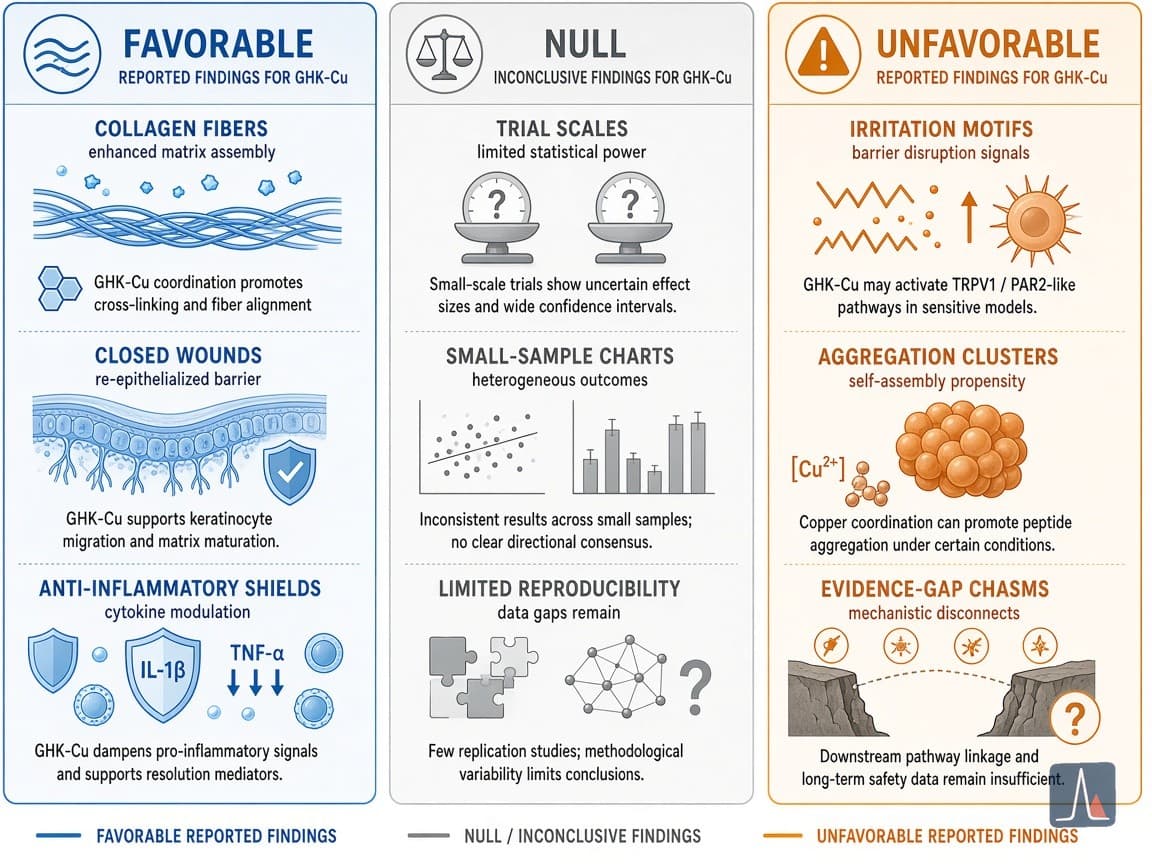
A 1992 randomised evaluator-blinded trial (≈86 evaluable patients with venous leg ulcers) found 0.4% copper-tripeptide cream produced no healing advantage over vehicle placebo; silver sulfadiazine was superior. A 2006 randomised post-CO₂-laser resurfacing study (13 completers) found no significant objective differences (computer-assessed erythema, blinded-evaluator wrinkle and skin-quality scores) between GHK-Cu regimen and control, although patient questionnaires showed higher satisfaction (P=0.04). Most human studies are small (often n<50–70), short-term (8–12 weeks), heterogeneous in formulation, vehicle, concentration, and endpoints, and many position GHK-Cu only as an active comparator against vitamin C, EGF, tretinoin, Pal-KTTKS, or microneedling alone rather than as the primary test article. Only three relatively recent direct interventional human studies (one pilot, one split-face, one case series) are highlighted in a 2026 review of 64 records (2005–2026). No published placebo-controlled trials demonstrate standalone hair regrowth or gray-hair reversal with isolated GHK-Cu; many hair reports use multi-ingredient products or GHK conjugates. Transdermal penetration of intact hydrophilic GHK-Cu is poor without physical or formulation enhancers; while microneedling dramatically improves uptake in ex-vivo and porcine models, no large, adequately powered human RCTs of the combination exist. An ongoing Phase 2 randomised vehicle-controlled split-wound trial of topical GHK-Cu gel for standardised acute punch-biopsy wounds (NCT07437586) is recruiting with no efficacy results available. Heterogeneity in chemical speciation (intact GHK-Cu vs apo-GHK vs labile or free copper), stability, and delivery verification prevents meta-analysis and limits attribution of effects. Claims for systemic anti-aging, metabolic, neurologic, or oncologic benefits remain entirely preclinical. 1 7
Evidence Context and Recurrent Limitations

GHK-Cu was identified in the 1970s as a plasma factor that binds copper with high affinity and acts as a matricryptin fragment released from collagen and SPARC during tissue injury. It serves as a copper chaperone for lysyl oxidase and appears to bias repair signaling toward anti-fibrotic TGF-β3 pathways. The preclinical evidence base (cell, ex-vivo, animal) spanning four decades is described by 2026 systematic and evidence-mapping reviews as “mechanistically coherent,” “deep,” and supportive of regenerative, anti-inflammatory, antioxidant, and matrix-remodeling roles. However, clinical translation is constrained. Reviews of 20–64 studies (2005–2026) identify only ≈11 human studies, of which few directly test GHK-Cu as the primary intervention and only 2 qualify as dedicated RCTs in aesthetic contexts. Methodological variability (formulation, speciation, dose, delivery, outcome measures, follow-up), small sample sizes, industry-linked authorship in foundational positive work, surrogate rather than patient-important endpoints, and absence of long-term independent data recur as limitations. Delivery challenges (poor passive transdermal penetration of the intact complex) and incomplete pharmaceutical characterisation (exact copper occupancy, labile copper limits, stability) are repeatedly highlighted. Reviews uniformly conclude GHK-Cu is “promising but unproven” and issue explicit calls for larger, well-designed, independent RCTs using standardised, analytically defined materials, objective imaging/biomarkers, advanced delivery platforms (microneedle arrays, dissolvable patches), longer follow-up, and rigorous safety monitoring across indications such as photoaging, atrophic scarring, chronic wounds, post-Mohs reconstruction, and post-radiation repair. Regulatory context limits medical claims; topical cosmetic incorporation exists in some products while injectable compounding has faced safety scrutiny (immunogenicity, limited human data). No regulatory approval exists for therapeutic use. The current corpus therefore supports continued laboratory investigation of mechanisms and formulation science rather than clinical extrapolation. Future work should prioritise independent replication, clear active-entity analytics, and adequately powered trials to resolve the translational gap. 1 3
Sources
- Najafi N, et al. A Systematic Review of the Mechanisms and Therapeutic Applications of GHK-Cu (Glycyl-L-Histidyl-L-Lysine-Copper Complex) in Topical Microneedle Delivery: A Case for Expanded Clinical Trials. Arch Intern Med Res. 2026. doi:10.26502/aimr.0255. PMID: 42787770. (64 records, 2005–2026; strong preclinical, defined human evidence gap). 1
- Mokhtar J, et al. The Regenerative Potential of GHK-Cu in Aesthetic Medicine. Aesthet Surg J. 2026. (20 studies: 18 preclinical, 2 RCTs; consistent preclinical but limited well-designed clinical trials). 3
- Pickart L, Margolina A. Regenerative and Protective Actions of the GHK-Cu Peptide in the Light of the New Gene Data. Int J Mol Sci. 2018;19(7):1987. doi:10.3390/ijms19071987. PMID: 29986520. (noted commercial context in some syntheses). 2
- Miller TR, et al. Effects of topical copper tripeptide complex on CO2 laser-resurfaced skin. Arch Facial Plast Surg. 2006;8(4):252-259. doi:10.1001/archfaci.8.4.252. PMID: 16847171. (null objective findings). 7
- Bishop JB, et al. A prospective randomized evaluator-blinded trial of two potential wound healing agents for the treatment of venous stasis ulcers. J Vasc Surg. 1992;16(2):251-257. PMID: 1495150. (null vs vehicle). 4
- Additional preclinical, wound-chamber, fibroblast, lung-injury, gene-profiling, and formulation papers (1988–2026) indexed on PubMed/Europe PMC; FDA compounding safety assessments (2026); ongoing NCT07437586 Phase 2 topical gel trial (recruiting, no results).
More briefings
- Survodutide Dual Agonist: Preclinical and Clinical EvidenceThe open-catalog entry for survodutide describes a synthetic acylated 29-amino-acid peptide dual agonist of glucagon and GLP-1 receptors supplied as high-purity lyophilized powder for laboratory metabolic research. Randomised trials report
- Dulaglutide: GLP-1 Receptor Agonist in Metabolic CareDulaglutide is a recombinant Fc-fusion GLP-1 receptor agonist engineered for once-weekly administration in laboratory and clinical metabolic research. Randomised trials report glycaemic improvements, cardiovascular risk reduction and modest
- Cagrilintide-Semaglutide Mixture: Open-Catalog Context and Metabolic Trial EvidenceThe open-catalog cagrilintide-semaglutide mixture supplies a research pairing of an amylin receptor agonist and GLP-1 receptor agonist for laboratory metabolic studies. Randomised trials of co-administration report enhanced weight loss (13–
All information and products discussed are for laboratory and research use only. Not for human or veterinary use. Not intended to diagnose, treat, cure, or prevent any disease.