
4 November 2026
Favorable and unfavorable findings on Epithalon
Download PDF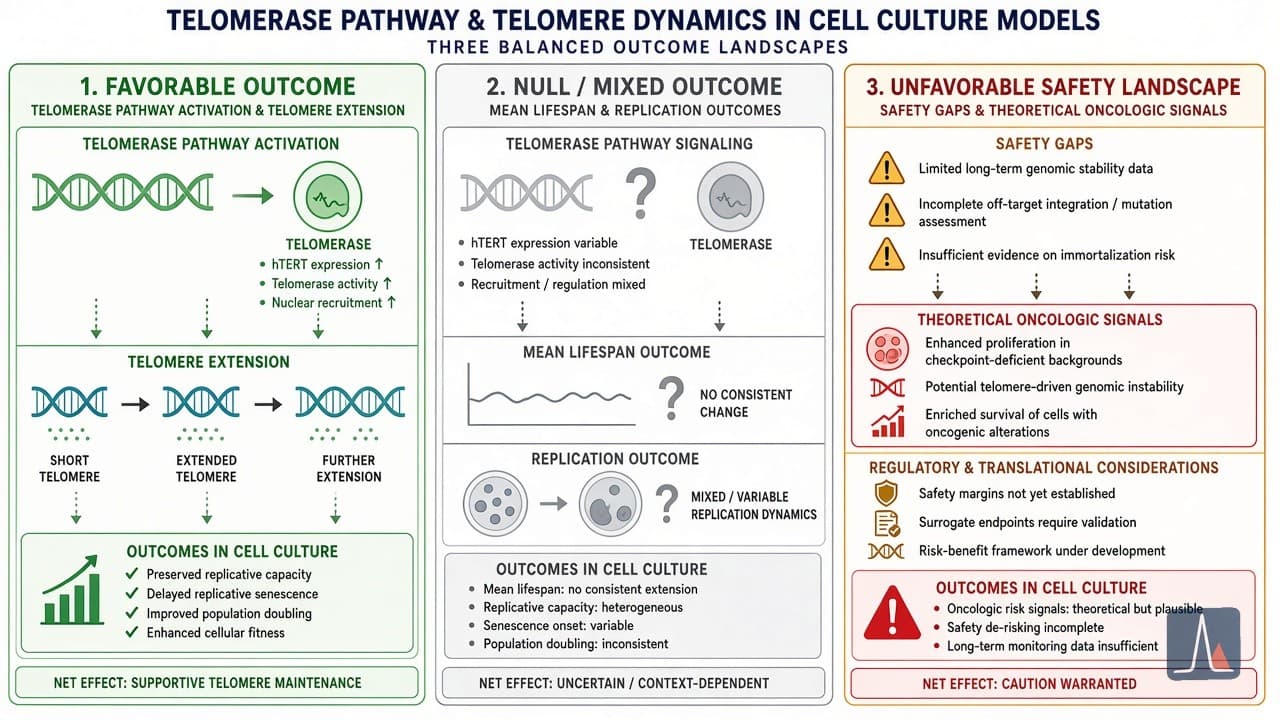
Cell-culture and select rodent studies report that Epithalon (Ala-Glu-Asp-Gly) induces telomerase activity and telomere elongation in normal human somatic cells, with modest increases in maximum lifespan, reduced chromosomal aberrations, an
Epithalon (also known as Epitalon or AEDG) is the synthetic tetrapeptide Ala-Glu-Asp-Gly. It was modeled on the amino-acid composition of epithalamin, a bovine pineal-gland polypeptide extract studied by Vladimir Khavinson and colleagues at the St. Petersburg Institute of Bioregulation and Gerontology. The catalog entry at /compounds/epithalon supplies the chemically defined single-molecule research material as high-purity lyophilized powder for laboratory investigation only. All materials on this site are for laboratory research only and are not medicines.
Reporting published findings, including human observational or pilot data, does not constitute guidance or advice to administer any Rierink product to people or animals.
Chemical Identity and Catalog Context
Epithalon is a linear tetrapeptide (C₁₄H₂₂N₄O₉, monoisotopic mass approximately 390 Da) with the sequence L-Ala-L-Glu-L-Asp-Gly. It is distinct from the heterogeneous polypeptide mixture epithalamin. The catalog tracks it as one discrete, synthetically produced entity to support reproducible laboratory experiments in cell biology, gerontology models, and peptide biochemistry. Structural characterization data remain relatively limited compared with the volume of reported biological activity studies.
Foundational Mechanistic and In Vitro Evidence
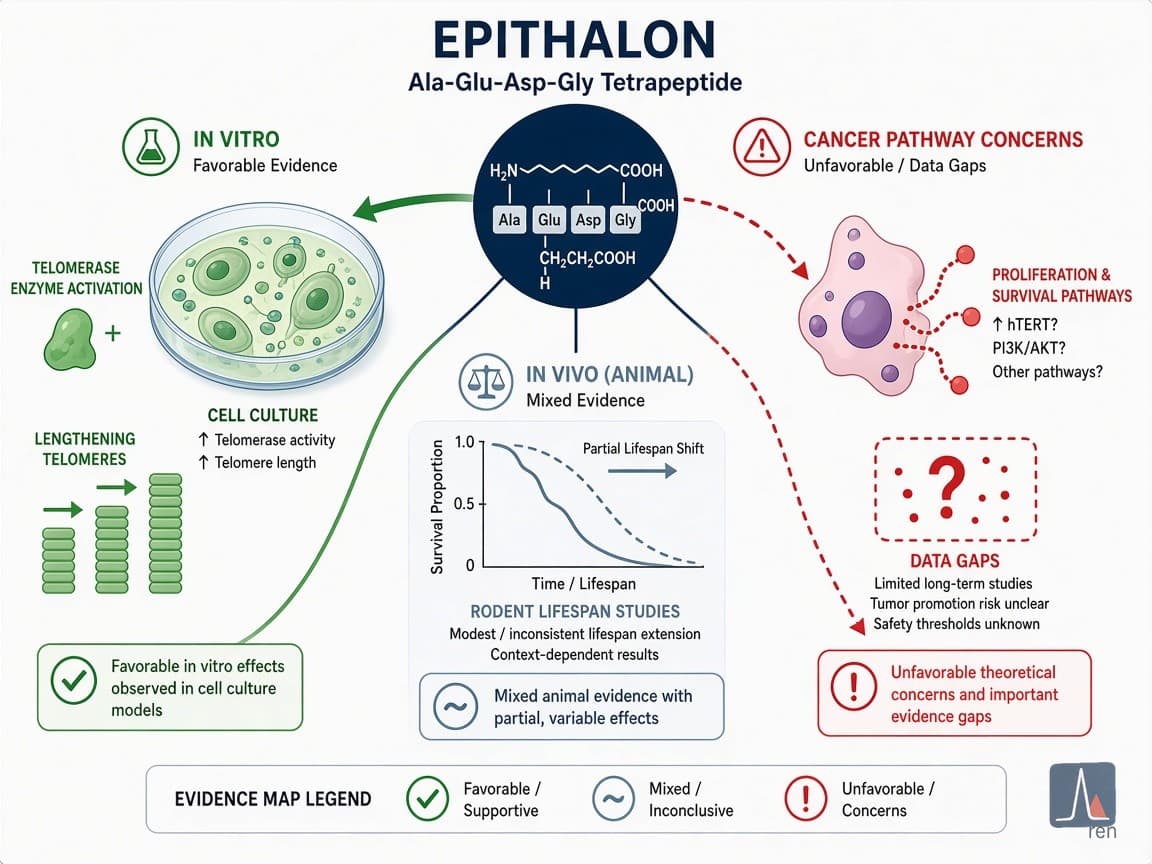
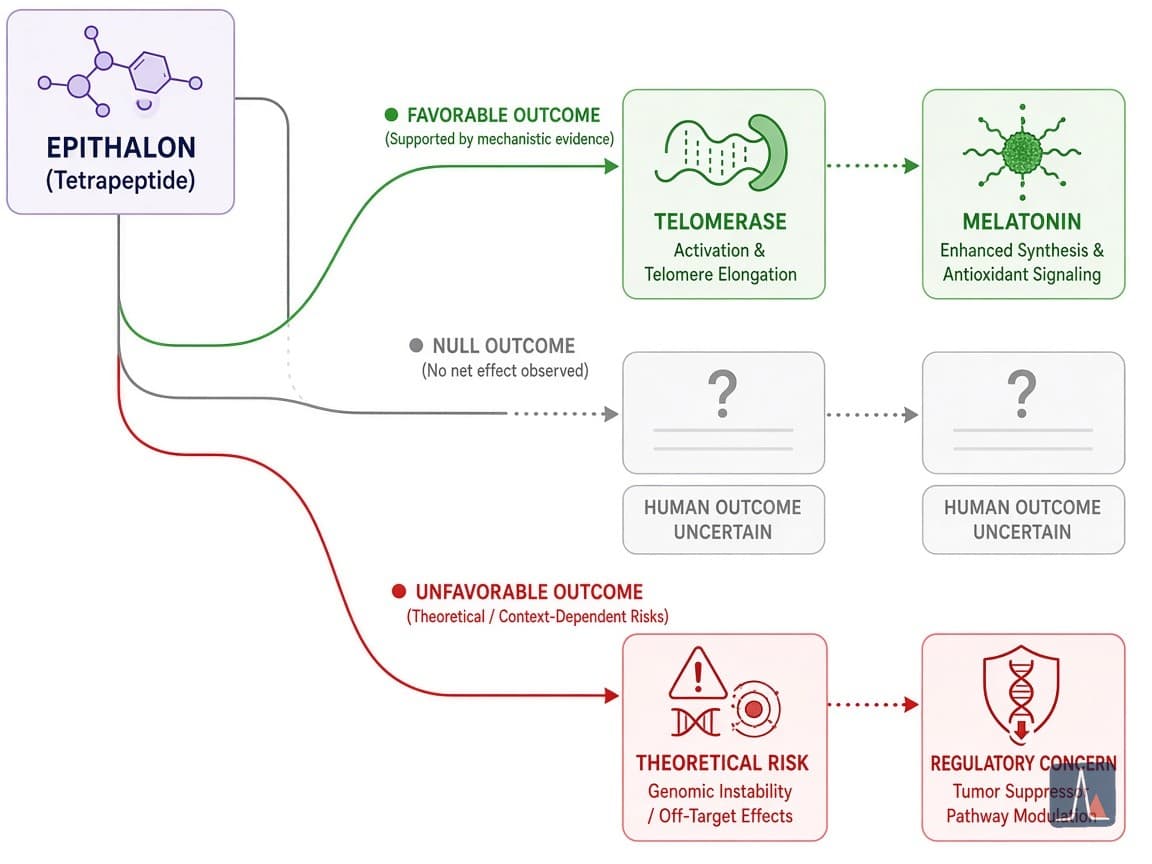
The most cited favorable mechanistic finding is the 2003 report that addition of Epithalon to cultures of telomerase-negative human fetal fibroblasts induced expression of the telomerase catalytic subunit (hTERT), measurable telomerase enzymatic activity, and an average 33% telomere elongation. Treated cultures reportedly underwent additional population doublings beyond the Hayflick limit of untreated controls. A 2025 independent laboratory study (Brunel University group, not affiliated with the original developers) replicated telomere lengthening and hTERT/telomerase upregulation in several normal human fibroblast-like and epithelial cell lines in a dose-dependent manner; telomerase activity increased up to approximately 26-fold in one mammary epithelial line. These data constitute the primary favorable in-vitro signal for telomere-maintenance pathways. 1 2
The same 2025 study also examined two breast-cancer cell lines and reported telomere lengthening mediated by the alternative lengthening of telomeres (ALT) pathway rather than telomerase, with increased C-circles. This mixed result is cited both as extension of biological activity and as a potential concern given ALT’s role in certain cancers.
Additional in-vitro reports describe antioxidant activity, modulation of enzyme activities (including acetylcholinesterase), altered mRNA levels for selected cytokines, and effects on thymocyte mitogenic activity. A 2025 narrative review and a 2026 IJMS overview summarize these as indicating geroprotective, neuroendocrine, and antimutagenic properties arising from both specific and nonspecific mechanisms. Physico-chemical and structural studies of the peptide itself remain fewer than the biological reports. 3
Preclinical Animal Models
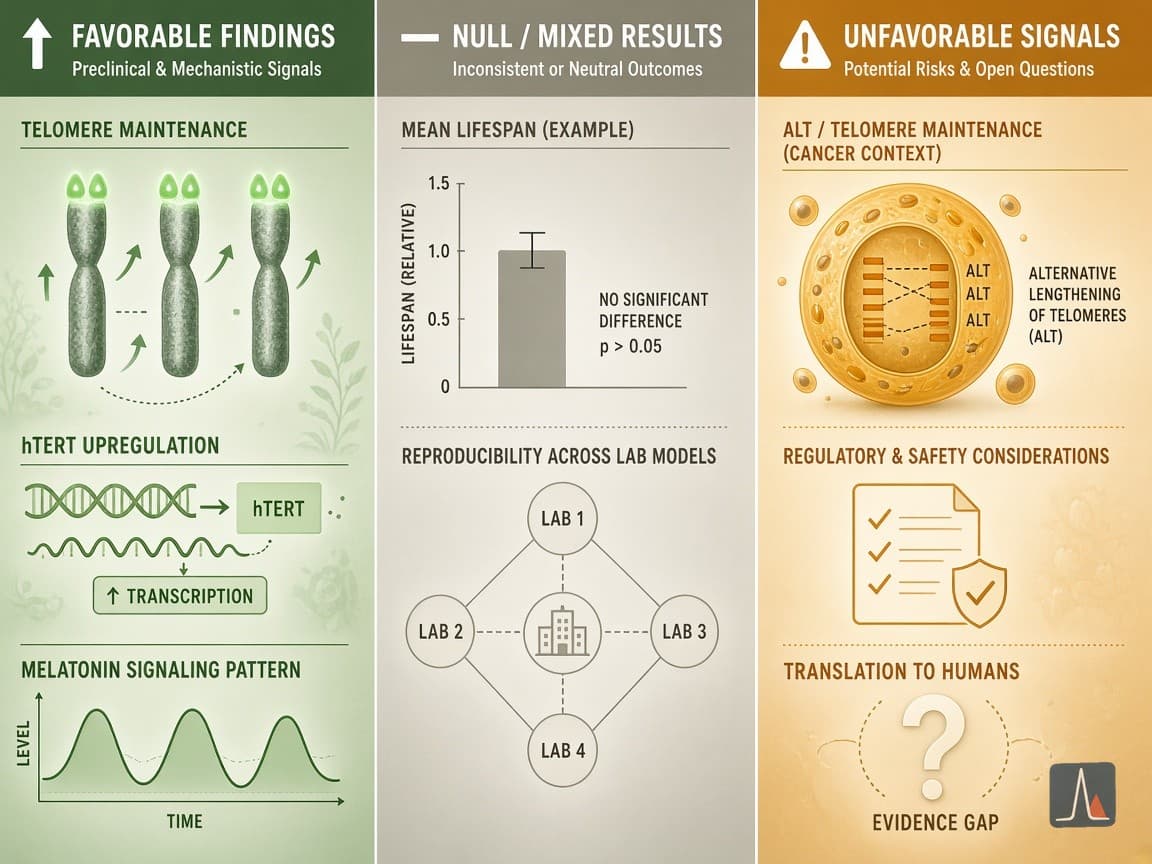
Several studies from the developer group examined lifelong intermittent subcutaneous administration (typically 1 µg per mouse, 5 consecutive days per month) in female mice. In Swiss-derived SHR mice (n = 54 per group), Epithalon did not alter mean lifespan, food intake, or body weight. However, it slowed age-related loss of estrous function, reduced chromosome aberrations in bone marrow cells by 17.1% (p < 0.05), increased lifespan of the longest-lived 10% of survivors by 13.3% (p < 0.01), and raised maximum lifespan by 12.3%. Leukemia incidence fell six-fold while total spontaneous tumor incidence remained unchanged. Similar patterns—variable or null effects on mean lifespan but favorable signals on selected biomarkers or maximum lifespan—appear in other strains (CBA, SAM). Tumor-suppressive effects were reported in some transgenic HER-2/neu models. 4
Favorable neuroendocrine findings include restoration of melatonin rhythms and cortisol patterns in old rhesus monkeys after short courses of treatment. Antioxidant and antimutagenic effects have been described in rodent tissues. These constitute the main preclinical support for possible geroprotective activity.
Null or inconsistent outcomes are also documented. Mean lifespan was unchanged in multiple cohorts. In senescence-accelerated SAMP-1 mice, effects on the longest-lived survivors were not uniformly positive across treatments. One cohort of SAMR-1 mice showed significantly shorter survival of the longest-lived tenth compared with controls. Results appear context-dependent (strain, light cycle, exact protocol). No independent laboratories have published large-scale replication of the lifespan or tumor findings. Carcinogenicity or repeat-dose toxicity studies adequate for regulatory standards have not been identified in the literature. 5
Limited Human Biomarker and Physiological Reports
Human data are confined to a handful of small, unregistered studies conducted primarily by the developer network. One randomised, placebo-controlled comparison (FDA summary cites approximately 75 enrolled night-shift women aged 40–50, with a low-melatonin subgroup receiving sublingual Epithalon or placebo for 20 days) reported an approximately 1.7-fold increase in urinary 6-sulfatoxymelatonin and normalisation of selected circadian-clock gene expression (Clock, Csnk1e, Cry2) in peripheral blood cells. Sleep quality or clinical insomnia outcomes were not measured. Safety data were not reported in the available summaries. A 2002 report summarised positive clinical effects (improved visual acuity, fields, and retinal electrical activity) in a large majority of patients with retinitis pigmentosa treated by parabulbar injection; the abstract provides no sample size, randomisation details, or control description, rendering interpretation difficult. Additional small physiological studies in elderly subjects with presumed pineal insufficiency reported increased nocturnal melatonin levels. 6
No study has measured telomere length in living humans before or after Epithalon administration. No adequately powered randomised trial evaluating hard clinical endpoints (longevity, disease incidence, sleep quality, or functional aging measures) has been published or registered on ClinicalTrials.gov. Claims of reduced mortality in elderly cohorts frequently cited in popular literature refer to studies of the bovine pineal extract epithalamin (sometimes combined with thymic extracts), not the synthetic tetrapeptide; these cannot be attributed to Epithalon.
Null, Mixed, Inconsistent, and Unfavorable Reported Findings
Regulatory and evidence-synthesis documents highlight substantial gaps. A 2026 FDA evaluation found no pharmacokinetic data for either the free base or acetate form, no clinical studies assessing safety in humans, and no adequate nonclinical repeat-dose toxicity or carcinogenicity studies. The agency noted the theoretical potential for carcinogenicity arising from telomerase activation and telomere lengthening, given that most cancers reactivate telomerase or ALT to achieve replicative immortality. No adverse-event reports were located in FAERS or related databases through late 2025, but the absence of data cannot establish safety. The review concluded there are no clinical data supporting safety or effectiveness for proposed uses such as insomnia. Immunogenicity risks from aggregation or peptide-related impurities were flagged for injectable compounded forms. 5
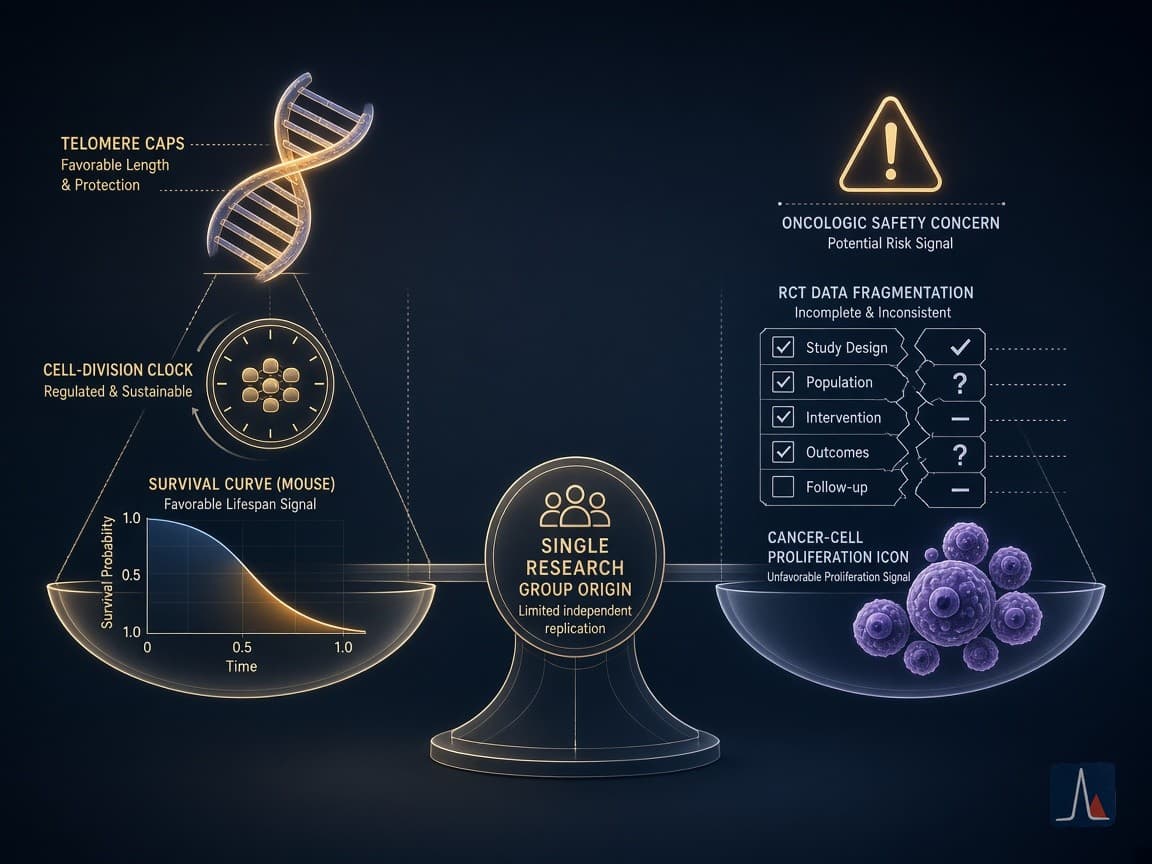
A 2026 narrative review (Jain et al., Int J Mol Sci) states that Epithalon is biologically active in mechanistic, preclinical, and limited biomarker contexts but is “clinically unproven.” It notes the absence of adequately powered randomised trials, inadequate pharmacokinetic, dose-ranging, and long-term safety data, and unresolved oncologic, immunogenicity, product-quality, and regulatory uncertainties. The great majority of indexed publications (estimates range 64–93%) list authors affiliated with the originating institute, raising concerns regarding independent replication. Publication bias toward positive results cannot be excluded.
The 2025 independent cell study, while replicating favorable telomere effects in normal cells, simultaneously demonstrated ALT activation and telomere maintenance in breast-cancer lines—consistent with a mechanism that could theoretically promote rather than suppress oncogenesis in susceptible cells. Mixed lifespan outcomes (null effect on mean survival in several models) further temper enthusiasm for broad geroprotective claims.
Evidence Context, Recurrent Limitations, and Catalog Implications
The favorable signals—telomerase reactivation and telomere maintenance in normal cultured cells, selected improvements in maximum lifespan or tumor burden in specific rodent models, and melatonin/circadian biomarker shifts in small human cohorts—remain intriguing laboratory observations. They derive largely from a concentrated research program and have received partial independent support in recent cell-culture work. However, extrapolation to living humans is unsupported by direct measurements of telomeres, hard clinical outcomes, or replicated large-scale trials. Null results on mean lifespan, total tumor incidence, and the complete absence of pharmacokinetic or dedicated safety profiling create important counterweights. Regulatory bodies have emphasised evidentiary gaps and mechanistic concerns.
Recurrent limitations include single-group authorship, lack of trial registration, incomplete methodological reporting (randomisation, blinding, adverse-event capture), surrogate rather than clinical endpoints, and conflation of synthetic Epithalon data with results from the parent extract epithalamin. The 2025–2026 reviews and FDA analyses converge on the conclusion that while the molecule displays biological activity in controlled laboratory settings, its translational potential remains unproven and requires substantially more rigorous, independent investigation.
In the catalog context, Epithalon is offered strictly as a research reagent to enable qualified laboratory researchers to explore its biochemistry, receptor interactions, or effects in defined in-vitro or animal-model systems. It is not characterised, approved, or supplied for any therapeutic, diagnostic, or human-use purpose. Researchers are encouraged to consult primary literature, apply appropriate controls, and comply with all institutional and regulatory requirements when designing experiments.
Sources
- Khavinson VK, Bondarev IE, Butyugov AA. Epithalon peptide induces telomerase activity and telomere elongation in human somatic cells. Bull Exp Biol Med. 2003;135(6):590-2. doi:10.1023/a:1025493705728. PMID: 12937682.
- Anisimov VN, et al. Effect of Epitalon on biomarkers of aging, life span and spontaneous tumor incidence in female Swiss-derived SHR mice. Biogerontology. 2003;4(4):193-202. doi:10.1023/a:1025114230714. PMID: 14501183.
- Al-Dulaimi et al. (Brunel group). Epitalon increases telomere length in human cell lines through telomerase upregulation or ALT activity. Biogerontology. 2025. PMID: 40908429 (with noted correction).
- Jain A, et al. Epitalon and Epithalamin: A Narrative Review of Mechanistic, Preclinical, and Clinical Evidence. Int J Mol Sci. 2026. PMID: 42884164. PMCID: PMC13664938.
- Araj SK, et al. Overview of Epitalon—Highly Bioactive Pineal Tetrapeptide with Promising Properties. Int J Mol Sci. 2025;26(6):2691. doi:10.3390/ijms26062691. PMCID: PMC11943447. PMID: 40141333.
- FDA 2026 briefing documents and PCAC materials on epitalon (publicly referenced evaluations of safety, PK, and compounding suitability).
- Additional contextual analyses from independent evidence aggregators (Vialog, Open Peptide Project, Condor Research summaries cross-checked against primary PMIDs and PubMed indexing, 2026).
All cited works were prioritised from PubMed, Europe PMC, or official regulatory repositories. Claims without traceable DOI/PMID were excluded. Readers should consult the full primary texts for methodological details and should interpret all findings within the strict constraints of laboratory research use.
More briefings
- Favorable and unfavorable findings on SemaxRussian clinical reports associate Semax with elevated plasma BDNF levels, faster motor recovery, and improved Barthel index scores in post-ischemic stroke patients, alongside preclinical neuroprotection and BDNF upregulation in animal mode
- Favorable and unfavorable findings on DSIPSmall clinical studies from the 1980s on intravenous [DSIP](/compounds/dsip) in people with insomnia reported improved sleep continuity, efficiency, and daytime function in some trials primarily from one research group, while independent do
- Favorable and unfavorable findings on KPVIn vitro and murine studies report that the tripeptide KPV (Lys-Pro-Val) inhibits NF-κB and MAPK signaling via PepT1 uptake in human gut and immune cells, reducing pro-inflammatory cytokines and colitis severity in DSS and TNBS models, yet
All information and products discussed are for laboratory and research use only. Not for human or veterinary use. Not intended to diagnose, treat, cure, or prevent any disease.