
4 November 2026
Favorable and unfavorable findings on DSIP
Download PDF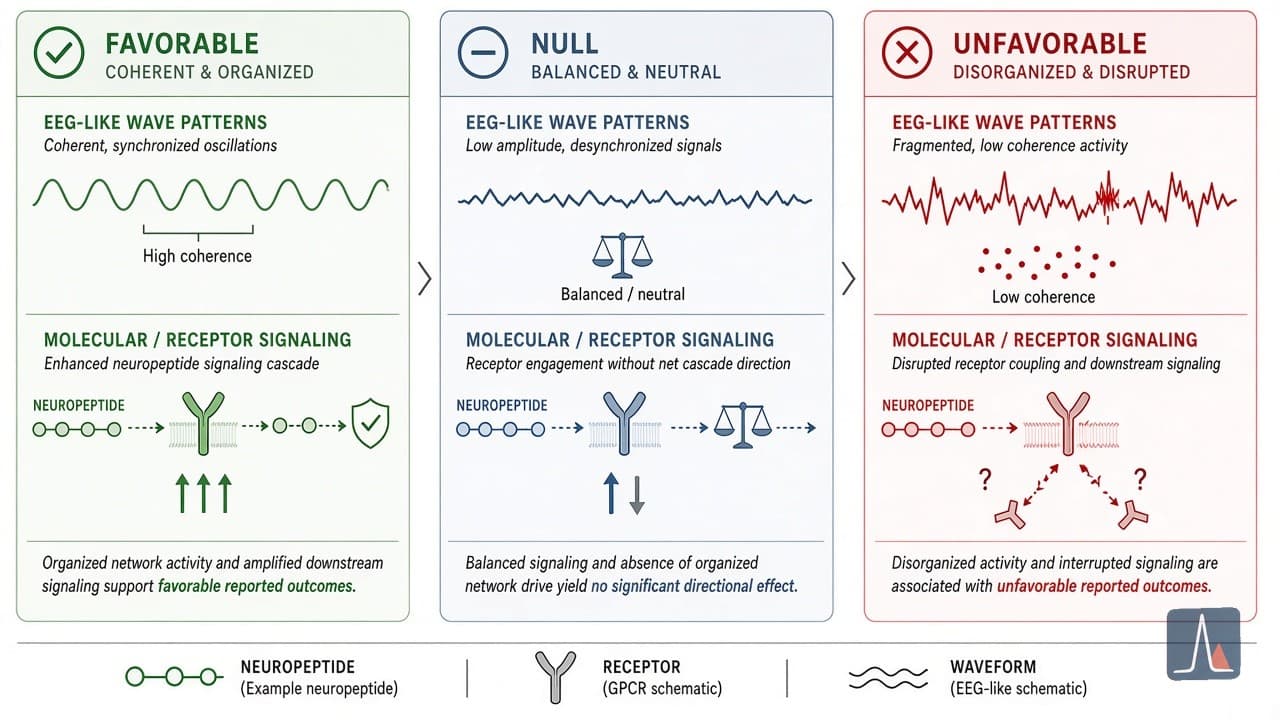
Small clinical studies from the 1980s on intravenous [DSIP](/compounds/dsip) in people with insomnia reported improved sleep continuity, efficiency, and daytime function in some trials primarily from one research group, while independent do
Chemical Identity and Catalog Context
DSIP (Delta Sleep-Inducing Peptide, also known as emideltide) is a synthetic nonapeptide with the amino acid sequence Trp-Ala-Gly-Gly-Asp-Ala-Ser-Gly-Glu (WAGGDASGE). It is supplied as a high-purity lyophilized research chemical for laboratory investigation of neuropeptide biology, sleep architecture, stress responses, and related pathways. Materials on this site are for laboratory research only and are not medicines. Reporting published human trial outcomes is not guidance to use research materials in any living system.
Discovery, Preclinical Mechanistic Evidence, and Endogenous Status
DSIP was isolated in 1977 from the cerebral venous blood of rabbits in which sleep had been electrically induced. Initial rabbit experiments described increased delta (slow-wave) and spindle EEG activity after intraventricular administration, giving the molecule its name. Subsequent animal studies explored effects on sleep stages, pain thresholds, seizure activity, thermoregulation, and stress markers in rabbits, rats, cats, and mice. Results have been inconsistent across laboratories, species, and models; some reports noted increases in slow-wave sleep or non-REM sleep, while others observed limited or opposite effects. A 2024 mouse study using a DSIP fusion peptide with blood-brain barrier-crossing elements reported modulation of neurotransmitters (serotonin, glutamate, dopamine, melatonin) and behavioral improvements in a PCPA-induced insomnia model; native DSIP effects were weaker in that paradigm.
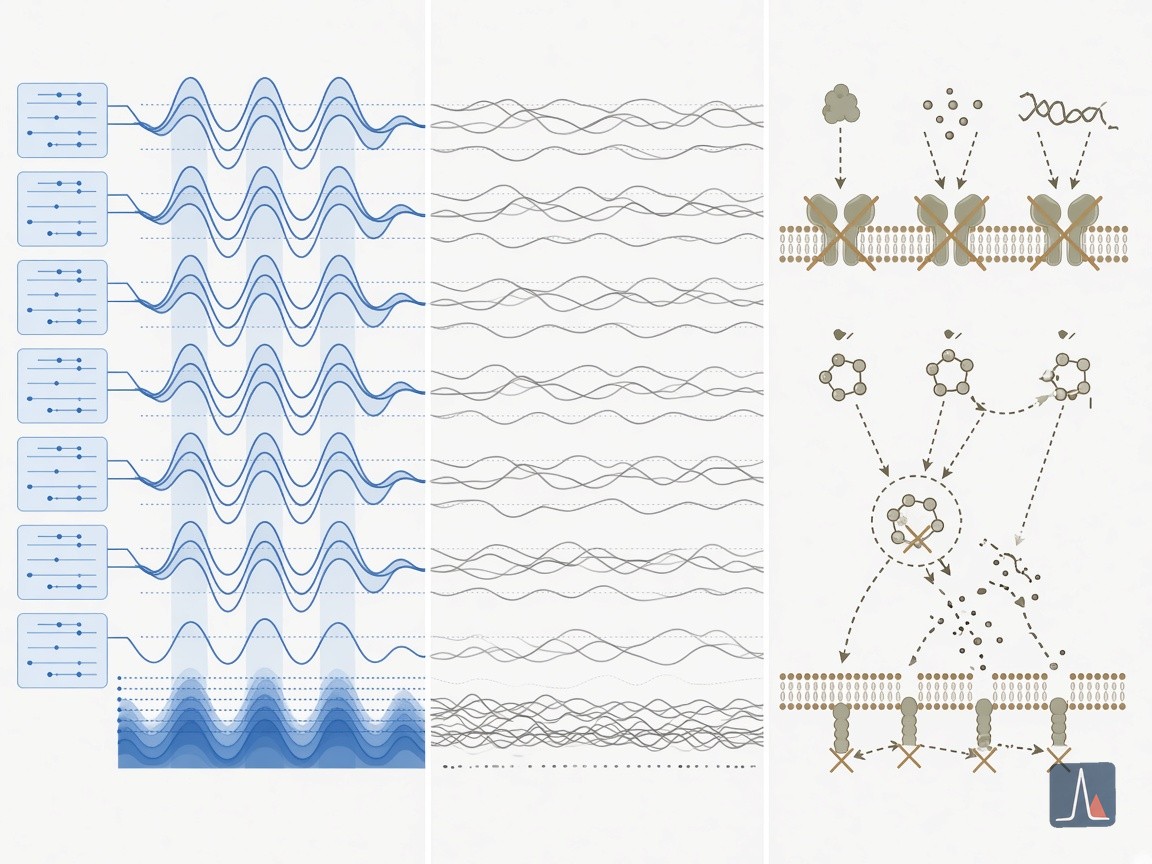
Mechanistically, DSIP remains poorly characterized. No gene encoding a DSIP precursor protein, no confirmed endogenous mature peptide sequence matching the isolated nonapeptide in humans, and no specific receptor have been identified despite decades of search. Plasma half-life is short (approximately 5–10 minutes in human serum due to enzymatic degradation). A 2006 review in the *Journal of Neurochemistry* described the hypothesis of DSIP as an endogenous sleep factor as “extremely poorly documented and still weak” and titled the peptide “a still unresolved riddle.” Immunoreactivity detected in hypothalamic nuclei, pituitary, gut, and breast milk may reflect cross-reactivity with a related but unidentified molecule. Some in vitro work has explored interactions with opioid-like systems, monoamine oxidase, or MAPK pathways, but these remain associative rather than causal. !Three-panel abstract diagram of DSIP research findings balance Abstract representation separating categories of reported DSIP findings across preclinical and clinical literature.
Favorable Reported Findings in Human Studies
Early clinical reports, largely from the Swiss group that isolated the peptide, described positive changes in sleep parameters and daytime function. In a 1981 double-blind crossover study in six healthy volunteers (PMID 6895513), a single morning intravenous infusion was associated with a 59% median increase in sleep time within approximately two hours compared with placebo, without classic pharmacologic sedation on EEG or behavioral measures; subsequent night sleep showed shorter latency, reduced stage 1, and improved efficiency.
In middle-aged and elderly patients with severe chronic insomnia, open and partially controlled polysomnographic assessments (Schneider-Helmert, 1986, PMID 3792404; 1987, PMID 3622582) reported normalization of sleep efficiency to levels comparable with healthy controls after repeated nightly intravenous administration over one week. Improvements were described as appearing from the first dose, with reduced awakenings, increased total sleep time, and better daytime alertness, psychological performance, and mood that persisted into a post-treatment placebo night in one report. A 1983 summary of five small human studies (PMID 6689058) noted latency of sleep induction around one hour with effects lasting up to 20 hours, improved stress tolerance, and modulation of “local vigilance” conceptualized as programming of behavior.
Exploratory open-label observations in small cohorts of patients with chronic pain (n=7) described reduced pain intensity in six participants and improved mood after a series of intravenous injections. Uncontrolled series in patients experiencing alcohol or opiate withdrawal (1983–1984, total n approximately 170 evaluable) reported rapid resolution or marked improvement in somatic symptoms in the large majority, with slower resolution of anxiety and insomnia; headache was occasionally noted. These reports contributed to hypotheses of antinociceptive, stress-buffering, or normalizing effects on disrupted physiology. Preclinical support included some animal models showing elevated pain thresholds or anticonvulsant activity. !Evidence balance diagram for DSIP findings Schematic illustrating the distribution of favorable, null, and unfavorable observations in DSIP literature.

Null, Mixed, Inconsistent, and Unfavorable Human Findings
Independent double-blind placebo-controlled polysomnography trials produced weaker or null conclusions. A 1987 crossover study (Monti et al.) in patients with insomnia found increases in total sleep time and stage 2 non-REM sleep, but these differences were already present at baseline, slow-wave sleep was unmodified, and the authors judged the improvement to be of “little clinical significance.” A 1992 double-blind, matched-pairs, parallel-group study in 16 chronic insomniacs (Bes et al., PMID 1299794) reported statistically higher sleep efficiency and shorter sleep latency with DSIP versus placebo across three treatment nights, yet the effects were characterized as weak, partly attributable to an incidental change in the placebo arm, and unaccompanied by improvement in subjective sleep quality. The authors concluded that short-term treatment “is not likely to be of major therapeutic benefit.”
A randomized study in 24 patients undergoing anesthesia (2009) found that DSIP as an adjunct paradoxically lightened anesthetic depth (increased BIS index, altered EEG delta activity, and heart-rate variability in the opposite direction from the delta-sleep hypothesis). Controlled investigations in healthy men found no significant effect of DSIP on CRH- or meal-stimulated ACTH or cortisol secretion, failing to support hypothesized inhibitory actions on the HPA axis. Plasma DSIP-like immunoreactivity measurements have been inconsistent and not reliably correlated with sleep stages or clinical outcomes across studies.
The overall pattern noted by multiple 2026 syntheses is that more rigorously controlled trials tended to yield smaller, weaker, or null results compared with earlier reports from the discovery group. No large-scale, modern randomized controlled trials using contemporary polysomnographic standards have been published. No human study has examined the subcutaneous route used in some laboratory or compounding contexts; all efficacy data are intravenous. !Triptych abstract of favorable null unfavorable DSIP evidence Geometric separation of favorable, null, and unfavorable published findings on DSIP.

Evidence Syntheses, Regulatory Assessments, Safety Profile, and Recurrent Limitations
A 2006 *Journal of Neurochemistry* review (Kovalzon & Strekalova, PMID 16539679) highlighted the absence of a DSIP gene, precursor, or receptor and questioned whether measured immunoreactivity represents the isolated nonapeptide or a related entity. Narrative reviews and 2026 regulatory briefings reached similar conclusions: the human evidence base consists of approximately 200 participants across small, dated studies with heterogeneous methodologies, frequent lack of adequate placebo controls in positive reports, and no replication under current standards. The U.S. FDA 2026 Pharmacy Compounding Advisory Committee briefing described the intravenous insomnia data as “inconclusive and at best preliminary,” noted that even positive responses left unclear whether changes were clinically meaningful, found insufficient evidence for proposed indications (chronic insomnia, narcolepsy, opioid withdrawal), and highlighted the complete absence of effectiveness or safety data for non-intravenous routes. The advisory committee voted against recommending DSIP for the 503A bulking list—the only peptide among several reviewed to receive this outcome.
Safety reporting in the published small trials described DSIP as generally well-tolerated when given slowly by intravenous infusion, with no major psychologic, physiologic, or biochemical side effects and no daytime sedation in sleep studies. Transient headache, nausea, sweating, or mild hypotension appeared in some withdrawal-context observations; serious adverse events were not prominently reported in the sleep literature. However, the thin evidence base, short half-life, potential for immunogenicity or impurities in research or compounded forms, and lack of long-term data limit safety conclusions. No meta-analyses of randomized trials exist because of study heterogeneity and age.
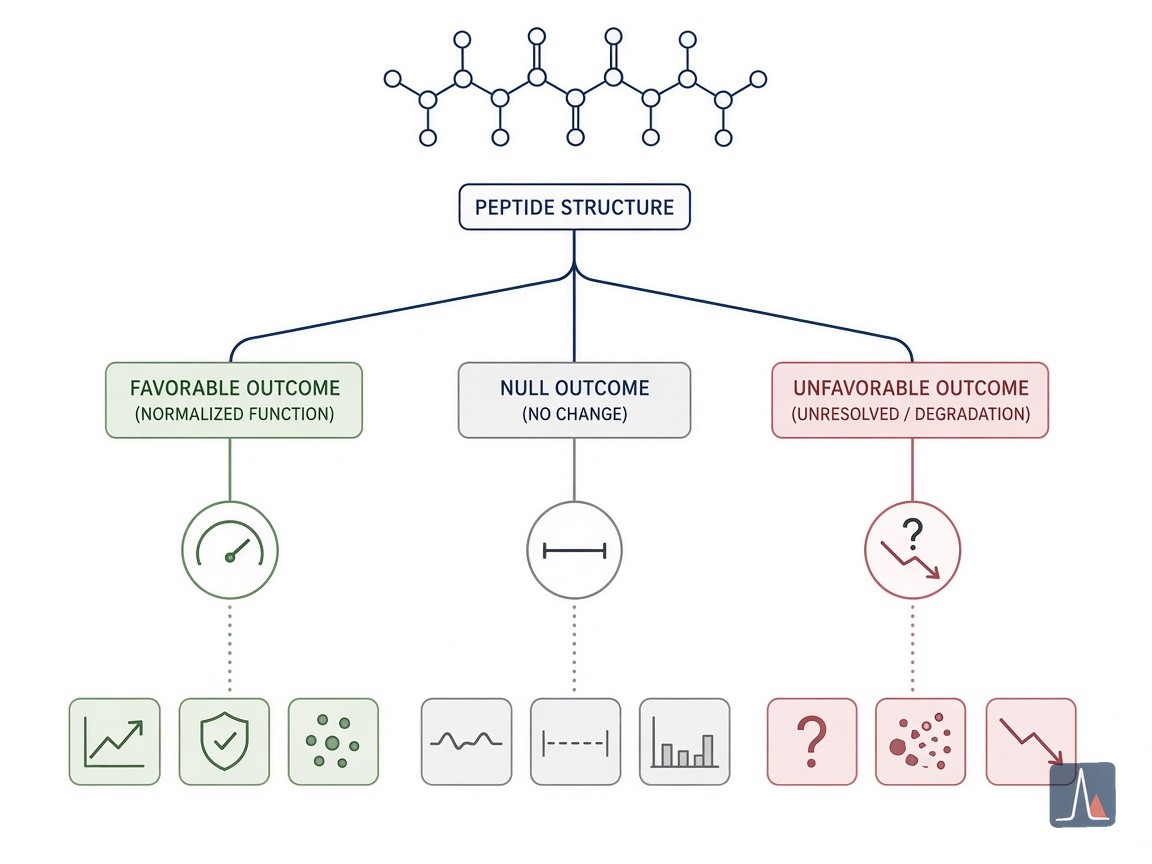
Recurrent limitations include very small sample sizes (precluding robust statistical power), absence of modern replication, route-specific data (IV only in efficacy trials), unknown molecular target, rapid degradation, and the possibility that observed immunoreactivity reflects a different endogenous ligand. Positive findings have not been independently confirmed at scale, while null or weak results appear in better-controlled designs. These factors render mechanistic and translational claims theoretical rather than established in people. !Branched pathway diagram of DSIP research outcomes Abstract branched diagram delineating categories of DSIP study results.
Catalog Implications
Within the Rierink catalog, DSIP is positioned as a tool for controlled laboratory investigation of neuropeptide signaling, EEG patterns, stress biology, or in vitro receptor pharmacology. Researchers may explore structure-activity relationships, analogs with improved stability, or fusion constructs as in the 2024 mouse study. The mixed, dated, and mechanistically unresolved human literature underscores the value of rigorous in vitro and animal model work to clarify whether DSIP-like activity arises from this exact sequence or related molecules. Future studies could address receptor identification, precursor biology, or standardized polysomnographic outcomes under contemporary protocols. Until such foundational gaps are closed, DSIP remains an intriguing but unresolved research subject rather than a characterized therapeutic entity.
Sources
- Schneider-Helmert D, et al. (1981). Acute and delayed effects of DSIP on human sleep behavior. *Int J Clin Pharmacol Ther Toxicol*. PMID: 6895513.
- Schneider-Helmert D (1986, 1987). Efficacy of DSIP to normalize sleep; Effects on 24-hour sleep-wake behaviour. *Eur Neurol*. PMIDs: 3792404, 3622582.
- Bes F, et al. (1992). Effects of DSIP on sleep of chronic insomniac patients. A double-blind study. *Neuropsychobiology*. PMID: 1299794.
- Monti JM, et al. (1987). Sleep improvement under DSIP treatment. *Eur Neurol* (related crossover data).
- Kovalzon VM, Strekalova TV (2006). Delta sleep-inducing peptide (DSIP): a still unresolved riddle. *J Neurochem*. PMID: 16539679. DOI: 10.1111/j.1471-4159.2006.03693.x.
- U.S. FDA Pharmacy Compounding Advisory Committee briefing on emideltide (DSIP), July 2026 (summarized in multiple 2026 secondary sources).
- Additional supporting animal and review papers cited in the 2006 riddle review and 2024 Frontiers in Pharmacology mouse fusion-peptide study.
The body of evidence remains sparse, non-replicated at scale, and characterized by conflicting outcomes between discovery-group reports and independent controlled trials. Laboratory researchers are encouraged to prioritize mechanistic clarification over premature translational assumptions.
Sources
- Acute and delayed effects of DSIP (delta sleep-inducing peptide) on human sleep behavior, 1981. https://pubmed.ncbi.nlm.nih.gov/6895513/
- Effects of Delta-Sleep-Inducing Peptide on 24-Hour Sleep-Wake Behaviour in Severe Chronic Insomnia, 1987. https://doi.org/10.1159/000116143
- Effects of delta sleep-inducing peptide on sleep of chronic insomniac patients. A double-blind study, 1992. https://doi.org/10.1159/000118919
- Sleep improvement under DSIP treatment (Monti et al. related crossover data), 1987. https://pubmed.ncbi.nlm.nih.gov/?term=Monti+DSIP+1987
- Delta sleep-inducing peptide (DSIP): a still unresolved riddle, 2006. https://doi.org/10.1111/j.1471-4159.2006.03693.x
- FDA Pharmacy Compounding Advisory Committee briefing on emideltide (DSIP), 2026. https://www.fda.gov/
More briefings
- Favorable and unfavorable findings on SemaxRussian clinical reports associate Semax with elevated plasma BDNF levels, faster motor recovery, and improved Barthel index scores in post-ischemic stroke patients, alongside preclinical neuroprotection and BDNF upregulation in animal mode
- Favorable and unfavorable findings on EpithalonCell-culture and select rodent studies report that Epithalon (Ala-Glu-Asp-Gly) induces telomerase activity and telomere elongation in normal human somatic cells, with modest increases in maximum lifespan, reduced chromosomal aberrations, an
- Favorable and unfavorable findings on KPVIn vitro and murine studies report that the tripeptide KPV (Lys-Pro-Val) inhibits NF-κB and MAPK signaling via PepT1 uptake in human gut and immune cells, reducing pro-inflammatory cytokines and colitis severity in DSS and TNBS models, yet
All information and products discussed are for laboratory and research use only. Not for human or veterinary use. Not intended to diagnose, treat, cure, or prevent any disease.