
27 November 2026
Semax: chemical identity and published assays
Download PDF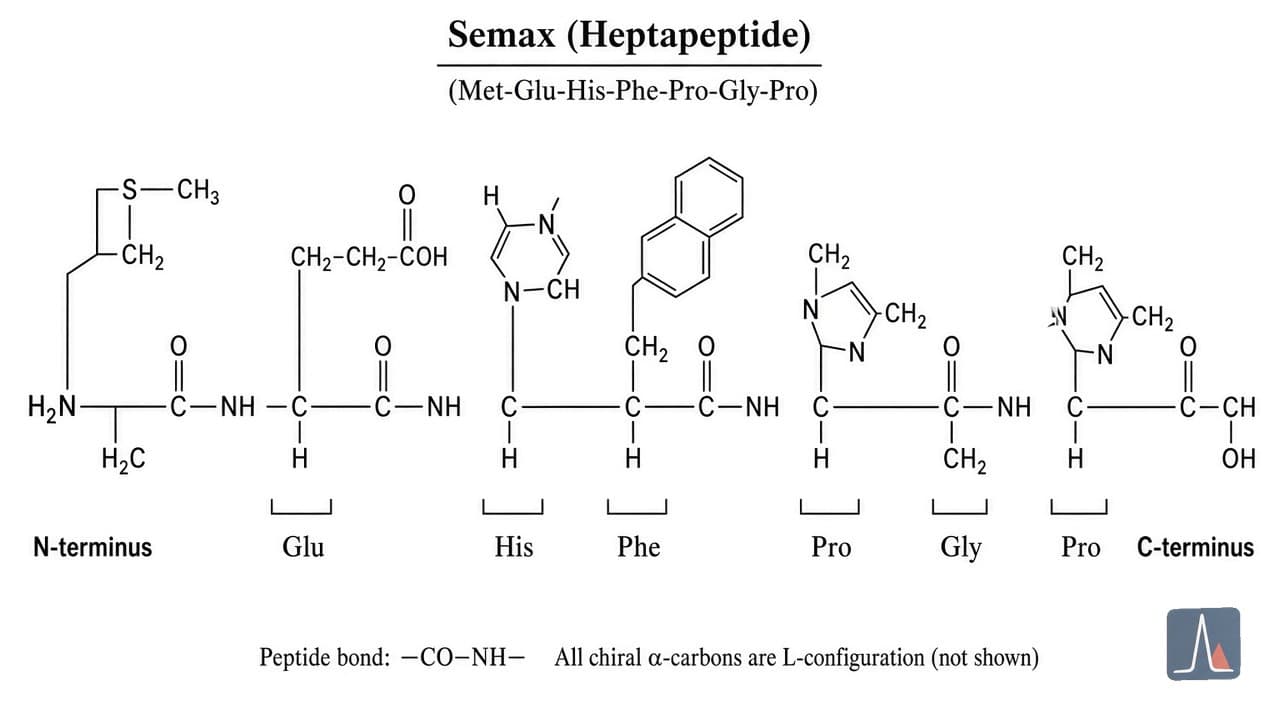
Semax (Met-Glu-His-Phe-Pro-Gly-Pro, C₃₇H₅₁N₉O₁₀S, 813.9 Da) is a synthetic heptapeptide analog of the ACTH(4–7) fragment extended by a stabilizing Pro-Gly-Pro C-terminal motif. Supplied for laboratory research only at [Semax](/compounds/sem
Semax: chemical identity and published assays
Semax (Met-Glu-His-Phe-Pro-Gly-Pro or MEHFPGP, C₃₇H₅₁N₉O₁₀S, average molecular weight 813.9 Da) is a synthetic heptapeptide analog of the adrenocorticotropic hormone (ACTH)(4–7) fragment extended by the Pro-Gly-Pro tripeptide to increase resistance to proteolytic degradation. It is supplied exclusively for laboratory research only at Semax. This briefing summarizes its defined chemical structure and the principal assays reported in the published biochemical, analytical, and preclinical literature for identity confirmation, purity assessment, stability/degradation profiling, membrane binding, metal coordination, neurotrophic factor quantification, and cellular effects. Reporting what a published study found is not guidance to use the research material.
Chemical Identity and Catalog Context
Semax is registered under CAS 80714-61-0 (free base), PubChem CID 9811102, and InChIKey AFEHBIGDWIGTEH-AQRCPPRCSA-N. It is frequently supplied as the acetate salt in research settings (approximate MW ~874 Da). The compound is placed in the Rierink catalog alongside other nootropic and neuroprotective research peptides such as Selank (which shares the Pro-Gly-Pro C-terminal motif) and Adamax. It is handled as a lyophilized white to off-white powder that is freely soluble in aqueous vehicles. The catalog entry is intended strictly for qualified laboratory researchers conducting in vitro, ex vivo, or preclinical animal model experiments.
Primary Sequence and Physicochemical Properties
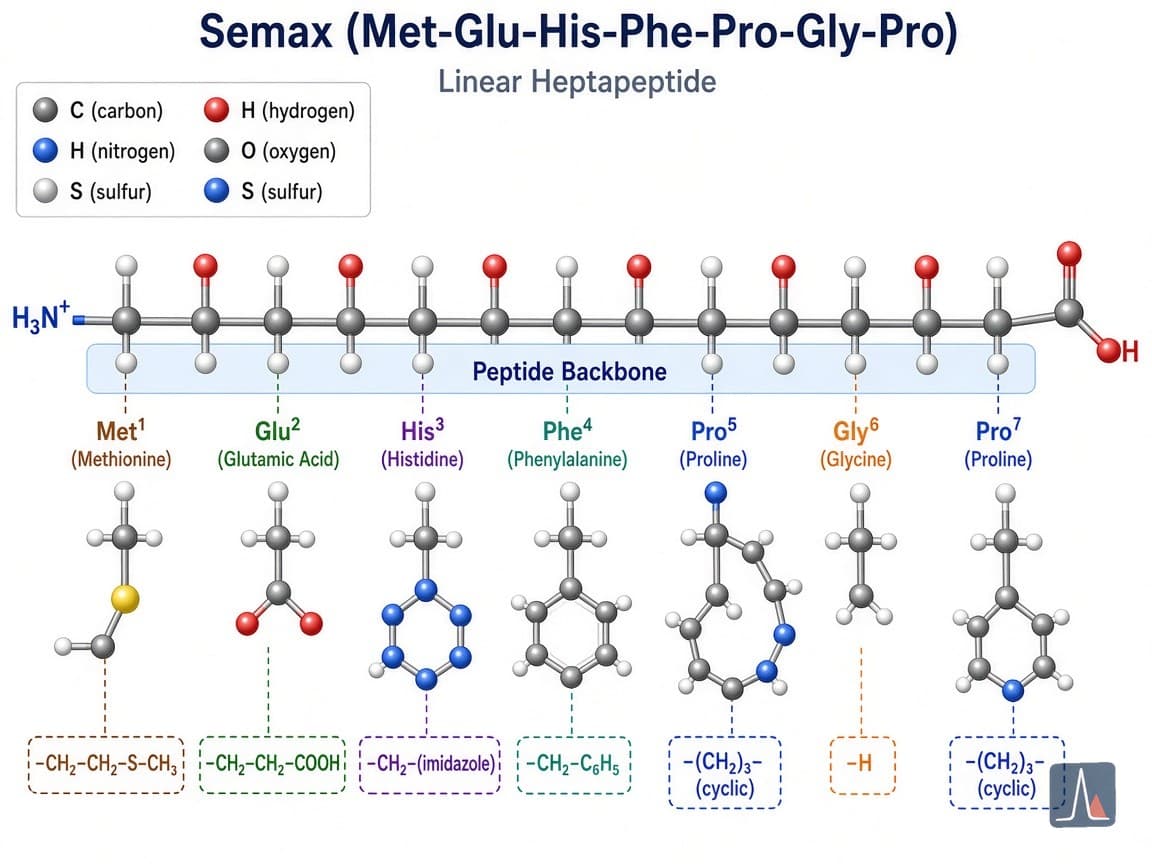
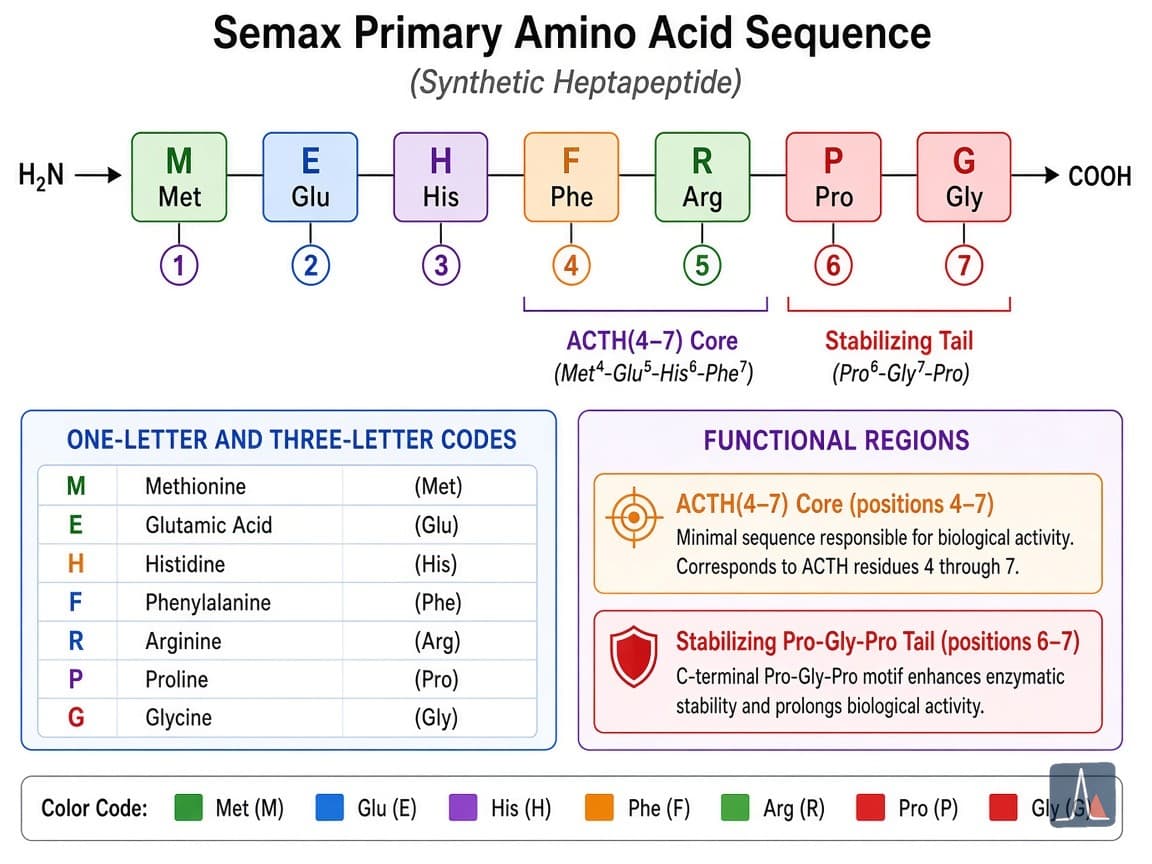
The primary sequence is H-Met-Glu-His-Phe-Pro-Gly-Pro-OH (one-letter code: MEHFPGP). It comprises the N-terminal tetrapeptide of ACTH(4–7) (Met-Glu-His-Phe) fused to the tripeptide Pro-Gly-Pro. All residues are L-configuration with free N- and C-termini. The Pro-Gly-Pro extension is reported to reduce susceptibility to carboxypeptidases. Key physicochemical parameters include an isoelectric point (pI) of approximately 5.4, net charge of roughly –0.8 to –1 at pH 7.0, and GRAVY index of –0.80. The molecule contains no Trp or Tyr, precluding strong 280 nm absorbance; quantification is performed at 214–220 nm (peptide bond) or 254 nm (Phe, His). The N-terminal methionine is prone to oxidation to the sulfoxide (+16 Da), a common impurity monitored in stability studies. No well-defined single high-affinity receptor has been molecularly cloned; specific, saturable, calcium-dependent binding sites have been described in rat basal forebrain plasma membranes.
Published Chromatographic Assays for Purity, Impurities, and Stability
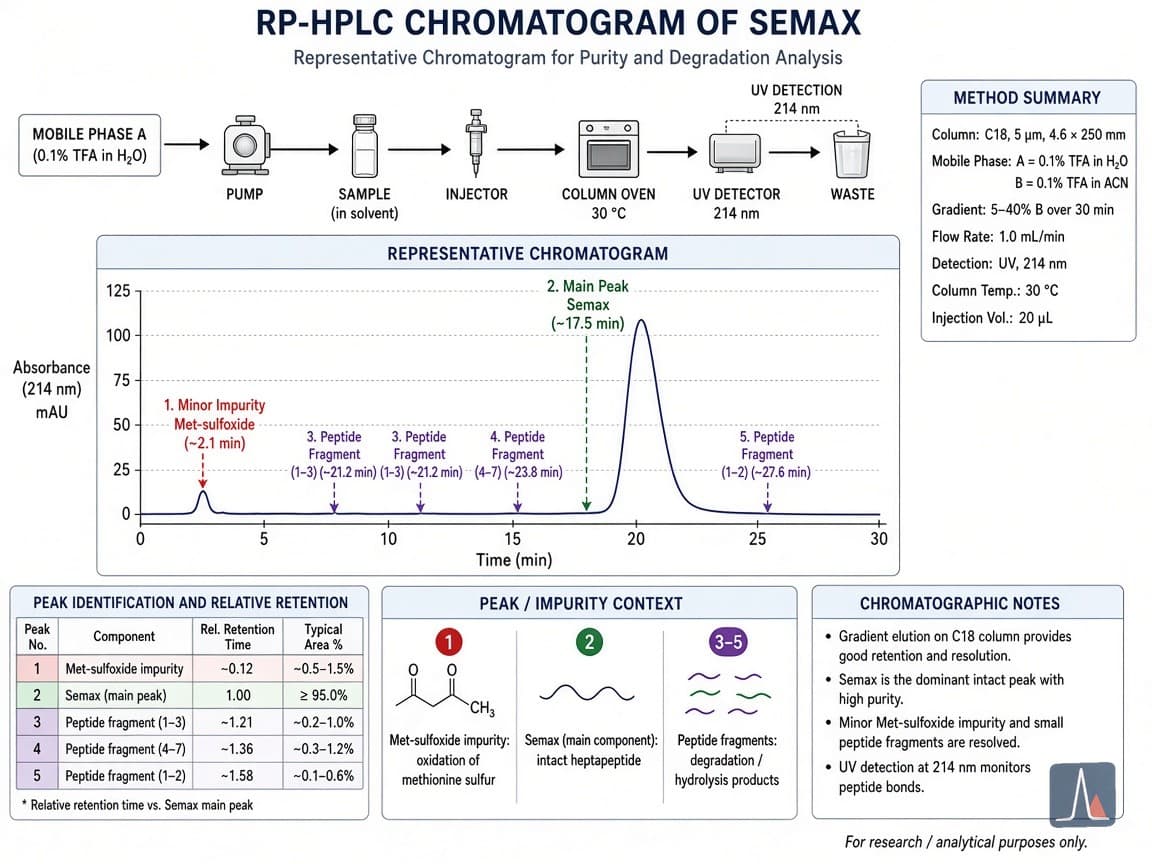
Reversed-phase high-performance liquid chromatography (RP-HPLC) with C18 columns, acidic ion-pairing agents (0.1 % TFA or perchloric acid), and acetonitrile gradients with UV detection at 214, 220, or 254 nm is the predominant method for purity assessment and degradation profiling. Vendor COAs and research papers routinely report chromatographic purity ≥98–99.5 % (main peak area percent). Literature studies employ RP-HPLC-UV to track proteolytic degradation of Semax (and tritium- or isotopically labeled versions) in rat serum, plasma membranes, and basal forebrain neuronal/glial cell cultures. Predominant pathways involve N-terminal dipeptidylaminopeptidase or aminopeptidase activity (bestatin- and puromycin-sensitive) that successively cleaves Met-Glu, yielding the stable pentapeptide HFPGP and ultimately the tripeptide PGP. Semax exhibits greater stability than the parent ACTH(4-10) fragment, with reported half-lives exceeding 1 hour in certain membrane preparations. Methionine sulfoxide is resolved as an earlier-eluting peak. These methods have been validated for selectivity against related fragments and used to generate degradation/accumulation curves. A 2020 forensic method also employed RP-HPLC as part of orthogonal confirmation prior to MS.
Mass Spectrometric Assays and Molecular Confirmation
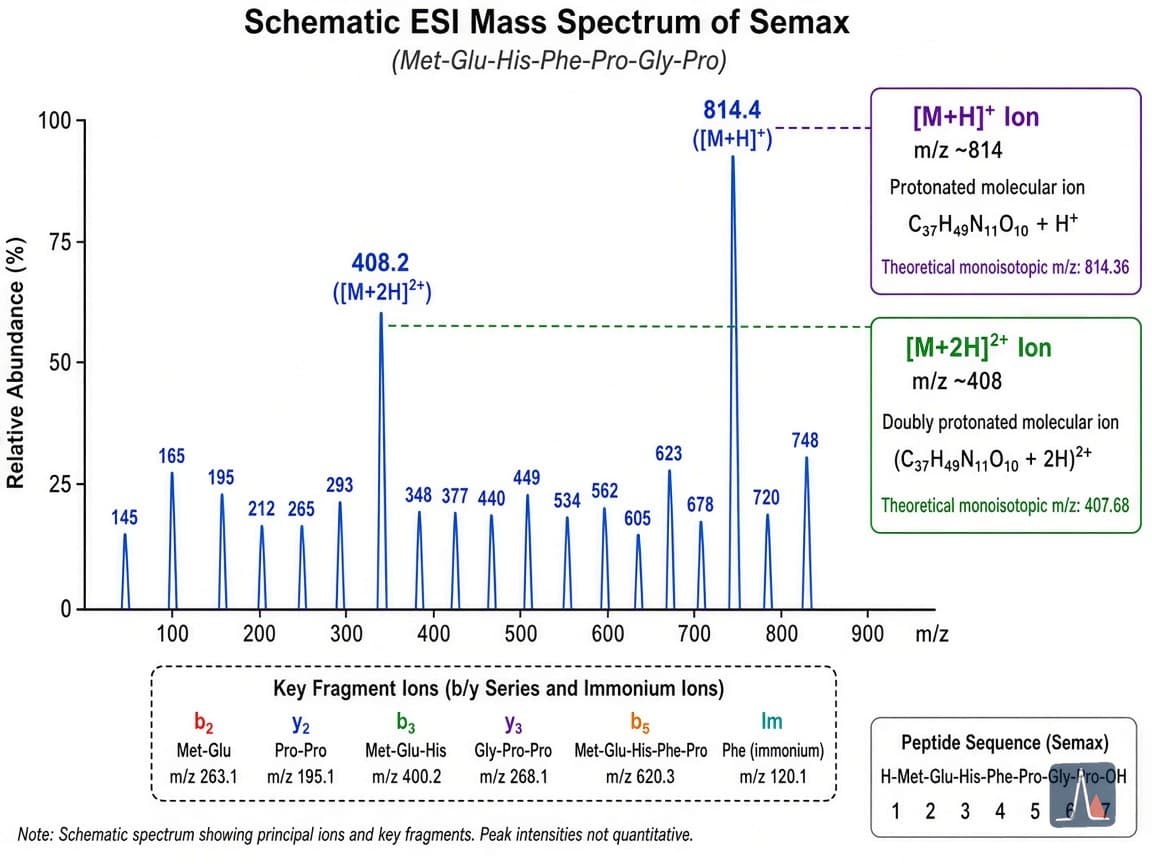
Electrospray ionization mass spectrometry (ESI-MS or LC-MS) is used for molecular weight confirmation and impurity identification. The expected ions are [M+H]⁺ ≈ 814.35–814.9 m/z and [M+2H]²⁺ ≈ 407.7 m/z. High-resolution accurate-mass (HRAM) LC-MS/MS methods developed for screening seized “nootropic” preparations successfully identified Semax via precursor ion, characteristic b/y fragments, and immonium ions (e.g., m/z 110.07 His, 120.08 Phe, 173.09). Isotopically labeled Semax combined with HPLC-MS has been used to quantify specific metabolites in biodegradation studies. Peptide mapping or MS/MS fragmentation confirms sequence identity and distinguishes oxidation (+16 Da at Met¹) or other modifications. These assays align with recommendations from official medicines control laboratory networks for unknown peptide identification.
Spectroscopic, Biophysical, and Metal-Binding Characterization
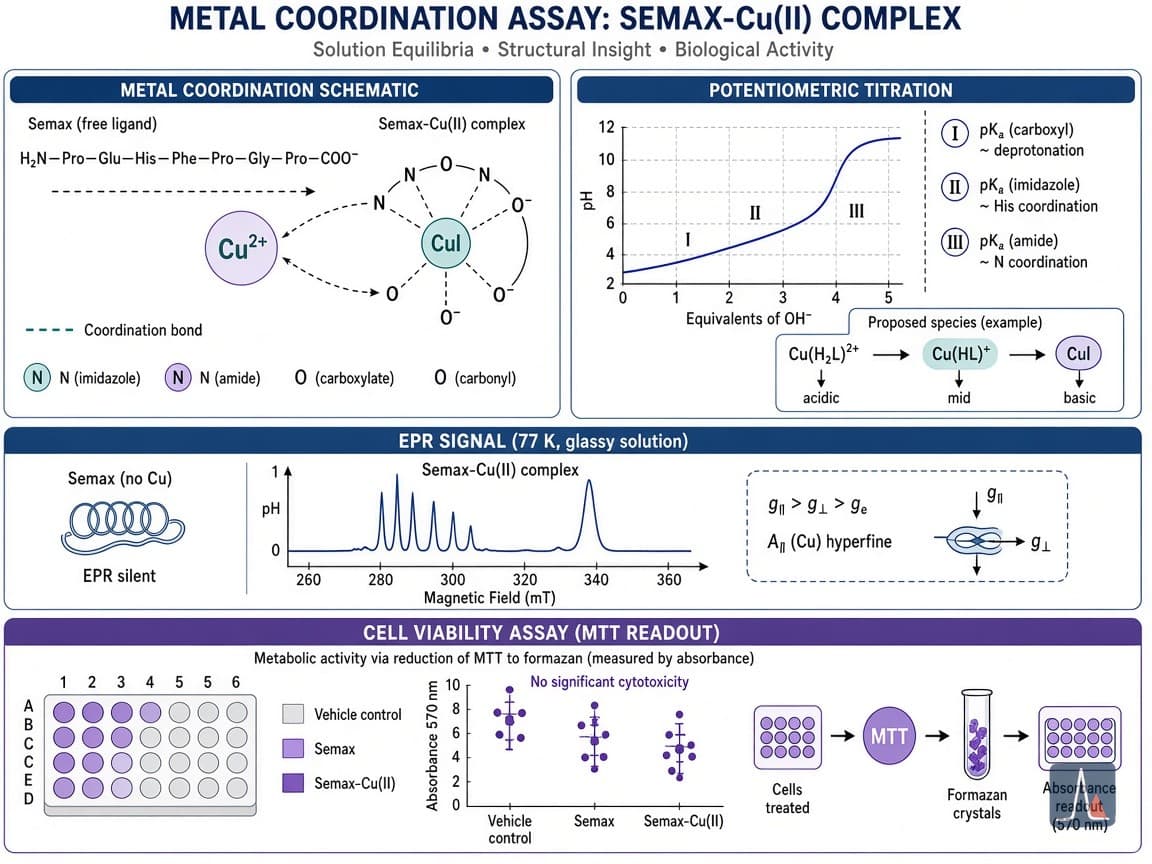
Semax exhibits high affinity for Cu(II) ions. Potentiometric titration, UV-Vis, circular dichroism (CD), electron paramagnetic resonance (EPR/ESR), electrospray MS, and voltammetry/cyclic voltammetry have been used to characterize complex speciation. At physiological pH the dominant species is [CuLH₋₂]²⁻ with a distorted 4N planar coordination (involving the N-terminal amine, three deprotonated amide nitrogens, and weak apical Met sulfur interaction). Acetylation of the N-terminus alters coordination geometry and abolishes certain protective effects. Similar studies have been performed with Zn(II). These biophysical methods demonstrate that metal coordination modulates redox activity and can reduce copper-induced cytotoxicity.
Binding, Immunoassays, Gene Expression, and Functional Bioassays
Radioligand binding assays using [³H]-Semax demonstrate specific, reversible, time-dependent, and Ca²⁺-dependent binding to rat basal forebrain plasma membrane preparations (K_d ≈ 2.4 ± 1.0 nM, B_max ≈ 33.5 ± 7.9 fmol/mg protein). Sandwich immunoenzymatic (ELISA-type) assays have quantified rapid increases in brain-derived neurotrophic factor (BDNF) protein levels in rat basal forebrain and hippocampus following intranasal administration. Complementary qRT-PCR, RT-PCR, Western blotting, and RNA-Seq methods measure upregulation of BDNF, NGF, TrkB, and downstream signaling proteins (p-CREB, p-JNK, c-Fos, MMP-9) in ischemia, stress, or neuronal culture models. MTT cell viability assays on SH-SY5Y neuroblastoma and RBE4 endothelial lines demonstrate reduced Cu(II)- or glutamate-induced cytotoxicity in the presence of Semax. Neurochemical HPLC methods have quantified changes in striatal 5-HIAA and interactions with dopaminergic systems. Behavioral readouts (conditioned avoidance, maze performance, analgesic models) are used as downstream functional correlates but are secondary to the biochemical assays.
Evidence Context, Recurrent Limitations, and Catalog Implications
The published literature on Semax is substantial (primarily Russian-origin preclinical studies from the 1990s–2020s) and heavily weighted toward stability, degradation pathways, BDNF induction, and metal coordination rather than classical receptor pharmacology or comprehensive NMR conformational analysis. Positive findings on BDNF upregulation, membrane binding, and cytoprotection are reported in multiple independent rodent and cell models, yet unfavorable or null results on certain monoamine pathways and the absence of a cloned receptor are also documented. Recurrent limitations include heavy reliance on radiolabeled or ex vivo preparations, species (rat) specificity, limited orthogonal validation across laboratories, and the predominance of open-label or small-scale designs in any human reports (none of which are registered on major international trial databases). Analytical methods (RP-HPLC, LC-MS) are robust and reproducible for identity and purity but require orthogonal confirmation (amino acid analysis, MS/MS) to rule out isobaric impurities or oxidation. For catalog users, lots should be verified by RP-HPLC purity (>98 %), LC-MS identity match, and low endotoxin. Semax is positioned for laboratory investigation of neurotrophic signaling, peptide stability, and metal-peptide interactions alongside related catalog entries. All materials are for laboratory research only.
Sources
Primary literature cited includes PubMed records with DOIs/PMIDs for degradation (doi:10.1007/s00726-006-0328-8; PMID 16773243), membrane binding and BDNF (doi:10.1111/j.1471-4159.2006.03658.x; PMID 16635254), Cu(II) coordination and cytoprotection (doi:10.1016/j.jinorgbio.2014.09.008; PMID 25310602), N-acetyl analog (doi:10.1016/j.jinorgbio.2016.08.013; PMID 27586814), and forensic LC-MS/MS screening (doi:10.1002/dta.2717). Additional supporting data from PubChem, structural databases, and analytical method papers were consulted. No dosing, therapeutic claims, or human-use recommendations are made.
Sources
- Degradation of the ACTH(4-10) analog Semax in the presence of rat basal forebrain cell cultures and plasma membranes, 2006. https://doi.org/10.1007/s00726-006-0328-8
- The binding of Semax, ACTH 4-10 heptapeptide, to plasma membranes of the rat forebrain basal nuclei and its biodegradation, 2004. https://doi.org/10.1023/b:rubi.0000030127.46845.f0
- Semax, an analogue of adrenocorticotropin (4-10), binds specifically and increases levels of brain-derived neurotrophic factor protein in rat basal forebrain, 2006. https://doi.org/10.1111/j.1471-4159.2006.03658.x
- Semax, an ACTH4-10 peptide analog with high affinity for copper(II) ion and protective ability against metal induced cell toxicity, 2015. https://doi.org/10.1016/j.jinorgbio.2014.09.008
- The occurrence of putative cognitive enhancing research peptides in seized pharmaceutical preparations, 2020. https://doi.org/10.1002/dta.2717
More briefings
- KPV: chemical identity and published assaysThis briefing identifies KPV and summarizes published assays that characterize it.
- Epithalon: chemical identity and published assaysEpithalon (Ala-Glu-Asp-Gly or AEDG, C₁₄H₂₂N₄O₉, 390.35 Da) is a synthetic tetrapeptide supplied as [Epithalon](/compounds/epithalon) for laboratory research only. This briefing details its defined chemical structure together with the princi
- GHK-Cu: chemical identity and published assaysGHK-Cu is the copper(II) complex of the tripeptide glycyl-L-histidyl-L-lysine (GHK; free ligand C₁₄H₂₄N₆O₄, 340.38 Da; complex ≈C₁₄H₂₃CuN₆O₄⁺, ~403 Da, CAS 89030-95-5). Supplied exclusively as [GHK-Cu](/compounds/ghk-cu) for laboratory rese
All information and products discussed are for laboratory and research use only. Not for human or veterinary use. Not intended to diagnose, treat, cure, or prevent any disease.