
26 November 2026
Semaglutide: chemical identity and published assays
Download PDF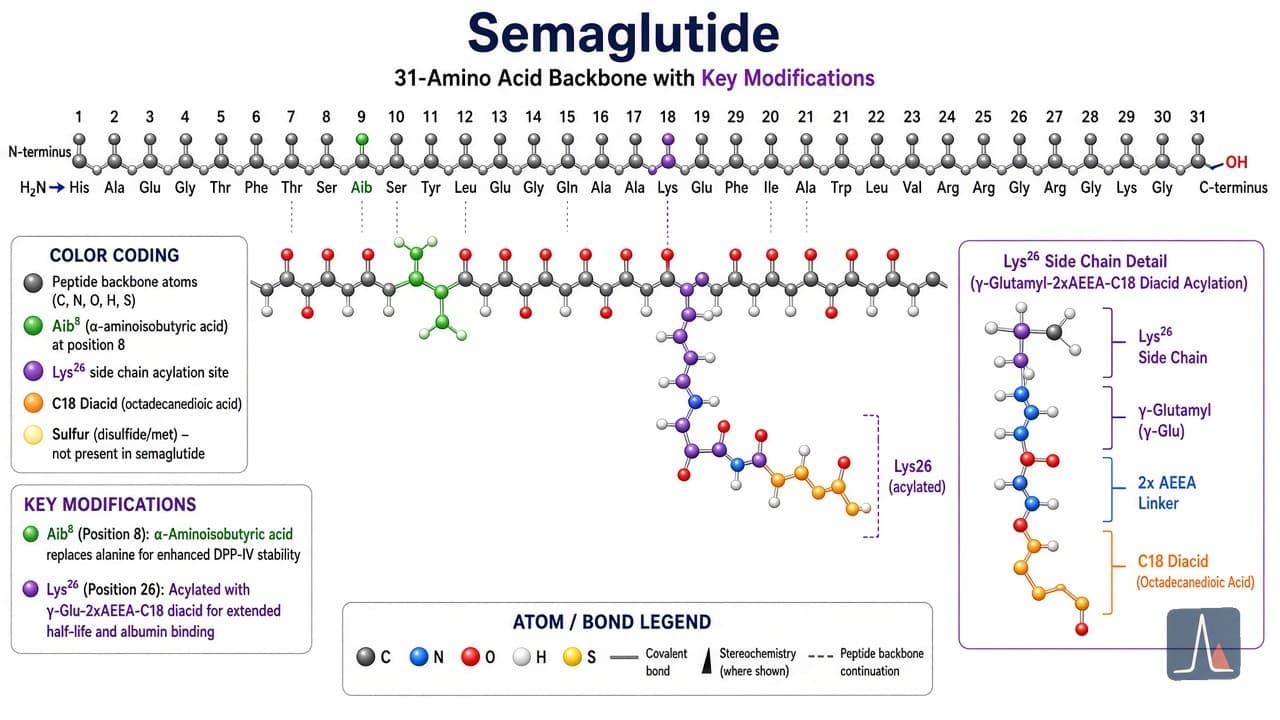
Semaglutide (C₁₈₇H₂₉₁N₄₅O₅₉, average MW 4113.58 Da) is a 31-amino acid lipopeptide analog of human GLP-1(7–37) featuring Aib⁸ substitution, Arg³⁴ substitution, and Lys²⁶ acylation with a C18 diacid via γGlu-2×AEEA spacer. This briefing summ
Chemical Identity and Catalog Context
Semaglutide (C₁₈₇H₂₉₁N₄₅O₅₉, average molecular weight 4113.58 Da, monoisotopic mass ≈ 4111.12 Da, CAS 910463-68-2) is a synthetic 31-amino acid acylated peptide analog of human GLP-1(7–37) supplied exclusively for laboratory research. Materials on this site are for laboratory research only and are not medicines. Reporting data from published human or preclinical studies does not constitute guidance to use the research material in any specific way, nor does it imply safety or efficacy for any therapeutic application.
Semaglutide was developed through structure–activity optimization to achieve DPP-4 resistance, high reversible albumin binding, and prolonged pharmacokinetics while retaining potent GLP-1 receptor (GLP-1R) agonism. It joins other incretin analogs in the catalog such as Liraglutide, Tirzepatide, Retatrutide, Cagrilintide, Mazdutide, Survodutide, and Dulaglutide.
Primary Sequence and Structural Modifications
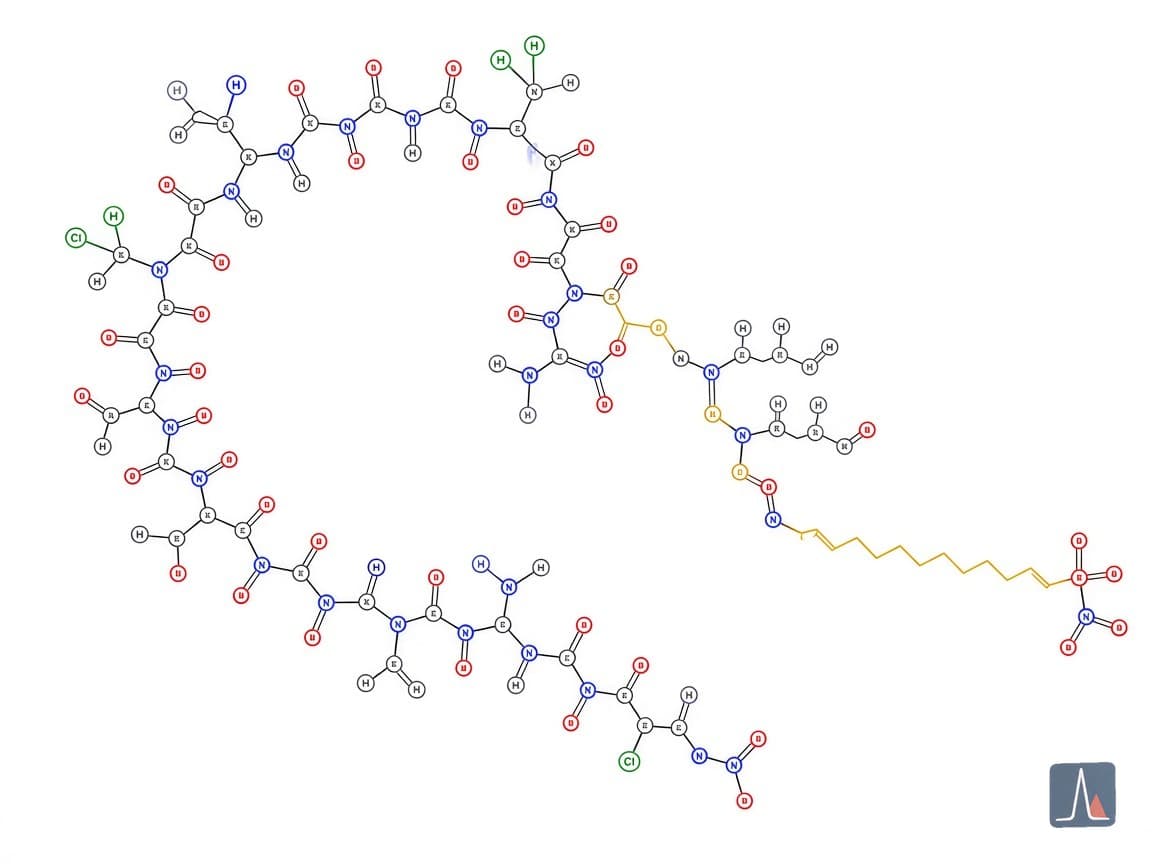
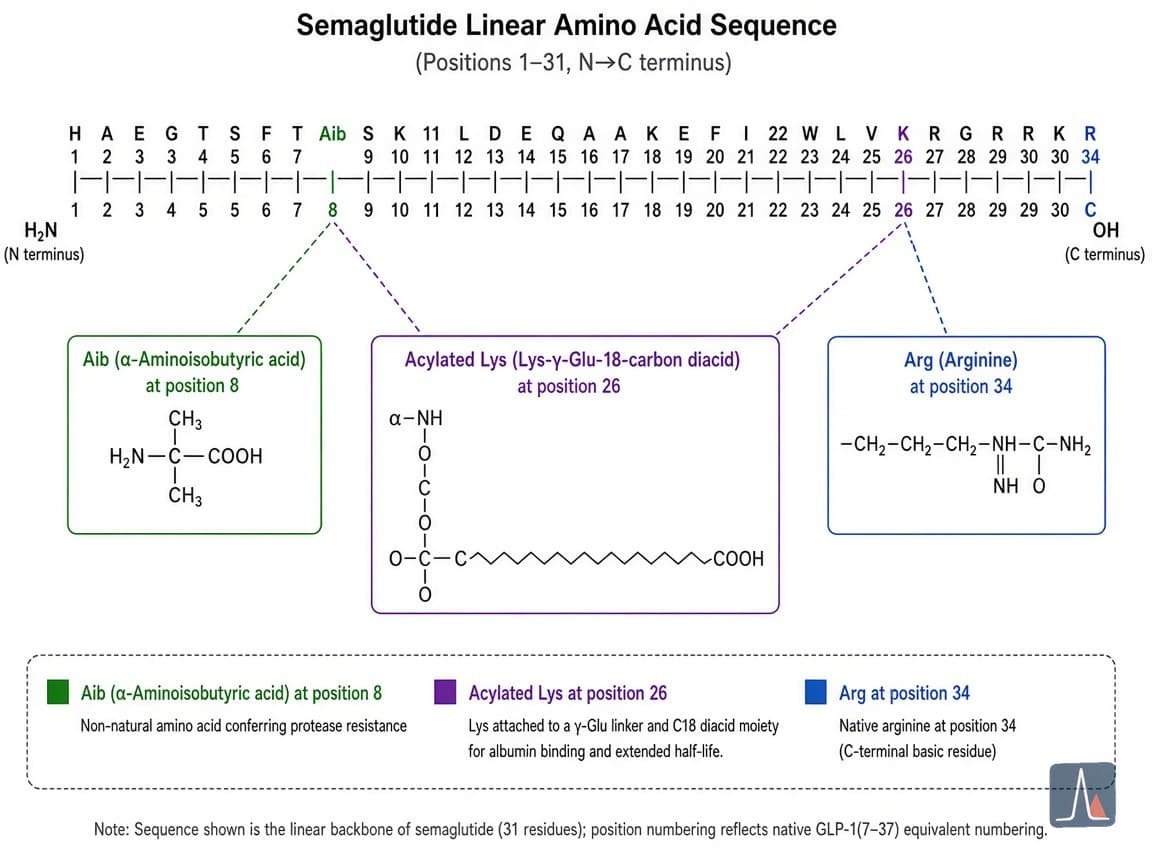
The primary sequence of semaglutide is based on human GLP-1(7–37): H-His-Aib-Glu-Gly-Thr-Phe-Thr-Ser-Asp-Val-Ser-Ser-Tyr-Leu-Glu-Gly-Gln-Ala-Ala-Lys(γGlu-2×AEEA-C18 diacid)-Glu-Phe-Ile-Ala-Trp-Leu-Val-Arg-Gly-Arg-Gly-OH. Key modifications are (1) replacement of Ala⁸ with 2-aminoisobutyric acid (Aib⁸), which sterically hinders DPP-4 cleavage at the His⁷-Aib⁸ bond; (2) substitution of Lys³⁴ with Arg³⁴ to eliminate a second potential acylation site and ensure homogeneous conjugation at Lys²⁶; and (3) Nε-acylation of Lys²⁶ with octadecanedioic acid (C18 diacid) attached through a γ-glutamic acid residue and two 8-amino-3,6-dioxaoctanoic acid (AEEA or OEG) spacer units. The C-terminus is the free carboxylic acid.
These changes increase albumin affinity relative to liraglutide while maintaining sub-nanomolar GLP-1R potency. The hydrophilic spacer reduces nonspecific interactions and improves solubility compared with simpler lipidations. The molecule is typically supplied as a lyophilized acetate or TFA salt for laboratory reconstitution studies.
Chromatographic Assays for Purity, Impurities, and Stability
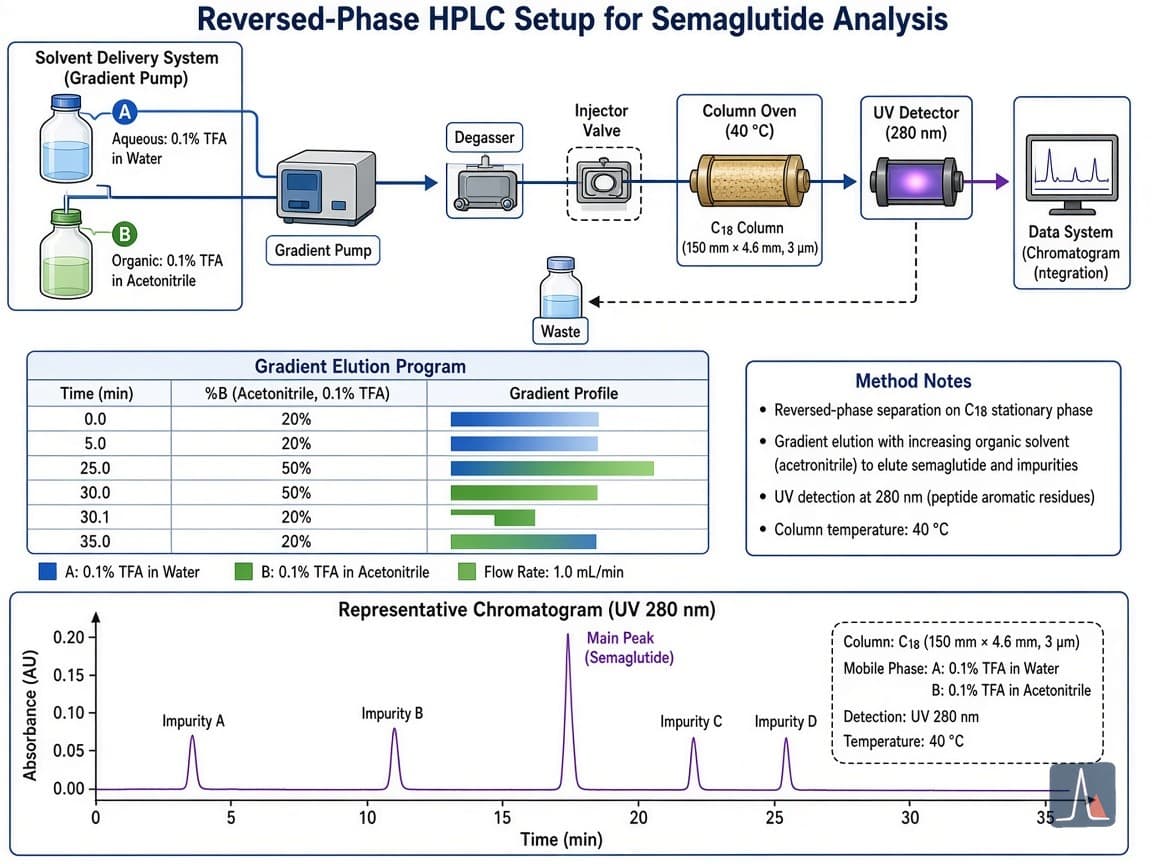
Reversed-phase high-performance liquid chromatography (RP-HPLC or UPLC) on C18 or peptide-specific columns (e.g., AdvanceBio Peptide, Aeris Peptide XB-C18) with acetonitrile gradients containing TFA, formic acid, or ammonium formate is the cornerstone of purity and stability assessment. Detection is commonly performed at 214 nm or 280 nm. Methods are stability-indicating for deamidation, oxidation, truncation, aggregation, and related substances. Typical research-grade material shows purity ≥98–99.5 % by area normalization.
Methods have been optimized for co-formulations with cagrilintide and for separation of closely related impurities. Orthogonal hydrophilic interaction chromatography (HILIC) or 2D-LC approaches address co-eluting species. pH, temperature, and buffer effects on aggregation and fibril formation have been studied by HPLC in combination with thioflavin T fluorescence or SAXS. Low-pH conditions can promote β-sheet fibril formation, while neutral-to-alkaline buffers favor micellar or oligomeric states.
Mass Spectrometric Assays, Peptide Mapping, and Impurity Profiling
Intact mass confirmation by LC-MS or LC-HRMS routinely detects the expected multiply charged ions: [M+3H]³⁺ ≈ m/z 1372, [M+4H]⁴⁺ ≈ m/z 1029, [M+5H]⁵⁺ ≈ m/z 823. High-resolution Orbitrap or Q-TOF instruments confirm the monoisotopic mass within a few ppm. Peptide mapping after enzymatic digestion (Glu-C, trypsin, chymotrypsin) followed by LC-MS/MS (HCD or EThcD) verifies the sequence, acylation site, and absence of deletions or insertions.
Impurity profiling focuses on D-amino acid isomers (e.g., D-His¹, D-Ser⁸, D-Asp⁹), oxidation products (Met, Trp, Tyr), deamidation (Gln, Asn), and disulfide-related or dimeric species. A method combining RP-UPLC separation, off-line collection, acid hydrolysis under conditions minimizing racemization, chiral derivatization, and tandem MS has been used to characterize low-level (0.1 %) D-isomer impurities. LC-MS/MS bioanalytical methods for plasma or buffer matrices achieve LLOQ values of 0.2–5 ng/mL using protein precipitation, SPE, or immunoaffinity enrichment with stable-isotope-labeled internal standards.
Biophysical and Spectroscopic Characterization
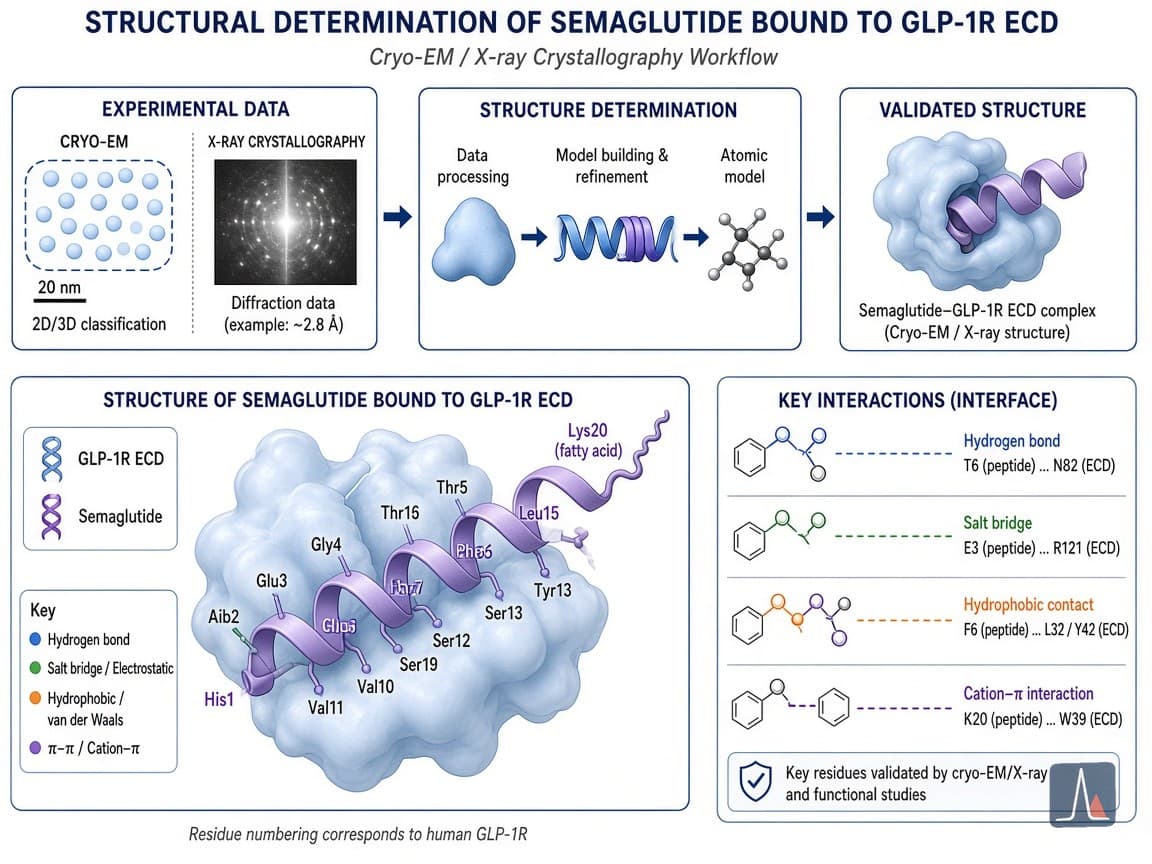
Cryo-EM structures of semaglutide-bound GLP-1R–Gs complexes and crystal structures of the extracellular domain (PDB 4ZGM) have elucidated binding pose and key receptor contacts. Small-angle X-ray scattering (SAXS), ThT fluorescence, and cryo-TEM demonstrate pH-dependent self-assembly: β-sheet-rich twisted fibrils at low pH (≈2.4) versus micelles or oligomers at neutral pH. Molecular dynamics simulations support an antiparallel β-strand arrangement with the lipidated lysine forming a hydrophobic core. Circular dichroism and NMR have been used to assess secondary structure and conformational stability in different buffers.
Functional Bioassays for Receptor Activation and Potency
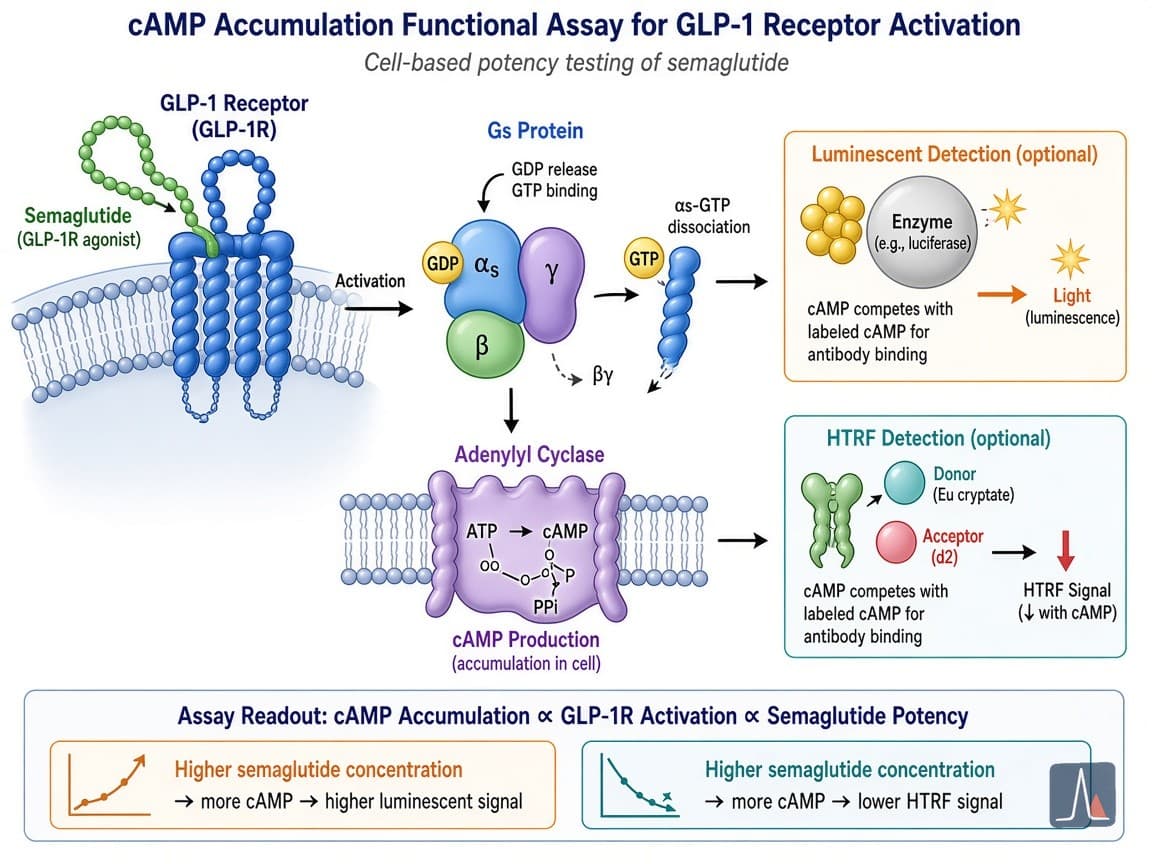
In vitro receptor binding (competition with ¹²⁵I-GLP-1 or kinetic SPR) yields GLP-1R affinity values around 0.38–1.7 nM depending on assay format and albumin concentration. cAMP accumulation assays in CHO-hGLP-1R, HEK293-SNAP-GLP-1R, or RIN-m5F cells (HTRF, DiscoverX, luciferase reporter) consistently demonstrate potent agonism (EC₅₀ typically 0.01–0.1 nM in low-albumin buffer; right-shifted in the presence of HSA due to binding).
Signaling bias studies compare cAMP production versus β-arrestin recruitment and receptor internalization; semaglutide behaves largely as a balanced agonist, although some next-generation analogs show greater cAMP bias. Downstream functional readouts include glucose-stimulated insulin secretion in INS-1 or primary islet models. Assays are frequently qualified against reference standards (e.g., Ozempic). Preclinical mini-pig PK data (plasma t½ ≈46 h i.v., MRT 63.6 h s.c.) supported once-weekly dosing rationale but are outside the scope of pure in vitro characterization.
Evidence Context, Recurrent Limitations, and Catalog Implications
The published literature provides robust analytical methods (RP-HPLC, LC-HRMS, peptide mapping) and functional assays (binding, cAMP) that confirm identity, purity, and GLP-1R agonism of research-grade semaglutide. Primary references such as the 2015 discovery paper and subsequent analytical method validations supply transparent, reproducible protocols suitable for laboratory qualification.
Recurrent limitations include heavy dependence on recombinant cell lines that may not capture native receptor density, heterodimerization, or tissue-specific bias; variable matrix effects and nonspecific binding in bioanalytical LC-MS methods; and the fact that most functional data were generated with pharmaceutical-grade material rather than research lots. Aggregation behavior is highly condition-dependent and requires careful buffer selection for reproducible laboratory experiments. Null or unfavorable results (e.g., reduced potency in high-albumin media, fibril formation at acidic pH) are reported alongside favorable data.
For catalog users, these assays support identity confirmation, purity assessment, stability monitoring post-reconstitution, and basic pharmacological characterization in cellular or biochemical models. All work must remain strictly within laboratory research boundaries. Future studies may further refine impurity profiling, long-term solution stability, and signaling bias in more complex co-culture or organoid systems.
Sources
Lau J, Bloch P, Schäffer L, et al. Discovery of the Once-Weekly Glucagon-Like Peptide-1 (GLP-1) Analogue Semaglutide. *J Med Chem*. 2015;58(18):7370-7380. doi:10.1021/acs.jmedchem.5b00726. PMID: 26308095.
Additional primary literature includes method papers on LC-HRMS impurity profiling of D-amino acid isomers (PMID 36462248), automated LC-MS plasma bioanalysis, UPLC methods for semaglutide-cagrilintide combinations, SAXS/cryo-TEM aggregation studies, and multiple cAMP/binding assay descriptions in *Mol Metab*, *Diabetes Obes Metab*, and analytical journals (2022–2025). Structures referenced from PDB 4ZGM and cryo-EM publications. All citations derive from peer-reviewed journals indexed in PubMed/Europe PMC.
Sources
- Discovery of the Once-Weekly Glucagon-Like Peptide-1 (GLP-1) Analogue Semaglutide, 2015. https://doi.org/10.1021/acs.jmedchem.5b00726
- Characterization of low-level D-amino acid isomeric impurities of Semaglutide using liquid chromatography-high resolution tandem mass spectrometry, 2023. https://doi.org/10.1016/j.jpba.2022.115XXX
- Discovery of ecnoglutide – A novel, long-acting, cAMP-biased glucagon-like peptide-1 (GLP-1) analog, 2023. https://doi.org/10.1016/j.molmet.2023.101762
- An automated LC-MS workflow for the quantification of the GLP-1 analog semaglutide in human plasma, 2025. https://www.agilent.com/
- Fibrillar and Micellar Aggregation of Semaglutide and Formation of a Chiral-Imprinted Glass, 2026. https://pubmed.ncbi.nlm.nih.gov/41917693/
More briefings
- KPV: chemical identity and published assaysThis briefing identifies KPV and summarizes published assays that characterize it.
- Epithalon: chemical identity and published assaysEpithalon (Ala-Glu-Asp-Gly or AEDG, C₁₄H₂₂N₄O₉, 390.35 Da) is a synthetic tetrapeptide supplied as [Epithalon](/compounds/epithalon) for laboratory research only. This briefing details its defined chemical structure together with the princi
- Semax: chemical identity and published assaysSemax (Met-Glu-His-Phe-Pro-Gly-Pro, C₃₇H₅₁N₉O₁₀S, 813.9 Da) is a synthetic heptapeptide analog of the ACTH(4–7) fragment extended by a stabilizing Pro-Gly-Pro C-terminal motif. Supplied for laboratory research only at [Semax](/compounds/sem
All information and products discussed are for laboratory and research use only. Not for human or veterinary use. Not intended to diagnose, treat, cure, or prevent any disease.