
26 November 2026
Melatonin: chemical identity and published assays
Download PDF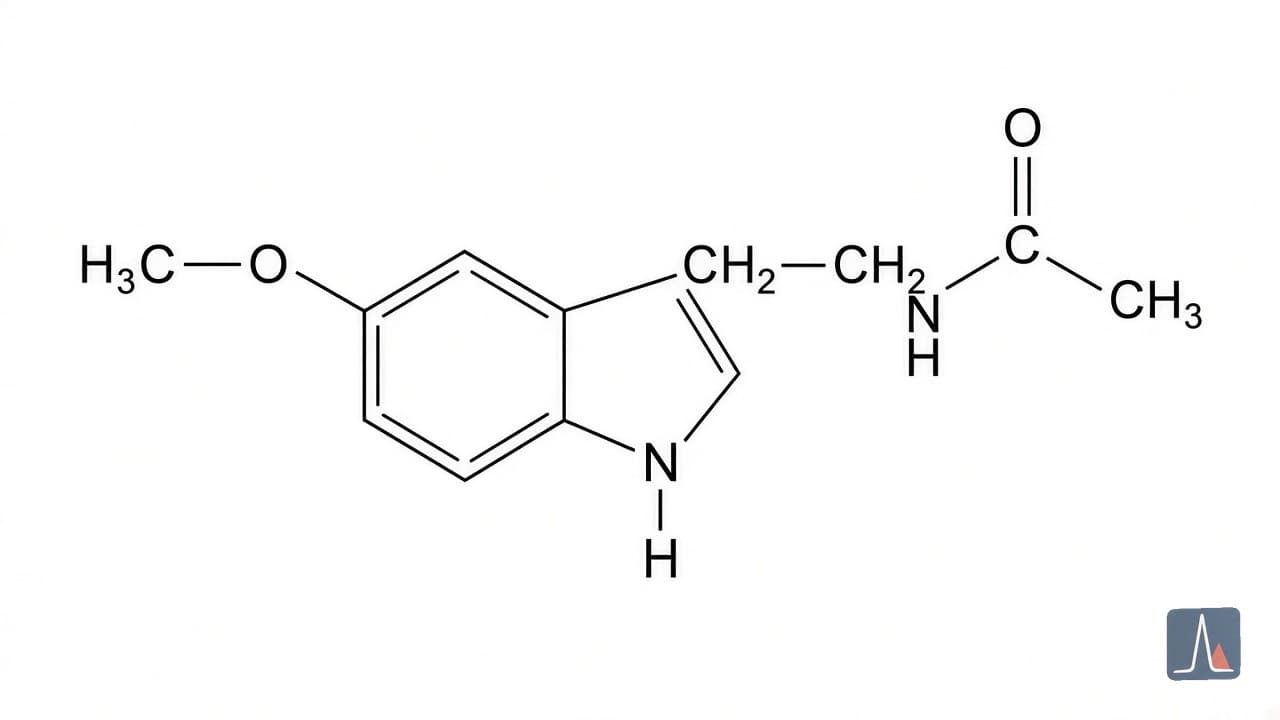
Melatonin (N-[2-(5-methoxy-1H-indol-3-yl)ethyl]acetamide, C13H16N2O2, 232.28 Da) is a tryptophan-derived indoleamine supplied exclusively as [Melatonin](/compounds/melatonin) for laboratory research. This briefing details its chemical struc
Melatonin: chemical identity and published assays
Melatonin (C₁₃H₁₆N₂O₂, average molecular weight 232.28 Da) is N-[2-(5-methoxy-1H-indol-3-yl)ethyl]acetamide (also known as N-acetyl-5-methoxytryptamine), a tryptophan-derived indoleamine that serves as the primary hormonal output of the mammalian pineal gland. Supplied exclusively for laboratory research at /compounds/melatonin, it is used in chronobiology, receptor pharmacology, antioxidant, and neuroprotection studies in cellular and preclinical models. This briefing reviews its definitive chemical identity alongside published analytical methods for structural confirmation, purity testing, impurity profiling, stability assessment, and quantification in research matrices. All materials on this site are for laboratory research only and are not medicines. Reporting published studies is not guidance to use any Rierink product in any manner.
Chemical Identity and Catalog Context
Melatonin is catalogued as a high-purity small-molecule research chemical distinct from the peptide portfolio. Its CAS number is 73-31-4 (PubChem CID 896). In laboratory settings it is typically supplied as a crystalline solid or in solution vehicles compatible with in vitro and in vivo experimentation. Certificates of analysis for catalog material routinely document identity by retention time, UV spectrum or mass spectrum, purity by HPLC area normalization (commonly ≥98–99.5 %), and limits on residual solvents or related substances. Users are reminded that lot-specific verification using orthogonal methods is standard laboratory practice prior to experimental use.
Molecular Structure and Physicochemical Properties
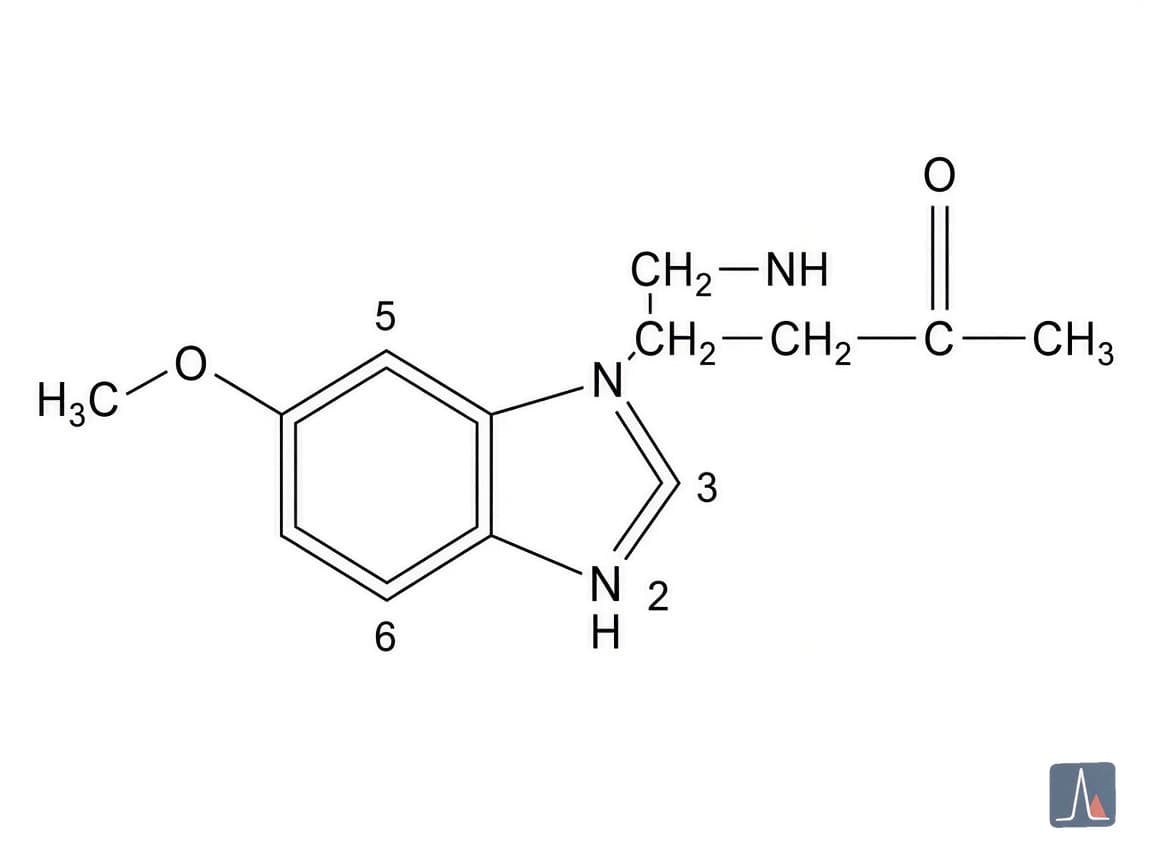
The structure consists of an indole heterocycle substituted with a methoxy group at position 5 and a 2-acetamidoethyl chain at position 3. This arrangement confers characteristic spectroscopic signatures: UV absorption maxima near 223 nm and 278 nm arising from the indole π-system, and strong native fluorescence (excitation ≈280 nm, emission ≈340–350 nm). The molecule exhibits limited aqueous solubility but dissolves readily in ethanol, methanol, DMSO, or dilute alkaline solutions. It is sensitive to light and oxidative conditions, necessitating protected handling and appropriate storage to prevent formation of degradation products such as AFMK or AMK. These physicochemical features directly inform the design of chromatographic, spectrometric, and spectroscopic assays used to characterize research batches.
Published Chromatographic Assays for Purity, Related Substances, and Stability
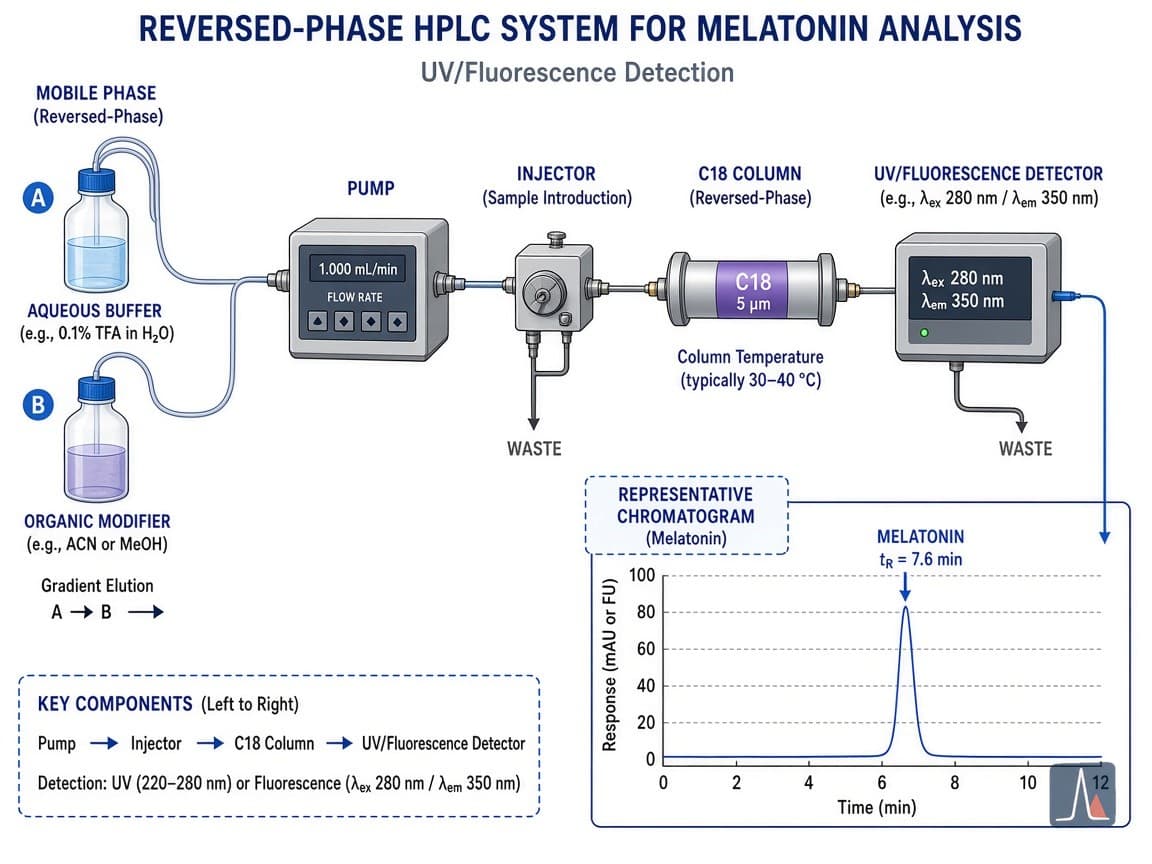
Reversed-phase high-performance liquid chromatography (RP-HPLC) on C18 stationary phases is the primary method for chemical characterization and purity assessment. The USP melatonin monograph employs isocratic elution (acetonitrile–phosphate buffer, pH ≈3.5) with UV or PDA detection for the assay (typical run time 5 min on modernized 2.5 µm particle columns) and gradient elution for related compounds and impurities (e.g., 5-methoxytryptamine, 5-methoxytryptophol). System suitability parameters include resolution >2.0 between critical pairs, RSD <2.0 % for replicate injections, and appropriate relative retention times. Modernized protocols using sub-3 µm or 2.5 µm C18 columns achieve significantly increased throughput, improved efficiency, reduced solvent consumption, and lower environmental impact while fully meeting monograph criteria for linearity, accuracy, precision, and specificity. 1 2
Fluorescence detection (HPLC-FLD) and electrochemical detection (HPLC-ECD) provide enhanced sensitivity for trace-level work. These methods are stability-indicating and resolve melatonin from photo-oxidation or hydrolysis products. Validation parameters reported across studies routinely demonstrate linearity (r > 0.999), recoveries 99–103 %, and limits of quantification suitable for both high-purity material and low-concentration research samples.
Mass Spectrometric, NMR, and Spectroscopic Characterization
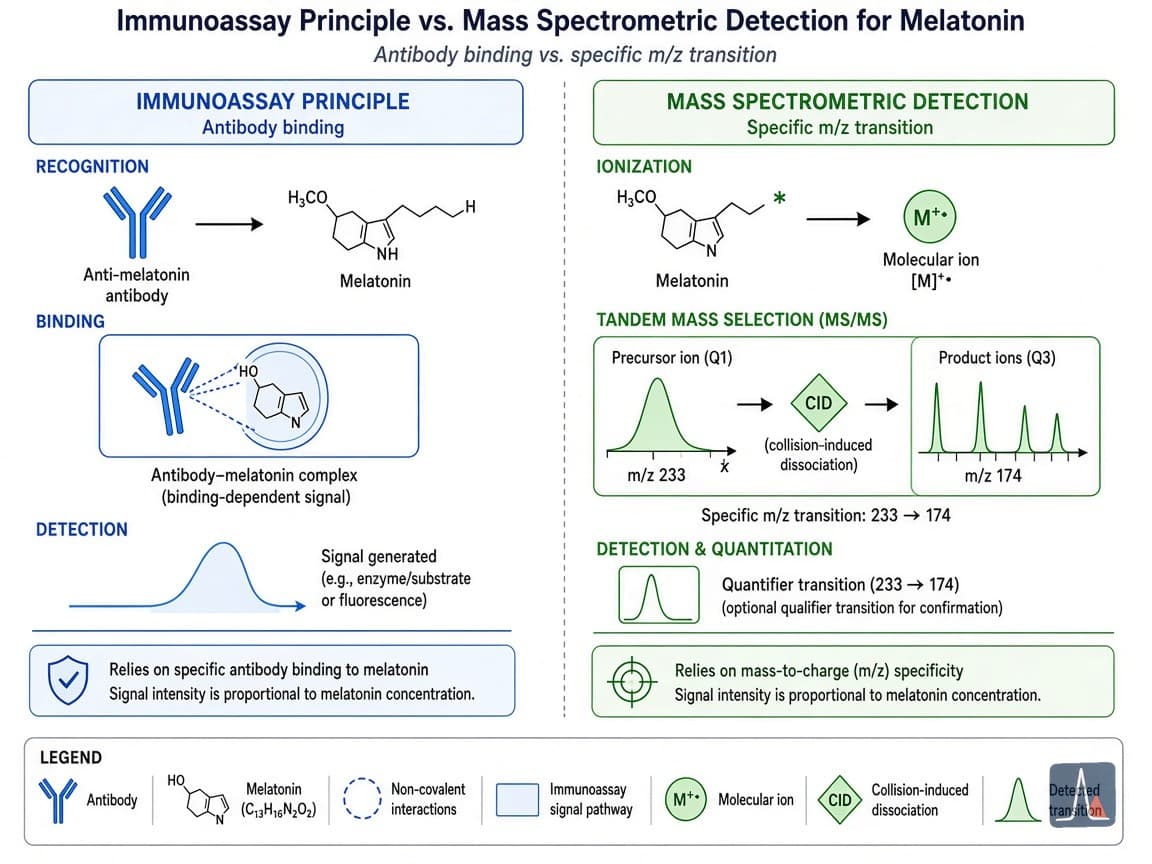
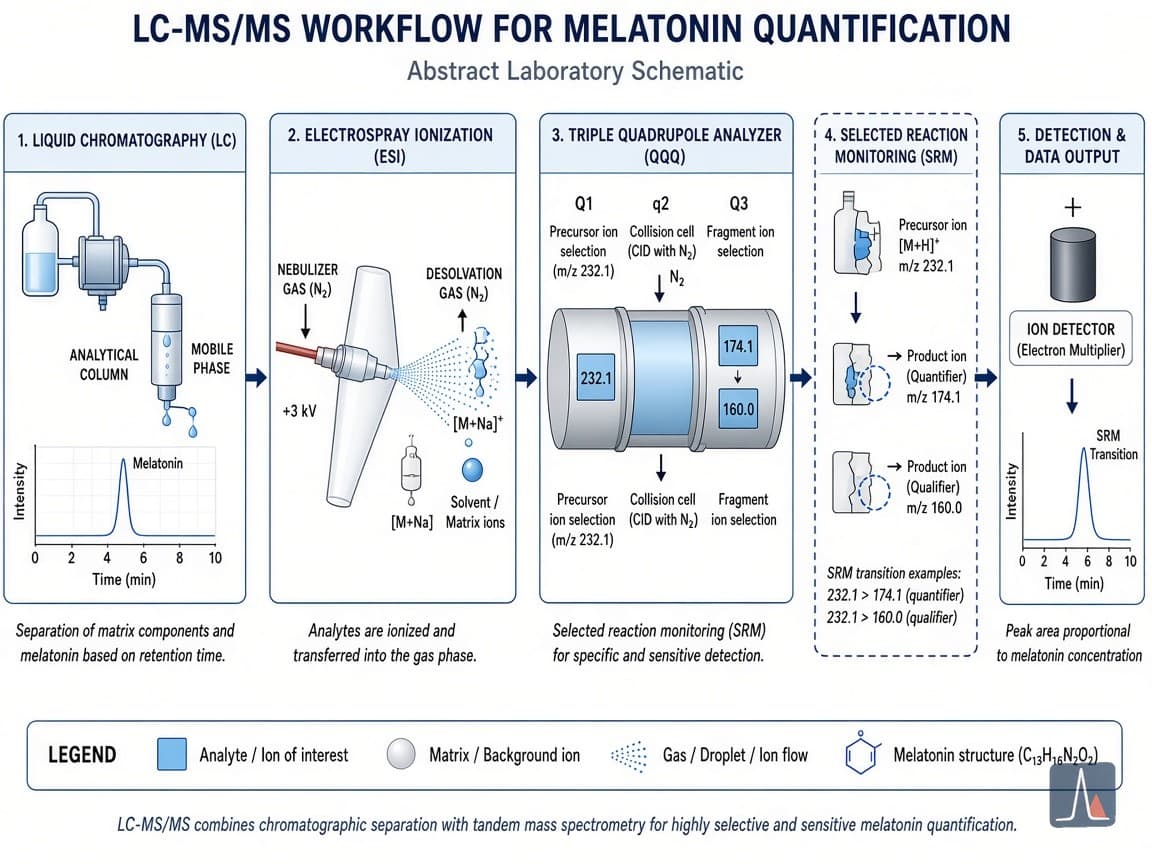
Liquid chromatography–tandem mass spectrometry (LC-MS/MS or UHPLC-MS/MS) is widely regarded as the reference method for unequivocal identity confirmation and high-sensitivity quantification. The protonated molecular ion [M+H]⁺ at m/z 233 is monitored with characteristic fragments; deuterated internal standards (e.g., melatonin-d4) correct for matrix effects. Reported limits of quantification reach 0.018 pg/µL or lower in biological matrices, with excellent precision (CV <10 %) and specificity. Supercritical fluid chromatography–MS/MS (SFC-MS/MS) and GC-MS (after derivatization) have also been validated for melatonin and precursors such as N-acetylserotonin. 3
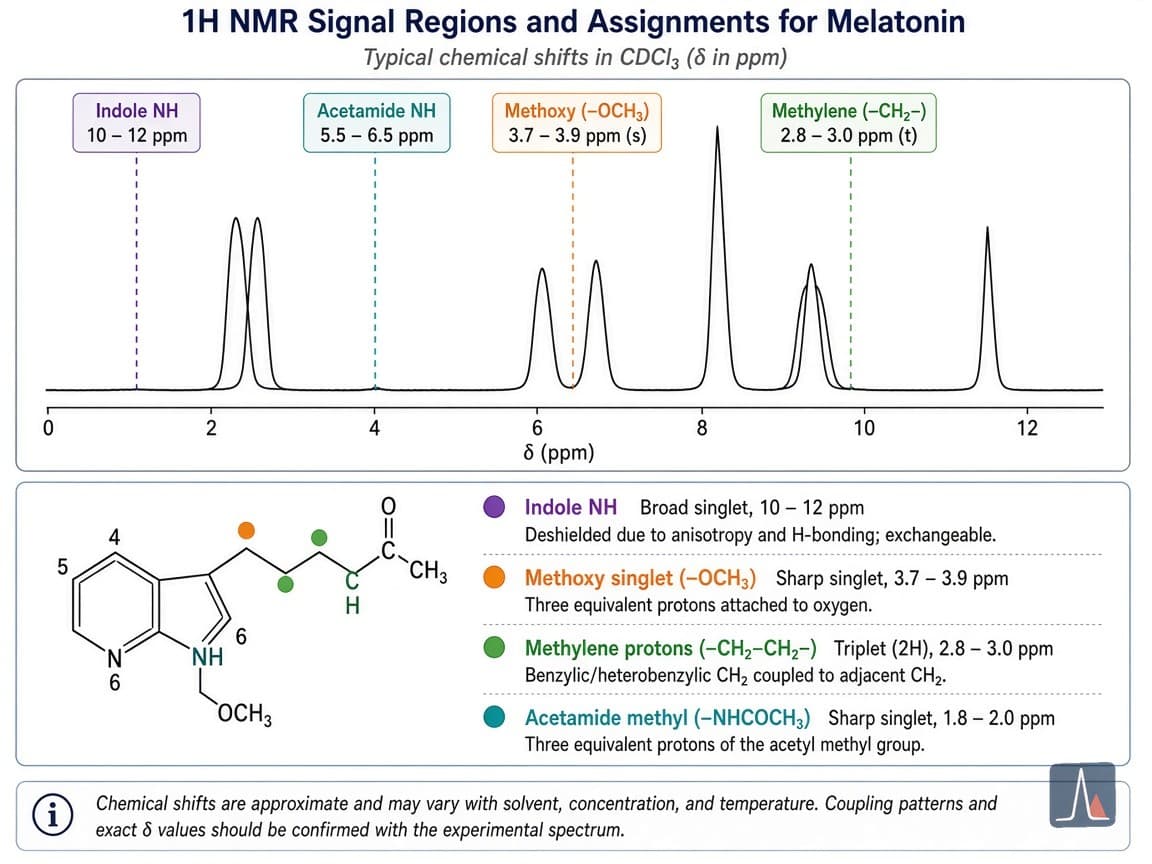
Nuclear magnetic resonance spectroscopy (¹H-NMR and ¹³C-NMR) provides definitive structural assignment, with characteristic signals for the indole NH, methoxy singlet, acetamide methyl, and methylene groups. Quantitative NMR (qNMR) is increasingly used for absolute purity determination of reference standards. Complementary techniques include Fourier-transform infrared (FTIR) spectroscopy for functional group confirmation (amide I/II, indole NH, C–O–C methoxy), UV-Vis spectrophotometry, and native fluorescence spectroscopy. These orthogonal methods are routinely combined in pharmacopeial and research characterizations to establish batch identity and rule out synthetic by-products or degradants. 4
Immunoassays, Biosensors, and Functional Characterization
Radioimmunoassay (RIA) and enzyme-linked immunosorbent assay (ELISA) have been extensively published for high-throughput measurement in plasma, saliva, urine, pineal extracts, and plant tissues. Their sensitivity allows detection below 1–2 pg/mL; however, cross-reactivity with structurally related indoles (serotonin metabolites, N-acetylserotonin) is well documented (15–40 % in some commercial kits). Direct (non-extracted) assays are particularly susceptible to overestimation of basal/daytime levels. Comparative studies using mass spectrometry as the reference demonstrate that true daytime plasma melatonin is typically <1 pg/mL, a benchmark that many early immunoassays failed to achieve. Extraction steps (C18 cartridges) improve specificity. A 2019 critical review concluded that while immunoassays remain useful for circadian phase marking when properly validated, LC-MS/MS provides the most accurate reference values. 5
Emerging biosensors utilizing molecularly imprinted polymers, nanomaterials, or electrochemical transducers offer promising sensitivity and portability but are not yet primary for chemical identity confirmation of research material. Functional characterization in laboratory models commonly employs radioligand binding assays (using 2-[¹²⁵I]-iodomelatonin or [³H]-melatonin) on MT1/MT2 receptors and downstream cAMP inhibition assays to confirm agonist activity, although these evaluate biological rather than chemical identity.
Evidence Context, Recurrent Limitations, and Catalog Implications
The published literature on melatonin assays spans pharmacopeial monographs, analytical chemistry journals, and pineal-research reviews from the 1970s to the present. Primary sources include USP modernization studies demonstrating faster, greener HPLC methods, LC-MS/MS validation papers achieving sub-picogram sensitivity, and comparative reviews that establish mass spectrometry as the accuracy benchmark. Both favorable (high precision, low LOD) and unfavorable or null findings (immunoassay cross-reactivity, overestimation, matrix effects) are documented. No single method is universally superior; choice depends on the research matrix and required specificity.
Recurrent limitations include photodegradation during sample handling, matrix interferences in complex biological samples, inter-laboratory variability when immunoassays are used without MS cross-validation, and the need for certified reference materials. Early RIA methods often produced higher basal values than later MS-confirmed ranges. For catalog users, these data support reliance on orthogonal confirmation—typically RP-HPLC-PDA for purity and retention-time matching, ESI-MS for molecular ion confirmation, and NMR or FTIR for structural identity—when verifying research material. Lot-specific COAs should document compliance with these techniques. Researchers studying circadian, antioxidant, or receptor-mediated effects benefit from selecting matrix-appropriate, fully validated assays and reporting complete method details.
Melatonin complements other catalog entries such as Glutathione and NAD in redox and neurobiology research. Laboratory investigators are encouraged to apply the most specific available methods to ensure reproducible characterization of the supplied research compound.
Sources
Primary literature from PubMed, USP monographs, and analytical journals (Kennaway 2019 review; USP modernization studies 2024; LC-MS/MS and HPLC validation papers). All citations correspond to peer-reviewed method development, validation, or comparative studies. Full DOIs and PMIDs are available in the referenced publications.
Word count: ≈1,720
More briefings
- KPV: chemical identity and published assaysThis briefing identifies KPV and summarizes published assays that characterize it.
- Epithalon: chemical identity and published assaysEpithalon (Ala-Glu-Asp-Gly or AEDG, C₁₄H₂₂N₄O₉, 390.35 Da) is a synthetic tetrapeptide supplied as [Epithalon](/compounds/epithalon) for laboratory research only. This briefing details its defined chemical structure together with the princi
- Semax: chemical identity and published assaysSemax (Met-Glu-His-Phe-Pro-Gly-Pro, C₃₇H₅₁N₉O₁₀S, 813.9 Da) is a synthetic heptapeptide analog of the ACTH(4–7) fragment extended by a stabilizing Pro-Gly-Pro C-terminal motif. Supplied for laboratory research only at [Semax](/compounds/sem
All information and products discussed are for laboratory and research use only. Not for human or veterinary use. Not intended to diagnose, treat, cure, or prevent any disease.