
10 November 2026
Favorable and unfavorable findings on Thymosin alpha-1
Download PDF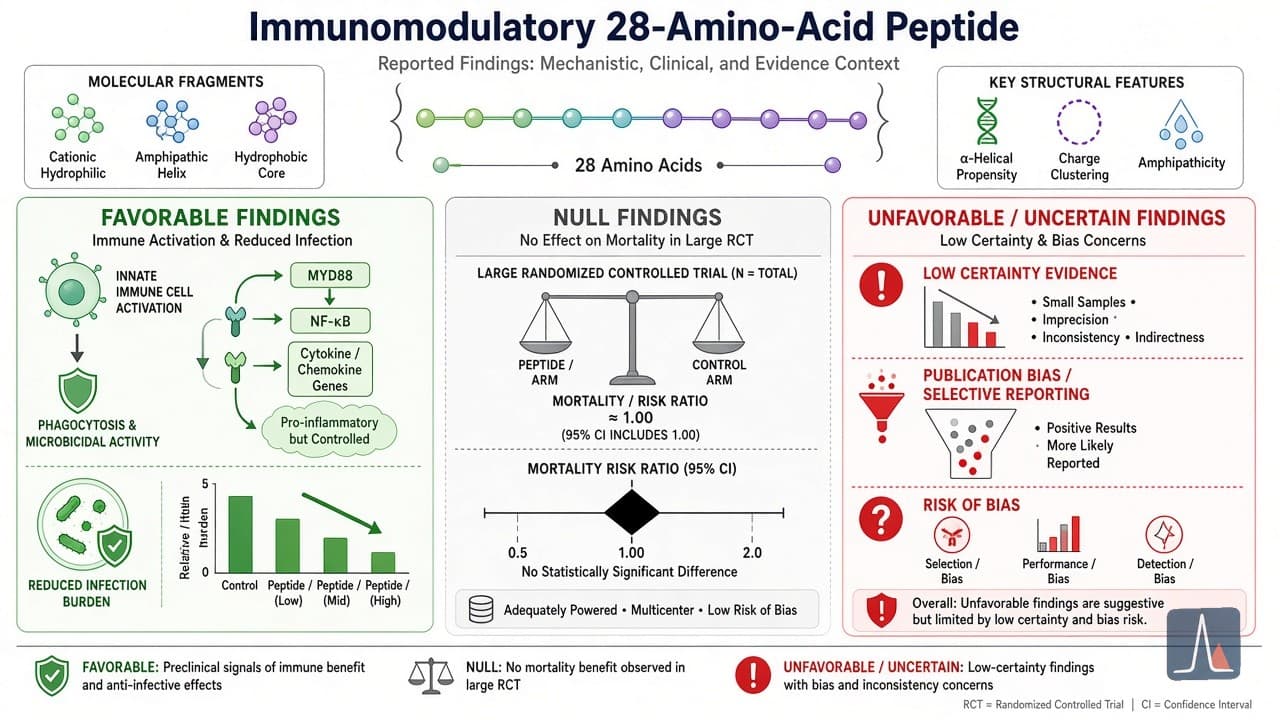
Published randomised trials and meta-analyses of thymosin alpha-1, a 28-amino-acid immunomodulatory peptide supplied for laboratory research, report improvements in T-cell subsets, reduced infections, and select clinical parameters in lower
Chemical Identity and Catalog Context
Thymosin alpha-1 (Tα1, thymalfasin) is a synthetic N-acetylated 28-amino-acid peptide (sequence Ac-SDAAVDTSSEITTKDLKEKKEVVEEAEN) corresponding to residues 2–29 of human prothymosin α. It is supplied as a high-purity lyophilized research powder for laboratory investigation of immune modulation. As with all catalog materials, it is for laboratory research only and is not a medicine. Reporting findings from human trials or reviews is not guidance to use the research material in people or animals.
Foundational Mechanistic and In Vitro Evidence
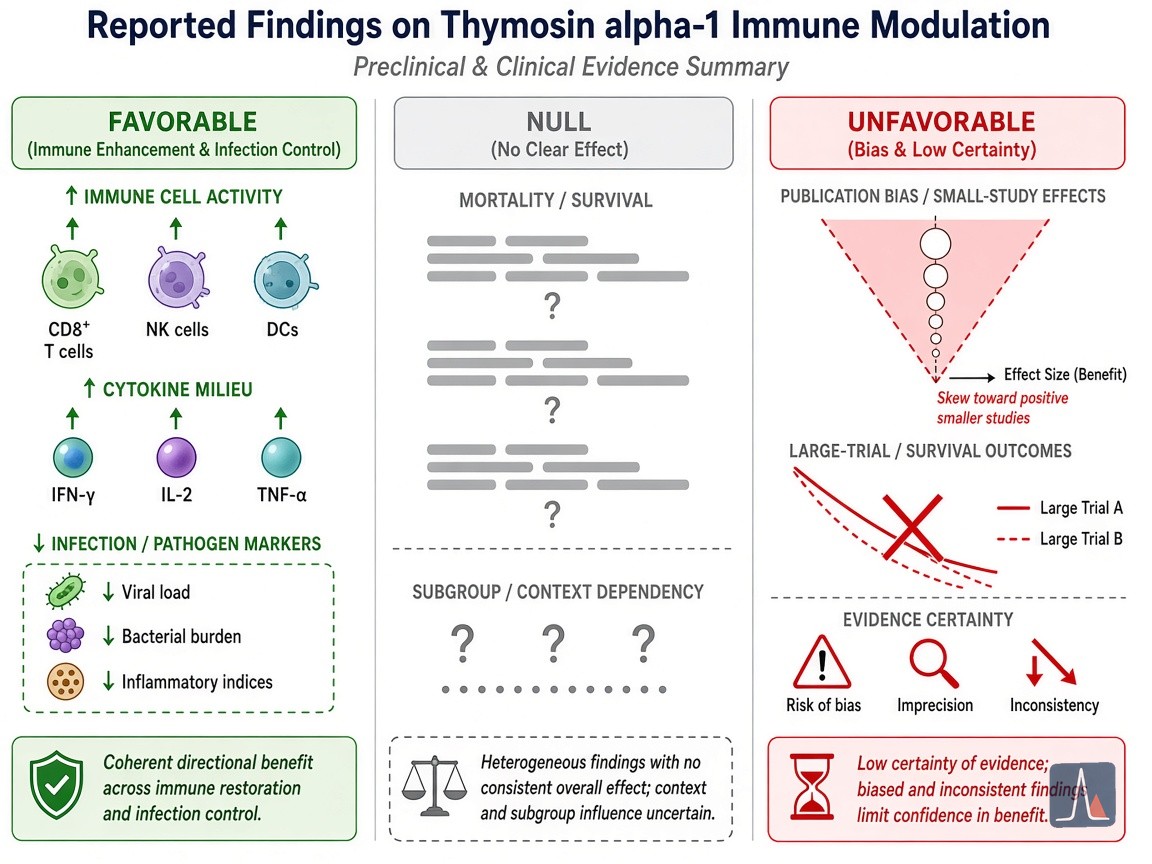
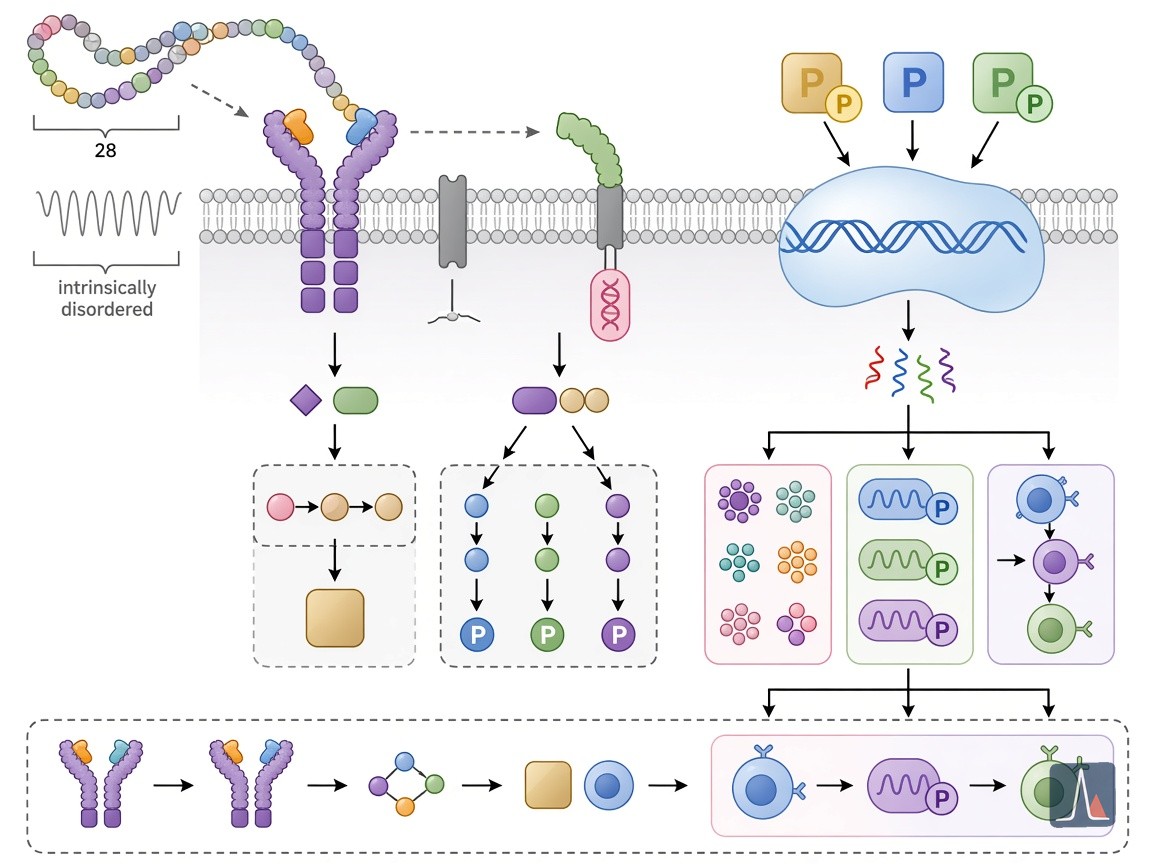
In vitro studies demonstrate that Tα1 functions primarily as an agonist of Toll-like receptors (TLR2 and TLR9) on dendritic cells and macrophages. This activates downstream pathways including NF-κB, MAPK, and IRF, leading to increased production of IL-2, IFN-γ, and other Th1 cytokines, maturation of T-cell precursors into CD4+ and CD8+ cells, upregulation of MHC class I/II and HLA-DR expression, and enhanced NK-cell cytotoxicity. It can also attenuate excessive inflammation in some models by modulating cytokine balance and increasing intracellular glutathione. These effects are observed in cells from immunocompromised or virally infected donors, supporting a role in restoring rather than simply stimulating immunity. No single high-affinity receptor has been identified; the peptide is intrinsically disordered in aqueous solution and interacts with negatively charged membrane regions. !Abstract triptych diagram of favorable, null and unfavorable Thymosin alpha-1 findings Abstract separation of reported findings on Thymosin alpha-1 (favorable immune biomarkers and select clinical signals vs null large RCT mortality data and low-certainty evidence syntheses).
Preclinical Animal Model Records
Rodent and other animal models of viral (hepatitis, influenza), bacterial, and fungal infection, as well as chemically induced immunosuppression or sepsis-like states, have shown that Tα1 administration can improve survival, reduce pathogen burden, restore lymphocyte counts, and limit organ damage. Benefits are most pronounced in immunocompromised or aged animals. Cancer models report enhanced anti-tumor immunity when used as an adjuvant. These preclinical records provide mechanistic plausibility for immune restoration but do not predict human clinical outcomes.
Favorable Reported Findings
Multiple randomised controlled trials (RCTs) and meta-analyses, predominantly from China, report favorable effects on immune biomarkers and some clinical parameters. A 2025 meta-analysis of five RCTs (n=706) in severe acute pancreatitis found Tα1 increased CD4+ percentage (MD 4.53) and CD4+/CD8+ ratio (MD 0.42), reduced extrapancreatic infections (RR 0.56, especially abdominal and bloodstream), lowered APACHE II scores, and (at lower doses) reduced CRP. A 2024 meta-analysis of 39 RCTs (n=3,329) in acute exacerbations of COPD reported significant gains in FEV1, FEV1/FVC, PaO2, reductions in PaCO2 and hospital stay, plus improved CD4+ counts and CD4+/CD8+ ratio. Earlier sepsis metas (2016 meta of 19 RCTs and a 2015 analysis) reported mortality reductions (RR ~0.59–0.68) and improvements in APACHE II, HLA-DR, and cytokine profiles. A 2025 sepsis meta of 11 RCTs (n=1,927) found an overall 28-day mortality benefit (OR 0.73), driven by subgroups with cancer, diabetes, or coronary disease. In chronic hepatitis B, a 2026 Cochrane review of 10 trials noted possible reductions in all-cause mortality and serious adverse events (low to very low certainty). Oncology adjuvant settings (gastric, colorectal, melanoma) have shown improved objective response rates in some metas, better Karnofsky performance status, reduced chemotherapy toxicities, and favorable shifts in immune markers. Some COVID-19 observational data and subgroup metas suggested mortality benefit in severe/elderly patients. These findings make it theoretically plausible that Tα1 could support immune recovery in selected immunosuppressed states, although theory is not equivalent to proven clinical benefit in people. !Mechanistic schematic for Thymosin alpha-1 immune modulation Foundational in-vitro mechanism of TLR-mediated immune restoration.
Null, Mixed, Inconsistent, and Unfavorable Reported Findings
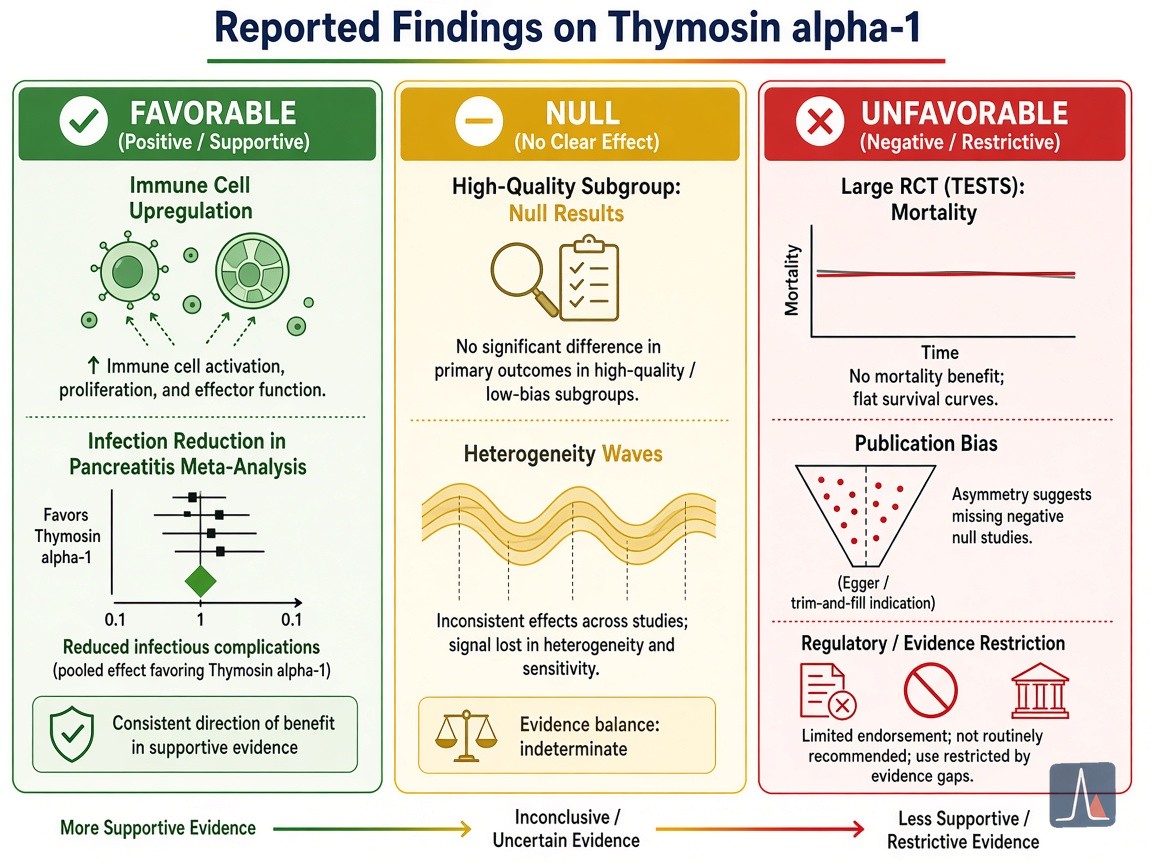
The largest and highest-quality trial, the 2025 TESTS phase 3 multicentre double-blind placebo-controlled RCT (n=1,106 adults with sepsis-3, 22 Chinese centres), found no difference in 28-day all-cause mortality (23.4% thymosin alpha-1 vs 24.1% placebo; HR 0.97, 95% CI 0.76–1.24, p=0.82) or 90-day mortality. No secondary outcomes (new infections, organ support, quality of life, mHLA-DR recovery) or safety endpoints differed significantly. Prespecified subgroup analyses suggested heterogeneity of treatment effect (possible harm in patients <60 years, HR 1.67; possible benefit in diabetics), but these are hypothesis-generating only. The 2025 sepsis meta showed the overall mortality signal disappeared in high-quality (OR 0.82, p=0.09) and multicentre subgroups; trial sequential analysis indicated insufficient information size, and Egger’s test suggested publication bias. The 2026 Cochrane review on hepatitis B rated evidence as very low certainty for mortality, histological improvement, quality of life, and HBV-related illness; many trials used obsolete comparators. A 2023 COVID-19 meta-analysis (9 studies, n=5,352) found no overall mortality benefit (RR 1.03, p=0.92, high heterogeneity) and explicitly did not support routine use. In melanoma, a 488-patient trial showed more tumour responses and a non-significant survival trend (median OS 9.4 vs 6.6 months, HR 0.80, p=0.08). Many positive signals derive from small, single-centre, lower-quality studies with high risk of bias; larger or higher-quality analyses frequently nullify or attenuate benefits. Surrogate immune-marker improvements do not reliably translate to hard clinical endpoints. !Evidence quality separation diagram for Thymosin alpha-1 Visual summary of favorable biomarker signals versus null high-quality trial outcomes and evidence limitations.
Safety Profile, Adverse Events, and Regulatory Context
Across trials involving thousands of patients, thymosin alpha-1 has been generally well tolerated. In the TESTS trial, adverse events (66.4% vs 67.6%) and serious adverse events (26.8% vs 29.3%) were comparable to placebo; no unexpected drug-related serious events occurred. Injection-site discomfort is the most commonly reported mild effect. A 2026 Cochrane review found a possible reduction in serious adverse events with thymosin alpha-1 in hepatitis B (low certainty). No consistent increase in autoimmune flares or other severe toxicities has been established in the published record. Regulatory status is mixed: approved in approximately 35 countries (including China as Zadaxin for chronic hepatitis B and certain cancers), but it has never received full FDA approval in the United States despite an orphan designation for hepatitis B in 1991. In 2024 the FDA Pharmacy Compounding Advisory Committee voted against inclusion on the 503A bulking list, citing insufficient compelling evidence of safety and effectiveness for the reviewed uses. Compounded versions may carry risks of immunogenicity or impurities. It is not on the 2026 WADA prohibited list.
Evidence Context, Recurrent Limitations, and Catalog Implications
The published record on thymosin alpha-1 is extensive (>11,000 patients across >30 trials and numerous metas) yet polarized by study quality. Favorable signals on immune biomarkers and secondary outcomes in pancreatitis, COPD exacerbations, and lower-quality sepsis or oncology studies contrast sharply with null results on mortality and hard endpoints in the largest rigorous trial (TESTS) and high-quality subgroup analyses. Recurrent limitations include geographic concentration in China, small sample sizes in many positive trials, inadequate blinding or reporting (poor CONSORT adherence), use of outdated standard-of-care comparators in viral hepatitis studies, high heterogeneity, publication bias, and reliance on surrogate markers whose clinical relevance is uncertain. Trial sequential analyses indicate that current evidence has not reached the required information size for firm conclusions on mortality. Subgroup heterogeneity of treatment effect (age, diabetes, cancer comorbidity) suggests possible personalized utility, but this remains unproven and requires dedicated prospective testing. For laboratory researchers, thymosin alpha-1 remains a valuable tool for studying immune restoration, TLR signaling, and T-cell biology in vitro and in animal models. The human clinical record illustrates the gap between mechanistic promise, biomarker changes, and reproducible hard clinical benefit. Future high-quality, adequately powered, internationally conducted trials targeting well-defined immunosuppressed populations may clarify its utility. !Evidence pyramid and balance for Thymosin alpha-1 clinical record Recurrent pattern of surrogate improvement in lower-quality data contrasted with null hard endpoints in rigorous trials.

Sources
- Wu J et al. The efficacy and safety of thymosin α1 for sepsis (TESTS): multicentre, double blinded, randomised, placebo controlled, phase 3 trial. BMJ. 2025. (PMID 39814420)
- Gu B et al. Efficacy of thymosin α1 for sepsis: a systematic review and meta-analysis of randomized controlled trials. Front Cell Infect Microbiol. 2025. doi:10.3389/fcimb.2025.1673959
- Relevant SAP and AECOPD metas (Front Immunol 2025; J Coll Physicians Surg Pak 2024).
- Naing C et al. Thymosin-α1 for people with chronic hepatitis B. Cochrane Database Syst Rev. 2026.
- Shang W et al. Thymosin alpha1 use in adult COVID-19 patients: A systematic review and meta-analysis. Int Immunopharmacol. 2023. (PMID 36527881)
- Additional supporting reviews and earlier metas (PMC5025565, 2016 sepsis meta; oncology adjuvant metas; mechanistic reviews on TLR signaling).
All claims are drawn from indexed primary literature or systematic reviews. No dosing, administration, or therapeutic advice is provided. Materials from Rierink Compounds are strictly for laboratory research.
More briefings
- Favorable and unfavorable findings on Lemon BottleNo peer-reviewed randomised trials or controlled human studies evaluate the injectable research mixture known as Lemon Bottle for lipolysis. In vitro experiments on bromelain report inhibition of adipogenesis and induction of lipolysis/apop
- Favorable and unfavorable findings on SS-31Preclinical models report that SS-31 (elamipretide) binds cardiolipin to stabilize mitochondrial function and reduce oxidative damage, with an accelerated approval for muscle strength in Barth syndrome, but large randomised trials in primar
- Favorable and unfavorable findings on LiraglutideRandomised trials and meta-analyses report that liraglutide produces moderate weight loss, glycaemic improvements, and cardiovascular risk reduction in adults with type 2 diabetes or obesity, yet these occur alongside frequent gastrointesti
All information and products discussed are for laboratory and research use only. Not for human or veterinary use. Not intended to diagnose, treat, cure, or prevent any disease.