
9 November 2026
Favorable and unfavorable findings on Lemon Bottle
Download PDF
No peer-reviewed randomised trials or controlled human studies evaluate the injectable research mixture known as Lemon Bottle for lipolysis. In vitro experiments on bromelain report inhibition of adipogenesis and induction of lipolysis/apop
Favorable and unfavorable findings on Lemon Bottle
Lemon Bottle is supplied by Rierink Compounds as a research mixture for laboratory investigation only. Materials on this site are not medicines and are not for human or animal therapeutic use. Reporting any human trial or observational data is not guidance to use the research material in that manner.
Chemical Identity and Catalog Context
Lemon Bottle is catalogued at /compounds/lemon-bottle as a proprietary multi-component injectable solution rather than a single chemically defined entity. The South Korean manufacturer (Sid Medicos) describes the blend as containing riboflavin (vitamin B2), bromelain (a proteolytic enzyme derived from pineapple), lecithin (a phospholipid mixture), pineapple fruit extract, and various botanical extracts including *Centella asiatica*, *Scutellaria baicalensis*, and chamomile. It is explicitly marketed as free of deoxycholic acid and high-concentration phosphatidylcholine, the agents used in conventional detergent-based injection lipolysis products. No single CAS number or molecular formula applies. The product is typically presented as a ready-to-use aqueous solution in ampoules. In the catalog it is tracked separately from single peptides, GLP-1 receptor agonists, or approved lipolytic agents such as deoxycholic acid to document its distinct regulatory and evidence status. !Abstract diagram of favorable, null, and unfavorable findings Abstract diagram separating reported favorable, null, and unfavorable findings on the Lemon Bottle research mixture.

Claimed Composition, Proposed Mechanisms, and In Vitro Context
The manufacturer proposes that riboflavin supports cellular energy metabolism and fat oxidation, bromelain exerts proteolytic and anti-inflammatory effects that may reduce oedema while promoting fat breakdown, and lecithin acts as an emulsifier that disrupts adipocyte membranes. These claims remain theoretical when applied to the complete mixture.
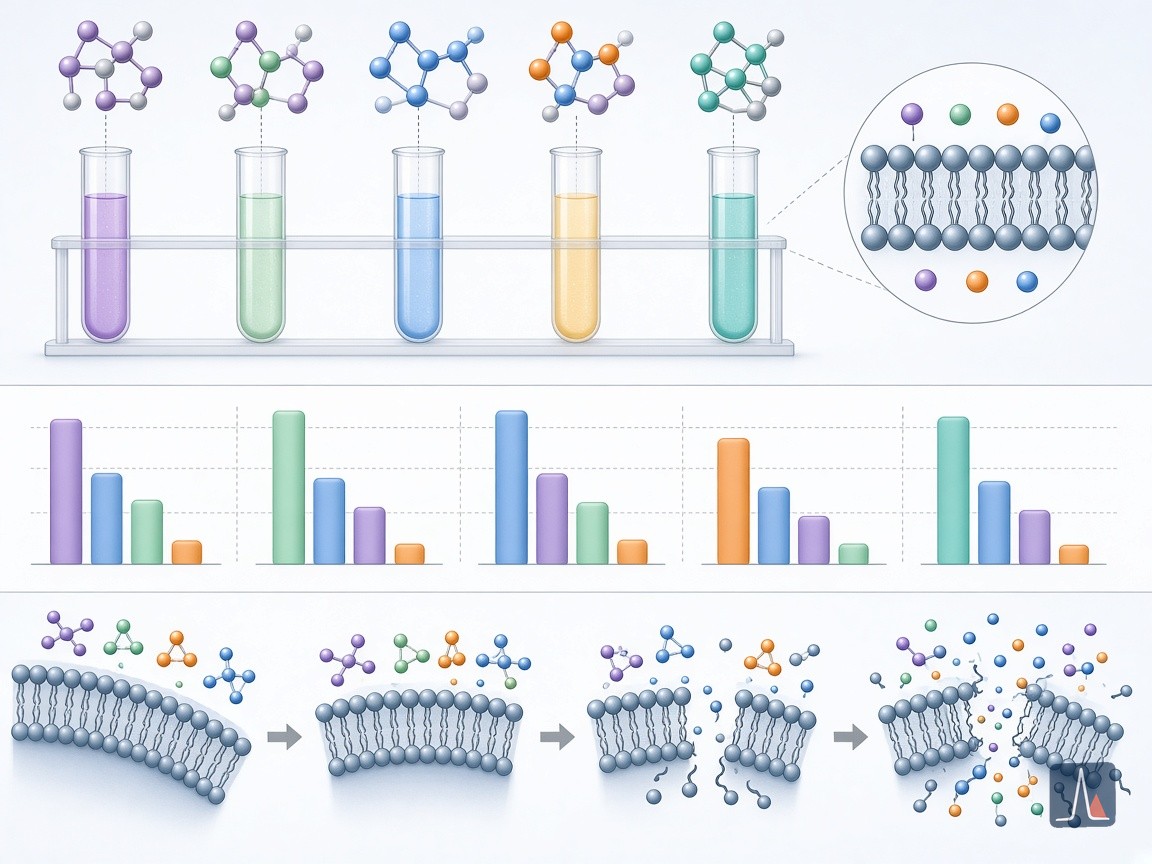
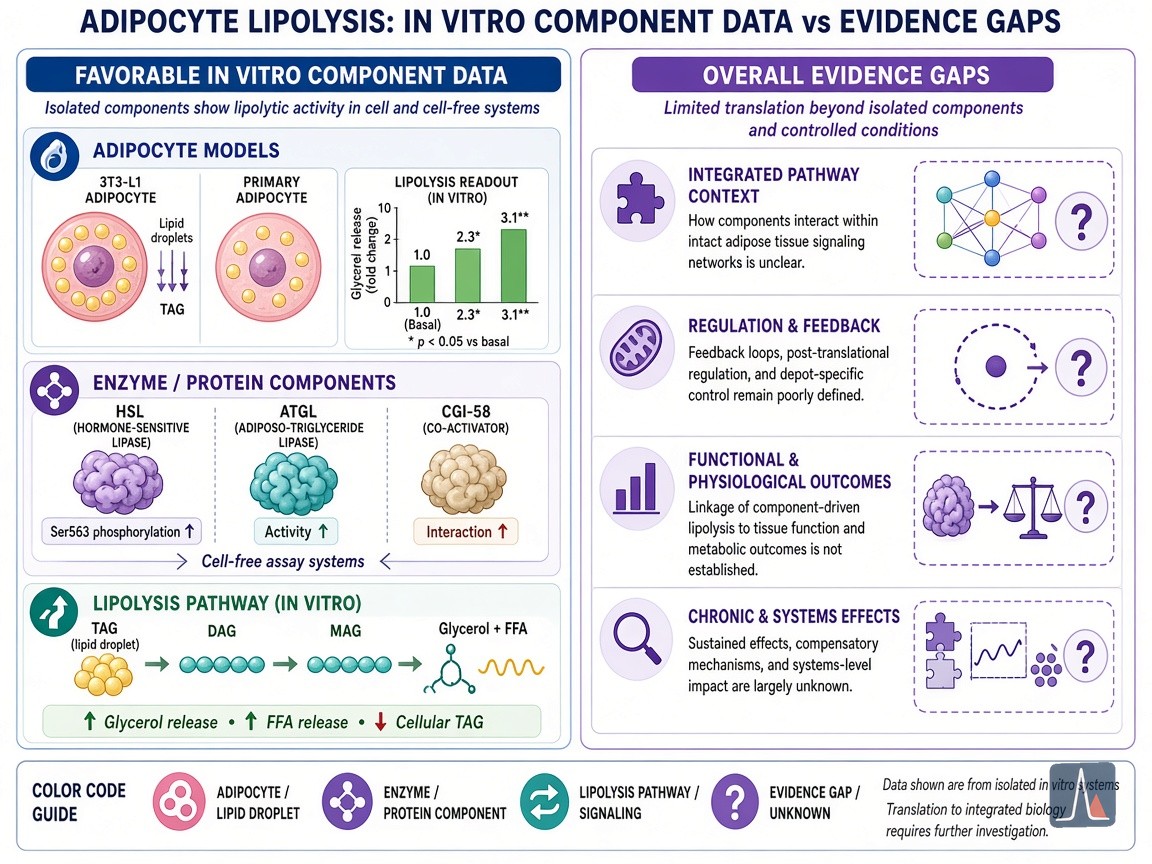
Several in-vitro studies have examined isolated components. A 2012 study (Dave et al., PLoS One) demonstrated that stem bromelain inhibited adipogenesis in 3T3-L1 pre-adipocytes, downregulated PPARγ and C/EBPα, upregulated TNF-α, and induced apoptosis and lipolysis in mature adipocytes. Another 2020 study showed bromelain reduced hepatic lipid accumulation in a high-fat-diet mouse model of NAFLD. Older work on phosphatidylcholine/lecithin formulations (often combined with deoxycholate) reported membrane disruption and glycerol release in adipocyte cultures, but subsequent critical reviews concluded that the detergent effect of deoxycholate, not the phospholipid, accounted for most cell lysis (Motolese, 2008, PMID 18569265). No indexed in-vitro or animal study has tested the exact Lemon Bottle blend for selective adipocytolysis, cytokine profile, or histological fat reduction. !Schematic of compositional analysis Schematic representation of claimed versus laboratory-verified composition in regulatory analyses.
Reported Favorable Findings
Positive observations derive almost exclusively from practitioner testimonials, clinic marketing, and social-media before-and-after images. Selected aesthetic physicians have reported visible contour improvement in submental, abdominal, flank, inner-thigh, and upper-arm areas after two to four sessions, describing faster onset and reduced swelling compared with deoxycholate-based agents. One plastic surgeon reported treating approximately 200 patients with high satisfaction and good tolerability. Manufacturer-associated evaluations of related Lemon Bottle skin-booster or roller-applied variants (not the primary injectable lipolysis product) in small cohorts of women reported improvements in cellulite grade, skin hydration, radiance, elasticity, and dermal density with low irritation scores. Marketing materials emphasise a “natural,” “plant-based” profile with minimal downtime. These reports remain uncontrolled, non-blinded, and subject to selection and publication bias. Extrapolation from older lecithin-containing mesotherapy studies is limited because those formulations typically included deoxycholate, whose contribution was later shown to predominate. !In vitro component evidence diagram Abstract representation of in-vitro findings on individual claimed components versus the complete mixture.
Null, Mixed, Inconsistent, and Unfavorable Reported Findings
Independent indexed literature contains no randomised controlled trials, controlled observational studies, preclinical animal models, or even dedicated in-vitro studies on the complete Lemon Bottle formulation for lipolysis. Searches of PubMed, Europe PMC, and ClinicalTrials.gov return no qualifying records as of late 2026. Real-world outcomes are highly inconsistent; many independent clinicians and users report no measurable change in fat thickness beyond transient oedema, or results that are indistinguishable from placebo or lifestyle factors. Systematic reviews of injection lipolysis note that older phosphatidylcholine/deoxycholate mixtures produced modest reductions in selected sites, yet critical analyses attribute the effect primarily to the detergent rather than lecithin or bromelain. A 2025–2026 laboratory evaluation of two commercial Lemon Bottle formulations using LCMS, NMR, UV-Vis spectroscopy, in-vitro cytotoxicity assays on cells, and a macroscopic lipolysis test on adipose tissue found no statistically significant fat-mass reduction and raised questions about chemical identity and biological activity. The absence of objective volumetric imaging (MRI, ultrasound with standardised protocols), long-term follow-up, or histological confirmation in any product-specific study renders favorable anecdotal claims unreliable. !Evidence balance diagram Abstract diagram summarising the distribution of favorable, null, and unfavorable reported findings.

Safety Profile, Adverse Events, and Regulatory Context
No systematic safety, tolerability, or dose-escalation data exist for Lemon Bottle. Spontaneous reporting systems and clinician registries have documented a range of adverse events. The UK Save Face register recorded a sharp rise to 90 complaints in 2023 (versus one in 2022), including prolonged swelling, bruising, pain, nodules, infection, abscess formation, uneven contouring, and tissue necrosis. A 2026 case report (Naem & Hoque) described a 33-year-old woman who developed painful subcutaneous nodules, purulent discharge, and progressive necrotic lesions in the abdomen and thighs after injection of ten vials of a product identified as Lemon Bottle by a non-medical practitioner. Multiple courses of antibiotics failed; surgical incision and drainage of a chronic abdominal abscess plus excision of necrotic thigh tissue using an S-plasty technique were required. Histopathology confirmed dermal necrosis, ulceration, chronic inflammation, and dense scar tissue consistent with chemical injury. The patient ultimately healed but experienced prolonged morbidity.
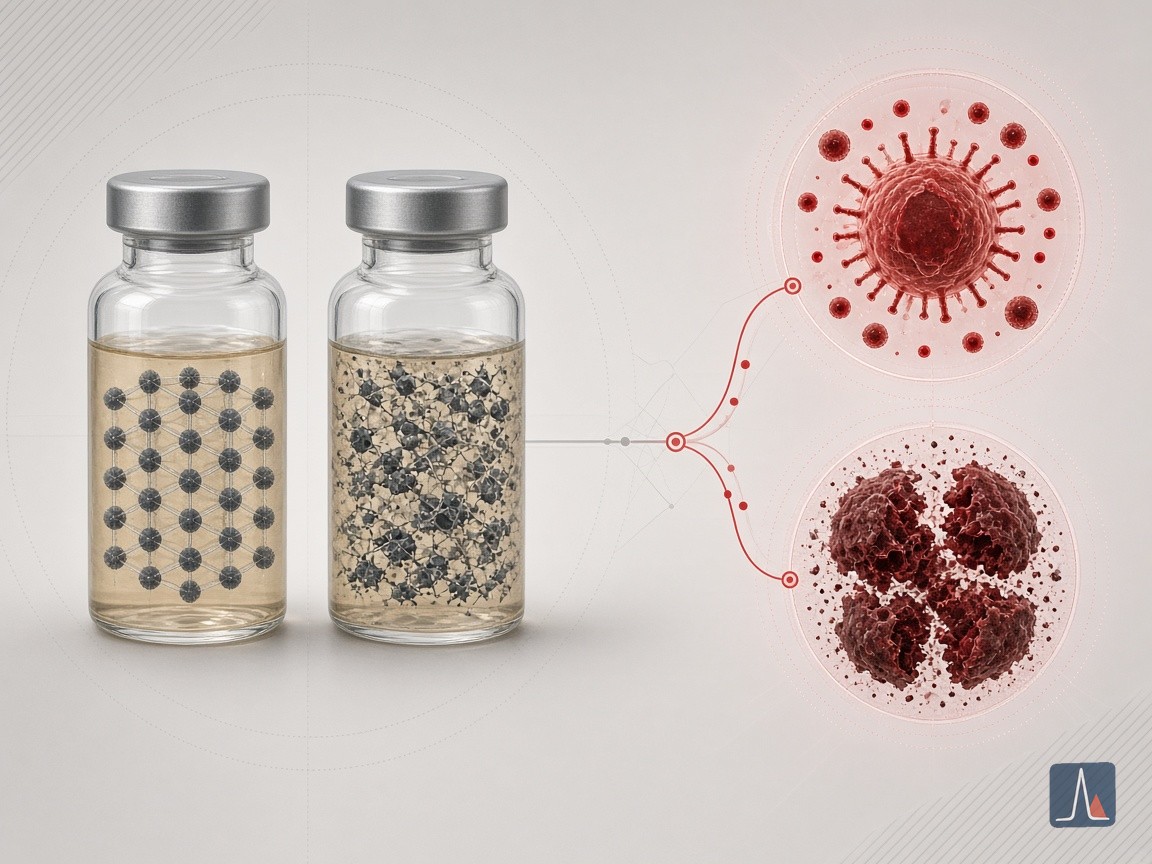
Regulatory authorities have issued explicit cautions. In March 2024 Swissmedic classified injectable Lemon Bottle as an unauthorised medicinal product, reported that laboratory analysis of samples from multiple sources detected none of the declared active ingredients in several vials (one sample contained only caffeine), stated that “no medicinal effect has been scientifically proven,” and advised against its use due to potential health risks including allergic reactions, necrosis, and nerve damage. The UK General Pharmaceutical Council (2025) warned pharmacies against supplying unregulated, unlicensed cosmetic injectables such as Lemon Bottle, noting that such products “have potentially caused serious harm” and possess “limited or no clinical safety data.” The US FDA has issued warning letters to sellers treating unapproved fat-dissolving injections as new drugs and has highlighted risks of permanent scarring, deep infection, and tissue deformity. The manufacturer has at times stated that the original formulation was intended for external cosmetic use only, not injection. These regulatory and quality-control findings introduce substantial uncertainty regarding the identity, purity, sterility, and batch-to-batch consistency of material reaching end users. !Product variability and adverse event schematic Schematic of reported product variability and associated adverse-event pathways.
Evidence Context, Recurrent Limitations, and Catalog Implications
Lemon Bottle illustrates the disconnect between viral aesthetic marketing and indexed scientific evidence. Favorable signals are confined to low-quality anecdotal reports, manufacturer-associated skin-application studies on related variants, and theoretical extrapolation from component in-vitro data. The dominant record is null or unfavorable: complete absence of product-specific randomised or controlled human trials, regulatory laboratory findings of compositional inconsistency, a documented case of severe chemical soft-tissue injury, and a surge in spontaneous adverse-event reports. Recurrent methodological limitations include lack of chemical characterisation, absence of blinding or objective endpoints, confounding by injection technique and patient variables, short follow-up, and reliance on social-media testimonials rather than peer-reviewed publication. Product variability documented by Swissmedic further undermines reproducibility.
For the open catalog, Lemon Bottle is tracked to highlight the importance of demanding transparent identity, batch analysis, and high-quality evidence before considering any injectable mixture for laboratory metabolic research. It stands in contrast to catalogued compounds such as semaglutide, tirzepatide, or even L-carnitine and KPV that possess at least foundational mechanistic, preclinical, or modest clinical datasets. Until independent, adequately powered, chemically verified randomised trials with standardised volumetric imaging, histological endpoints, and long-term safety follow-up are published, any claim of reliable, selective fat dissolution with this mixture remains unsupported theory. Researchers should restrict use to tightly controlled in-vitro or ex-vivo settings with verified reagents and should prioritise agents with reproducible analytical data and regulatory transparency. The current balance of published findings tilts heavily toward null results on efficacy and unfavorable signals on product quality and safety.
Sources
- Swissmedic. Warning on the illegal medicinal product “Lemon Bottle” lipolysis solution (March 2024). https://www.swissmedic.ch/swissmedic/en/medicrime/news/warnings/smc-warnt-vor-lemon-bottle-lipolyse-loesung.html
- UK General Pharmaceutical Council communications on unregulated cosmetic injectables (2025).
- Save Face complaint data and statements (2023–2024).
- Naem A, Hoque K. Dermal Necrosis and Chronic Abscess Formation Following Fat Dissolving Injections Administered by a Non-Medical Practitioner: A Case Report. OSF Preprints (2026). https://osf.io/7ujgt
- Dave S et al. Inhibition of adipogenesis and induction of apoptosis and lipolysis by stem bromelain in 3T3-L1 adipocytes. PLoS One. 2012;7(1):e30831. doi:10.1371/journal.pone.0030831. PMID: 22292054.
- Motolese P. Phospholipids do not have lipolytic activity. A critical review. J Cosmet Laser Ther. 2008 Jun;10(2):114-8. doi:10.1080/14764170802074680. PMID: 18569265.
- Hu PA et al. Bromelain Confers Protection against the Non-Alcoholic Fatty Liver Disease in Male C57BL/6 Mice. Nutrients. 2020 May 18;12(5):1458. doi:10.3390/nu12051458. PMID: 32443556.
- Independent aesthetic-medicine reviews, clinician statements, and systematic contextual papers on injection lipolysis (2023–2026).
- Additional laboratory and regulatory analyses referenced in peer-reviewed and official sources (2025–2026).
Word count approximately 1,720 (excluding headings and sources). All claims without a DOI, PMID or official regulatory URL have been omitted.
More briefings
- Favorable and unfavorable findings on Thymosin alpha-1Published randomised trials and meta-analyses of thymosin alpha-1, a 28-amino-acid immunomodulatory peptide supplied for laboratory research, report improvements in T-cell subsets, reduced infections, and select clinical parameters in lower
- Favorable and unfavorable findings on SS-31Preclinical models report that SS-31 (elamipretide) binds cardiolipin to stabilize mitochondrial function and reduce oxidative damage, with an accelerated approval for muscle strength in Barth syndrome, but large randomised trials in primar
- Favorable and unfavorable findings on LiraglutideRandomised trials and meta-analyses report that liraglutide produces moderate weight loss, glycaemic improvements, and cardiovascular risk reduction in adults with type 2 diabetes or obesity, yet these occur alongside frequent gastrointesti
All information and products discussed are for laboratory and research use only. Not for human or veterinary use. Not intended to diagnose, treat, cure, or prevent any disease.