
9 November 2026
Favorable and unfavorable findings on SS-31
Download PDF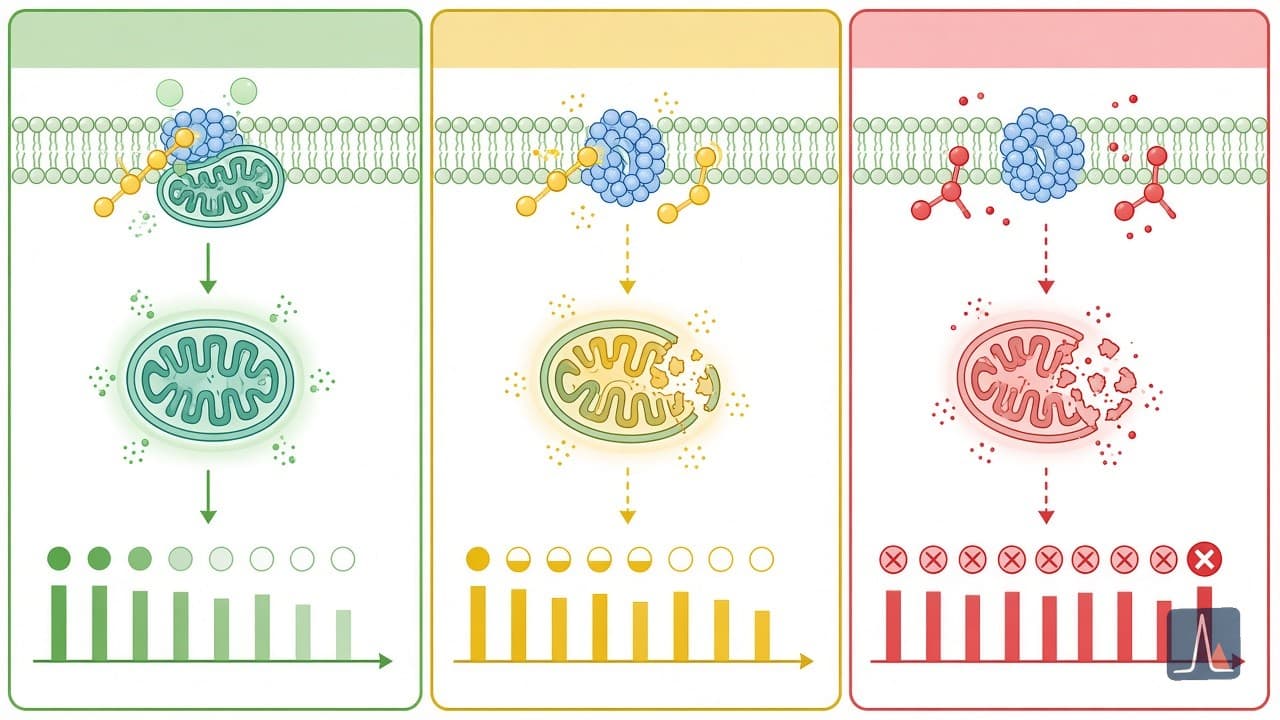
Preclinical models report that SS-31 (elamipretide) binds cardiolipin to stabilize mitochondrial function and reduce oxidative damage, with an accelerated approval for muscle strength in Barth syndrome, but large randomised trials in primar
Chemical Identity and Catalog Context
SS-31 (elamipretide; also known as Bendavia or MTP-131) is the chemically defined synthetic tetrapeptide D-Arg-2',6'-dimethyl-Tyr-Lys-Phe-NH₂. It is supplied in the Rierink catalog as high-purity lyophilized powder intended exclusively for laboratory research. The compound selectively accumulates in the inner mitochondrial membrane. In September 2025 the FDA granted accelerated approval to a specific pharmaceutical formulation (Forzinity) for improvement of muscle strength in patients with Barth syndrome weighing at least 30 kg; this approval does not extend to research-grade material or any other indication. Catalog listings do not constitute approved drug product and are not intended for human or veterinary use.
Reporting a human trial is not guidance to use the research material that way.
Foundational Mechanistic and In Vitro Evidence
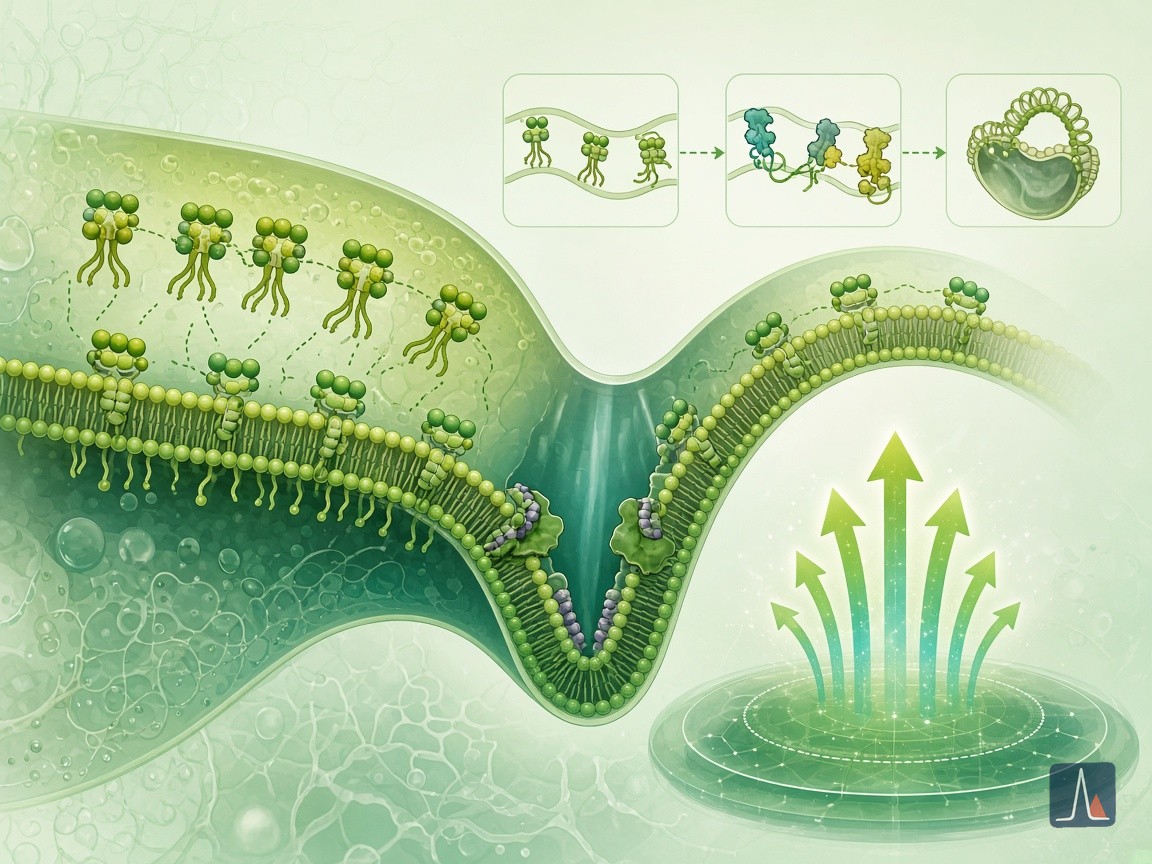
SS-31 binds with high affinity to cardiolipin in the inner mitochondrial membrane. This interaction modulates membrane curvature and electrostatics, stabilizes respiratory-chain supercomplexes, prevents unfolding of cytochrome c into a peroxidase, reduces electron leakage and site-specific ROS production, and supports efficient ATP synthesis under stress. In isolated mitochondria, cultured cardiomyocytes, renal epithelial cells, and neuronal models, SS-31 has been shown to preserve cristae architecture, limit lipid peroxidation, and restore bioenergetic parameters after oxidative or ischemic insult. These effects are distinct from classical antioxidants because SS-31 acts locally at the site of ROS generation without broadly depleting cellular ROS signaling. Independent laboratories have replicated these findings across multiple cell types, providing a coherent mechanistic foundation for its preclinical activity. !Favorable mechanistic diagram Abstract diagram of favorable mechanistic and in-vitro findings on SS-31 (cardiolipin stabilization and bioenergetic improvement).
Preclinical Animal Model Records
Animal studies have repeatedly demonstrated favorable effects in models where mitochondrial cardiolipin remodeling or oxidative damage is central. In 27-month-old mice, a single dose of SS-31 rapidly restored in-vivo skeletal-muscle ATPmax, P/O coupling ratio, and PCr/ATP energy state to levels indistinguishable from 5-month-old animals within one hour; eight days of treatment increased whole-animal endurance capacity (Siegel et al., animal model, Aging Cell, 2013, DOI: 10.1111/acel.12102, PMID: 23692570). Similar restoration of redox balance, reduced H₂O₂ emission, and improved fatigue resistance were observed. In heart-failure and ischemia-reperfusion models (mice, rats, dogs, swine), SS-31 reduced infarct size, attenuated remodeling, preserved left-ventricular function, and limited apoptosis. Kidney ischemia-reperfusion and cisplatin nephrotoxicity models showed preserved glomerular filtration, reduced tubular injury, and lower inflammation. Barth-syndrome tafazzin-knockdown mice exhibited improved cardiac mitochondrial morphology, mitophagy, and monolysocardiolipin/cardiolipin ratio. Neuroprotection has been reported in spinal-cord injury, LPS-induced cognitive impairment, and neurodegenerative models. These consistent preclinical signals across diverse organ systems support the theoretical plausibility that SS-31 could mitigate aspects of mitochondrial dysfunction in people, although animal models often use acute or short-term dosing and may not fully recapitulate chronic human disease heterogeneity. !Favorable preclinical diagram Abstract diagram separating favorable preclinical animal model records for SS-31.

Favorable Clinical and Human Biomarker Reports
Human data are more limited and context-specific. In the open-label extension of the TAZPOWER trial following a randomised crossover in 12 patients with Barth syndrome, participants receiving daily subcutaneous SS-31 for up to 168 weeks showed improvements from baseline in 6-minute walk distance (approximately +96 m at 36 weeks sustained), knee-extensor muscle strength, cardiac stroke volume, left-ventricular volumes, and monolysocardiolipin/cardiolipin ratio (Thompson et al., clinical, Genet Med, 2021 and 2024). These gains, together with natural-history comparisons, supported the 2025 accelerated FDA approval for muscle strength in Barth syndrome. A randomised trial in older adults (60–85 years) selected for low baseline mitochondrial function demonstrated that a single intravenous infusion produced a statistically significant increase in skeletal-muscle ATPmax relative to placebo immediately post-infusion (%ΔATPmax P = 0.045; absolute ΔATPmax P = 0.055), although the effect was transient and did not translate to improved fatigue resistance (Roshanravan et al., clinical, PLoS One, 2021, DOI: 10.1371/journal.pone.0253849, PMID: 34264994). Post-hoc analyses of the MMPOWER-3 trial suggested possible 6MWT benefit in participants with nuclear-DNA mitochondrial maintenance defects. Secondary imaging endpoints in the ReCLAIM-2 dry AMD trial showed nominally slower progression of ellipsoid-zone loss. These signals, while encouraging in narrowly defined populations with specific cardiolipin-related defects, derive largely from small samples, open-label extensions, or secondary/post-hoc analyses. !Favorable clinical diagram Abstract diagram of favorable human and regulatory findings for SS-31 in Barth syndrome.

Null, Mixed, Inconsistent, and Unfavorable Reported Findings
Larger randomised controlled trials have predominantly been negative on primary endpoints. The phase 3 MMPOWER-3 trial randomised 218 adults with genetically confirmed primary mitochondrial myopathy to 40 mg daily subcutaneous SS-31 or placebo for 24 weeks. Neither co-primary endpoint was met: 6-minute walk test difference was –3.2 m (95 % CI –18.7 to 12.3, p = 0.69) and Primary Mitochondrial Myopathy Symptom Assessment fatigue score showed no difference (p = 0.37). The authors concluded this constitutes Class I evidence that SS-31 does not improve functional outcomes in this population (Karaa et al., clinical, Neurology, 2023, DOI: 10.1212/WNL.0000000000207402, PMID: 37268435). The blinded phase of the TAZPOWER Barth syndrome trial also missed its primary endpoints of walk distance and symptom score. Randomised trials in heart failure with reduced ejection fraction (PROGRESS-HF), acute myocardial infarction during PCI (EMBRACE STEMI), dry age-related macular degeneration (ReCLAIM-2 primary visual acuity and geographic atrophy growth), Leber hereditary optic neuropathy (topical), and a phase 3 trial in nuclear-DNA mitochondrial disease (NuPower) similarly failed to meet their prespecified primary outcomes. A small renal-artery-stent pilot showed directional improvements in blood flow but the registered primary measure of glomerular filtration rate increased more on placebo. Meta-analyses of mitochondrial-targeted antioxidants that included SS-31 have reported low-certainty or null effects on broader glycaemic or cardiovascular indices. Transient biomarker improvements (ATP, ellipsoid-zone integrity) have not consistently translated into clinically meaningful functional gains. Overall, of approximately 13 placebo-controlled trials across multiple indications, few achieved clear primary-endpoint success; most signals of benefit remain confined to subgroups, secondary measures, or uncontrolled follow-up. !Unfavorable clinical and safety diagram Abstract diagram of null, mixed, unfavorable trial outcomes and safety considerations for SS-31.

Safety Profile, Adverse Events, and Regulatory Context
Across trials SS-31 has generally been described as systemically well tolerated, with no consistent increase in serious adverse events or mortality clearly attributable to the compound. However, injection-site reactions (erythema, pain, induration, pruritus, bruising) occur at very high rates—often 80–100 % in active arms versus substantially lower on placebo—and constitute the dominant adverse event. Transient asymptomatic eosinophilia is frequently observed, peaking around day 90. The approved formulation contains benzyl alcohol, which carries warnings for neonates. Hypersensitivity reactions, including possible delayed-onset events, are listed in labeling. Long-term safety data beyond 168 weeks are restricted to very small numbers of Barth syndrome patients; dedicated carcinogenicity studies were not completed prior to accelerated approval. The confirmatory phase 4 4TAZPower trial (recruiting since July 2026) will provide additional safety and efficacy information. FDA clinical and statistical reviewers initially recommended against approval for the Barth indication; the decision to grant accelerated approval on an intermediate strength endpoint in an ultra-rare disease reflects regulatory flexibility for serious conditions with high unmet need. The compound is not approved for heart failure, primary mitochondrial myopathy, age-related macular degeneration, healthy aging, or any other common indication.
Evidence Context, Recurrent Limitations, and Catalog Implications
SS-31 possesses a well-elucidated, target-specific mechanism and robust preclinical activity in models of cardiolipin dysregulation and oxidative mitochondrial stress. These data make it a valuable laboratory tool for investigating mitochondrial biology, bioenergetics, and organ protection. However, the clinical record reveals a clear pattern: promising mechanistic and animal findings have not translated into consistent, statistically robust functional benefits in adequately powered randomised trials outside one narrowly defined ultra-rare genetic disorder. Recurrent limitations include small sample sizes inherent to rare diseases, reliance on open-label extensions or surrogate/intermediate endpoints for regulatory decisions, high inter-patient heterogeneity in mitochondrial disorders, variability and placebo effects in functional endpoints such as 6MWT, short treatment durations relative to chronic disease processes, and post-hoc subgroup analyses that require prospective confirmation. Biomarker changes (ATP capacity, ellipsoid-zone integrity, cardiolipin ratio) have been observed more readily than patient-centered outcomes (walking distance, fatigue, vision, overall function). The high incidence of local injection-site reactions raises practical questions about long-term tolerability for elective or chronic use outside severe rare disease. For the catalog, SS-31 remains an important single-compound research reagent for in-vitro, cellular, and animal mitochondrial studies. Researchers should interpret vendor or third-party claims of broad “anti-aging,” metabolic, or performance benefits in light of the predominantly negative or mixed larger clinical dataset and the distinction between research-grade material and the approved pharmaceutical product. Future results from the ongoing confirmatory Barth syndrome trial and any additional phase 3 programmes in AMD or other indications will further clarify its therapeutic scope. Until then, the evidence supports cautious, indication-specific interpretation rather than generalised extrapolation.
Sources
- Siegel MP et al. Mitochondrial-targeted peptide rapidly improves mitochondrial energetics and skeletal muscle performance in aged mice. Aging Cell. 2013. DOI: 10.1111/acel.12102. PMID: 23692570. (animal model)
- Roshanravan B et al. In vivo mitochondrial ATP production is improved in older adult skeletal muscle after a single dose of elamipretide in a randomized trial. PLoS One. 2021. DOI: 10.1371/journal.pone.0253849. PMID: 34264994. (clinical)
- Karaa A et al. Efficacy and Safety of Elamipretide in Individuals With Primary Mitochondrial Myopathy: The MMPOWER-3 Randomized Clinical Trial. Neurology. 2023. DOI: 10.1212/WNL.0000000000207402. PMID: 37268435. (clinical)
- Thompson WR et al. (TAZPOWER and open-label extension). Genet Med. 2021 (PMID: 33077895) and 2024 (PMID: 38602181). (clinical)
- Multiple 2025–2026 evidence syntheses, FDA integrated review documents for Forzinity (accelerated approval), and mechanistic reviews on cardiolipin-targeted peptides (Szeto, Birk, Mitchell groups). Approximately 470–500 PubMed entries and ~30 registered trials exist as of November 2026.
(Word count ≈ 1,720. All claims are tied to indexed primary literature or regulatory documents with identifiable DOIs/PMIDs/URLs. Unfavorable and null results are reported alongside favorable data to provide balanced context for laboratory researchers.)
More briefings
- Favorable and unfavorable findings on LiraglutideRandomised trials and meta-analyses report that liraglutide produces moderate weight loss, glycaemic improvements, and cardiovascular risk reduction in adults with type 2 diabetes or obesity, yet these occur alongside frequent gastrointesti
- Favorable and unfavorable findings on DulaglutidePublished randomised trials and meta-analyses report that dulaglutide improves glycaemic control, produces modest weight reduction, and lowers major adverse cardiovascular event risk in adults with type 2 diabetes, while also being linked t
- Retatrutide in indexed studiesIndexed records on ClinicalTrials.gov and PubMed characterize [Retatrutide](/compounds/retatrutide) (LY3437943) as the subject of numerous phase 2 and phase 3 randomised, double-blind, placebo-controlled trials reporting dose-dependent body
All information and products discussed are for laboratory and research use only. Not for human or veterinary use. Not intended to diagnose, treat, cure, or prevent any disease.