
10 November 2026
Favorable and unfavorable findings on Selank
Download PDF
Summarize published favorable and unfavorable findings on Selank without expanding beyond that catalog entry.
All materials from Rierink Compounds are for laboratory research only. They are not medicines. Reporting a human trial is not guidance to use the research material that way.
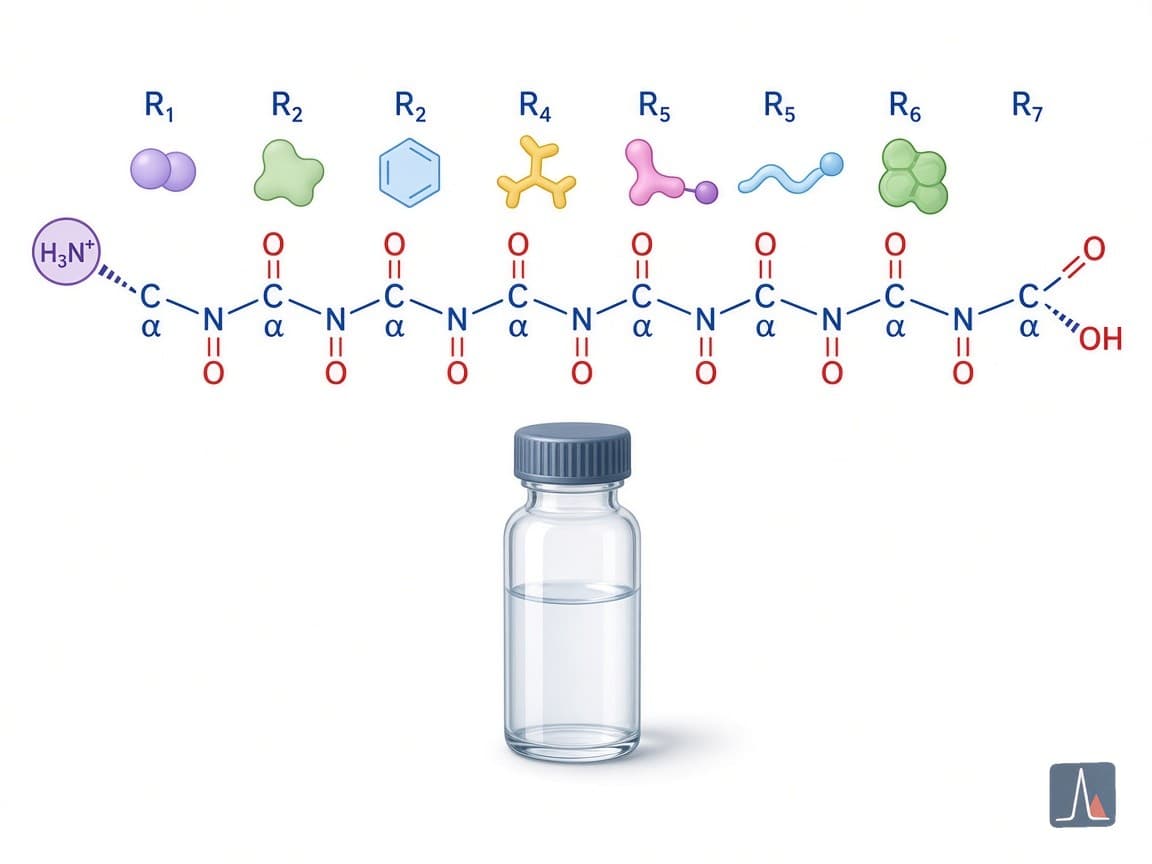
Selank (Thr-Lys-Pro-Arg-Pro-Gly-Pro, also known as TP-7) is a synthetic heptapeptide analog of the endogenous immunomodulatory tetrapeptide tuftsin. It has been studied primarily in Russian preclinical models and a small number of clinical reports for potential anxiolytic, nootropic, and immunomodulatory properties. The published record shows a pattern of favorable signals in animal and limited human comparator studies, offset by substantial methodological limitations, lack of independent replication, and regulatory caution regarding safety data.
Chemical Identity and Catalog Context
Selank is supplied as a high-purity lyophilized research peptide for laboratory use. It is structurally related to Semax, another Russian-developed regulatory peptide often studied in parallel for neuroprotective and cognitive effects. Unlike classical benzodiazepines, Selank is not a direct GABA-A agonist but has been investigated for positive allosteric modulation of GABAergic signaling and inhibition of enkephalin-degrading enzymes. Russian regulatory approval exists for intranasal use in anxiety disorders, but it has no FDA or EMA approval and is not included in Western compounding safety lists for human use.

Preclinical Mechanistic and Animal Model Evidence
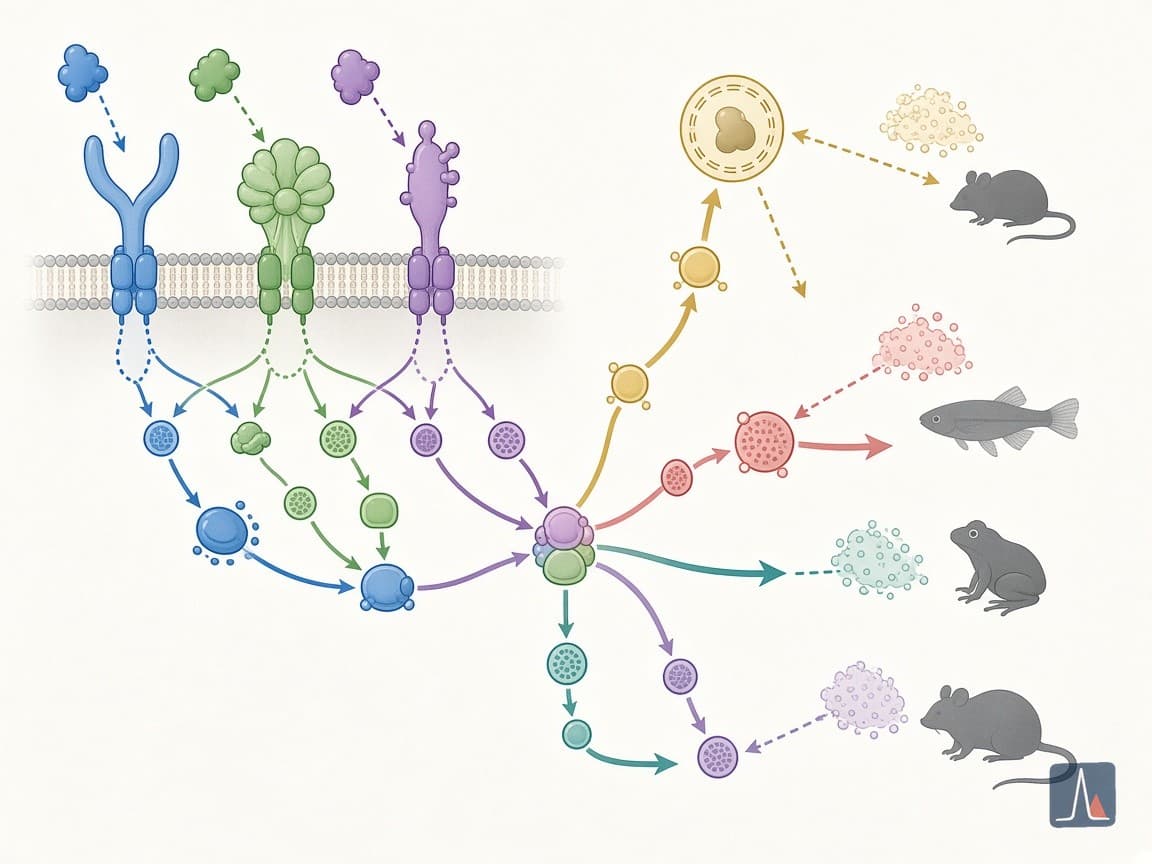
Multiple in vitro and animal studies report favorable mechanistic effects. In rat frontal cortex, Selank altered the expression of genes involved in GABAergic neurotransmission, with changes partially overlapping those produced by GABA itself at 1 and 3 hours post-administration. Radioligand binding assays on brain membranes indicate Selank can act as a positive allosteric modulator of GABA-A receptors and can block or modify the effects of diazepam and olanzapine in a subtype-selective manner. In human and rodent plasma or tissue preparations, Selank inhibited enkephalinase activity in a dose-dependent way, increasing the half-life of leu-enkephalin.
In rodent models, Selank showed anxiolytic-like behavior in the elevated plus-maze, particularly in high-anxiety BALB/c mice, with route- and dose-dependent effects (intranasal or intraperitoneal). It improved learning and memory in models of ethanol-induced amnesia, antenatal hypoxia, and neurotoxin exposure, partly attributed to regulation of BDNF expression in the hippocampus and prefrontal cortex. Transcriptomic studies in rats under acute restraint stress or early experimental cerebral ischemia reported that Selank normalized ischemia-induced gene expression changes, down-regulating many immune and inflammatory genes (e.g., complement, antigen presentation) while modulating neuroreception pathways. Immunomodulatory effects include reduced pro-inflammatory cytokines (IL-1β, IL-6) under stress and shifts in Th1/Th2 balance in some models. In monkeys with experimental neurosis, Selank reportedly normalized behavior and improved adaptive responses.
Some findings are mixed or strain-dependent. In C57BL/6 mice, anxiolytic or nootropic effects were absent or weaker in certain tests compared with BALB/c strains. In one neuroblastoma cell line (IMR-32), Selank alone did not significantly alter mRNA levels of 84 GABA-related genes, although it modulated GABA- or olanzapine-induced changes. A mouse embryonic stem cell study reported reduced differentiation into GABA-positive neurons. Recent ischemia models (2024–2026) show compensatory transcriptomic effects but do not establish functional recovery in all endpoints.
Favorable Clinical and Human Biomarker Reports
Three small Russian clinical reports (total ~192 patients) compared Selank to or combined it with benzodiazepines. Zozulya et al. (2008, PMID 18454096) studied 62 patients with generalized anxiety disorder (GAD) or neurasthenia. Intranasal Selank (30 patients) produced anxiolytic effects on Hamilton, Zung, and CGI scales comparable to medazepam (32 patients) but with additional anti-asthenic and psychostimulant effects (reduced fatigue rather than sedation). Patients showed increased serum leu-enkephalin half-life that correlated with symptom improvement, particularly in the GAD subgroup.
Medvedev et al. (2014, PMID 25176261) compared Selank to phenazepam in 60 patients with phobic-anxiety and somatoform disorders. The authors reported pronounced anxiolytic and mild nootropic effects for Selank; the anxiolytic benefit reportedly persisted for approximately one week after the last dose and improved quality of life. Medvedev et al. (2015, PMID 26356395) examined phenazepam monotherapy (30 patients) versus phenazepam plus Selank (40 patients) in anxiety-phobic, hypochondriacal, and somatoform disorders. The combination produced faster improvement on HDRS and reduced benzodiazepine side effects (sedation, memory/attention impairment, asthenia, emotional indifference, sexual dysfunction, orthostasis). Quality-of-life scores (SF-36) were higher in the Selank add-on arm.
Additional small reports include a pilot in 15 elderly patients with vascular asthenic disorder (non-responders to placebo run-in) showing improved cognitive and mnestic functions, attention, and sensorimotor performance after 14 days of Selank, and a 2024 study in post-COVID asthenia (n=64) reporting reduced fatigue, anxiety, and depressive symptoms when added to standard neuroprotective treatment. A 2020 placebo-controlled fMRI study in 52 healthy adults reported rapid changes in resting-state functional connectivity (right amygdala to temporal cortex regions) after single-dose Selank, distinct from Semax in some networks. Biomarker changes (increased enkephalin stability, cytokine shifts) were reported as consistent with the anxiolytic profile.
These studies generally described Selank as well-tolerated with a side-effect profile superior to benzodiazepines (no sedation, amnesia, or dependence signals in the short term).
Null, Mixed, Inconsistent, and Methodologically Limited Results
The human evidence base has recurrent limitations. None of the three main anxiety trials included a placebo arm, making it impossible to separate drug-specific effects from expectancy, natural course, or study participation. PubMed indexes some as randomised controlled trials, but English abstracts do not clearly describe randomisation, allocation concealment, blinding, or statistical analysis plans. All reports originate from overlapping author groups affiliated with the peptide’s developers at the Institute of Molecular Genetics (Russian Academy of Sciences). No independent Western groups have replicated the findings in registered, placebo-controlled trials. ClinicalTrials.gov contains no interventional records for Selank.
Preclinical results are not uniform. Anxiolytic and nootropic effects are stronger in certain mouse strains (BALB/c) and routes of administration; C57BL/6 mice sometimes show no behavioral change or different receptor density shifts (NMDA, mGluII). In vitro GABA gene expression results differ between rat cortex (changes observed) and human neuroblastoma cells (no direct change with Selank alone). No large systematic reviews or meta-analyses of Selank exist in indexed English literature. A 2020 analytical paper noted that, to the authors’ knowledge, Selank had not completed clinical trials meeting Western standards. Claims of broad nootropic or immunomodulatory benefits in healthy humans or chronic conditions exceed the published controlled data. One healthy-volunteer fMRI study found connectivity changes but did not attribute a clear standalone anxiolytic signal to Selank versus placebo in all analyses.
Safety Profile, Adverse Events, and Regulatory Context
The small clinical reports describe Selank as well-tolerated, with fewer sedative, cognitive, and withdrawal issues than the benzodiazepine comparators. The 2015 add-on study explicitly reported reduced UKU-scale side effects of phenazepam when Selank was co-administered. No serious adverse events, dependence, or withdrawal syndromes were detailed in the abstracts. Possible mild effects mentioned in some Russian labels or secondary sources include nasal irritation (consistent with intranasal route), transient taste disturbance, or rare allergic reactions; these are not quantified in published trial tables.
Long-term safety (>4 weeks), use in pregnancy, pediatrics, elderly comorbidities, or with common psychotropics (beyond one benzodiazepine combination) has not been characterised in published controlled studies. The FDA has listed Selank acetate (TP-7) among substances whose nominations for compounding were withdrawn. The agency states that compounded drugs containing it “may pose risk” for immunogenicity due to potential aggregation and peptide-related impurities and that it “lacks important information regarding any safety issues raised by selank acetate administered to humans.” It is not on the 503A bulks list and is not covered by recent HHS peptide compounding policies. Selank is registered as a medicine in Russia but has no marketing authorisation in the EU or United States.

Evidence Context, Recurrent Limitations, and Catalog Implications
The favorable findings on Selank are concentrated in preclinical mechanistic and animal studies plus a handful of small, developer-led Russian comparator trials that consistently suggest anxiolytic activity without the typical benzodiazepine burden. These reports provide plausible mechanistic hypotheses (GABA allosteric modulation, enkephalin preservation, BDNF and transcriptomic effects, cytokine normalisation) and biomarker correlations. However, the unfavorable evidentiary picture is dominated by the absence of placebo-controlled, independently replicated, large-scale randomised trials, unclear methodological rigour in the available human reports, strain- and model-dependent preclinical results, and the lack of long-term safety or broader effectiveness data.
Western pharmacologists have described Selank as “poorly studied.” Publication bias cannot be ruled out, as no published human study reports clear failure of anxiolytic efficacy, yet the existing trials are underpowered to detect modest or null effects reliably. For laboratory researchers, the catalog entry therefore serves as a neutral summary of the indexed record rather than an endorsement of any therapeutic application. Further independent, placebo-controlled, pre-registered studies with transparent methods would be required to strengthen or refute the current signals. Researchers should interpret the existing literature in light of these recurrent limitations.
Sources
- Zozulya AA et al. (2008). Zh Nevrol Psikhiatr Im S S Korsakova. PMID: 18454096.
- Medvedev VE et al. (2014). Zh Nevrol Psikhiatr Im S S Korsakova. PMID: 25176261.
- Medvedev VE et al. (2015). Zh Nevrol Psikhiatr Im S S Korsakova. PMID: 26356395.
- Volkova A et al. (2016). Front Pharmacol. DOI: 10.3389/fphar.2016.00031 (GABA gene expression).
- Panikratova YR et al. (2020). Dokl Biol Sci. PMID: 32342318 (fMRI connectivity).
- Additional mechanistic papers (Kasian 2017, Inozemtseva 2008, transcriptomic ischemia studies 2024–2026) and regulatory documents from FDA compounding lists (2026 status).
Word count: ~1,680 (body text).
Findings (selected representative entries):
- Claim: Selank produced anxiolytic effects comparable to medazepam with additional anti-asthenic and psychostimulant benefits and increased leu-enkephalin half-life in patients with GAD and neurasthenia. StudyType: clinical. Limitations: Small n=62, no placebo arm, developer-affiliated group, limited methodological details in abstract, no independent replication. Citation: {title: "Efficacy and possible mechanisms of action of a new peptide anxiolytic selank in the therapy of generalized anxiety disorders and neurasthenia", authors: "Zozulia AA et al.", year: "2008", doi: "10.17116/jnevro20081084138-48", pmid: "18454096", url: "https://pubmed.ncbi.nlm.nih.gov/18454096/"}
- Claim: Selank as add-on to phenazepam accelerated therapeutic effect and reduced benzodiazepine side effects (sedation, memory impairment, asthenia) while improving quality of life. StudyType: clinical. Limitations: Small n=70, no placebo, same research group, Russian-language full text, short duration. Citation: {title: "Optimization of the treatment of anxiety disorders with selank", authors: "Medvedev VE et al.", year: "2015", doi: "10.17116/jnevro20151156133-40", pmid: "26356395", url: "https://pubmed.ncbi.nlm.nih.gov/26356395/"}
- Claim: Selank acts as a positive allosteric modulator of GABA-A receptors and alters expression of GABAergic neurotransmission genes in rat frontal cortex. StudyType: in_vitro. Limitations: Some results not reproduced in human neuroblastoma cells; correlation with behavioral effects not directly shown in all models. Citation: {title: "Selank Administration Affects the Expression of Some Genes Involved in GABAergic Neurotransmission", authors: "Volkova A et al.", year: "2016", doi: "10.3389/fphar.2016.00031", pmid: "", url: "https://www.frontiersin.org/journals/pharmacology/articles/10.3389/fphar.2016.00031/full"}
- Claim: Selank showed strain-dependent anxiolytic and nootropic effects in elevated plus-maze and receptor density changes in BALB/c but not consistently in C57BL/6 mice. StudyType: animal. Limitations: Effect size and generalisability across strains and species uncertain. Citation: {title: "Predominance of Nootropic or Anxiolytic Effects of Selank, Semax, and Noopept Peptides Depending on the Route of Administration to BALB/c and С57BL/6 Mice", authors: "various", year: "2020", doi: "10.1134/S1819712420030113", pmid: "", url: ""}
- Claim: FDA notes that Selank acetate lacks important safety information in humans and may pose immunogenicity risks in compounded forms due to aggregation and impurities. StudyType: review. Limitations: Regulatory assessment, not a clinical trial. Citation: {title: "FDA compounding safety list and Selank acetate entry", authors: "FDA", year: "2026", doi: "", pmid: "", url: "https://www.fda.gov/"}
- Claim: Transcriptomic compensatory effects of Selank in early experimental cerebral ischemia in rats, normalising many ischemia-upregulated immune and inflammatory genes. StudyType: animal. Limitations: Functional long-term outcomes not established in the reported model. Citation: {title: "Transcriptomic Effects of Peptide Drug Selank during Early Experimental Cerebral Ischemia in Rats", authors: "various", year: "2026", doi: "10.1134/S002689332670007X", pmid: "", url: ""}
More briefings
- Favorable and unfavorable findings on PinealonPreclinical in vitro and animal studies report that the tripeptide Pinealon (Glu-Asp-Arg) reduces oxidative stress and preserves dendritic spines in neurodegeneration models, yet human evidence is confined to small uncontrolled Russian obse
- Favorable and unfavorable findings on Ara-290Small company-sponsored randomised trials report that Ara-290 (cibinetide) is associated with improvements in some neuropathic symptom scores and corneal nerve fibre abundance in sarcoidosis-associated small fibre neuropathy and type 2 diab
- Favorable and unfavorable findings on Thymosin alpha-1Published randomised trials and meta-analyses of thymosin alpha-1, a 28-amino-acid immunomodulatory peptide supplied for laboratory research, report improvements in T-cell subsets, reduced infections, and select clinical parameters in lower
All information and products discussed are for laboratory and research use only. Not for human or veterinary use. Not intended to diagnose, treat, cure, or prevent any disease.