
26 November 2026
DSIP: chemical identity and published assays
Download PDF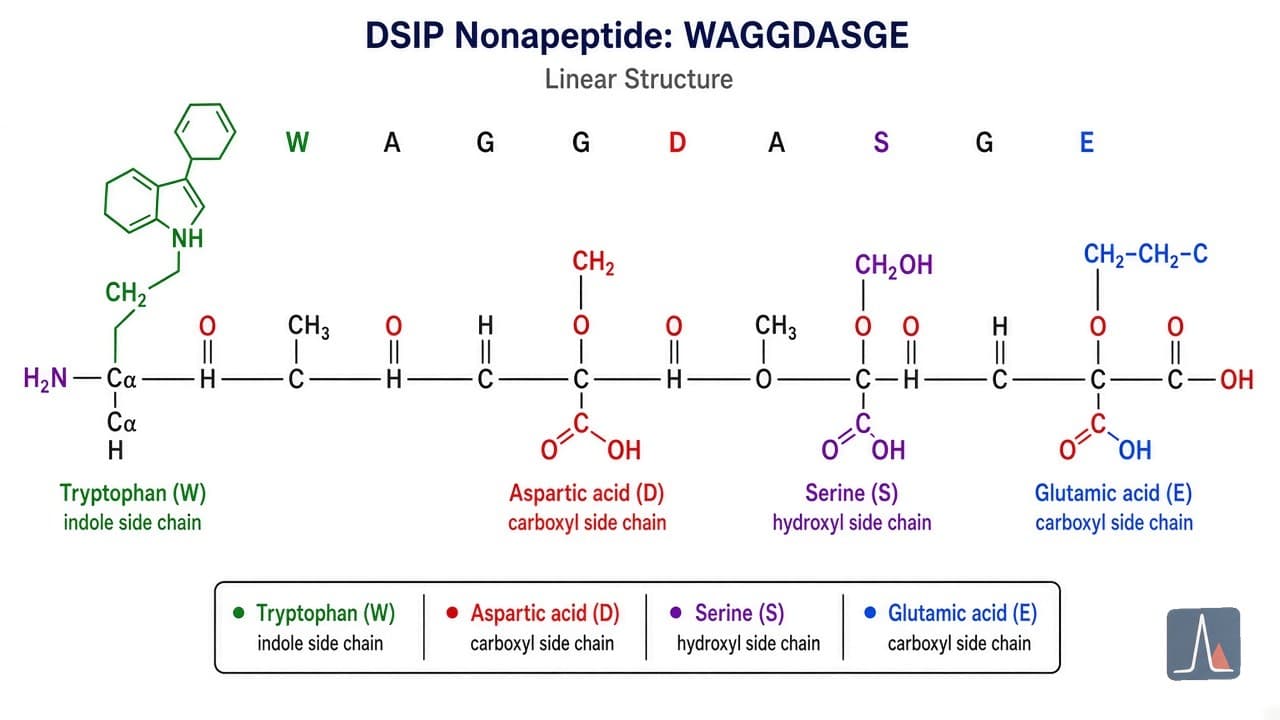
DSIP (Delta Sleep-Inducing Peptide, Emideltide) is a synthetic nonapeptide with sequence WAGGDASGE (C₃₅H₄₈N₁₀O₁₅, 848.8 Da) supplied for laboratory research only at /compounds/dsip. This briefing details its chemical identity and the princi
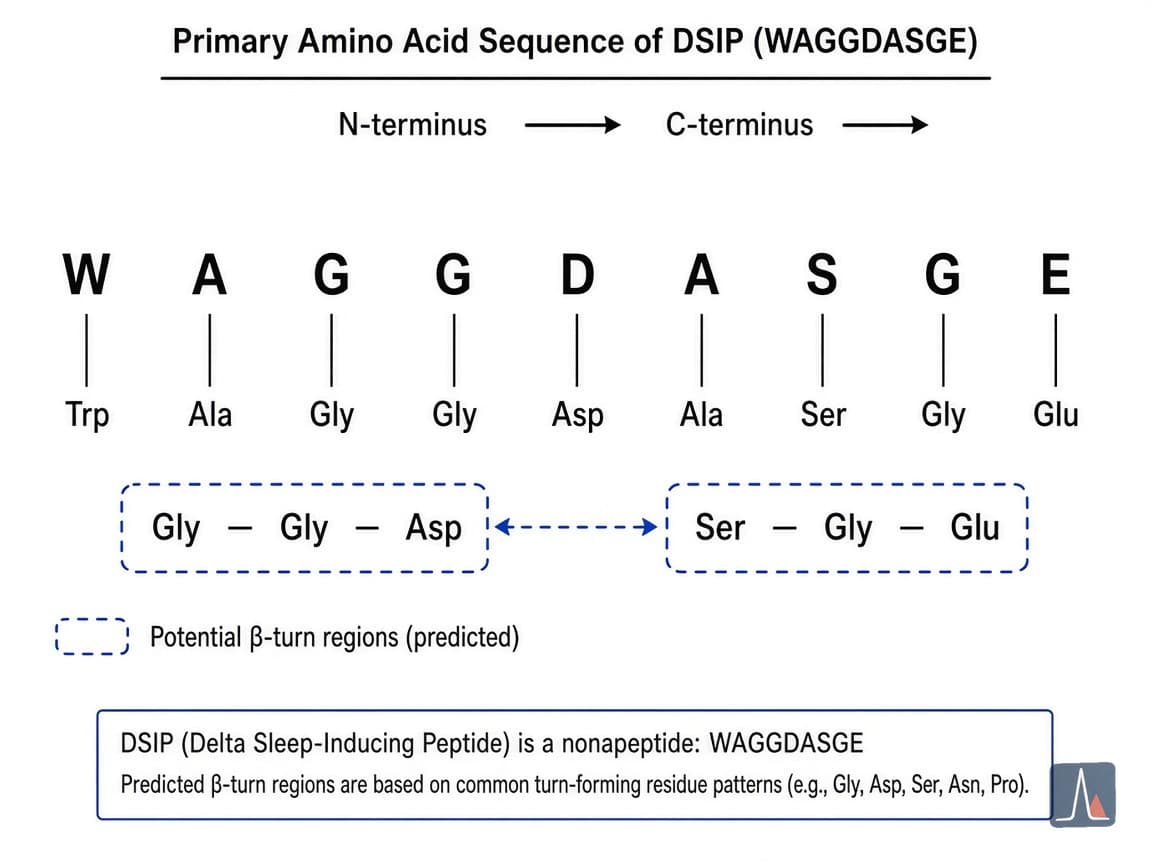
DSIP (Delta Sleep-Inducing Peptide or Emideltide) is a linear nonapeptide with the primary sequence H-Trp-Ala-Gly-Gly-Asp-Ala-Ser-Gly-Glu-OH (one-letter code WAGGDASGE). Its molecular formula is C₃₅H₄₈N₁₀O₁₅, with an average molecular weight of 848.8 Da (monoisotopic mass approximately 848.33 Da), CAS number 62568-57-4, and PubChem CID 68816. DSIP is supplied exclusively as a lyophilized research material for laboratory use. Materials on this site are for laboratory research only and are not medicines. Reporting published studies is not guidance to use research materials in any specific way.
The compound was originally isolated in the 1970s from rabbit cerebral venous blood dialysate during thalamic electrical stimulation that induced sleep-like EEG patterns. Subsequent work established its amino acid composition, sequence, and chemical synthesis. DSIP is amphiphilic yet highly hydrophilic (XLogP ≈ −7.1), carries a net negative charge of approximately −2 at physiological pH due to the Asp⁵, Glu⁹, and C-terminal carboxyl groups, and possesses a tryptophan residue that enables UV detection at 280 nm. In vitro it exhibits a short half-life (≈15 min) due to rapid cleavage by membrane-associated aminopeptidases, primarily removing the N-terminal Trp. It may form complexes with carrier proteins in some experimental contexts. No definitive gene, precursor, or high-affinity receptor has been conclusively identified, leaving its physiological status unresolved in the literature. 1 2
Primary Sequence and Physicochemical Properties
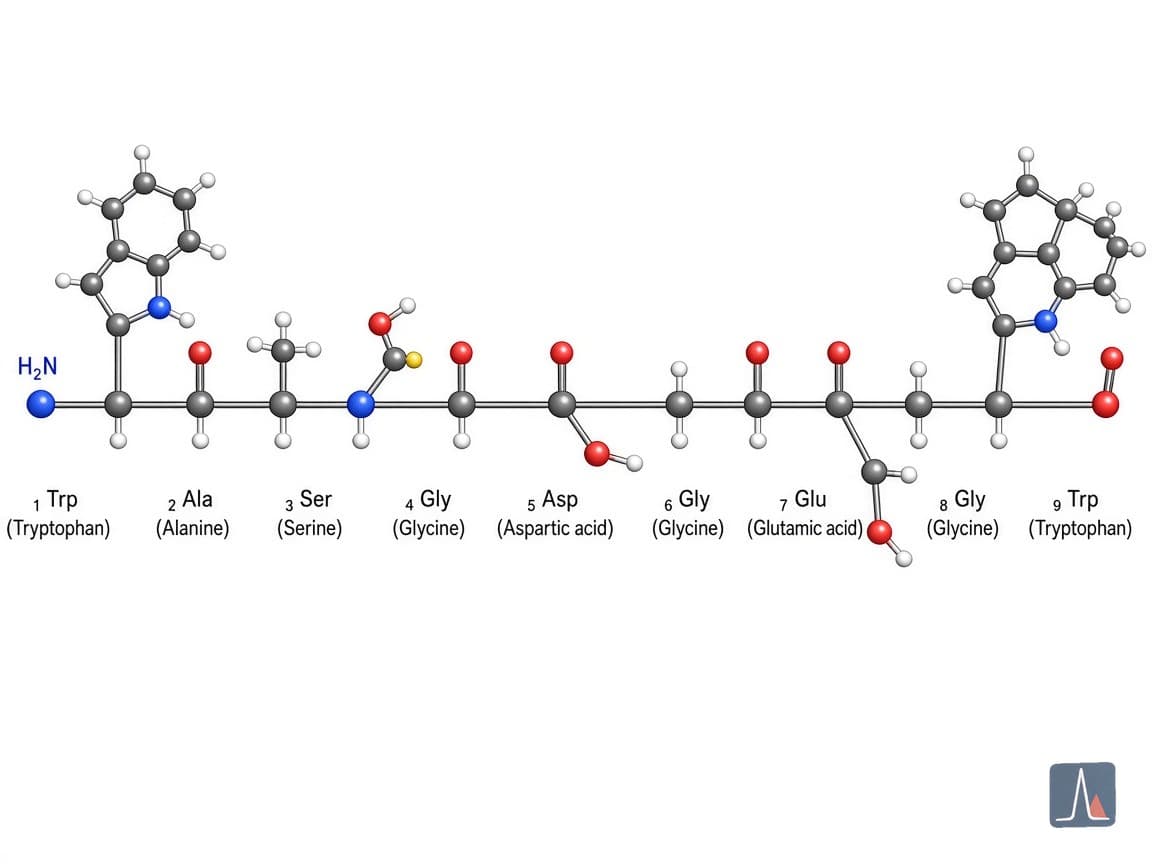
The sequence is strictly linear with free N- and C-termini and all L-amino acids in the biologically characterized preparations. The residues are Trp¹, Ala², Gly³, Gly⁴, Asp⁵, Ala⁶, Ser⁷, Gly⁸, and Glu⁹. The presence of two acidic residues and three glycines confers conformational flexibility, while the indole side chain of Trp contributes both hydrophobicity and fluorescence properties useful in spectroscopic assays. The peptide is readily soluble in water or dilute acetic acid vehicles commonly used in laboratory peptide work. Early studies distinguished the biologically active α-Asp⁵ isomer from the inactive β-Asp isomer formed during synthesis or degradation. Phosphorylated analogs (e.g., Ser⁷-phospho-DSIP) have also been synthesized and characterized in some papers. 3
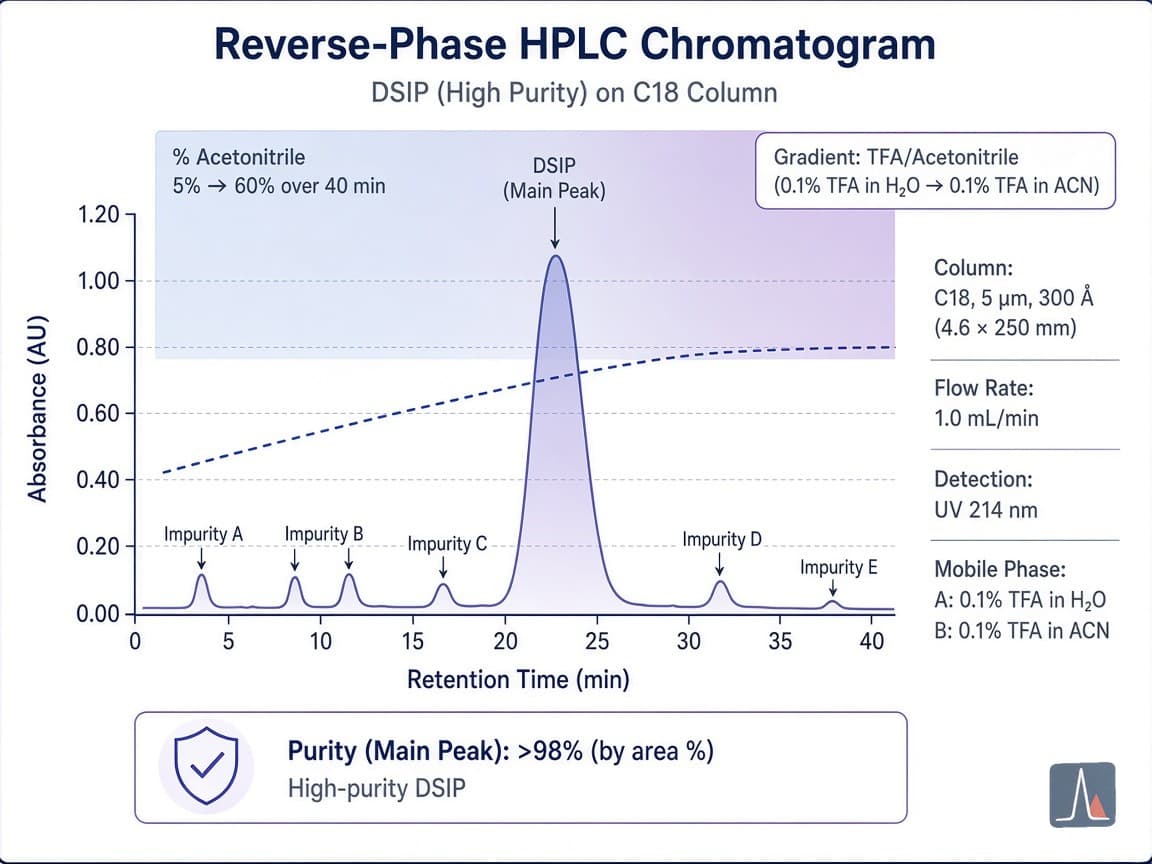
Physicochemical characterization typically includes confirmation of exact mass, chromatographic retention behavior consistent with high hydrophilicity (early elution on C18 RP-HPLC), and spectroscopic signatures of the Trp residue (UV absorbance, intrinsic fluorescence). These properties guide solvent selection and storage conditions (−20 °C for lyophilized powder) in research settings.
Chromatographic Assays for Purity, Impurities, and Stability
Reverse-phase high-performance liquid chromatography (RP-HPLC) is the cornerstone assay for DSIP purity and impurity profiling. Typical conditions use C18 columns with acidic mobile phases (0.1% TFA in water/acetonitrile gradients), UV detection at 214/220 nm (peptide bond) or 280 nm (Trp-selective). Published vendor COAs and analytical papers routinely report purities of 98–99.8% for research-grade material, with the main peak eluting relatively early owing to the peptide’s hydrophilicity. Methods have been developed to resolve the α- and β-aspartyl isomers at position 5, a critical distinction because only the α-form showed activity in early EEG models. HPLC is also used for stability studies, monitoring formation of des-Trp metabolite or oxidation products over time. One 1983 method combined RP-HPLC with on-line UV/fluorescence monitoring, peak collection, and subsequent amino-acid analysis for definitive identification of synthetic DSIP and analogs (Tyr¹-DSIP, Phe⁵-DSIP). Stability-indicating gradients have been proposed to separate DSIP from synthesis-related impurities and degradation products. 4
Mass Spectrometric Assays and Molecular Confirmation
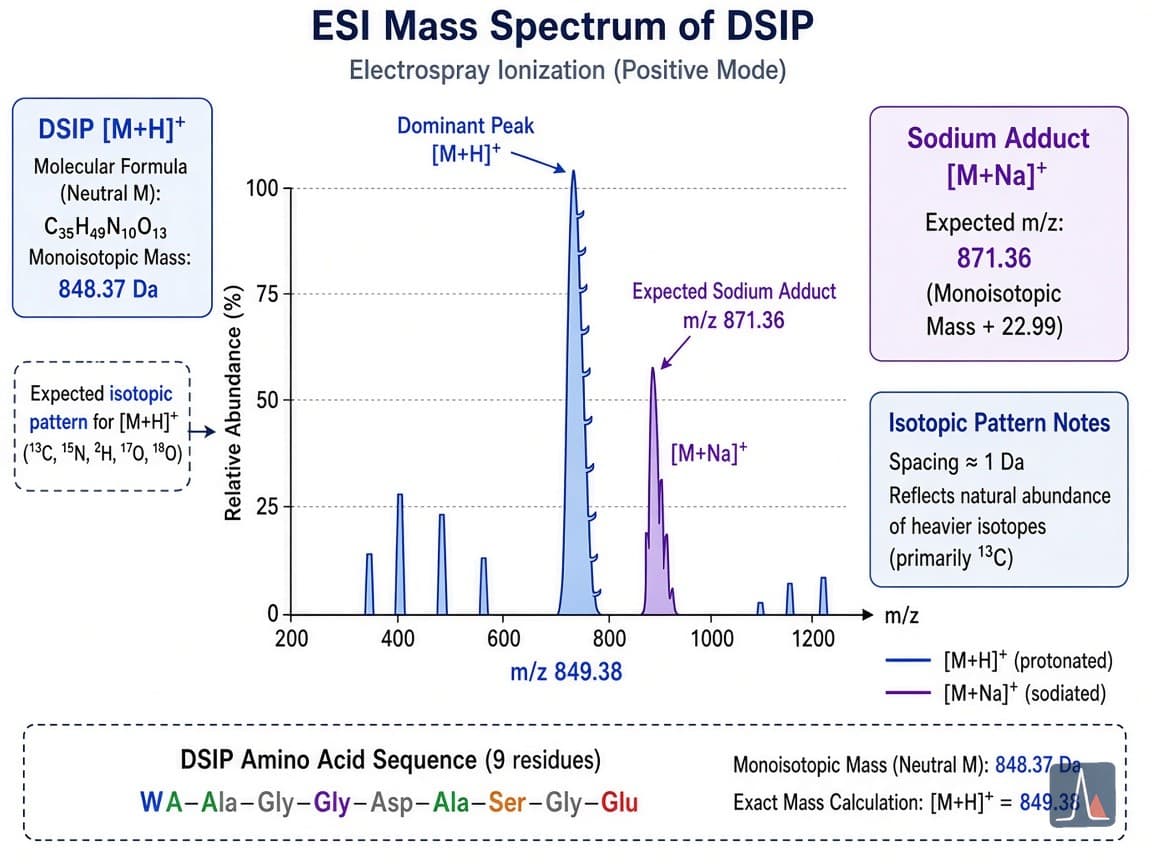
Electrospray ionization mass spectrometry (ESI-MS) or LC-MS is universally employed for identity confirmation. The expected [M+H]⁺ ion appears at m/z ≈ 849.34, with high-resolution instruments verifying the exact mass within a few ppm of the theoretical monoisotopic value. MS/MS fragmentation produces characteristic b- and y-ions consistent with the WAGGDASGE sequence. Modern research COAs almost invariably pair RP-HPLC purity data with LC-MS identity confirmation. High-resolution MS has also been used in synthetic papers to characterize intermediates and the final nonapeptide. These orthogonal methods (chromatographic retention + exact mass + fragmentation) provide robust structural verification for laboratory-grade material. 5
Spectroscopic, Biophysical, and Conformational Characterization
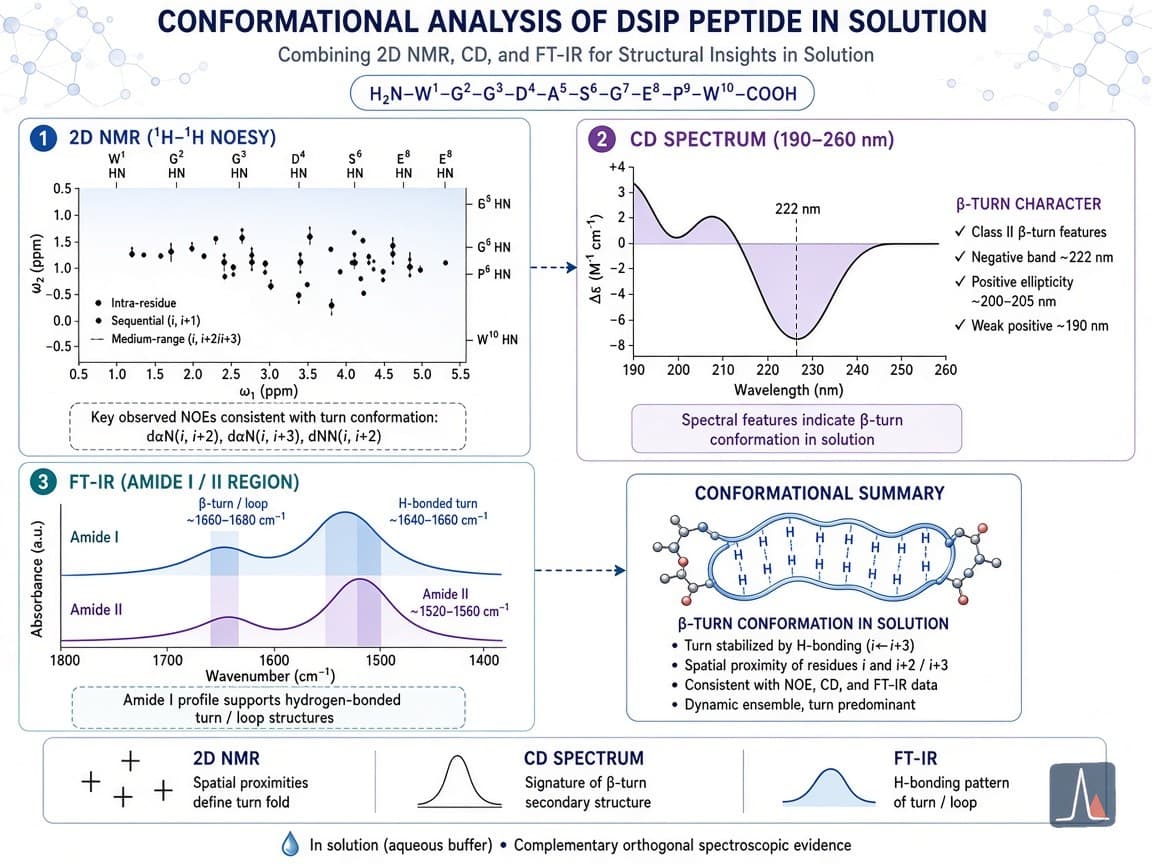
Nuclear magnetic resonance (NMR) spectroscopy (¹H, ¹³C, 2D techniques) has been applied to synthetic DSIP and intermediates for full structural assignment. A detailed 1994 solution conformational study used one- and two-dimensional NMR, circular dichroism (CD), Fourier-transform infrared (FT-IR), and fluorescence spectroscopies together with molecular modeling. In aqueous buffer, DSIP exists in a dynamic equilibrium between unordered and folded conformations, with residues 2–5 and 6–9 favoring type I β-turns (≈40% population by FT-IR). Addition of trifluoroethanol (TFE) induced a more ordered, helix-like structure. These data explain the peptide’s unusual membrane permeability despite its charged, hydrophilic character. Fluorescence of the Trp residue provided additional environmental information. Such biophysical assays are essential for understanding solution behavior relevant to experimental design. 6 7
Immunoassays, Bioanalytical Methods, and Historical Functional Assays
Radioimmunoassays (RIA) using ¹²⁵I-labeled DSIP derivatives or analogs (e.g., Tyr⁰-DSIP or p-hydroxyphenylpropionyl-DSIP) were developed with sensitivities down to ≈0.1 ng/mL. These assays, often combined with HPLC or gel filtration, detected DSIP-like immunoreactivity in plasma, CSF, urine, brain regions, pituitary, pineal, and human breast milk. ELISA methods have also been reported. Extraction conditions (acid vs neutral, protease inhibitors) critically affect recovery of free versus bound or larger-molecular-weight immunoreactive forms. Specificity remains a recurrent limitation because antisera may cross-react with fragments or unrelated peptides.
The original functional characterization relied on intraventricular infusion into rabbits followed by quantitative EEG (Fourier analysis) demonstrating increased delta (slow-wave) and spindle activity. Synthetic material matching the sequenced nonapeptide reproduced the effect, while fragments, analogs, or the β-Asp isomer were inactive. These bioassays helped confirm chemical identity during early isolation and synthesis campaigns but are less commonly used today for routine characterization. LC-MS/MS methods with multiple-reaction monitoring now enable sensitive quantification (pg/mL range) in biological matrices without immuno-reagents. 8 9
Evidence Context, Recurrent Limitations, and Catalog Implications
The foundational chemical identity derives from 1977–1978 papers that combined extraction, amino-acid analysis, sequencing, synthesis, and rabbit EEG confirmation. Subsequent analytical papers refined HPLC separation of isomers, developed sensitive immunoassays, and applied modern spectroscopic tools to solution conformation. Vendor COAs consistently demonstrate high purity by RP-HPLC and exact mass match by LC-MS, aligning with published methods. Unfavorable or null findings include inconsistent EEG or sleep effects across species/labs, rapid enzymatic degradation, and the persistent lack of an identified gene or receptor, raising questions about whether all measured immunoreactivity represents the exact nonapeptide. Human studies have been limited and produced mixed results; no human clinical data establish efficacy or safety for any indication.
Recurrent limitations in the literature include variable immunoassay specificity, dependence on extraction method, short peptide stability in solution, and the historical nature of many functional studies. Orthogonal analytical confirmation (HPLC + MS) is therefore essential for reproducible laboratory research. In the Rierink catalog, DSIP is provided with the expectation that researchers will verify identity and purity using the published chromatographic, mass spectrometric, and spectroscopic methods described above. Proper laboratory handling (low temperature, appropriate vehicles, fresh solutions) helps mitigate stability issues.
Sources
- PubChem: Delta Sleep-Inducing Peptide, CID 68816 (molecular formula, sequence, InChI, SMILES).
- Schoenenberger GA et al. (1978). Pflugers Arch. PMID 568769 (amino-acid analysis, sequence, synthesis, EEG activity).
- Gray RA et al. (1994). Biochemistry. PMID 8312250, DOI 10.1021/bi00172a006 (NMR, CD, FT-IR, fluorescence conformational study).
- Various analytical papers (1982–1983) on RP-HPLC separation of DSIP and isomers.
- Reviews and RIA papers (1980s) on immunoreactive DSIP in biological fluids.
- Modern vendor COAs illustrating routine HPLC-UV-MS characterization (representative data 2024–2026).
All information is derived from publicly available scientific literature. Researchers should consult primary sources and perform their own verification for specific experimental needs.
More briefings
- KPV: chemical identity and published assaysThis briefing identifies KPV and summarizes published assays that characterize it.
- Epithalon: chemical identity and published assaysEpithalon (Ala-Glu-Asp-Gly or AEDG, C₁₄H₂₂N₄O₉, 390.35 Da) is a synthetic tetrapeptide supplied as [Epithalon](/compounds/epithalon) for laboratory research only. This briefing details its defined chemical structure together with the princi
- Semax: chemical identity and published assaysSemax (Met-Glu-His-Phe-Pro-Gly-Pro, C₃₇H₅₁N₉O₁₀S, 813.9 Da) is a synthetic heptapeptide analog of the ACTH(4–7) fragment extended by a stabilizing Pro-Gly-Pro C-terminal motif. Supplied for laboratory research only at [Semax](/compounds/sem
All information and products discussed are for laboratory and research use only. Not for human or veterinary use. Not intended to diagnose, treat, cure, or prevent any disease.