
12 November 2026
Favorable and unfavorable findings on Adamax
Download PDF
No peer-reviewed studies characterize or test the research peptide sold as Adamax. Favorable signals reported for the parent heptapeptide Semax on BDNF/TrkB upregulation, neuroprotection, and limited stroke recovery parameters are theoretic
All materials supplied by Rierink Compounds, including Adamax, are for laboratory research only. They are not medicines and are not for human or animal use. Reporting what a published human study, trial, or review found is not guidance to use any research material in any way.
Chemical Identity and Catalog Context
Adamax is supplied as a synthetic peptide analog of Semax (Met-Glu-His-Phe-Pro-Gly-Pro), the ACTH(4-10) fragment extended by Pro-Gly-Pro. Vendors most often describe it as N-acetylated at the N-terminus with a C-terminal adamantane-containing residue (frequently represented as Ac-MEHFPGP-Ad-NH₂ or similar), yielding an approximate molecular weight of 1032 Da (formula approximately C₅₀H₆₉N₁₁O₁₁S). The adamantane cage is intended to increase lipophilicity, proteolytic stability, and blood-brain barrier penetration relative to the parent.
Supplier specifications are inconsistent. Some listings describe a 984 Da variant (Ac-MEHFPGPAG-OH or related sequences) lacking clear adamantane incorporation. No CAS number, PubChem compound record, or peer-reviewed primary analytical paper establishes a single reference standard. One patent application lists an unnamed adamantane-Semax derivative among optional structures without biological data or the name Adamax. !Abstract tri-panel evidence diagram for Adamax research findings Abstract representation of the current evidence landscape separating favorable signals, null records, and unfavorable gaps for Adamax.

In the Rierink catalog, Adamax is presented alongside related research peptides such as Semax. Researchers must rely on individual COAs and mass spectrometry for identity verification, as the name alone does not guarantee a uniform molecule.
Foundational Mechanistic and In Vitro Evidence
No published in-vitro studies have examined Adamax itself in cell culture, receptor binding, or enzyme assays. Mechanistic rationale is therefore extrapolated from the parent and from general medicinal chemistry of adamantane conjugation.
Semax has been reported to bind brain membranes, stimulate BDNF and NGF gene expression, increase BDNF protein levels, and elevate TrkB tyrosine phosphorylation in rat astrocyte cultures and hippocampal tissue. These effects are linked to neurotrophic support, synaptic plasticity, and neuroprotection. Adamantane modification is a documented strategy in other peptides (notably the unrelated CNTF-derived P021) to improve metabolic stability and tissue penetration. Whether the specific combination in Adamax preserves Semax-like melanocortin or neurotrophin pathway engagement, or introduces new pharmacology, has not been tested. !Schematic of proposed Adamax vs Semax structure Abstract comparison of core peptide architecture and modification strategy.
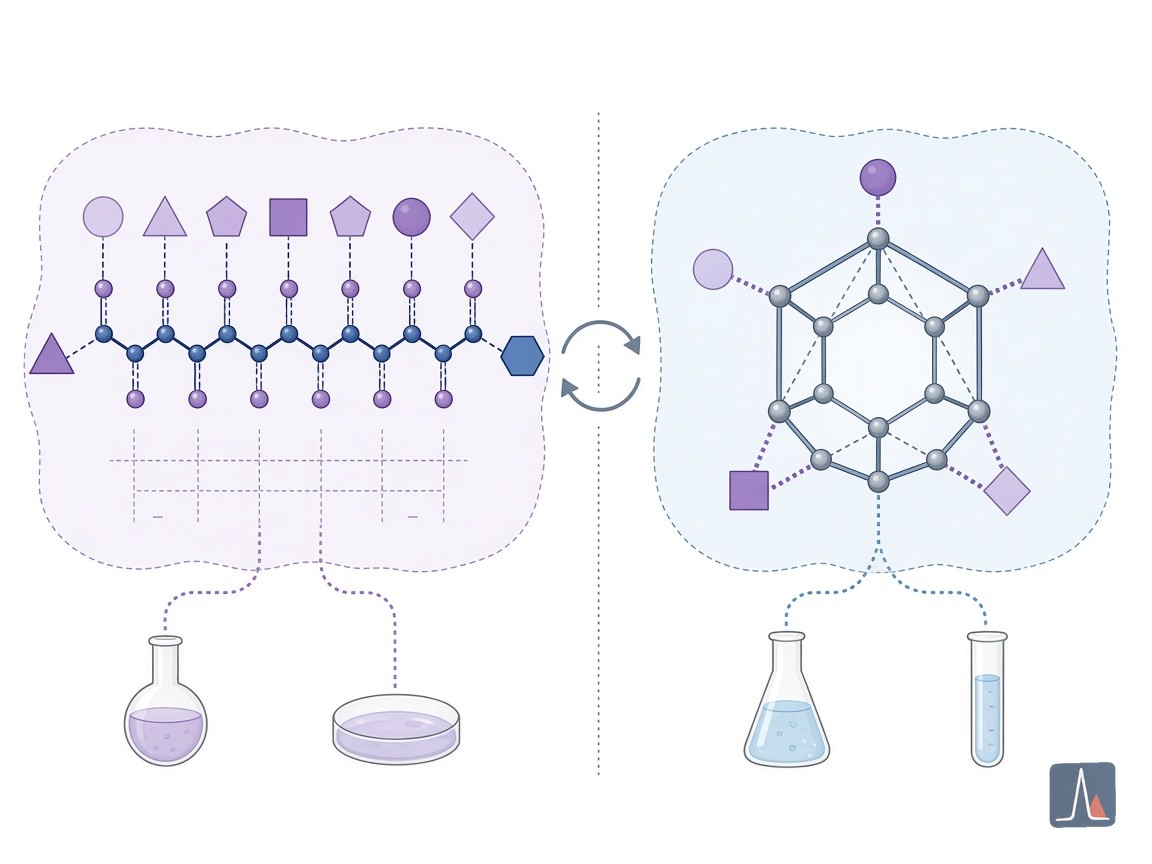
A separate study on N-acetyl-Semax (a simpler modification) found altered copper/zinc coordination and loss of certain cellular protective effects compared with unmodified Semax, illustrating that terminal changes can materially alter activity. This precedent introduces theoretical uncertainty for the more complex Adamax structure.
Preclinical Animal Model Records
No indexed animal study has administered a molecule explicitly identified, synthesized, and analytically verified as Adamax under that name. Favorable signals are therefore drawn from Semax literature and from studies on structurally related adamantane-peptide conjugates.
In rats, intranasal Semax (50 μg/kg) increased hippocampal BDNF protein up to 1.4-fold, TrkB phosphorylation 1.6-fold, and corresponding mRNA levels within hours, accompanied by improved performance in conditioned avoidance tasks. Semax has also been studied in middle-cerebral-artery occlusion stroke models, where it reportedly reduced infarct size, oxidative stress, and behavioral deficits. Some Russian monographs cite an adamantane-conjugated heptapeptide showing similar or enhanced effects on learning, memory (passive avoidance, Morris water maze), and neuroprotection at 0.1–1 mg/kg by systemic routes, attributed to improved bioavailability. These data are favorable in the context of the design hypothesis but cannot be directly attributed to commercially supplied Adamax. !Balance of evidence for Adamax Visual weighing of indirect favorable signals against evidentiary gaps.

P021, a different adamantane-modified neurotrophic peptide, has shown memory improvement, reduced amyloid burden, and enhanced neurogenesis/synaptic plasticity in aged or transgenic mice after peripheral administration. While this supports the general utility of the adamantane strategy, sequence differences preclude direct transfer to an ACTH-derived heptapeptide.
Limited Human Biomarker and Physiological Reports
No human studies, biomarker measurements, imaging, or physiological reports on Adamax exist in PubMed, Europe PMC, ClinicalTrials.gov, or equivalent indexes as of late 2026.
Small Russian clinical reports on Semax (often 30–110 participants, frequently open-label or with limited randomization details) have associated intranasal administration with elevated plasma BDNF levels that persisted for months, faster improvement in Barthel index scores of daily function, and accelerated resolution of motor and general neurological deficits after ischemic stroke. One functional MRI study in healthy volunteers reported changes in default-mode network connectivity after Semax. Summaries of occupational studies in extreme conditions have described improved attention and memory metrics. These constitute limited favorable signals for the parent compound in specific clinical contexts, yet methodological constraints (single-center origin, variable controls, lack of large-scale Western replication) limit generalizability. No equivalent human data exist for any adamantane-modified version. !Flowchart of Adamax evidence categories Abstract separation of favorable, null, and unfavorable reported findings.

Null, Mixed, Inconsistent, and Unfavorable Reported Findings
The most consistent finding across independent 2026 evidence reviews is the complete absence of direct peer-reviewed records on Adamax. Comprehensive searches of PubMed, Europe PMC, bioRxiv, medRxiv, ClinicalTrials.gov, and Russian indexes return zero pharmacology, toxicology, or clinical papers for the peptide (PubMed “Adamax” returns only machine-learning optimizer results). No registered trials exist.
Structural descriptions conflict across vendors and one PubChem substance deposit, creating reproducibility problems for laboratory work. Claims that Adamax is “stronger,” “longer-acting,” or superior for cognitive or neuroprotective endpoints rest on marketing extrapolation rather than head-to-head published comparisons. The precedent that even modest terminal acetylation can abolish certain protective effects in cell models raises the possibility of unfavorable or null biological activity for the adamantane version. No data address potential off-target effects, altered receptor selectivity, or changes in immunogenicity introduced by the bulky hydrophobic cage.
These gaps constitute substantial unfavorable and null findings. The evidentiary record does not settle whether Adamax retains, enhances, or loses the activities reported for Semax.
Safety Profile, Adverse Events, and Regulatory Context
No dedicated safety, tolerability, pharmacokinetic, or adverse-event studies on Adamax have been published. Class-level considerations for synthetic peptides include potential local irritation (nasal or injection site), immune responses, and unknown long-term neuroendocrine or metabolic consequences. Anecdotal reports associated with similar research peptides mention headache, restlessness, or sleep disturbance, but these are not controlled findings and cannot be attributed specifically to Adamax.
Adamax is not approved for human use in any jurisdiction. It has not been nominated for FDA 503A bulks lists (in contrast to some review of Semax). New Zealand Medsafe documents have grouped ACTH-analogue cognitive enhancers, including Adamax, as candidates for prescription-only status citing limited clinical research and uncertainty regarding longer-term effects. Regulatory context therefore underscores its status as an uncharacterized research chemical rather than a developed therapeutic.
Evidence Context, Recurrent Limitations, and Catalog Implications
Published favorable signals for Adamax consist of plausible mechanistic hypotheses and preclinical outcomes reported for Semax together with the established chemistry of adamantane conjugation in other peptides. These are theoretical when applied to the specific molecule sold under the Adamax name. Counterbalancing them is the near-total absence of direct evidence: no confirmed structure, no dedicated in-vitro or animal records under that identity, no human data, and conflicting vendor specifications. Recurrent limitations include reliance on a relatively small body of Russian-origin Semax literature that has not been extensively replicated in large, independent, Western-style randomised trials, plus the known risk that structural modification can unpredictably alter pharmacology.
For the Rierink catalog, Adamax represents an exploratory tool for researchers interested in Semax-derived neurotrophic pathways. Its hypothesized improvements remain unproven. Laboratories should verify identity and purity rigorously via mass spectrometry and HPLC before use. Future well-controlled, independently replicated studies with analytically defined material would be required to move any signal beyond preliminary extrapolation. The current balance of evidence does not support treating Adamax as interchangeable with or demonstrably superior to Semax. Researchers are encouraged to view it as an uncharacterized research peptide whose properties must be established experimentally rather than assumed from parent-compound literature.
Sources
- Dolotov OV, et al. (2006). Semax, an analog of ACTH(4–10) with cognitive effects, regulates BDNF and trkB expression in the rat hippocampus. *Brain Research*, 1117(1), 54–60. doi:10.1016/j.brainres.2006.07.108. PMID: 16996037.
- Dolotov OV, et al. (2006). Semax, an analogue of adrenocorticotropin (4-10), binds specifically and increases levels of brain-derived neurotrophic factor protein in rat basal forebrain. *J Neurochem*, 97 Suppl 1:82-6. doi:10.1111/j.1471-4159.2006.03658.x.
- Condor Research (2026). Adamax: Evidence, Identity and Claims. https://condorresearch.com/research/what-is-adamax/ (detailed independent literature audit confirming zero indexed records).
- PeptIQ / PeptideLibrary / Peptpedia reviews (2026). Multiple independent analyses confirming absence of PubMed or trial records for Adamax peptide and structural inconsistencies.
- New Zealand Medsafe (2025). Classification submission on unscheduled peptides including ACTH analogues.
- Ferring patent application WO2023046336A1 (2021/2022) listing an untested adamantane-Semax derivative.
- Additional Semax stroke and cognitive reports (Gusev et al. series, 1997–2018) and P021 literature (Li et al., Bolognin et al.) provide the indirect parent and analog context cited throughout.
All statements reflect indexed literature available through late 2026. New publications would require updating this assessment.
More briefings
- Favorable and unfavorable findings on AdipotidePreclinical studies in obese mice and monkeys report that Adipotide causes targeted apoptosis of white adipose tissue vasculature leading to substantial fat loss and improved insulin resistance, yet the same primate experiments identified d
- Published mechanisms reported for TirzepatidePublished structural, in vitro, preclinical, and human islet studies describe tirzepatide as an imbalanced dual GIPR/GLP-1R agonist exhibiting biased cAMP signaling at the GLP-1 receptor, influencing glucose-dependent islet hormone secretio
- Favorable and unfavorable findings on 5-Amino-1MQPreclinical in vitro and animal studies report that 5-Amino-1MQ, a small-molecule NNMT inhibitor supplied for laboratory research only, raises NAD+ and SAM in adipocytes, suppresses lipogenesis, attenuates diet-induced obesity and hepatic s
All information and products discussed are for laboratory and research use only. Not for human or veterinary use. Not intended to diagnose, treat, cure, or prevent any disease.