
12 listopada 2026
Published mechanisms reported for Tirzepatide
Pobierz PDF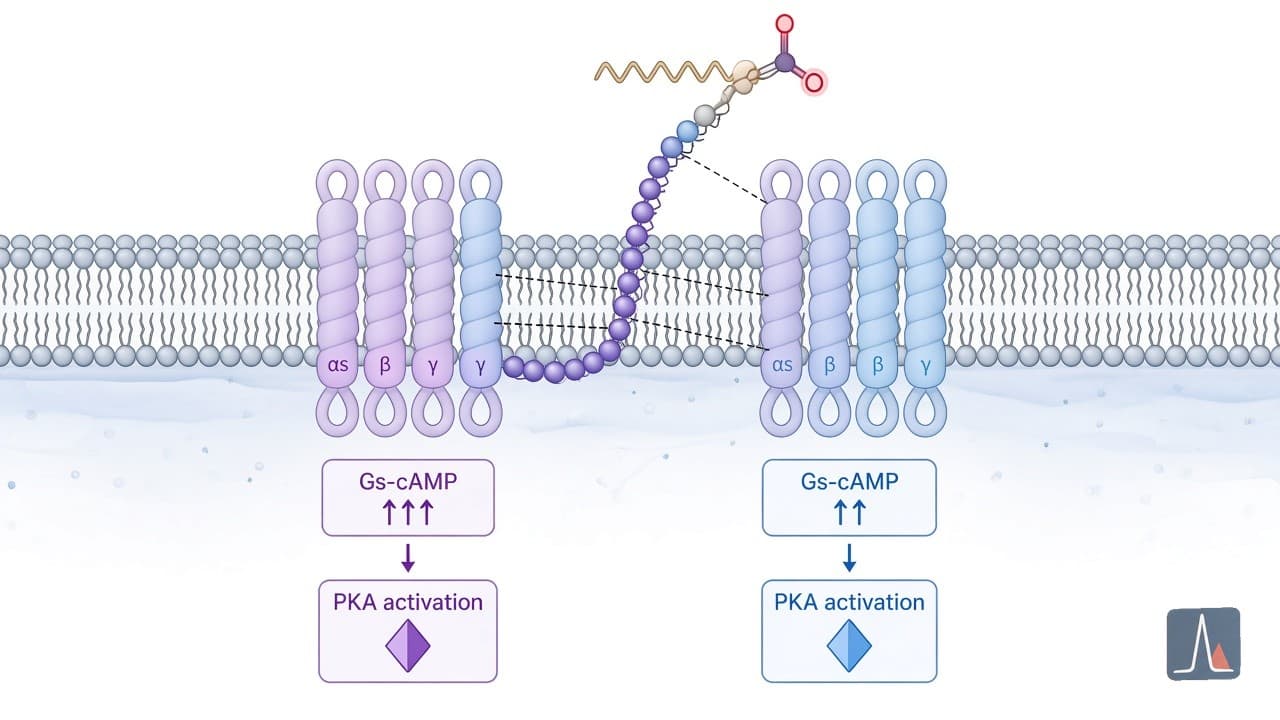
Published structural, in vitro, preclinical, and human islet studies describe tirzepatide as an imbalanced dual GIPR/GLP-1R agonist exhibiting biased cAMP signaling at the GLP-1 receptor, influencing glucose-dependent islet hormone secretio
Published mechanisms reported for Tirzepatide
Tirzepatide is a synthetic 39-amino acid peptide supplied by Rierink Compounds for laboratory research only. It is not a medicine. Published reports from receptor pharmacology, structural biology, in vitro assays, animal models, and human islet preparations describe its actions primarily through dual agonism at the glucose-dependent insulinotropic polypeptide receptor (GIPR) and the glucagon-like peptide-1 receptor (GLP-1R). These mechanisms integrate incretin physiology with engineered pharmacological properties including biased intracellular signaling.
Chemical Identity and Catalog Context
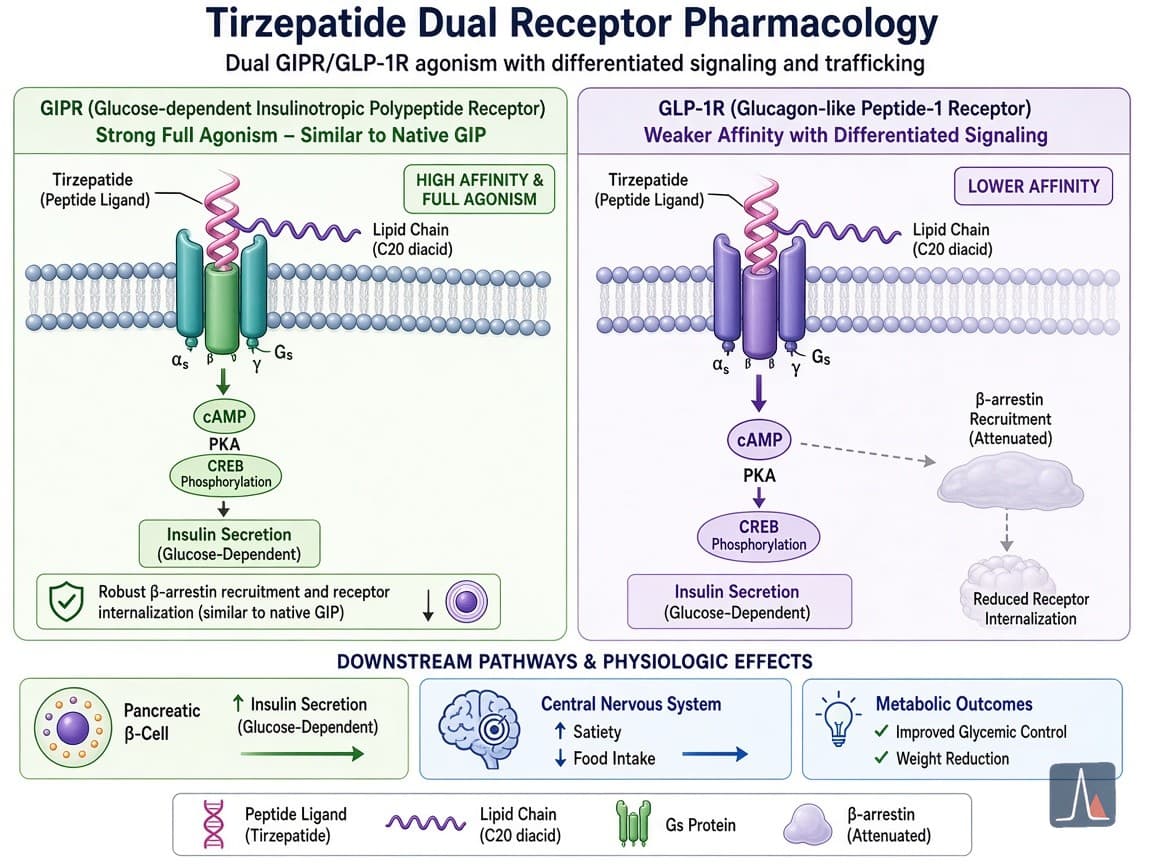
Tirzepatide is engineered from the native human GIP(1-42) sequence with amino acid substitutions, including 2-aminoisobutyric acid (Aib) residues at positions 2 and 13 for proteolytic stability, and a C20 diacid fatty acid moiety attached via a linker to lysine at position 20. This acylation facilitates non-covalent binding to albumin, contributing to prolonged pharmacokinetics observed in preclinical and human physiological studies (approximately 5-day half-life in pharmacokinetic reports). In catalog context, it is positioned alongside selective GLP-1R agonists such as Semaglutide, dual and triple agonists including Retatrutide, Cagrilintide, Survodutide, Liraglutide, and Dulaglutide. Published comparisons highlight tirzepatide's unique imbalanced dual agonism relative to selective GLP-1R agents.
Receptor Pharmacology, Structural Insights, and Biased Signaling
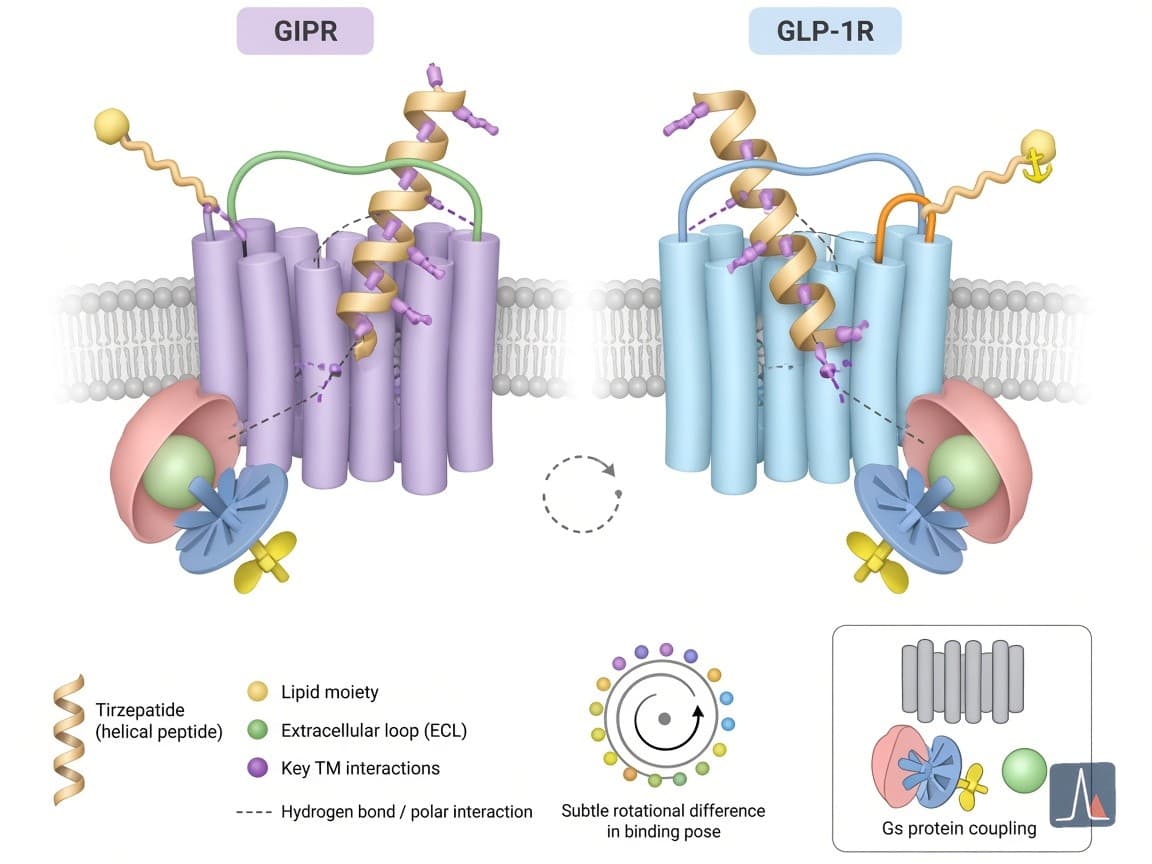
Receptor pharmacology studies using recombinant cell lines report that tirzepatide displays high affinity and potency at the human GIPR comparable to native GIP, acting as a full agonist for both Gs/cAMP and β-arrestin pathways. At the GLP-1R, affinity is approximately 5-fold lower and cAMP potency 13- to 20-fold weaker than native GLP-1. Cryo-electron microscopy (cryo-EM) structures (e.g., Zhao et al., Nat Commun 2022, doi:10.1038/s41467-022-28683-0; Sun et al., PNAS 2022, doi:10.1073/pnas.2116506119) reveal that tirzepatide adopts a helical conformation when bound to both receptors but exhibits subtle differences in binding pose, particularly an 8-degree rotation at the GIPR relative to the GLP-1R and distinct extracellular loop (ECL) interactions. The N-terminal tyrosine and the lipid moiety contribute to these features.
A key reported property is biased agonism at the GLP-1R. In contrast to native GLP-1 or selective GLP-1R agonists, tirzepatide preferentially activates the Gs/adenylyl cyclase/cAMP/protein kinase A (PKA) pathway while showing markedly reduced recruitment of β-arrestin1/2 and consequent receptor internalization and desensitization. This bias is linked to specific sequence elements and the acylated side chain. Willard et al. (JCI Insight, 2020) demonstrated that β-arrestin1 limits insulinotropic responses to GLP-1 in islets, but this limitation is absent for tirzepatide, suggesting sustained signaling potential. At the GIPR, signaling more closely mimics native GIP without pronounced bias. These molecular features are described as producing an "imbalanced" dual agonist profile with greater relative GIPR engagement at studied exposures.
In Vitro and Ex Vivo Islet Mechanistic Evidence
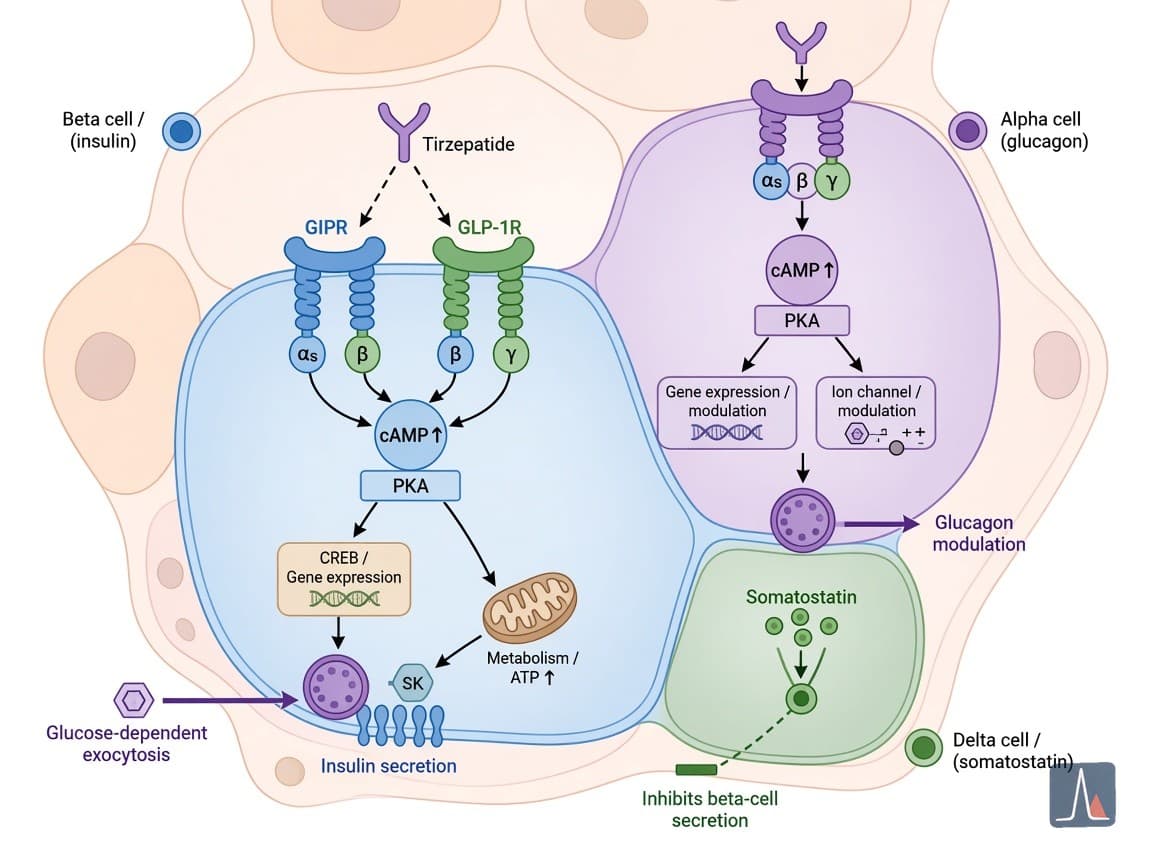
In vitro assays in recombinant HEK293 cells transfected with human receptors confirm the imbalanced and biased profile through cAMP accumulation, β-arrestin recruitment, and receptor trafficking measurements. Human pancreatic islet preparations (El et al., Nat Metab 2023) report that tirzepatide stimulates insulin secretion with substantial contribution from both receptors; pharmacological antagonism of GIPR consistently attenuates the insulin response more than GLP-1R antagonism in human islets, contrasting with mouse islets where GLP-1R mediation predominates due to species differences in GIPR potency. Tirzepatide also enhances glucagon and somatostatin secretion in human islets via both receptors. These effects are glucose-dependent in beta cells, consistent with incretin physiology, and proceed through cAMP/PKA/Epac-mediated closure of KATP channels, depolarization, calcium influx, and exocytosis of insulin granules.
Null or context-dependent findings appear in some reports. In certain mouse models, GIPR agonism contribution to acute insulin secretion is minimal, highlighting translational considerations when extrapolating rodent islet data to human physiology. No consistent unfavorable mechanistic data on core receptor activation were identified, but debates persist regarding the precise contribution of GIPR versus GLP-1R to net islet effects across species and metabolic states.
Central Nervous System and Gastrointestinal Pathway Reports
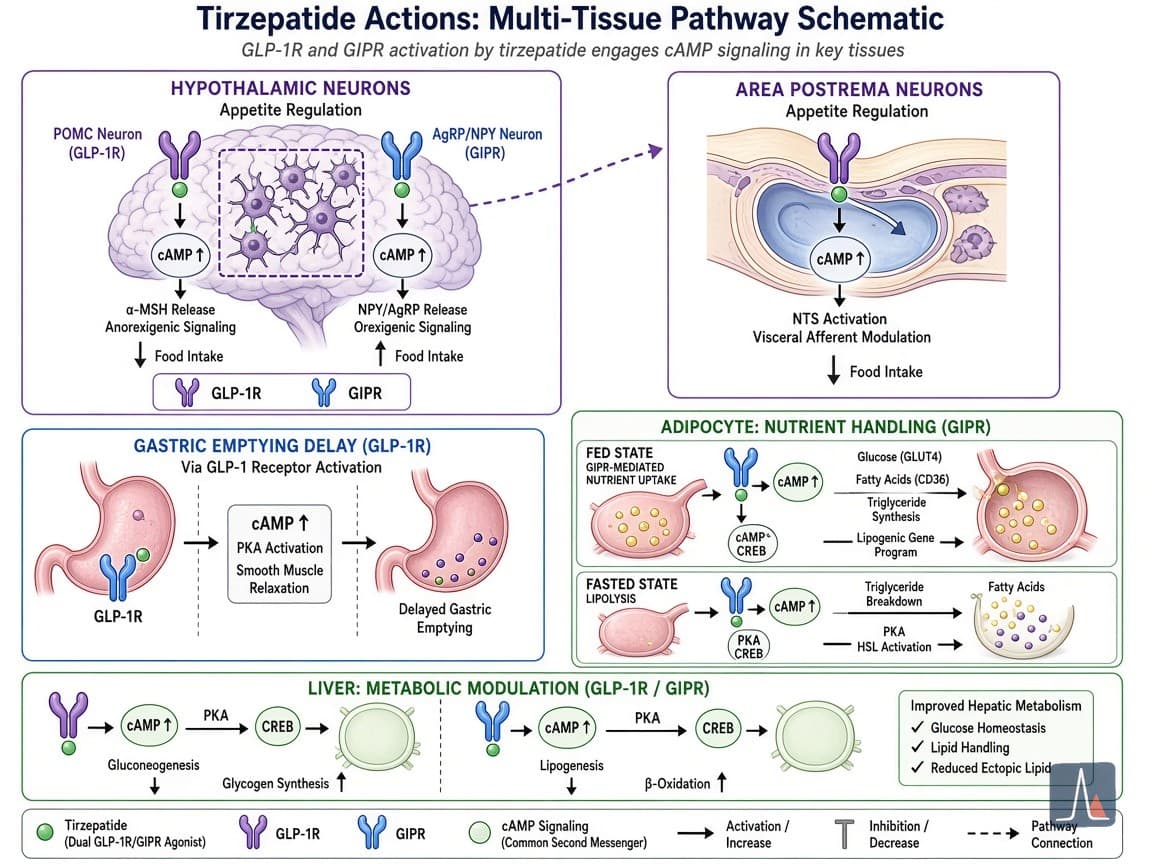
Preclinical rodent studies report that tirzepatide activates GIPR and GLP-1R expressed in circumventricular organs (area postrema, nucleus tractus solitarius) and hypothalamic nuclei (arcuate nucleus, paraventricular nucleus). Dual receptor engagement is described as producing synergistic reductions in food intake beyond additive effects of selective agonists, involving distinct neuronal populations including GABAergic neurons in the area postrema and downstream neurotensin neurons. GIPR activation in these regions is reported to potentially attenuate aversive or nausea-like signaling associated with strong GLP-1R stimulation. Gastric emptying delay is primarily attributed to GLP-1R agonism via vagal pathways, with some reports noting tachyphylaxis upon repeated exposure in animal models.
Adipose Tissue, Hepatic, and Peripheral Metabolic Mechanisms
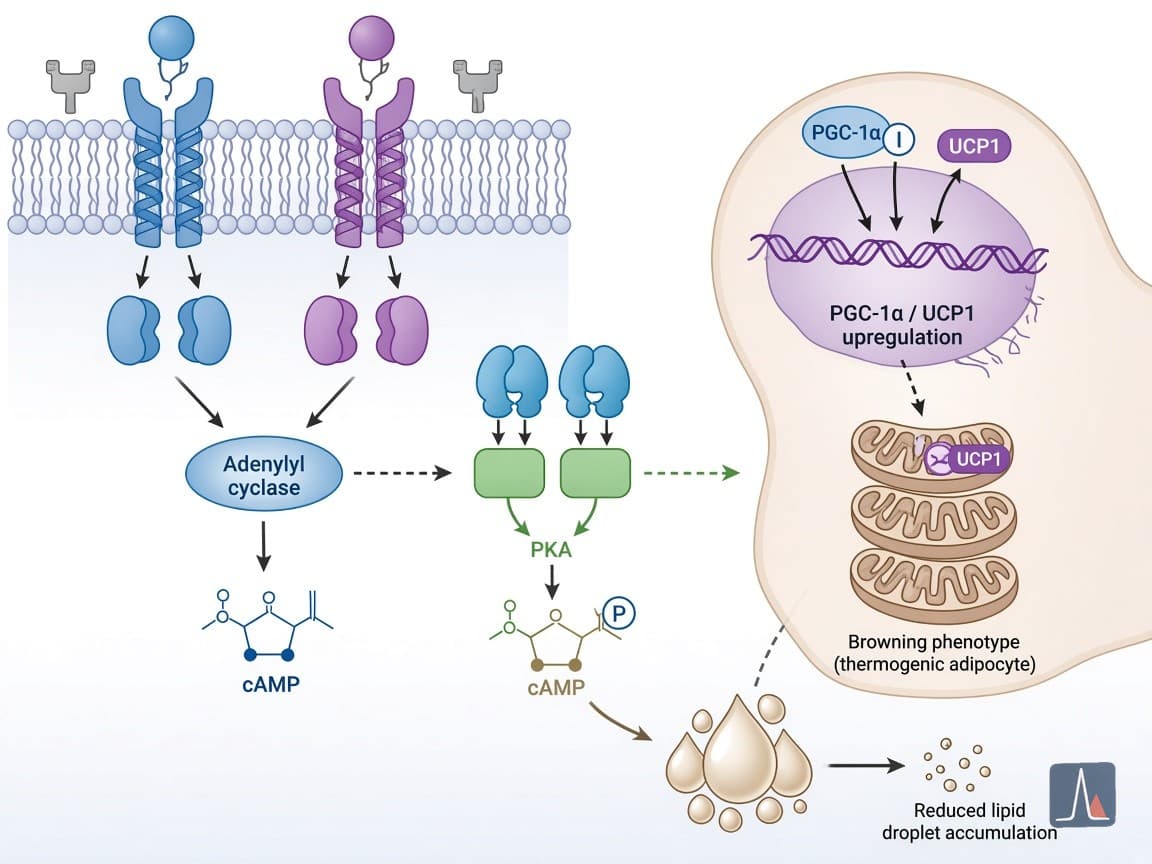
Recent in vitro and animal studies emphasize direct GIPR-mediated effects in adipocytes, which express GIPR but negligible GLP-1R. Regmi et al. (Cell Metab, 2024) report that long-acting GIPR agonism (modeled by tirzepatide-like compounds) cooperates with insulin in the fed state to enhance glucose uptake, triglyceride synthesis (via increased conversion of glucose to glycerol), and lipoprotein lipase activity, promoting nutrient partitioning into adipose. In low-insulin (fasted) states, the same agonism promotes lipolysis and fatty acid efflux. In diet-induced obese mice, this was associated with improved postprandial triglyceride clearance and increased fatty acid uptake into white adipose tissue. Additional reports describe cAMP-PGC-1α-UCP1 axis activation leading to white adipose tissue browning and reduced intracellular lipid accumulation in 3T3-L1 adipocytes and obese mouse models (2026 Eur J Pharmacol study).
In hepatic models, indirect effects via improved insulin sensitivity and reduced lipogenesis are reported, alongside direct receptor-mediated modulation of cholesterol efflux genes (Hnf4a, Abcg5/8) in some MAFLD mouse studies. Preclinical data also suggest contributions to skeletal muscle insulin sensitivity and cardiorenal protective pathways (anti-inflammatory, antifibrotic) through receptor expression in those tissues, though many effects appear secondary to central and islet actions.
Integrated Multi-Organ Pathway Models and Theoretical Implications
Theory derived from receptor distribution and preclinical integration suggests tirzepatide coordinates overlapping and complementary GIPR/GLP-1R signaling across pancreas, brain, gastrointestinal tract, adipose, liver, and cardiovascular tissues to modulate glucose, lipid, and energy homeostasis. A 2026 narrative review (Galindo et al., Diabetes Ther, doi:10.1007/s13300-025-01804-w) synthesizes these into multi-organ schematics showing how biased GLP-1R signaling and robust GIPR activity may produce sustained incretin effects with distinct nutrient handling compared to selective GLP-1R agonism. Animal models consistently report greater improvements in insulin sensitivity markers (e.g., HOMA-IR, adiponectin, IGFBP-1/2) and beta-cell function indices (HOMA-B, proinsulin/insulin ratio) with dual agonism versus GLP-1R mono-agonism, with some weight-independent components attributed to adipose GIPR signaling.
Null or mixed findings include variable contributions of GIPR to appetite effects across species and models, and limited evidence that GIP agonism alone improves insulin secretion in longstanding type 2 diabetes beta cells (a historical concern now partially addressed by biased dual agonist data). No large-scale unfavorable mechanistic human data contradict core receptor activation, but translational limitations from rodent to human GIPR pharmacology are recurrently noted.
Evidence Context, Recurrent Limitations, and Catalog Implications
Mechanistic evidence is strongest at the receptor and cellular level (cryo-EM, recombinant assays, human islets) and in preclinical animal models of obesity and diabetes. Human physiological and biomarker studies provide supportive data on pathway engagement but are fewer. Recurrent limitations include species differences in GIPR potency and signaling, heavy reliance on recombinant systems that may not fully recapitulate native receptor expression or heterodimerization, and the challenge of isolating GIPR versus GLP-1R contributions in vivo without selective antagonists. Many findings derive from industry-sponsored or collaborative work with the developer of tirzepatide.
For laboratory researchers, these published mechanisms position tirzepatide as a valuable tool compound for interrogating dual incretin signaling, biased agonism, and tissue-specific GIPR biology. Related catalog entries such as Semaglutide (selective GLP-1R) and emerging triple agonists like retatrutide allow comparative mechanistic studies. Future work may further elucidate long-term receptor trafficking, potential heterodimer effects, and detailed CNS neuronal mapping.
Sources
- Galindo RJ et al. Insights into the Mechanism of Action of Tirzepatide: A Narrative Review. Diabetes Ther. 2026;17(1):19-40. doi:10.1007/s13300-025-01804-w. PMID: 41196501. (Review synthesizing multi-organ mechanisms.)
- Willard FS et al. Tirzepatide is an imbalanced and biased dual GIP and GLP-1 receptor agonist. JCI Insight. 2020;5(19):e140532. doi:10.1172/jci.insight.140532. (Foundational in vitro pharmacology.)
- Zhao F et al. Structural insights into multiplexed pharmacological actions of tirzepatide and peptide 20 at the GIP, GLP-1 or glucagon receptors. Nat Commun. 2022;13(1):1057. doi:10.1038/s41467-022-28683-0. PMCID: PMC8881610. (Cryo-EM structures.)
- Sun B et al. Structural determinants of dual incretin receptor agonism by tirzepatide. PNAS. 2022;119(13):e2116506119. doi:10.1073/pnas.2116506119. PMCID: PMC9060465. (Cryo-EM and molecular dynamics.)
- El K et al. The incretin co-agonist tirzepatide requires GIPR for hormone secretion from human islets. Nat Metab. 2023;5(6):945-954. doi:10.1038/s42255-023-00811-0. (Human islet secretion data.)
- Regmi A et al. Tirzepatide modulates the regulation of adipocyte nutrient metabolism through long-acting activation of the GIP receptor. Cell Metab. 2024;36(7):1534-1549.e7. doi:10.1016/j.cmet.2024.05.010. (Adipocyte-specific GIPR mechanisms.)
- Additional supporting preclinical reports on cAMP-PGC-1α-UCP1 browning (Eur J Pharmacol 2026) and integrated reviews up to 2026.
All materials are for laboratory research only.
All information and products discussed are for laboratory and research use only. Not for human or veterinary use. Not intended to diagnose, treat, cure, or prevent any disease.
Więcej briefingów
- Favorable and unfavorable findings on AdipotidePreclinical studies in obese mice and monkeys report that Adipotide causes targeted apoptosis of white adipose tissue vasculature leading to substantial fat loss and improved insulin resistance, yet the same primate experiments identified d
- Favorable and unfavorable findings on 5-Amino-1MQPreclinical in vitro and animal studies report that 5-Amino-1MQ, a small-molecule NNMT inhibitor supplied for laboratory research only, raises NAD+ and SAM in adipocytes, suppresses lipogenesis, attenuates diet-induced obesity and hepatic s
- Favorable and unfavorable findings on AdamaxNo peer-reviewed studies characterize or test the research peptide sold as Adamax. Favorable signals reported for the parent heptapeptide Semax on BDNF/TrkB upregulation, neuroprotection, and limited stroke recovery parameters are theoretic
Wszelkie omawiane informacje i produkty są przeznaczone wyłącznie do użytku laboratoryjnego i badawczego. Nie do stosowania u ludzi ani do użytku weterynaryjnego. Nie są przeznaczone do diagnozowania, leczenia, wyleczenia ani zapobiegania jakiejkolwiek chorobie.